21 Studio Apartment Storage Hacks for Genius Organization
Small apartments can feel cluttered fast, but smart storage can change how every corner works. Studio Apartment Storage Hacks help you organize more without making your home feel crowded.
From the space beneath your bed to unused walls, cabinet doors, narrow corners, and compact furniture, there are plenty of overlooked places that can hold everyday belongings. The key is choosing storage that fits your layout and gives frequently used items a logical home.
This collection focuses on practical solutions you can actually use, including shelves, baskets, rolling carts, drawer dividers, hidden compartments, and vertical organizers. In my experience, the biggest improvement often comes from using space that was already there rather than adding more bulky furniture. These ideas can help you clear surfaces, improve daily routines, and make your studio feel more organized and comfortable.
Under Bed Storage
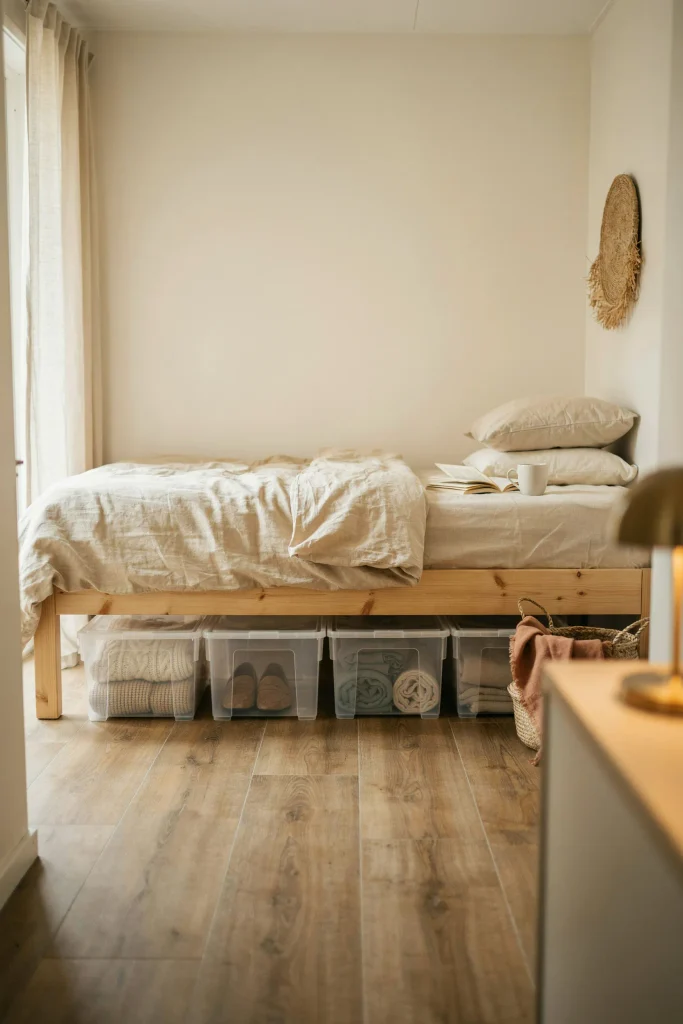
Small apartments often have valuable storage hiding beneath the bed. Slide flat containers underneath for shoes, extra bedding, off-season clothing, or bags that rarely need daily access. Choose lidded boxes so dust stays out and label each container clearly.
In my experience, shallow containers work better than deep bins because they are easier to pull out without moving the bed. Keep everyday items elsewhere and reserve this space for seasonal belongings. Grouping similar items together also prevents the familiar problem of opening several boxes just to find one sweater.
ALSO READ : Fall Dining Room Decorations
Wall Mounted Shelves
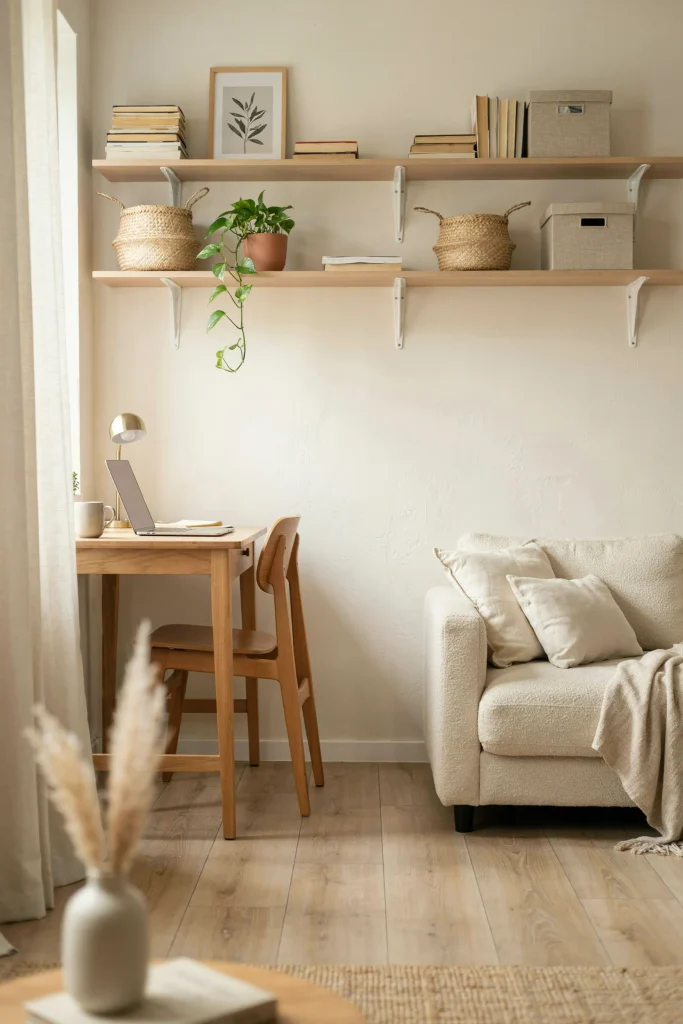
- Use vertical space: Mount shelves above desks, sofas, or unused wall sections.
- Add baskets: Place small woven or fabric bins on lower shelves for hidden storage.
- Keep daily items accessible: Store books, keys, chargers, and frequently used objects within easy reach.
- Leave breathing room: Avoid filling every shelf so the room does not feel visually crowded.
- Match finishes: Choose wood tones that coordinate with existing furniture for a cohesive look.
Wall-mounted shelving turns unused wall area into useful storage without taking up valuable floor space. In a studio, even a narrow shelf can hold several categories of belongings. Keep heavier objects on securely installed shelves, and use attractive baskets to hide smaller items that tend to create visual clutter.
Pinterest Account : HavenAndHue2
Slim Entryway Cabinet
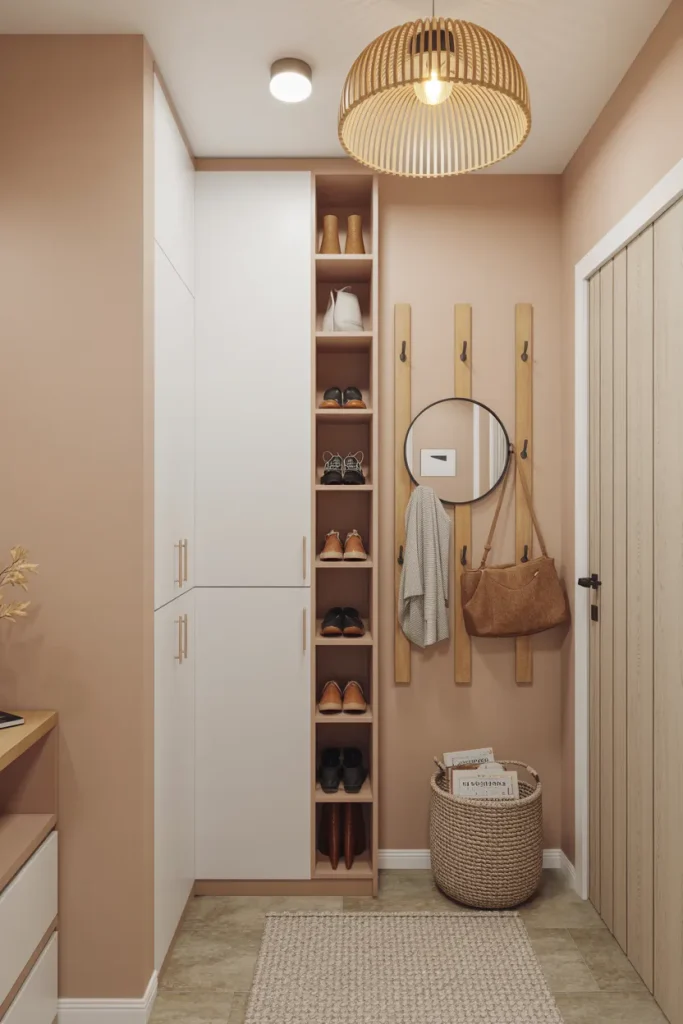
Quick Tip: Measure the available wall depth before buying an entryway cabinet. A unit around 6 to 10 inches deep can store shoes and small accessories while preserving walking space. Check door and drawer clearance too, especially when the cabinet sits near a narrow entrance.
A slim cabinet gives the entry zone a dedicated home for items that otherwise migrate around the apartment. Store shoes at the bottom, bags in the middle, and small accessories in labeled containers. Adding a mirror above the cabinet can also make the entrance feel more functional without consuming floor area.
Overhead Kitchen Cabinets
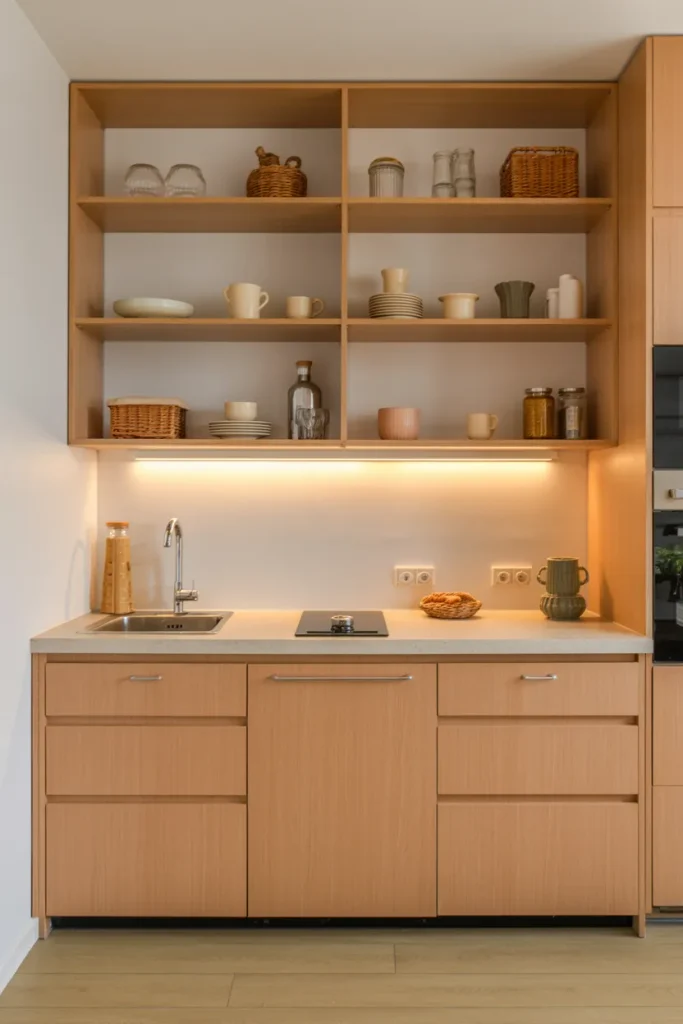
BEFORE: Short cabinets often leave a strip of unused wall above them where dust collects and clutter begins to gather. Everyday kitchen items may also crowd the counters because there is not enough accessible cabinet space.
AFTER: Extending storage upward creates another zone for less frequently used cookware, serving pieces, and pantry supplies. Matching baskets keep the upper area organized and visually calm.
Reserve the highest shelves for items you use occasionally, such as holiday dishes, extra appliances, or bulk supplies. Keep a small step stool nearby if needed. For renters, freestanding tall cabinets or removable shelf systems can provide a similar vertical storage benefit without permanent construction.
Pegboard Organizer
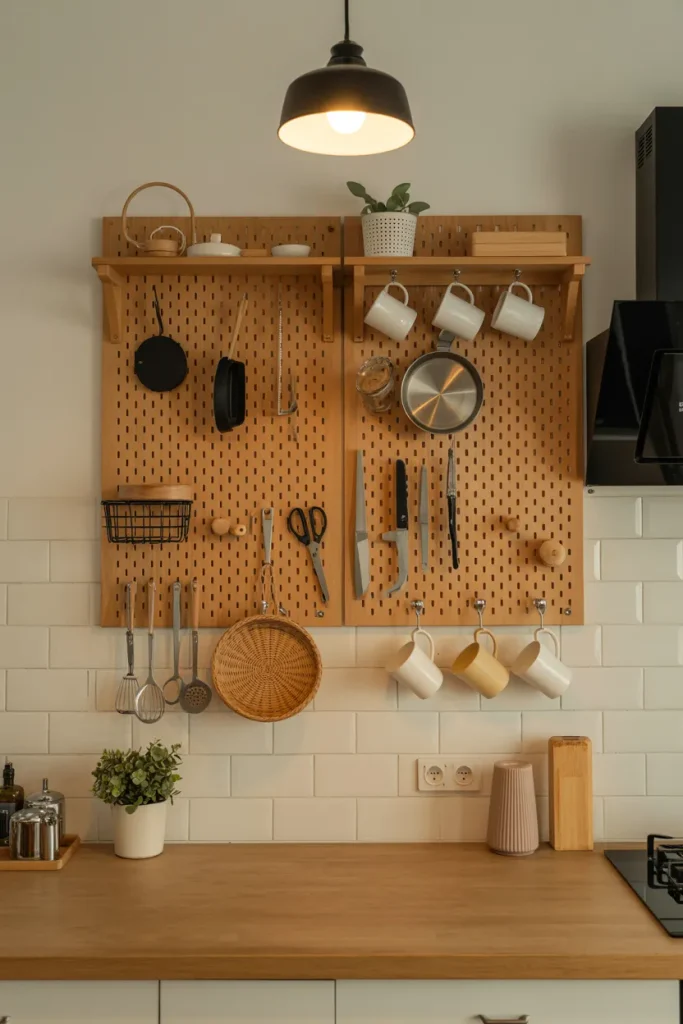
- Choose the wall: Select an unused section near your kitchen work area or desk.
- Install the board: Secure the pegboard according to the wall type and weight requirements.
- Add hooks: Position hooks for utensils, scissors, cords, or lightweight tools.
- Include baskets: Attach small baskets for spices, mail, chargers, or miscellaneous items.
- Group by use: Keep frequently needed objects at comfortable reach height.
A pegboard makes small belongings visible and accessible while freeing drawers and countertops. The adjustable hooks also let you change the arrangement as your needs change. I’ve noticed this works particularly well in studio kitchens because one narrow wall can handle several storage categories without requiring another bulky piece of furniture.
Open Shelves vs Cabinets
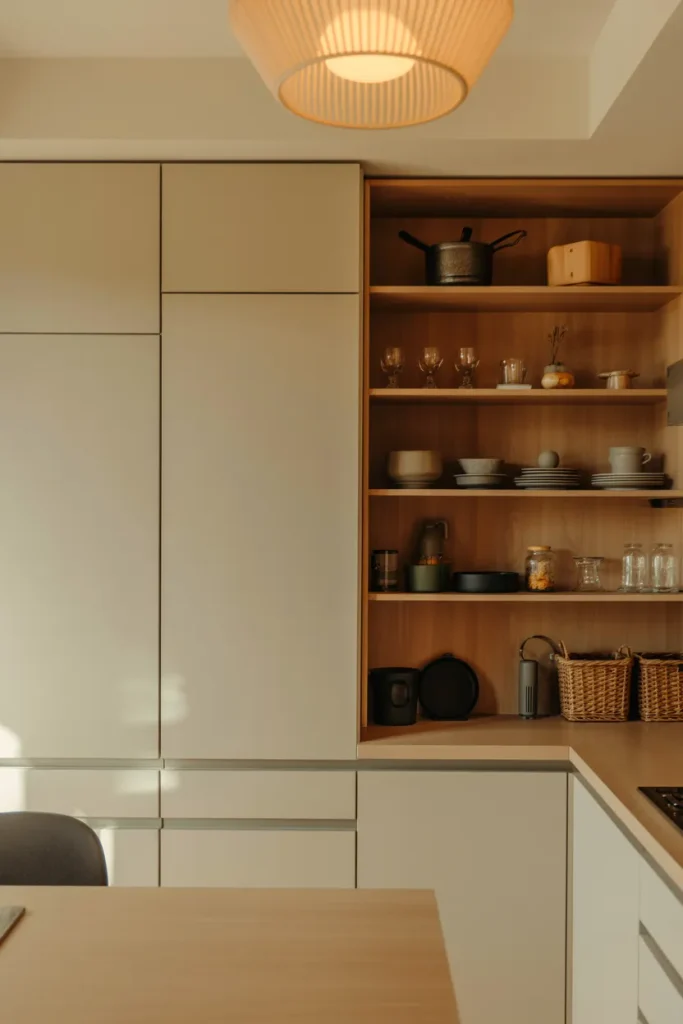
| Feature | Open Shelves | Closed Cabinets |
| Accessibility | Items are quick to reach | Items stay concealed |
| Visual Effect | Airy and decorative | Clean and streamlined |
| Best For | Attractive everyday pieces | Clutter-prone supplies |
| Maintenance | More visible dust | Less visible mess |
Mixing both storage styles can give a studio kitchen more flexibility. Keep attractive dishes, mugs, or matching jars on open shelves, while placing mismatched cookware and less-used supplies behind doors. This creates visual breathing room without sacrificing capacity, especially when every cabinet and wall section needs to serve a practical purpose.
Rolling Storage Cart
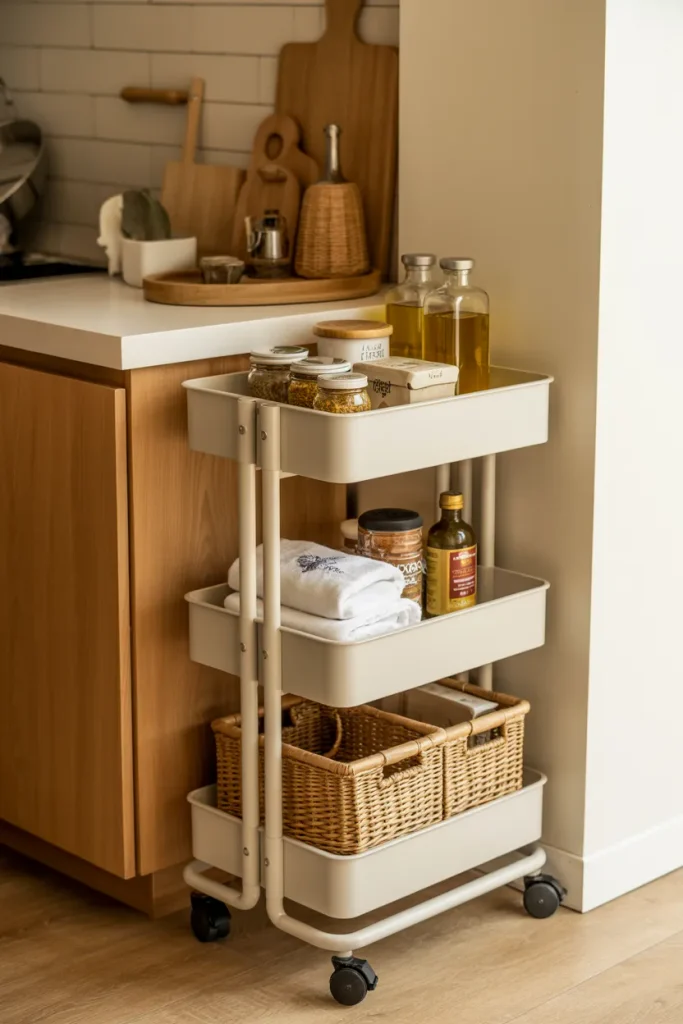
DO:
- Measure the gap before choosing a cart.
- Use each tier for one storage category.
- Choose wheels with reliable locks.
- Keep heavier items on the bottom shelf.
DON’T:
- Overfill the cart until it becomes difficult to move.
- Store unstable glass items on the top tier.
- Block cabinet doors or appliance access.
- Leave the cart in a narrow walkway.
A slim rolling cart can turn an awkward gap into useful storage for pantry goods, cleaning supplies, toiletries, or office materials. Because it moves, you can pull everything forward when needed and return it afterward. In my experience, assigning one category to each shelf keeps these carts from becoming clutter collectors.
Behind Door Storage
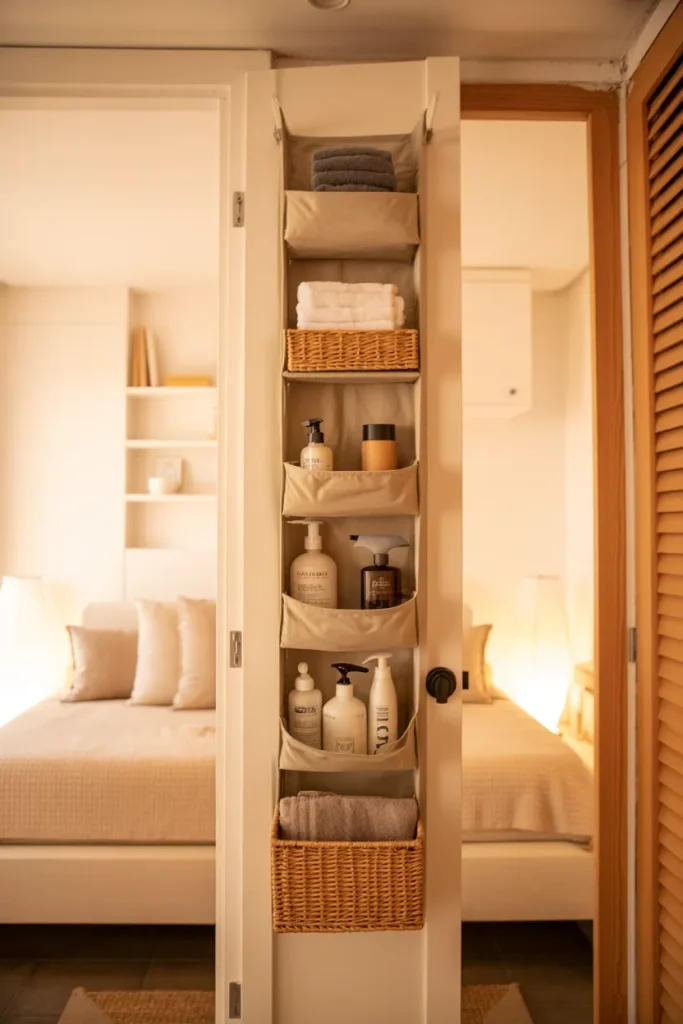
Cost: Low | Time: 15 to 30 minutes | Skill Level: Beginner
Best For: Bathrooms, closets, and kitchens | Storage Gain: Small items and daily essentials
Doors provide overlooked vertical storage that can hold surprisingly many small belongings. Use an over-door organizer for toiletries, hair tools, cleaning supplies, scarves, or pantry packets. Choose a design that fits the door thickness and closes properly without scraping nearby walls or furniture.
Clear pockets make frequently used items easy to locate, while fabric baskets provide a cleaner appearance for smaller objects. Keep heavier items toward the bottom and avoid overloading the hardware. This approach is especially useful for renters because many over-door organizers require little or no permanent installation.
Sofa Drawer Storage
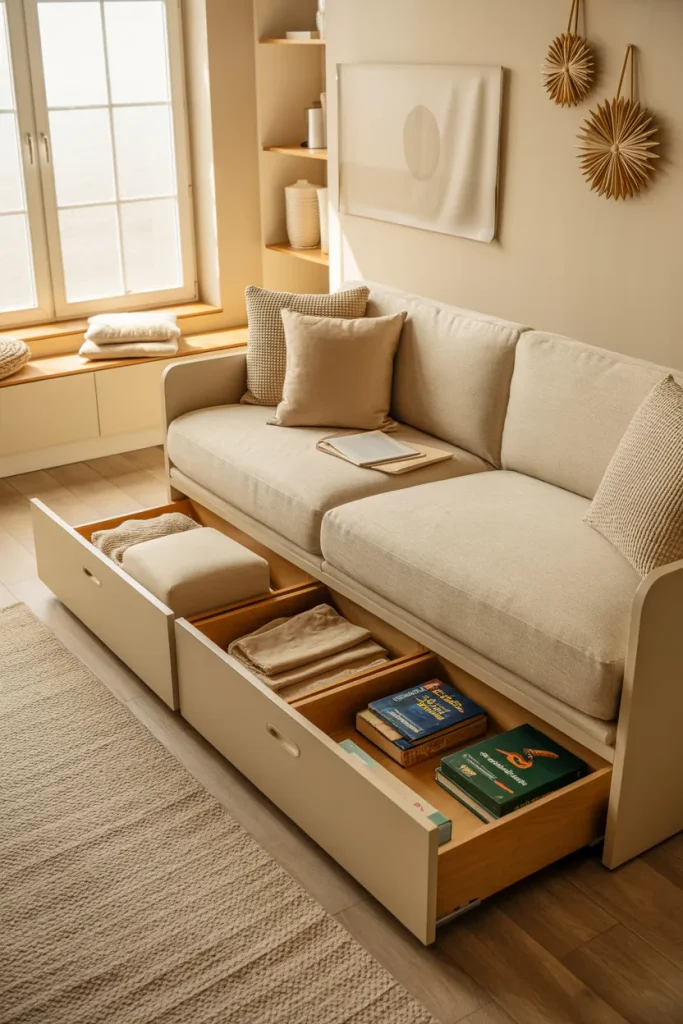
A sofa with built-in drawers can solve two problems at once: comfortable seating and hidden storage. Use the compartments for blankets, spare pillows, books, electronics, or items that need to stay close to the living area but out of sight.
Choose shallow compartments for everyday belongings and deeper drawers for bulky textiles. If replacing your sofa is not practical, consider a storage ottoman or lift-top coffee table instead. I’ve seen small apartments become noticeably easier to maintain when large furniture pieces provide hidden storage rather than occupying floor space without serving a second purpose.
Closet Shelf Dividers
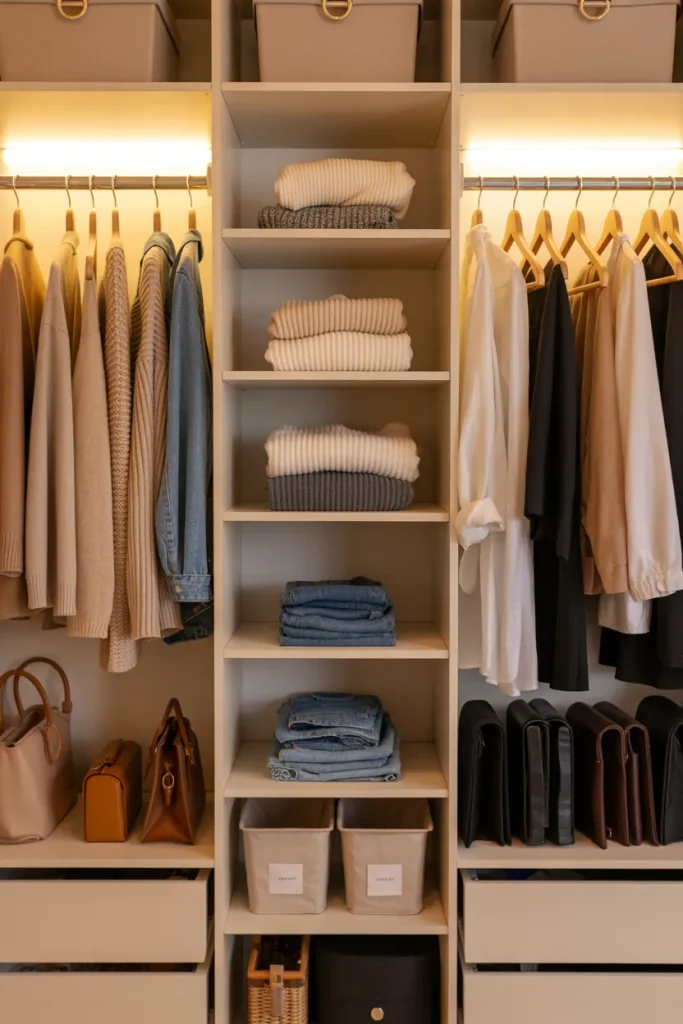
DO:
- Stack folded clothing by category.
- Use dividers to prevent tall piles from collapsing.
- Reserve upper shelves for seasonal pieces.
- Label bins containing accessories or rarely used items.
DON’T:
- Create stacks so tall that clothes fall over.
- Mix shoes with clean clothing.
- Push items so far back that they become difficult to reach.
- Keep clothes you never wear in prime shelf space.
Shelf dividers turn messy closet piles into defined sections that are easier to maintain. Place everyday clothing at eye level and move seasonal pieces higher. I’ve noticed that smaller, stable stacks encourage better organization because you can remove one item without disturbing everything around it.
Foldable Furniture Storage
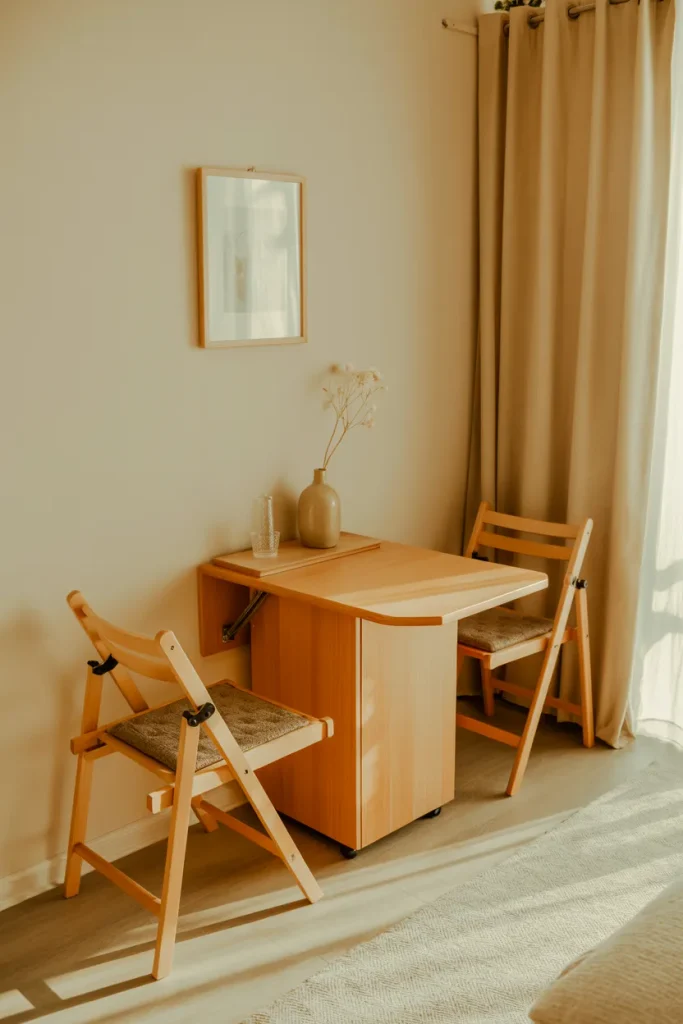
Cost: Moderate | Time: 1 to 2 hours | Skill Level: Beginner to intermediate
Best For: Dining and work zones | Works In: Very small studios
Furniture that folds away gives the same room multiple purposes without permanently consuming floor space. A drop-leaf table can serve as a dining surface or temporary desk, while folding chairs can hang on wall hooks or slide into a narrow cabinet when not needed.
Measure the folded dimensions before purchasing anything. The goal is not simply smaller furniture, but furniture that leaves useful floor area available after use. In a studio apartment, that extra clearance can make everyday movement easier and give the room a more open appearance.
Bedside Wall Nook
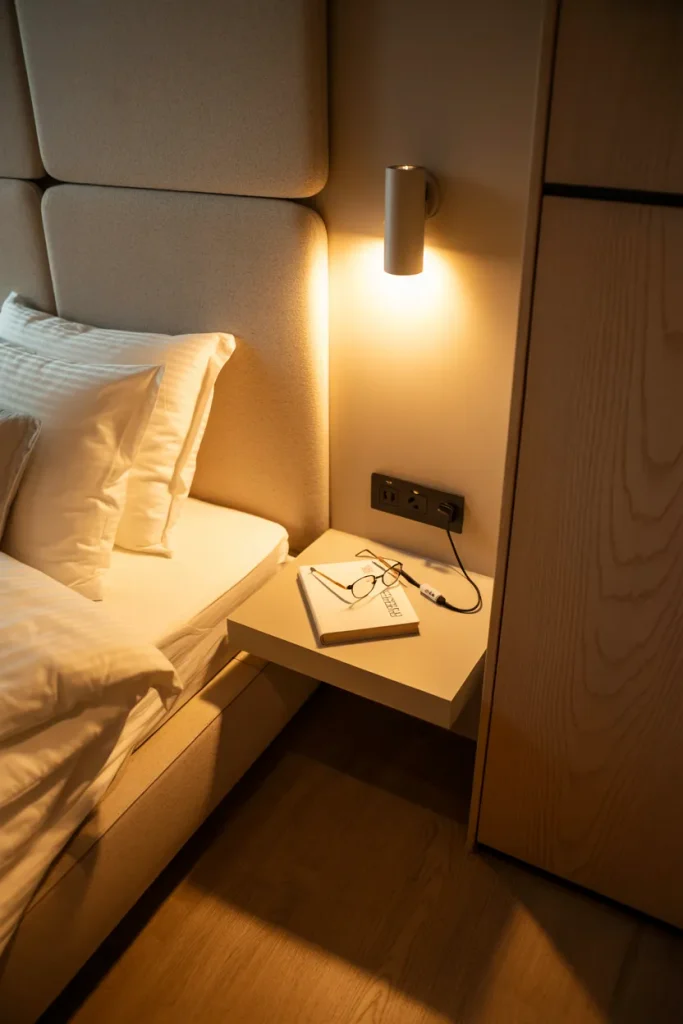
A bedside surface does not need to be a full nightstand. Install a narrow floating shelf beside the bed for essentials such as a phone, book, glasses, and small lamp. A shallow ledge keeps the sleeping area functional while preserving precious floor space.
Add a small cable clip underneath to prevent charging cords from dropping behind the bed. If the wall cannot be drilled, choose a freestanding narrow shelf or compact caddy designed for bedside use. Keeping only nighttime essentials within reach prevents the sleeping zone from becoming another cluttered storage area.
Kitchen Sink Storage
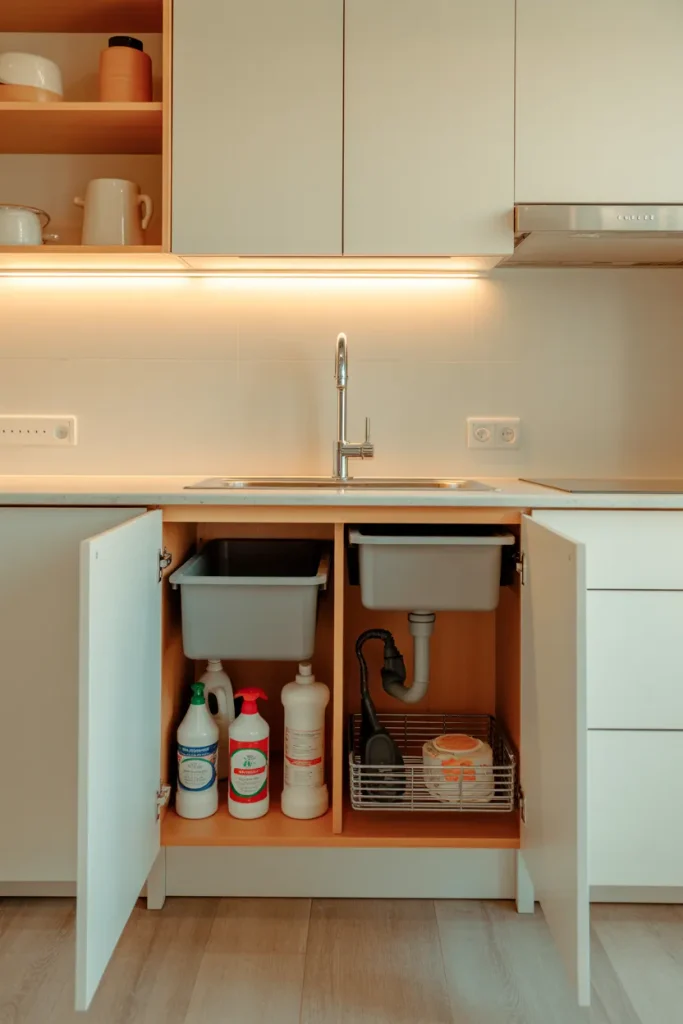
- DO: Add a small shelf riser to create a second storage level.
- DO: Use stackable bins for sponges, cloths, and cleaning supplies.
- DO: Keep frequently used products toward the front.
- DON’T: Store items where plumbing connections could cause damage.
- DON’T: Pack the cabinet so tightly that leaks become difficult to spot.
- DON’T: Mix food supplies with cleaning chemicals.
The cabinet beneath the sink often becomes a dark catchall, but a few simple organizers can make every inch more useful. Choose moisture-resistant bins and leave clearance around pipes. Keep hazardous cleaning products secured and separate from food. A tidy under-sink area also makes it easier to notice leaks before they cause bigger problems.
Vertical Pantry Bins
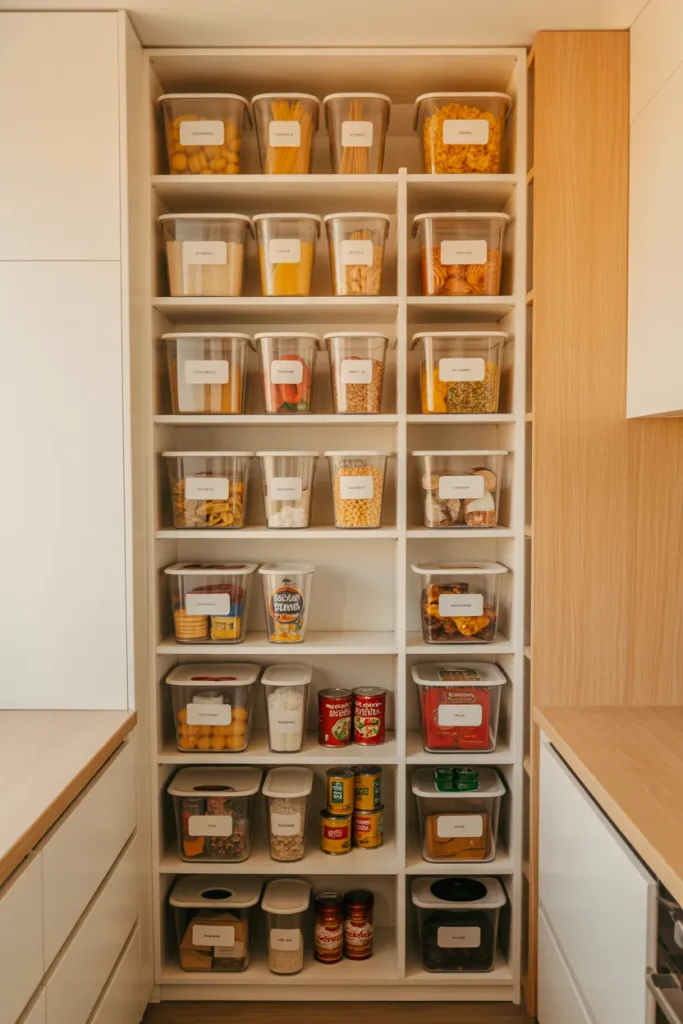
Cost: Low to moderate | Time: 30 to 60 minutes | Skill Level: Beginner
Best For: Small kitchens | Works In: Cabinets and narrow shelves
Result: More visible pantry capacity
Vertical bins make better use of cabinet height while keeping similar foods grouped together. Choose clear containers when you want to see contents quickly, or use matching opaque bins for a cleaner appearance. Label the front so you can identify staples without pulling every container forward.
Measure shelf height before buying organizers, especially if cabinets have fixed shelves. Keep heavier containers lower and lightweight snacks higher. I’ve noticed that vertical storage works best when each bin has one clear category, such as breakfast foods, baking supplies, or snacks, instead of becoming a mixed collection.
Floating Desk Shelf
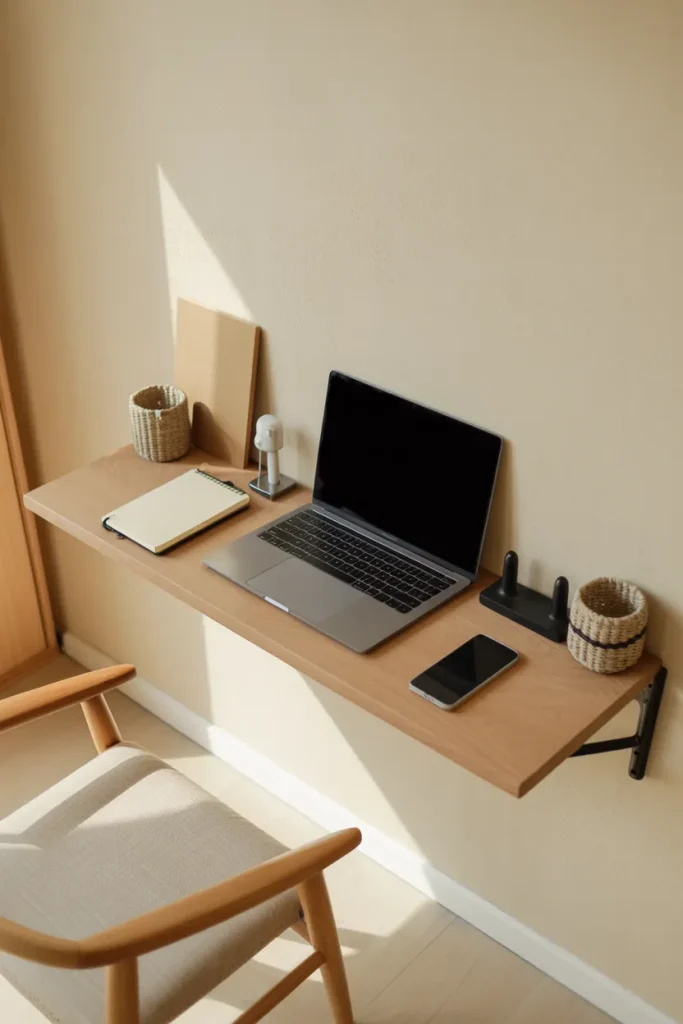
BEFORE: A traditional desk can consume valuable floor space even when you only need a small surface for occasional work. Cables, notebooks, and office supplies can quickly spread across the limited area.
AFTER: A wall-mounted shelf creates a dedicated work zone while leaving the floor clear. Add a small drawer or basket underneath for supplies that should stay nearby but out of sight.
Choose a shelf deep enough for your laptop and comfortable writing space, then mount it at a practical seated height. Route charging cables underneath with adhesive clips to keep the surface clear. When work is finished, store the laptop vertically or in a nearby cabinet so the studio can return to its main living function.
Overhead Bed Storage
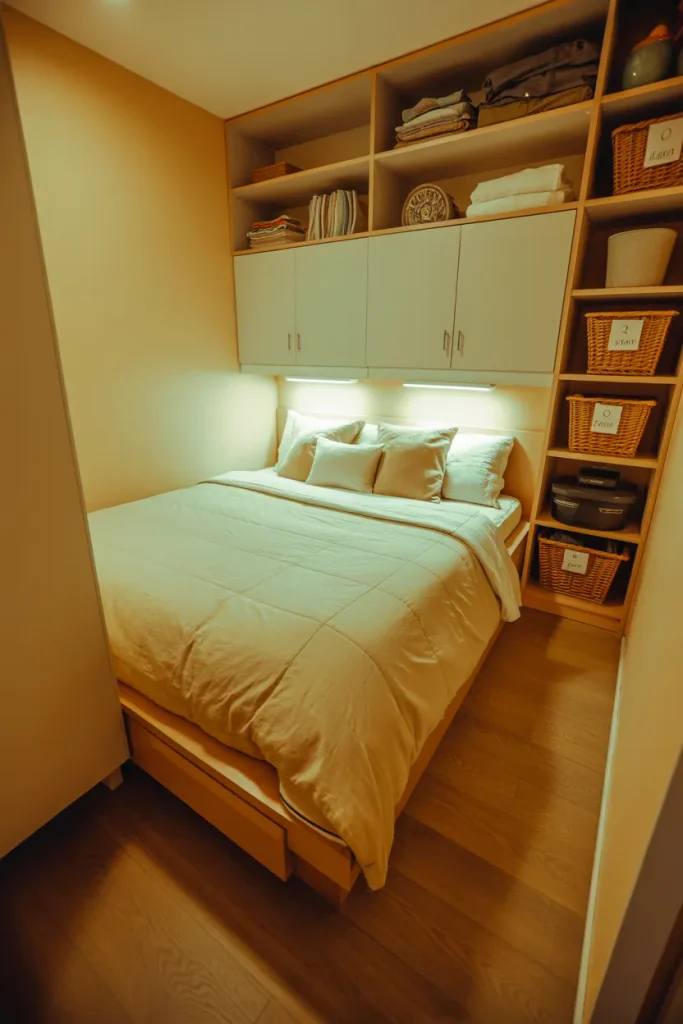
Cost: Moderate | Time: 1 to 2 hours | Skill Level: Intermediate
Best For: High ceilings and compact bedrooms | Storage Type: Seasonal belongings
Result: More vertical capacity
The area above the bed can provide valuable storage without taking up additional floor space. Use shallow cabinets or sturdy closed shelving for spare bedding, luggage, seasonal clothing, and other items you do not need every day. Keep the deepest storage for lightweight belongings and secure wall-mounted units properly.
Narrow Bathroom Shelves
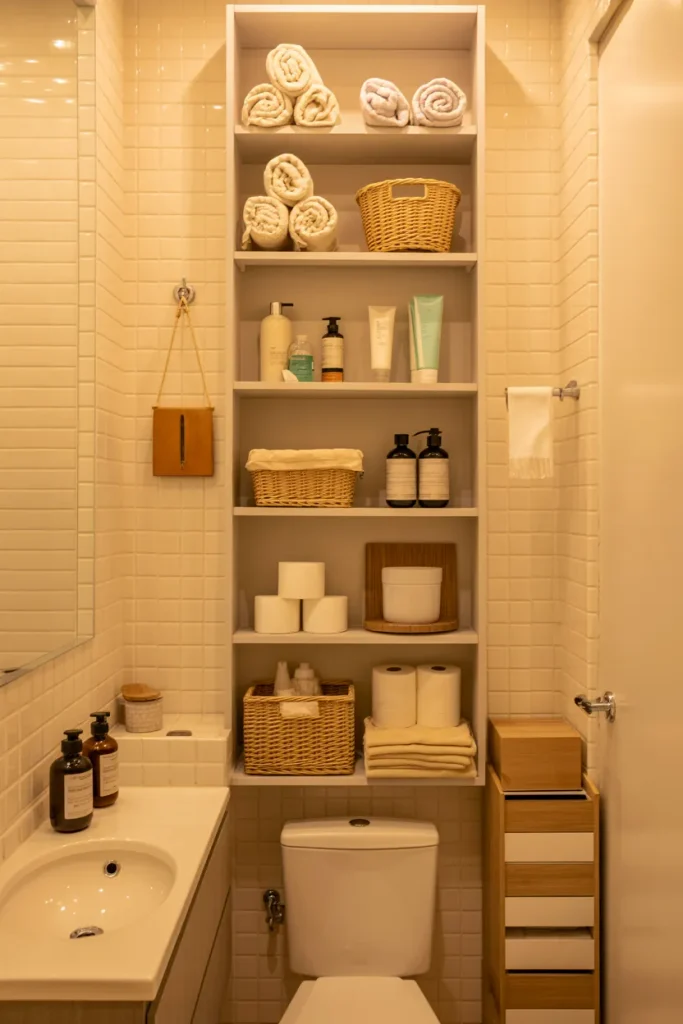
A narrow gap beside the bathroom vanity can become useful storage with a slim shelving unit. Choose one that is tall rather than wide, then assign each level to a specific category such as towels, toiletries, or extra paper goods. Matching baskets can hide smaller items and reduce visual clutter.
Keep frequently used products between waist and shoulder height so they are easy to grab. Store backups higher up or toward the bottom. In my experience, narrow shelving works especially well in studio bathrooms because it uses awkward vertical space without making the walking area feel cramped.
Storage Ottoman Seating
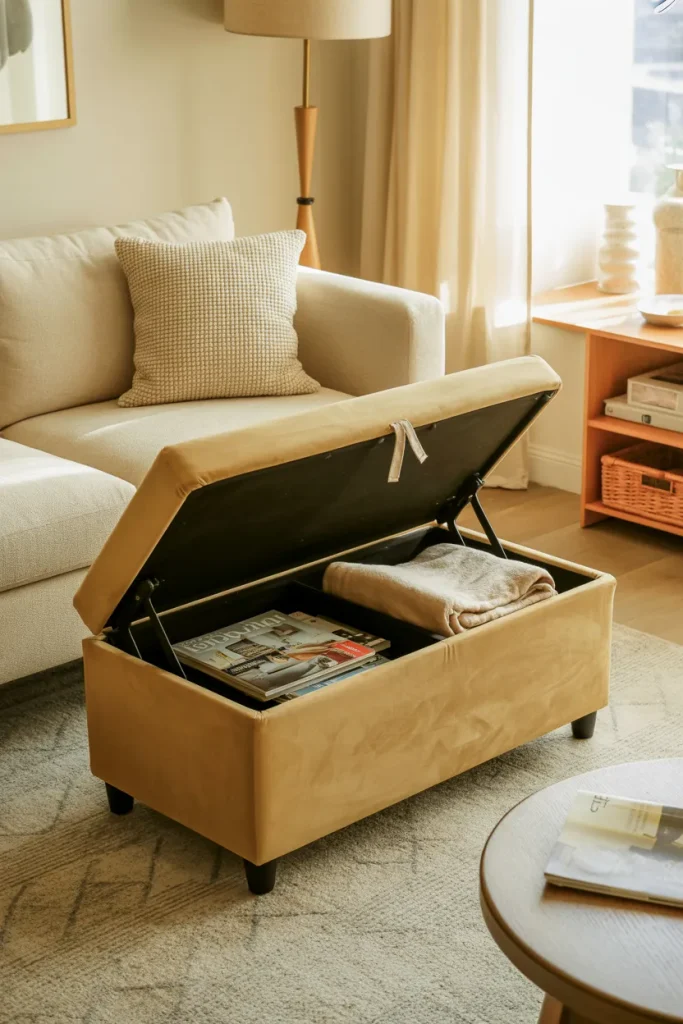
- Choose lift-top seating: Look for an ottoman with a hinged lid for quick access.
- Store bulky textiles: Use the interior for blankets, pillows, throws, or seasonal accessories.
- Match the upholstery: Coordinate the fabric with your sofa to create a cohesive living area.
- Use the surface: The closed ottoman can hold a tray, books, or a cup when needed.
A storage ottoman earns its floor space by providing both seating and hidden organization. Keep soft, lightweight items inside so the compartment stays easy to access. A removable tray can turn the top into a practical coffee table surface, giving one compact piece several useful functions in a studio apartment.
Closet Door Hooks
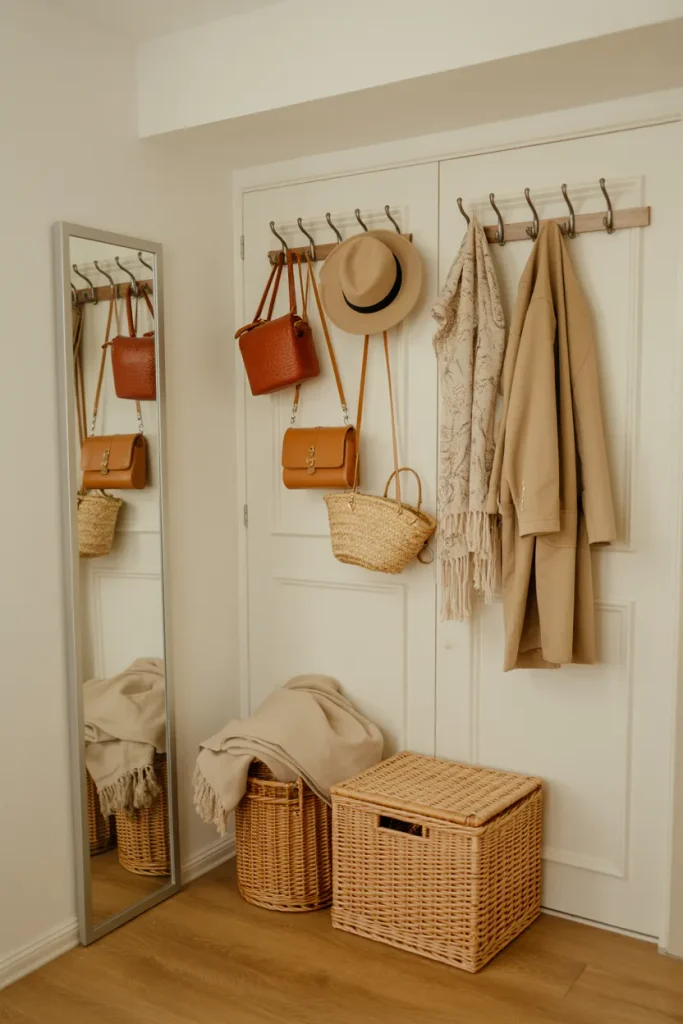
Cost: Low | Time: 10 to 20 minutes | Skill Level: Beginner
Best For: Clothing and accessories | Works In: Bedrooms and entryways
Result: Extra hanging space without floor clutter
Closet doors can provide useful storage for lightweight items that usually end up on chairs or the floor. Install an over-door hook rack for bags, robes, scarves, or frequently worn jackets. Keep the arrangement limited to items you reach for often so the door remains easy to open and close.
Choose hooks that fit securely over the door without damaging its surface. For heavier bags, check the manufacturer’s weight limit before hanging them. This small addition works especially well in rental apartments because it creates accessible organization without requiring permanent wall installation.
Drawer Dividers
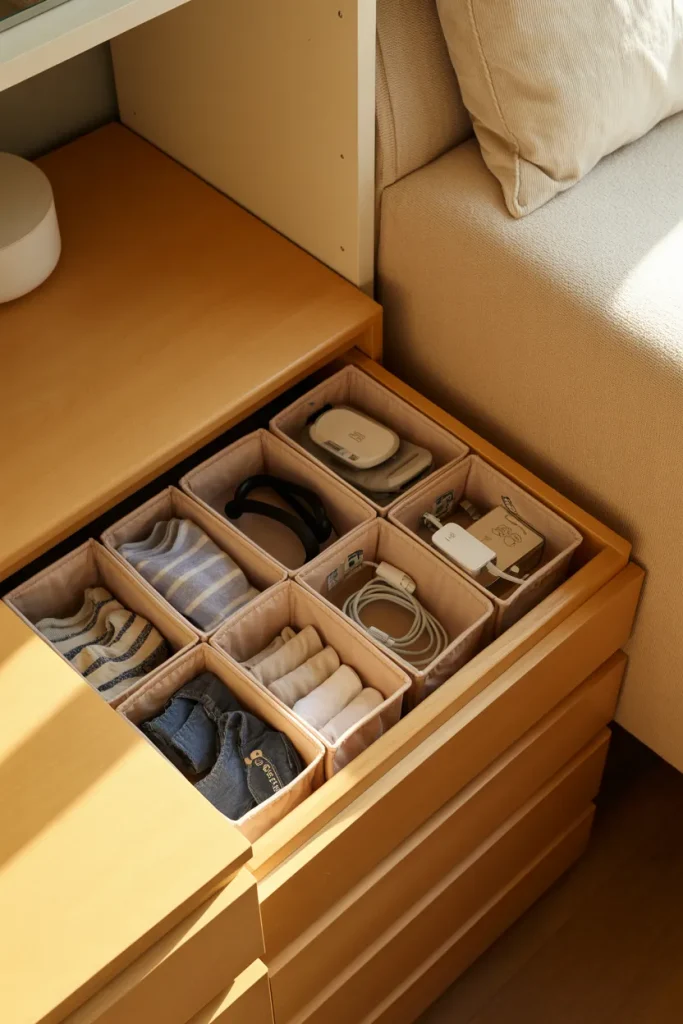
A messy drawer can waste more space than you realize because small items become difficult to find and unused gaps appear between piles. Drawer dividers create clear sections, making every inch easier to use while preventing categories from mixing together.
Measure the inside of each drawer before purchasing organizers. Adjustable dividers are useful when drawer sizes vary, while small fabric boxes work well for accessories and cables. I’ve noticed that assigning one category to each section makes daily tidying much faster because everything has an obvious place to return to.
Tall Corner Shelving
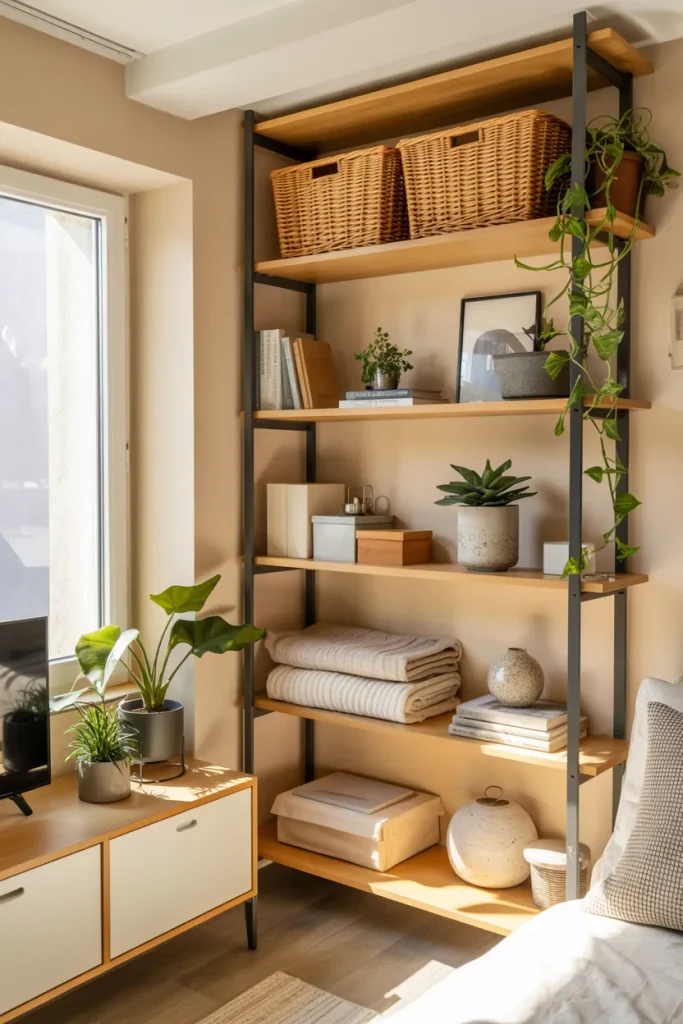
- Choose vertical shelving: A tall, narrow unit uses height while preserving valuable floor space.
- Store upward: Keep rarely used items on higher shelves and daily essentials within reach.
- Use baskets: Hide small belongings inside coordinated bins for a cleaner appearance.
- Leave corners open: Avoid pushing furniture tightly against every wall so the studio retains visual breathing room.
- Anchor securely: Stabilize tall shelving according to the manufacturer’s instructions, especially in homes with children or pets.
Corners often become dead zones simply because standard furniture does not fit them well. A narrow shelving unit can turn that unused area into dedicated storage for books, linens, decor, or household supplies. Keep heavier objects on lower shelves and lighter pieces above for easier access and better stability.
A tall shelf also helps draw the eye upward, making use of vertical space rather than spreading belongings across the floor. For renters, choose freestanding units that can move with you. With thoughtful baskets and a consistent color palette, practical storage can also become part of the room’s overall decor.
CONCLUSION
Good organization is less about owning fewer things and more about giving the things you keep a sensible place to live. These Studio Apartment Storage Hacks show how walls, doors, corners, furniture, and overlooked spaces can provide valuable extra capacity.
I’ve noticed that even one small change, such as adding drawer dividers or using the space beneath a bed, can make daily tidying much easier. Save this post on Pinterest for your next organizing project, try the ideas that fit your layout, and share the article with someone living in a small space. Start with one area today and build from there.