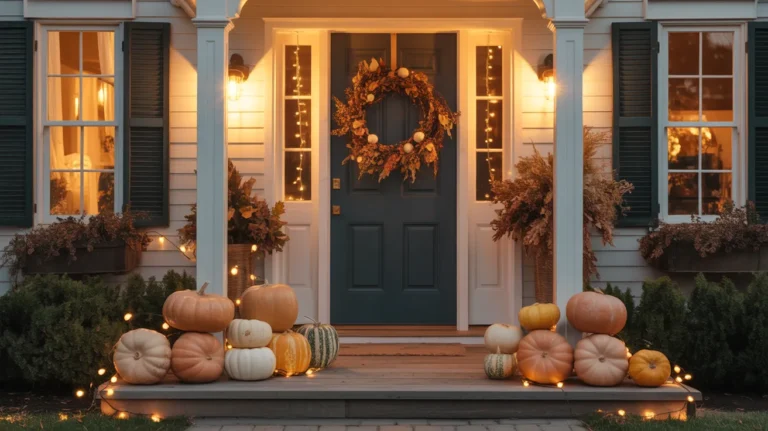
21 Fall Dining Room Decorations for a Fresh New Look!
INTRODUCTION
A few thoughtful changes can make your dining room feel completely different for fall. Fall Dining Room Decorations can add warmth and seasonal character without requiring a full room makeover.
Whether your table feels plain, your walls need a little personality, or you simply want a cozier setting for family meals, small updates can go a long way. Think textured linens, warm wood, amber glass, dried foliage, pumpkins, candles, and earthy colors that work together naturally.
This collection brings together practical ideas you can actually recreate at home, from simple table settings to layered lighting and seasonal displays. In my experience, the most inviting dining rooms are rarely filled with expensive pieces. They usually combine a few well-chosen textures and colors that make everyday meals feel a little more special.
Rustic Table Centerpiece
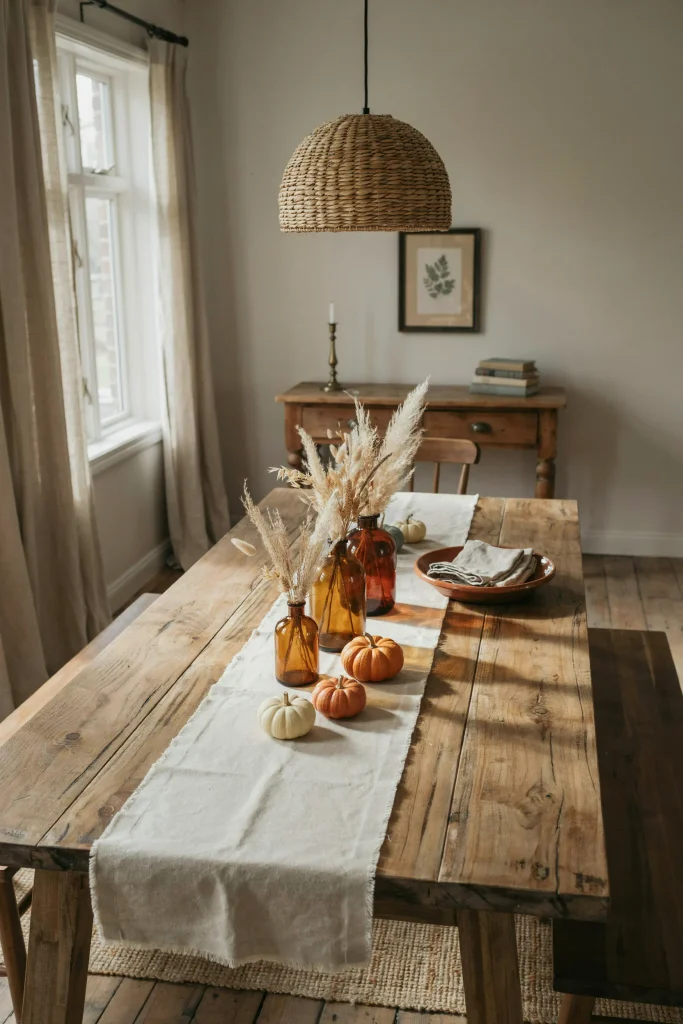
The dining table instantly becomes the seasonal focal point when natural textures and warm autumn tones take center stage. Arrange a loose linen runner down the middle, then layer amber glass vessels with dried wheat, eucalyptus, and a few small pumpkins. Keep the arrangement low enough for easy conversation.
In my experience, varied heights make a centerpiece feel collected rather than overly arranged. Place the tallest stems toward the center and shorter pieces near each end. A few matte ceramic accents can break up the shine of glass while reinforcing the earthy palette without making the table feel crowded.
ALSO READ : Halloween Wall Decor Ideas
Amber Glass Accents
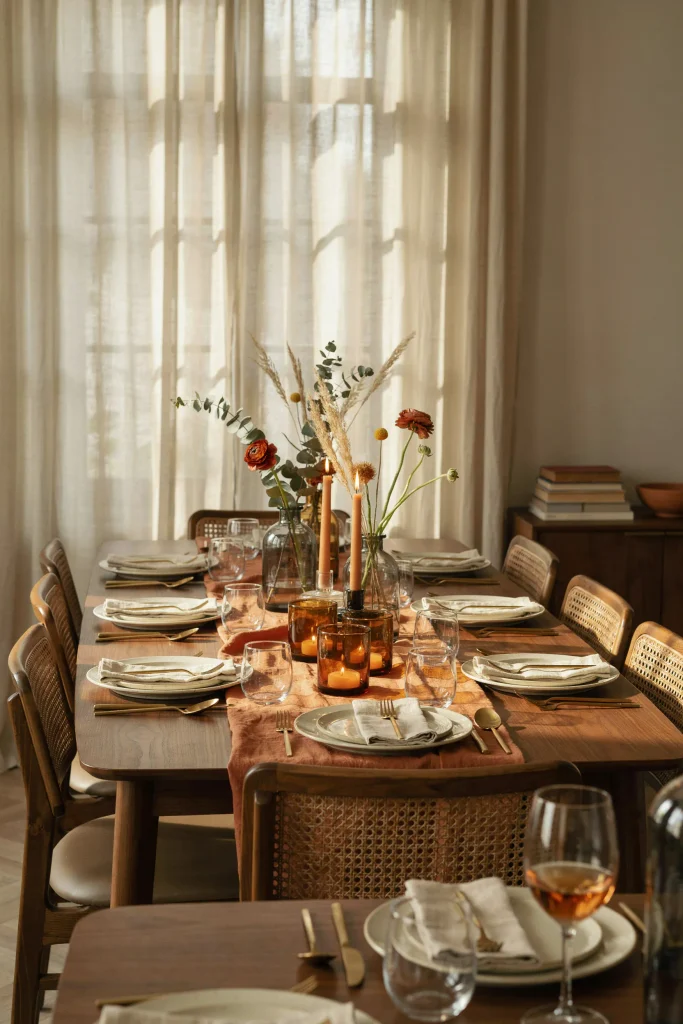
- Choose warm tones: Look for amber, honey, cognac, or caramel-colored glass.
- Mix shapes: Combine narrow bottles with rounded vases or simple candleholders.
- Add soft contrast: Pair glass with ivory ceramics and natural wood.
- Repeat the color: Echo amber in napkins, flowers, or a small decorative bowl.
- Keep the center open: Leave enough table space for serving dishes and place settings.
Amber glass brings seasonal color to the dining room without requiring a major decorating change. Group three or five pieces together for visual rhythm, then scatter one or two smaller accents elsewhere. The warm transparency works especially well with candlelight, making evening meals feel inviting while keeping the overall arrangement refined and uncluttered.
Pinterest Account : HavenAndHue2
Pumpkin Table Runner
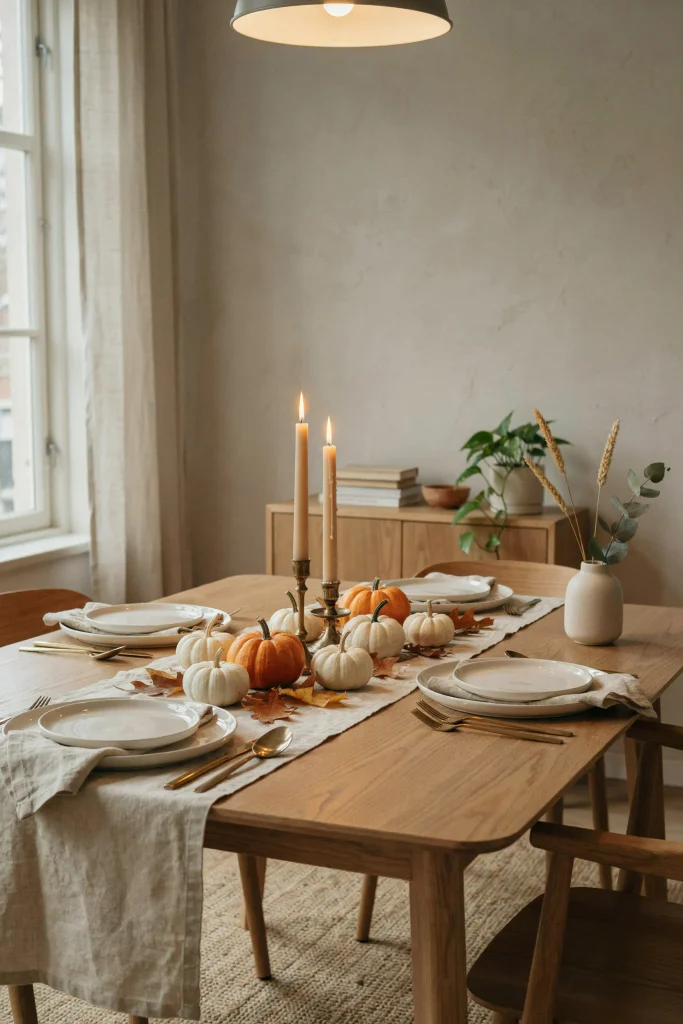
Quick Tip: Choose miniature pumpkins in three related shades rather than filling the entire table with orange. Leave visible sections of the runner between each group so the arrangement feels intentional and easy to maintain. Place candles slightly behind the pumpkins for a layered look.
A simple pumpkin runner gives the dining area an unmistakable autumn touch while keeping the setup practical. Alternate small pumpkins with dried foliage along the center, then add two or three low candleholders for height. I’ve noticed this approach works especially well on longer tables because it fills the space without creating a bulky centerpiece.
Dried Branch Arrangement
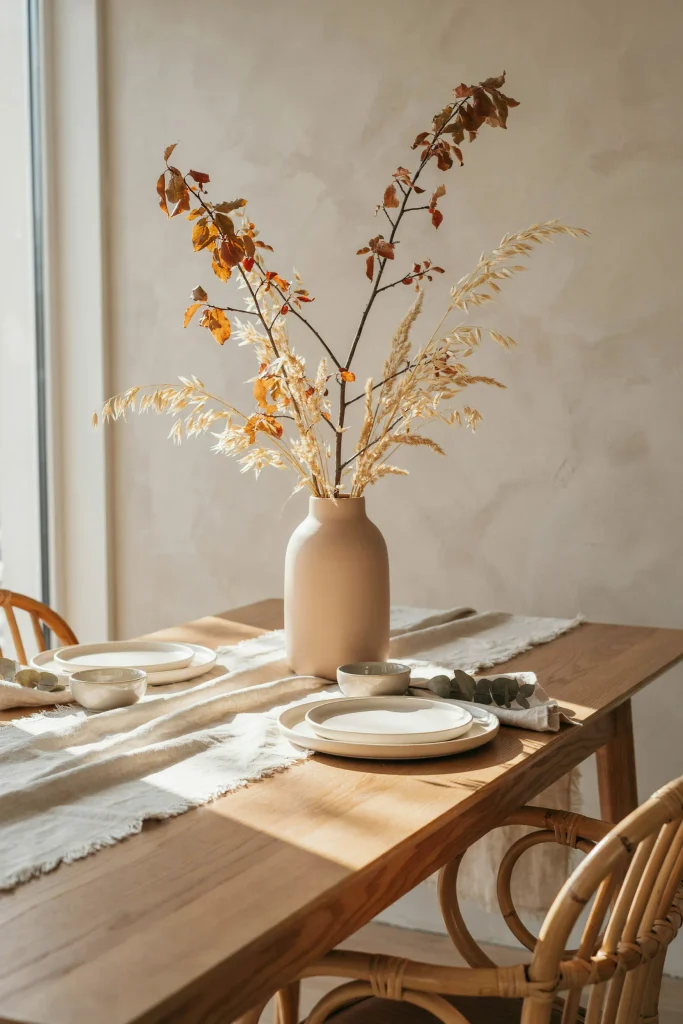
Bare branches and dried foliage bring vertical interest without taking up much table space. Choose a ceramic pitcher or narrow vase, then fill it with several branches in rust, ochre, beige, and muted brown. Keep the arrangement airy so the dining table still feels open and usable.
For a long table, position the vase slightly off-center and balance it with a few low accessories on the opposite side. I’ve noticed that asymmetry often feels more relaxed than a perfectly centered display. Preserved stems are also practical because they can stay in place throughout the season without watering or daily maintenance.
Layered Linen Table Setting
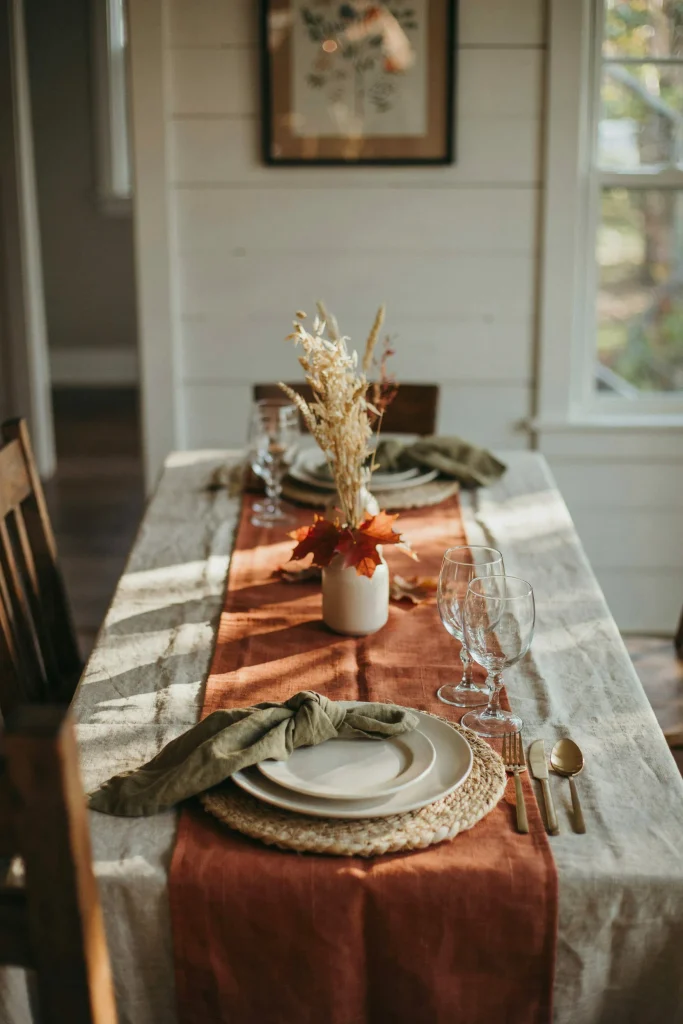
- Start with the base: Lay an oatmeal or cream linen cloth across the table to soften the furniture.
- Add a runner: Place a rust, olive, or muted plaid runner through the center.
- Build each setting: Layer a woven charger, neutral plate, folded napkin, and simple flatware.
- Repeat one accent: Add a small dried leaf, mini pumpkin, or autumn-colored napkin ring to each place.
Layered linens make a dining table feel warmer without requiring lots of seasonal accessories. Keep the larger pieces neutral, then let one autumn shade carry through the runner and napkins. This approach also makes future updates simple because you can swap just the top layer for Thanksgiving, winter, or everyday dining.
Vintage Brass Candleholders
| Feature | Option A | Option B |
| Finish | Aged brass | Polished brass |
| Candle color | Ivory | Warm white |
| Styling | Vintage and layered | Clean and refined |
| Best pairing | Walnut and linen | Light oak and ceramics |
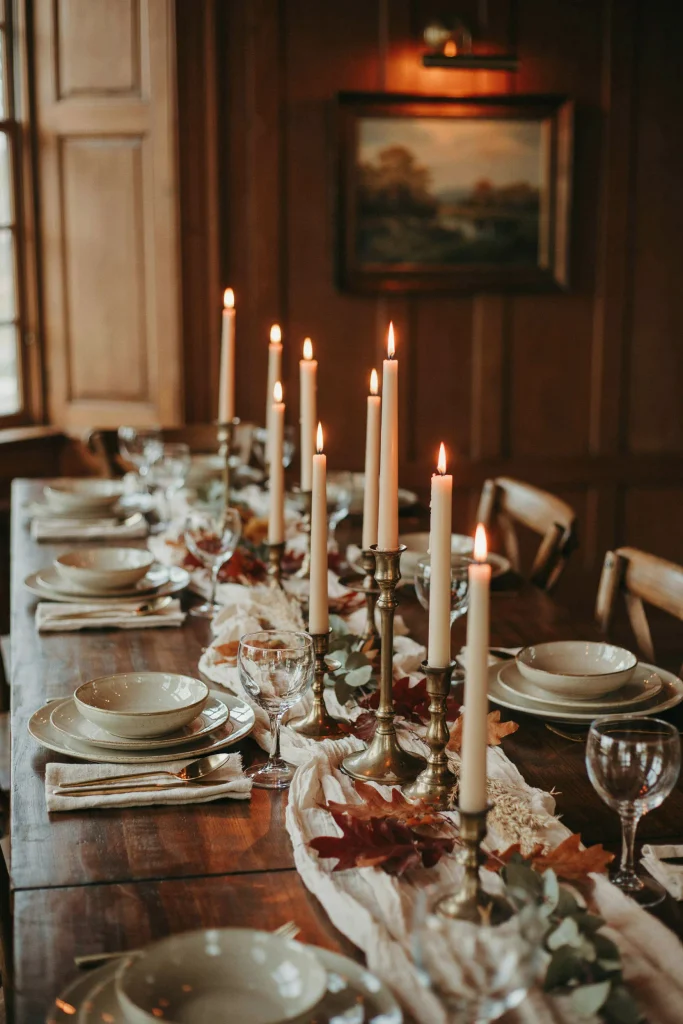
Brass candleholders add warmth while giving the table a timeless focal point. Mix two or three heights rather than lining up identical pieces. Keep candles slender and neutral so the metal remains the visual accent. For everyday meals, flameless taper candles can provide a similar glow without an open flame.
Plaid Dining Textiles
DO:
- Choose one dominant plaid pattern for the table.
- Pair rust, cream, olive, or brown with neutral dishes.
- Repeat one plaid color in nearby decor.
- Keep patterns balanced with solid linens.
DON’T:
- Mix several competing plaid patterns.
- Cover every surface with seasonal fabric.
- Choose overly bright colors that clash with the room.
- Let bulky textiles interfere with dining space.
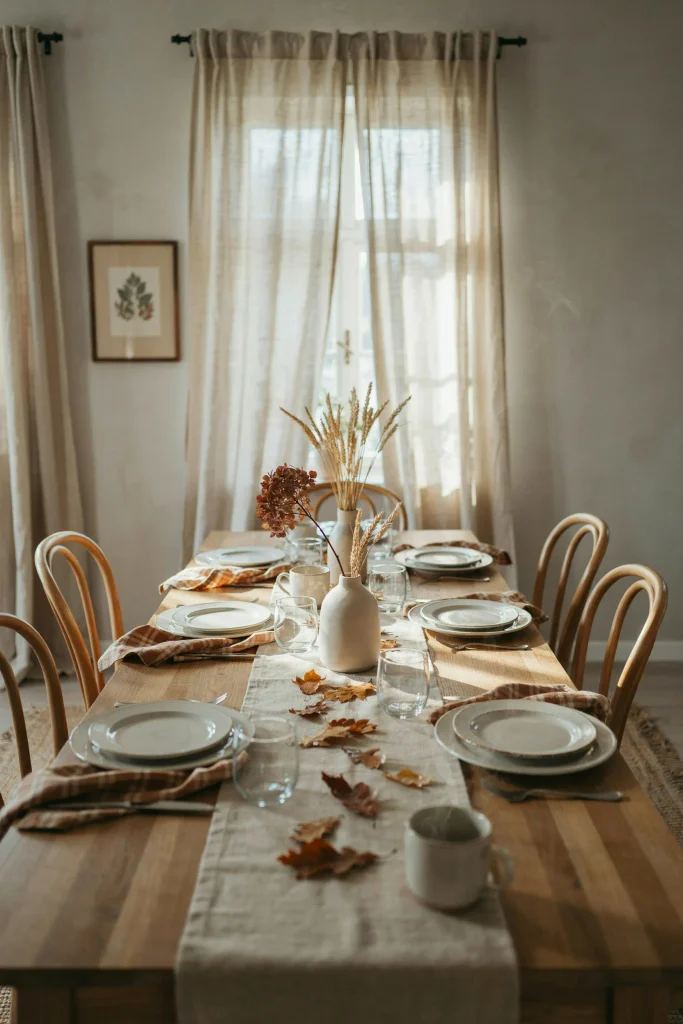
Plaid instantly introduces a fall-inspired layer without changing the furniture or wall decor. Fold patterned napkins beside neutral plates, or use a narrow runner for a lighter touch. I’ve seen this work particularly well in dining rooms with simple wood furniture because the textile adds visual interest while preserving a relaxed, lived-in character.
Woven Chair Details
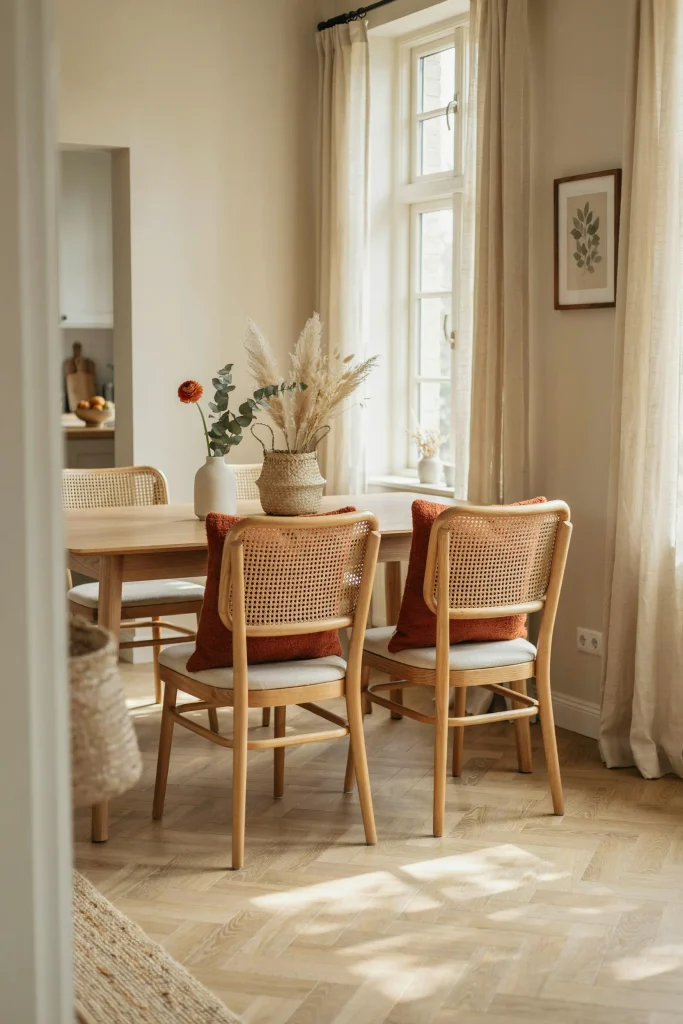
Cost: Low to moderate | Time: 20 to 30 minutes | Skill Level: Beginner
Best For: Wood, neutral, or minimalist dining rooms | Works In: Small and large dining areas
Natural woven textures soften a dining space while adding the earthy character associated with autumn. If your chairs already have woven backs, emphasize them with simple linen cushions in rust, beige, or olive. For upholstered chairs, a small textured lumbar pillow can provide a similar seasonal effect without replacing anything.
Autumn Gallery Wall
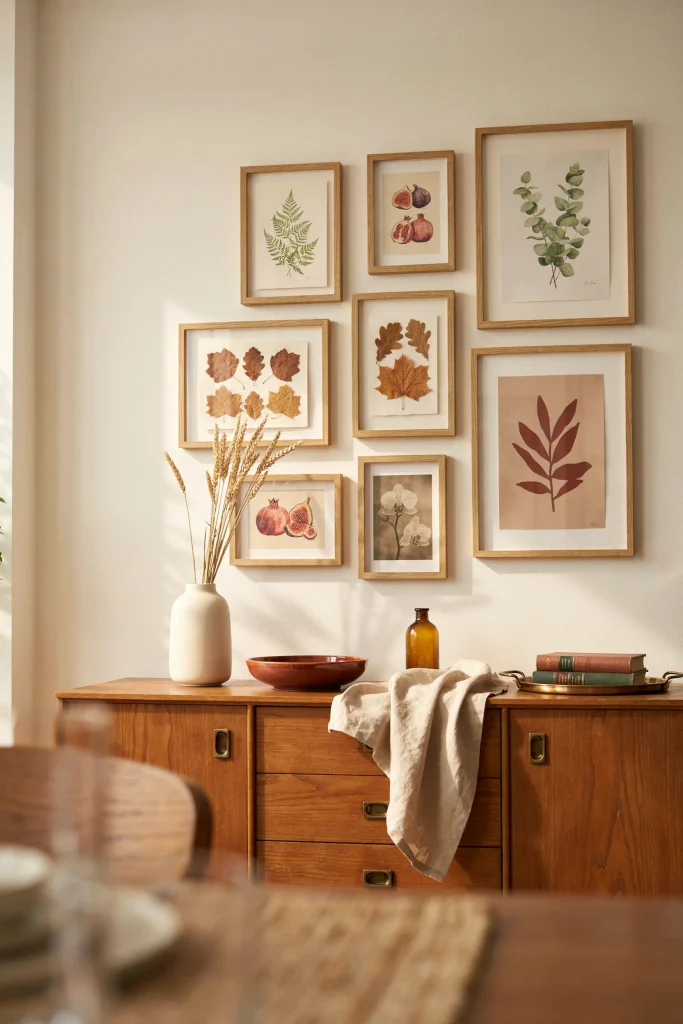
A blank dining room wall can become the seasonal backdrop with a carefully arranged collection of autumn-inspired artwork. Start with botanical prints, vintage harvest illustrations, or pressed-leaf designs in coordinated frames. Keep the palette to two or three earthy shades so the wall feels connected to the table decor.
For a cohesive arrangement, place the largest print slightly off-center and build outward with smaller frames. Leave consistent spacing between pieces rather than filling every inch. In my experience, mixing old-fashioned artwork with simple modern frames keeps seasonal wall decor from feeling overly themed, especially in homes with contemporary furniture.
Layered Harvest Vignettes
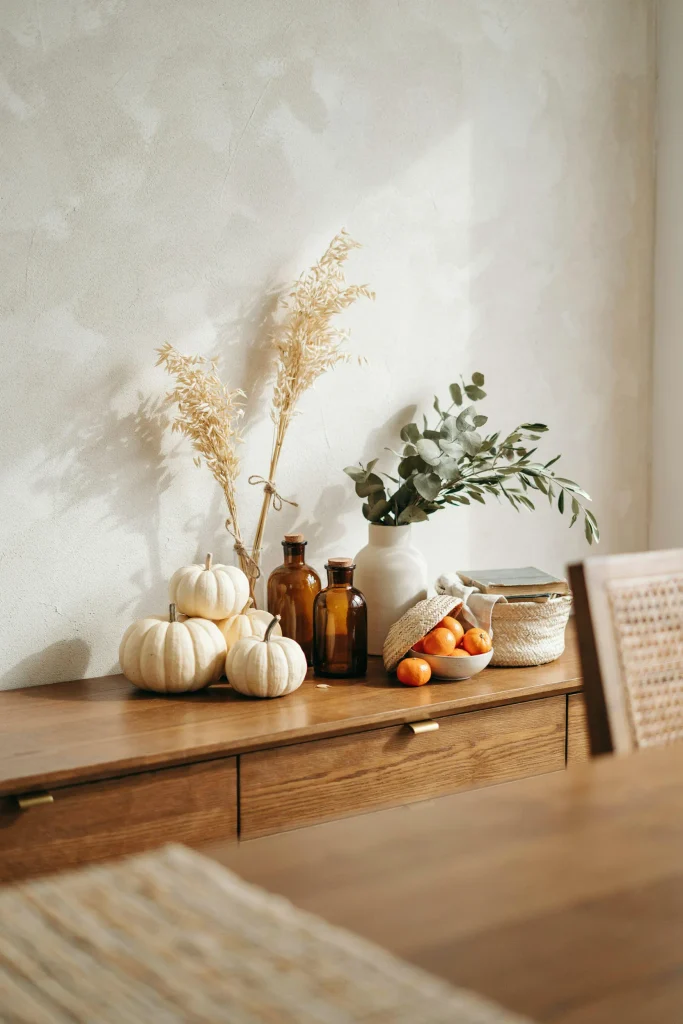
Quick Tip: Build the vignette from back to front. Place the tallest branch or artwork behind medium-height vessels, then finish with low pumpkins or a small bowl. Keep a little empty surface visible so the arrangement feels intentional rather than crowded.
A harvest vignette works beautifully on a buffet, sideboard, or console because it adds seasonal character without taking up dining space. Combine three textures, such as ceramic, woven fiber, and dried foliage, then repeat one color from your table setting. This creates a visual connection between separate areas of the room.
Natural Wood Place Settings
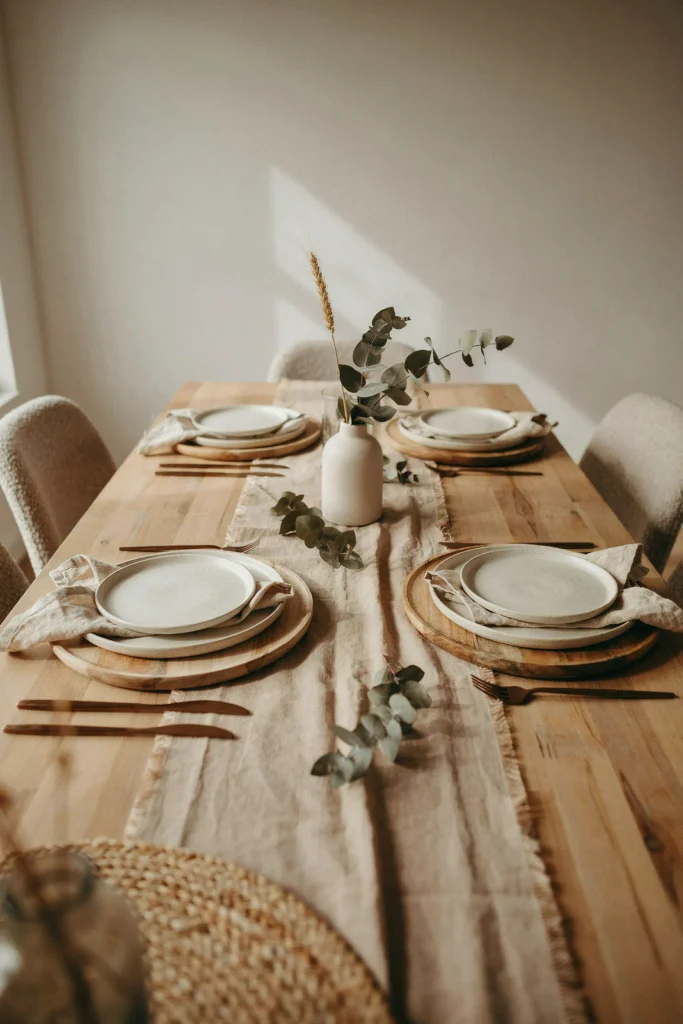
Natural materials make a table setting feel grounded and welcoming, especially during fall. Start with a wooden charger beneath each plate, then layer cream stoneware and a loosely folded linen napkin. Add a tiny dried sprig beside each setting for a subtle seasonal detail that does not interfere with serving space.
Choose chargers with visible grain rather than highly polished finishes if you want a relaxed look. Keep dinnerware simple so the wood remains noticeable. A repeated combination of wood, linen, and greenery gives the table enough texture to feel decorated while still being practical for everyday family meals and casual gatherings.
Soft Candlelight Glow
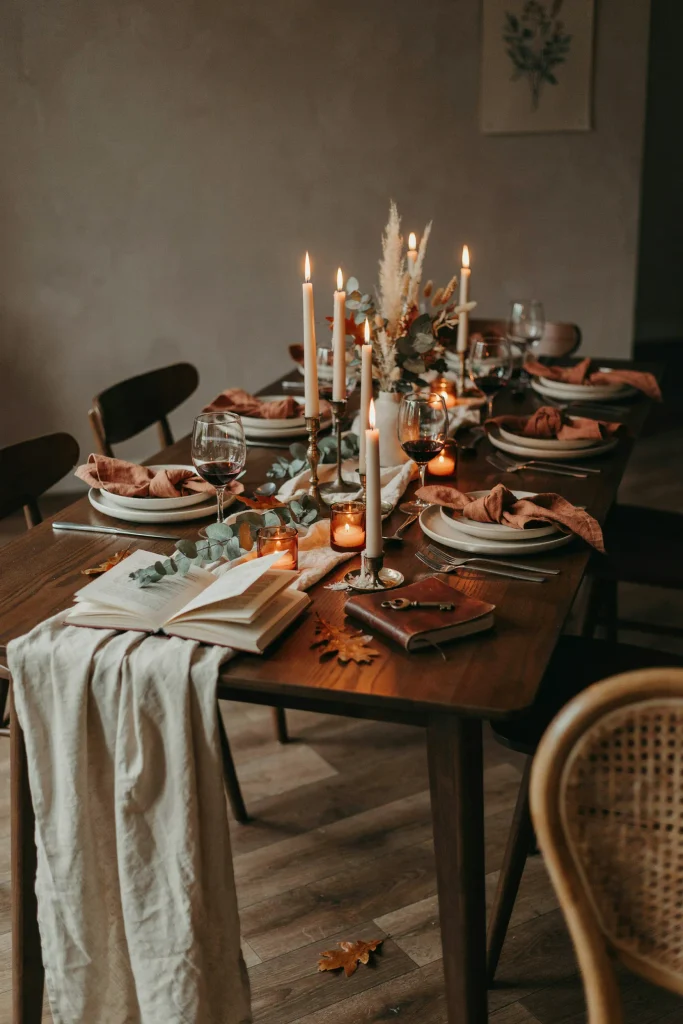
Cost: Low | Time: 15 minutes | Skill Level: Beginner
Best For: Evening dinners and entertaining | Result: Warm, intimate atmosphere
Few seasonal updates create as much evening impact as carefully placed candlelight. Use several small votives along the center of the table, then add two taller tapers near the ends. Choose ivory or cream candles to keep the arrangement sophisticated and let amber holders provide the autumn color.
Keep every flame away from dried foliage, napkins, and other flammable materials. For homes with children or pets, battery-operated candles offer a safer alternative. The goal is gentle illumination, not a brightly lit centerpiece, so switch off harsh overhead lighting when dining and let the table provide the main glow.
Earthy Ceramic Collection
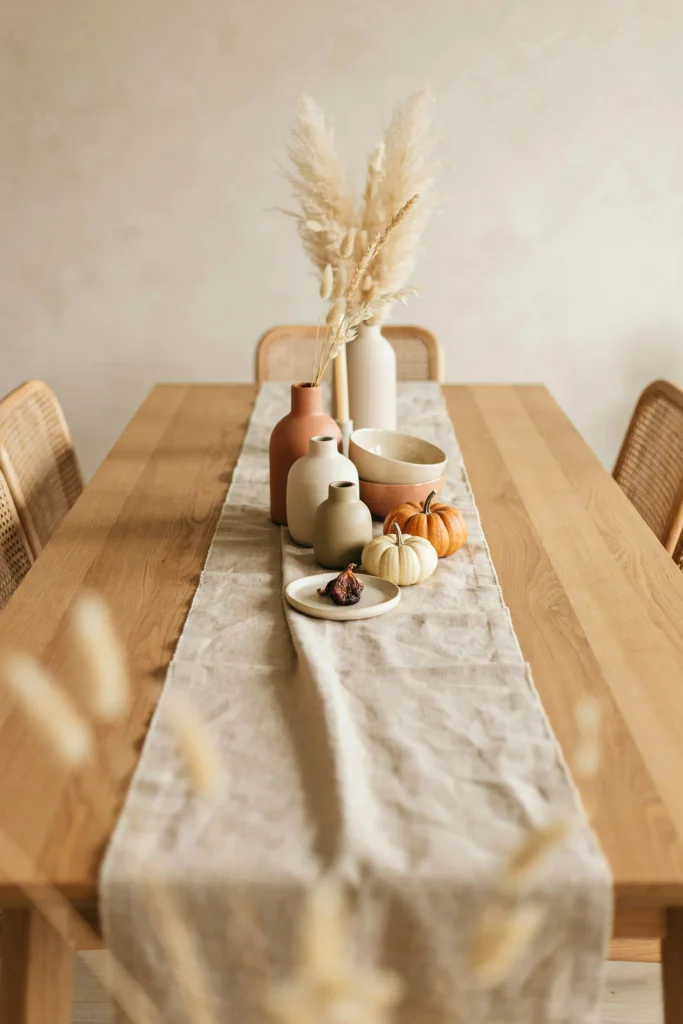
- Group by color: Keep ceramics within a warm earthy palette for a cohesive display.
- Vary the shapes: Combine rounded bowls, narrow vases, and small sculptural pieces.
- Mix heights: Place taller vessels behind shorter bowls and pumpkins.
- Leave breathing room: Avoid filling every inch of the table or sideboard.
- Repeat materials: Echo ceramic pieces with wood, linen, or woven accents nearby.
An earthy ceramic collection gives fall dining decor a handcrafted feel without relying on traditional seasonal symbols. Arrange several pieces on a sideboard or use a small group as a centerpiece. Matte finishes are especially useful because they absorb light softly and complement natural wood rather than competing with it.
Rust Toned Napkins
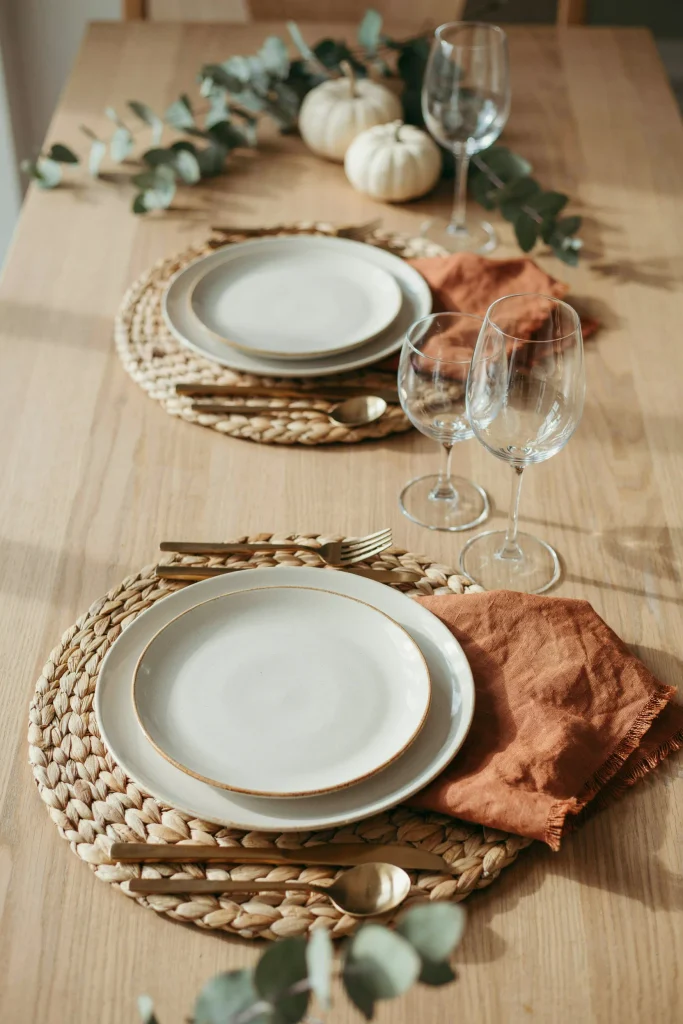
Quick Tip: Let rust be the strongest color at the place settings, then repeat it once elsewhere in the room. A small ceramic vase, artwork detail, or cushion is enough to connect the table to the surrounding decor without making the palette feel overly orange.
Rust napkins offer an easy seasonal update for anyone who prefers subtle decorating. Pair them with cream plates and natural chargers to create contrast without making the table feel busy. I’ve noticed that linen works particularly well because its relaxed texture keeps the rich rust shade from looking too formal or heavy.
Harvest Buffet Display
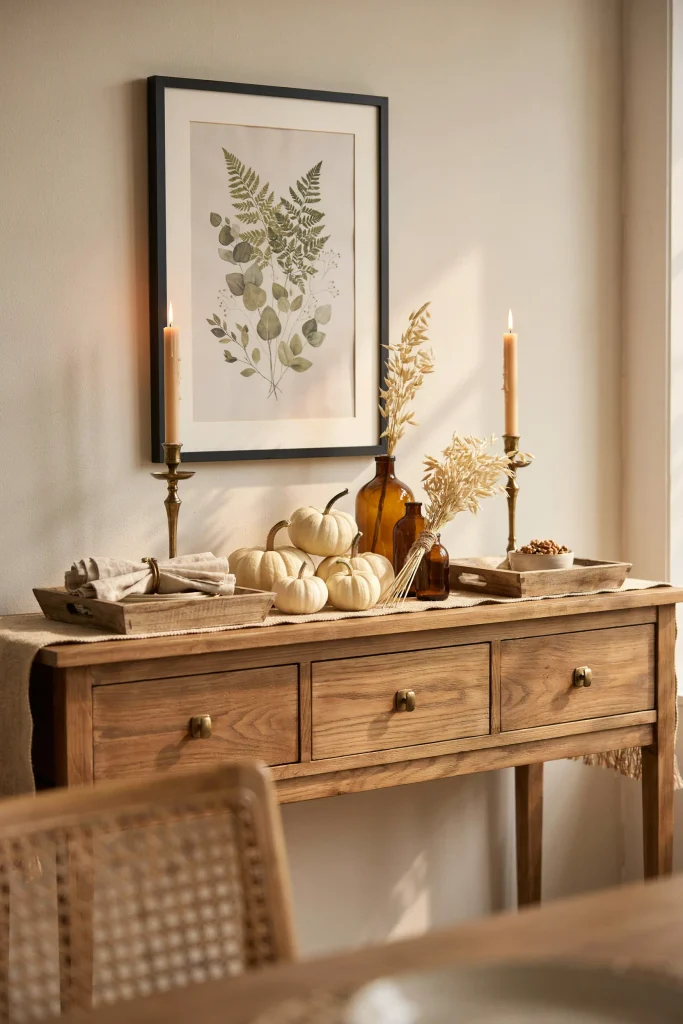
BEFORE: A bare buffet can make the dining room feel unfinished, especially when the table already carries seasonal details. Scattered accessories may also look disconnected when there is no clear focal point.
AFTER: A simple harvest display creates a defined visual anchor. A framed print provides height, while a tray, pumpkins, foliage, and candleholders create layers across the surface.
Keep the arrangement practical by grouping smaller objects inside one tray rather than spreading them across the entire buffet. Use the tallest piece toward the back and gradually lower the accessories toward the front. This makes the display easy to dust, rearrange, and clear when you need extra serving space.
Autumn Floral Centerpiece
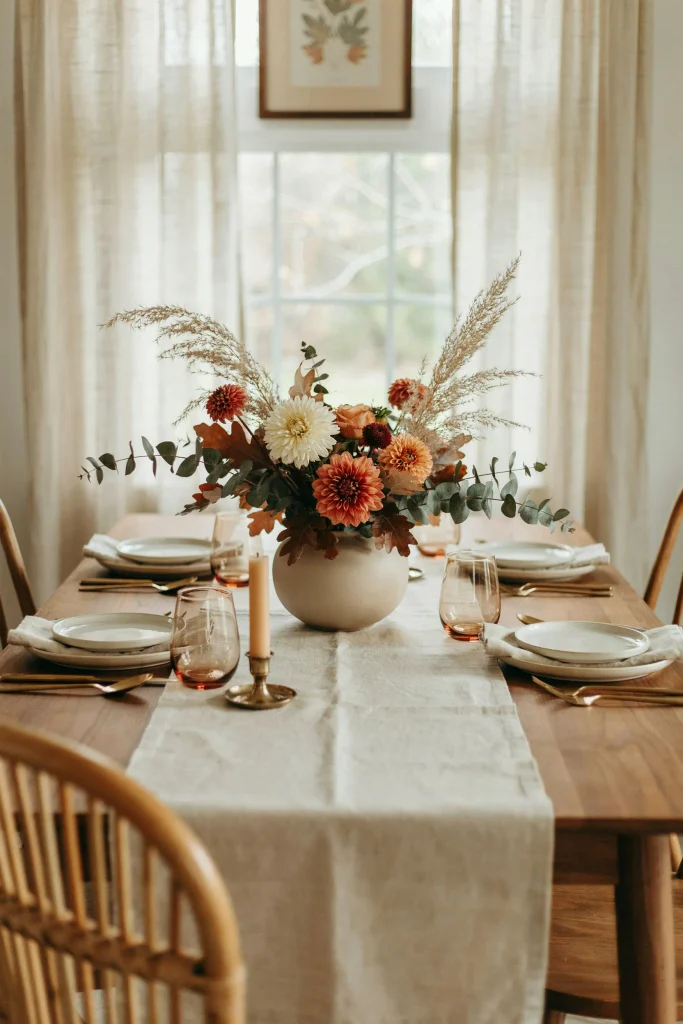
- Choose seasonal blooms: Combine cream, rust, burgundy, and muted peach flowers.
- Keep it low: Trim stems so guests can see across the table.
- Add texture: Mix fresh flowers with eucalyptus, grasses, or dried stems.
- Use one vessel: A ceramic pitcher or simple vase keeps the arrangement cohesive.
- Refresh carefully: Replace wilted stems while keeping long-lasting foliage in place.
Fresh flowers bring color and softness to fall dining decor without making the room feel heavily themed. Arrange the blooms loosely rather than creating a perfectly rounded bouquet. For a longer table, two small arrangements can work better than one oversized vase because they distribute color while leaving enough room for serving dishes.
Seasonal Place Cards
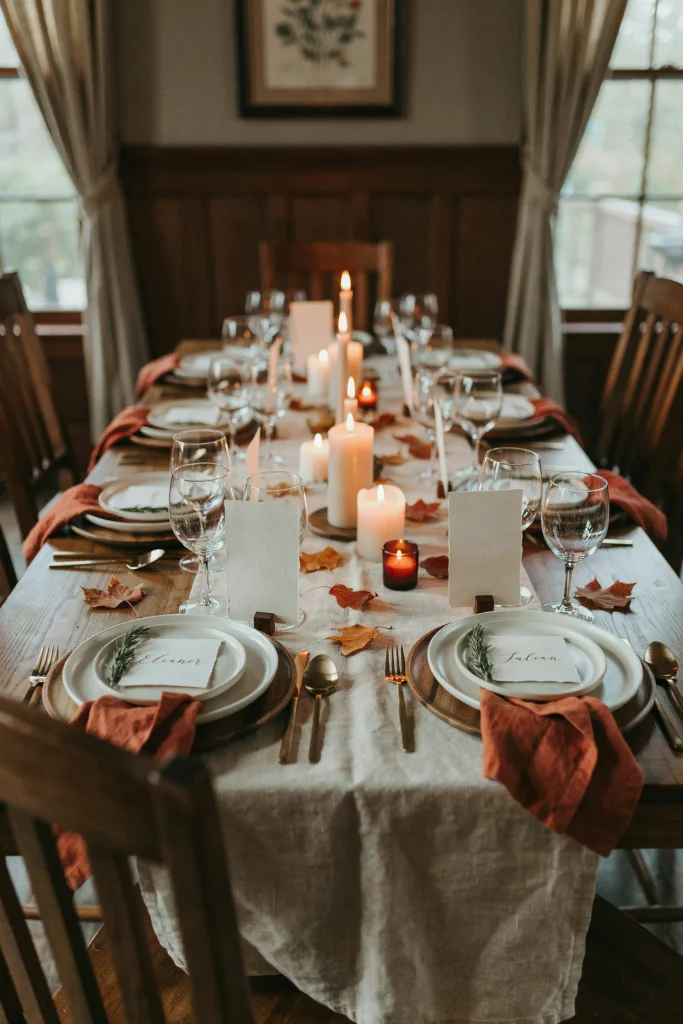
Quick Tip: Write each guest’s name on thick cream cardstock and attach a tiny dried leaf with twine. For a cleaner look, use simple black lettering and skip decorative borders. Place cards can double as keepsakes when guests can take them home after dinner.
Personal place cards make an autumn table feel thoughtful without requiring expensive decorations. Set each card directly on the napkin or lean it against the plate. Natural cardstock, twine, dried leaves, and small wooden accents work together especially well with farmhouse and organic dining styles.
This detail is also useful for larger gatherings because it helps guests find their seats quickly. Keep the lettering easy to read and avoid oversized decorations that compete with the dinnerware. A small seasonal accent is enough to make each setting feel considered while keeping the overall table relaxed.
Textured Table Runner
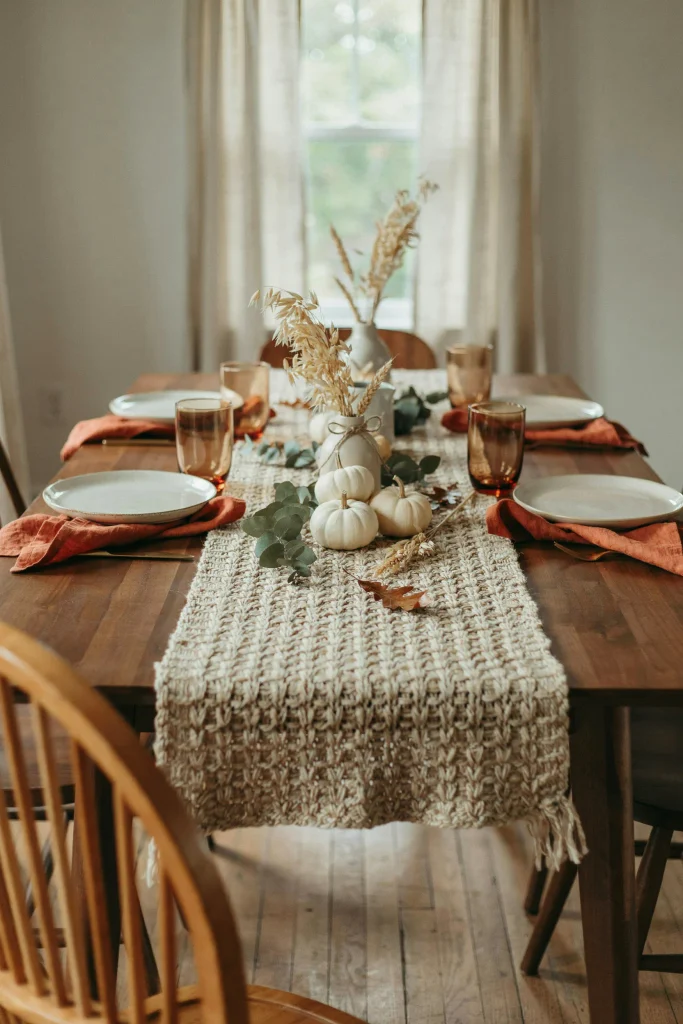
BEFORE: A dining table with a plain surface can feel flat even when the surrounding room has attractive furniture and accessories. Seasonal pieces placed directly on the tabletop may also look disconnected.
AFTER: A textured runner creates a visual foundation for the entire arrangement. Layering ceramics, foliage, candles, or pumpkins over it makes each element feel connected.
Choose a runner that leaves several inches of tabletop visible at both ends. This keeps the furniture visible while giving the centerpiece a defined zone. Chunky cotton, woven jute, or soft linen can add enough texture to support autumn styling without becoming difficult to clean after everyday meals.
Olive Green Accents
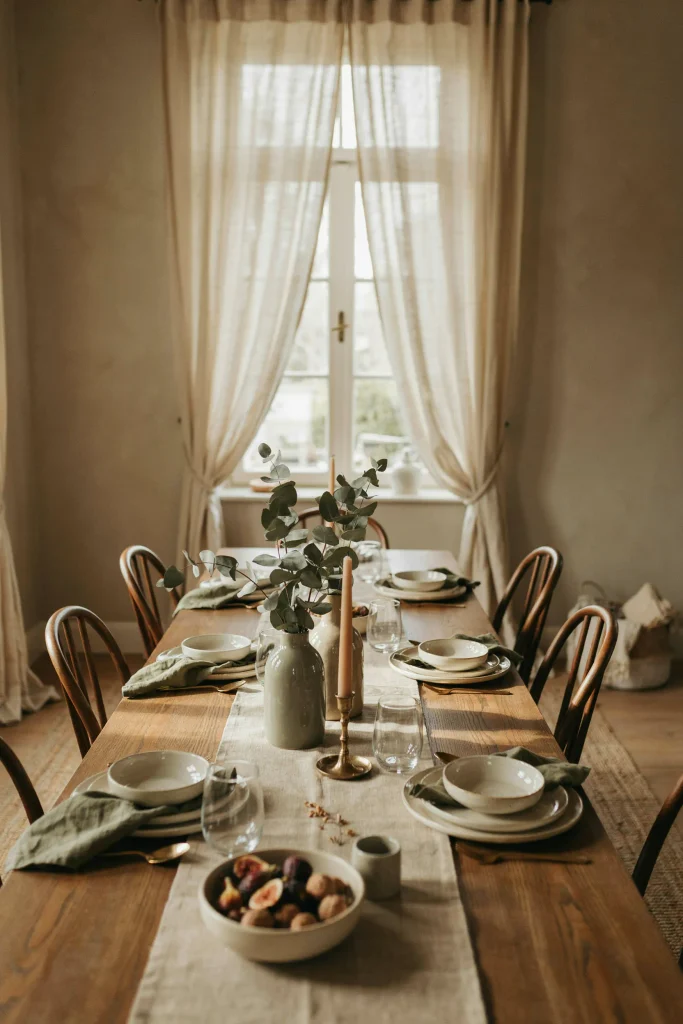
- Pick a base shade: Start with muted olive rather than a bright green for a softer autumn palette.
- Repeat it twice: Use olive in napkins and one small accessory, such as a vase or bowl.
- Balance with neutrals: Pair green with cream, beige, walnut, or natural wood.
- Add organic texture: Include eucalyptus, dried grasses, or woven accessories for depth.
Olive green brings a fresh counterpoint to traditional rust and orange fall colors. It works particularly well in dining rooms that already feature plants, wood furniture, or neutral walls. Keep the green muted and let natural materials carry the rest of the palette. The result feels seasonal without looking overly themed.
Cozy Layered Lighting
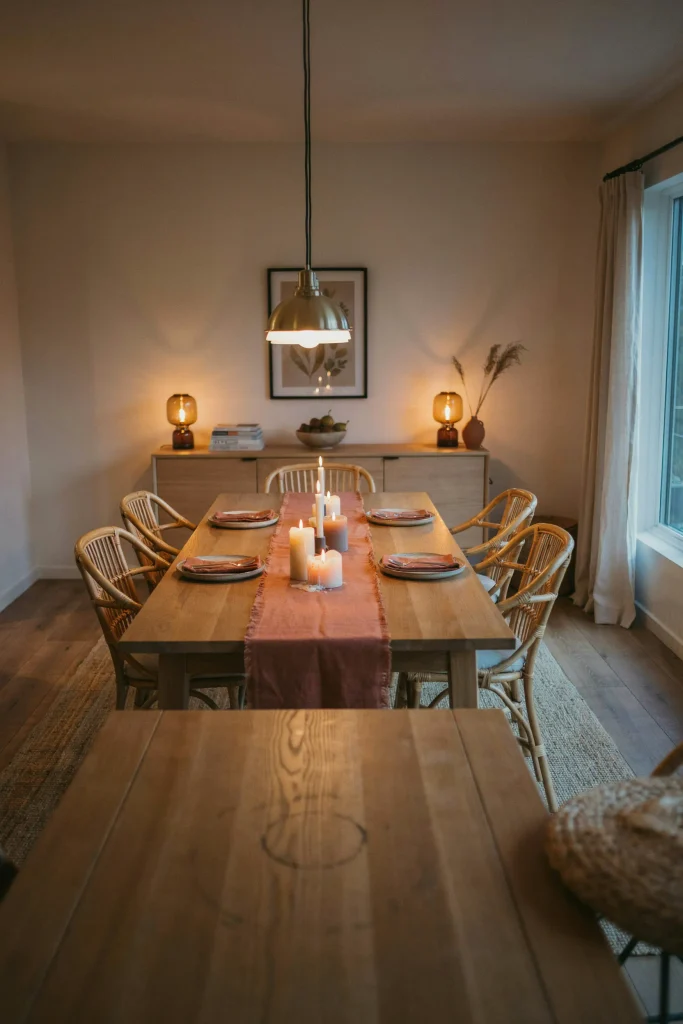
Cost: Low to moderate | Time: 30 minutes | Skill Level: Beginner
Best For: Evening dining | Works In: Large or compact rooms
Result: Softer, warmer illumination
Layered lighting can change the entire mood of a dining room after sunset. Keep the main pendant or chandelier at a comfortable brightness, then add a small lamp on a sideboard and a few candles near the table. Warm bulbs around 2700K to 3000K generally create a softer residential glow.
Avoid placing several equally bright light sources around the room. Instead, create different levels of illumination so the dining table remains the natural focal point. A dimmable overhead fixture is especially useful because you can brighten the room for serving and lower the intensity once everyone sits down.
Wooden Serving Boards
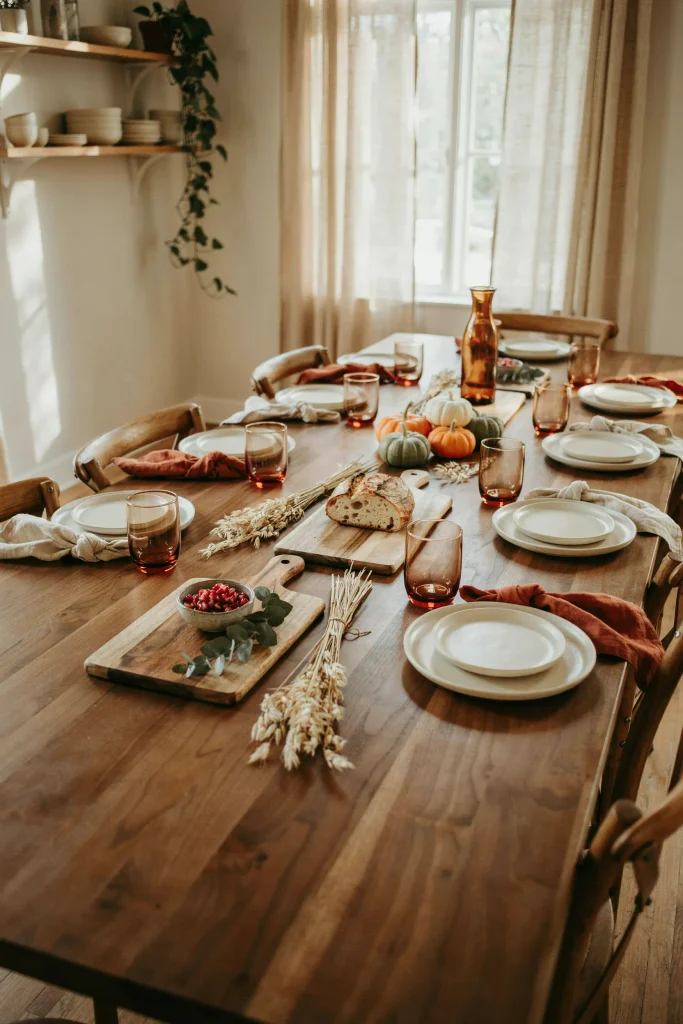
DO:
- Choose boards with visible natural wood grain.
- Lean one large board against a sideboard for vertical interest.
- Use smaller boards as practical serving pieces.
- Pair wood with cream ceramics and linen textiles.
DON’T:
- Overload the table with boards that are not being used.
- Mix too many competing wood finishes.
- Place food-safe boards directly beside open flames.
- Hide the most attractive grain beneath excessive accessories.
Wooden serving boards bring both function and seasonal warmth to the dining area. Display one or two against a backsplash or wall, then bring them to the table when serving bread, fruit, or appetizers. I’ve found that practical decor tends to stay useful longer because it earns its place beyond the season.
CONCLUSION
Fall decorating does not require a complete dining room makeover. With the right colors, textures, lighting, and natural accents, even a simple table can feel warm and inviting. These Fall Dining Room Decorations offer easy inspiration for refreshing your space while keeping it practical for everyday life.
I’ve seen how small changes like a new runner, candleholders, or seasonal centerpiece can completely shift the atmosphere. Save this post on Pinterest so you can return to your favorite ideas, try one or two this season, and share it with someone who loves cozy home decor. Start small, have fun, and let your dining room reflect the warmth of fall.