23 Clever Storage Ideas for Tiny Apartments That Work
INTRODUCTION
Small apartments can feel cluttered before you even realize how much you’ve collected. The secret is not having more space, but making every inch work harder.
These Clever Storage Ideas for Tiny Apartments show practical ways to organize bedrooms, kitchens, bathrooms, entryways, and living areas without making your home feel crowded. From hidden compartments and vertical shelving to furniture that serves two purposes, each idea focuses on gaining useful storage while keeping your space comfortable and attractive.
In my experience, the biggest improvements often come from overlooked areas such as the space beneath a bed, above a door, or beside a refrigerator. I’ve noticed that assigning a clear purpose to these forgotten spots makes daily tidying much easier. Whether you’re furnishing a studio or simply trying to control apartment clutter, these ideas offer realistic inspiration you can adapt to your layout, budget, and routine.
Under Bed Drawers
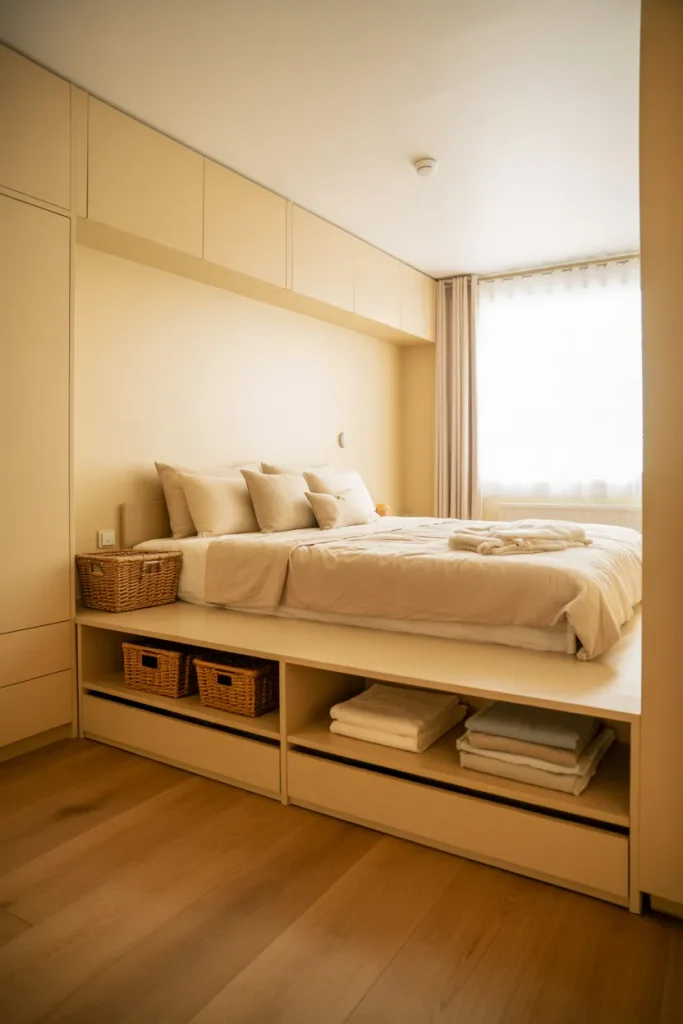
Unused space beneath the bed can handle far more than spare blankets. Choose a platform bed with deep drawers or slide low-profile storage boxes underneath. Divide each container by category, such as bedding, shoes, seasonal clothing, or travel items, so everything stays easy to find.
In my experience, under-bed storage works best when containers have lids and smooth wheels. Clear labels prevent the common problem of opening several boxes just to find one item. Keep frequently used belongings near the foot of the bed and reserve harder-to-reach areas for seasonal pieces.
ALSO READ : Fall Kitchen Decorating Ideas
Floating Wall Shelves
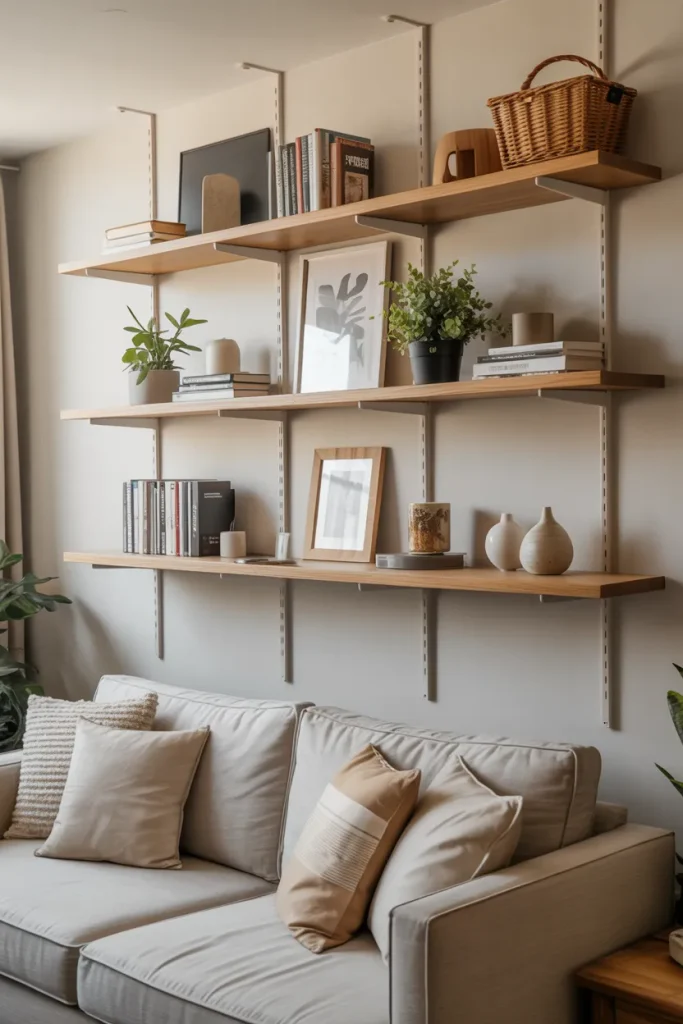
- Mount shelves above sofas, desks, or narrow consoles where floor space is limited.
- Keep heavier books on lower shelves and lighter decor higher up.
- Use matching baskets to hide chargers, papers, and small household items.
- Leave some shelf space open so the wall does not feel crowded.
- Install shelves at staggered heights for useful vertical storage and visual interest.
Wall-mounted shelving turns empty wall area into practical storage without taking another inch from the floor. I’ve noticed that three carefully spaced shelves often provide enough room for everyday items while keeping a small room visually light. Choose shallow shelves for narrow apartments, especially in walkways where deep units could become obstacles.
Pinterest Account : HavenAndHue2
Ottoman Storage Bench
Quick Tip:
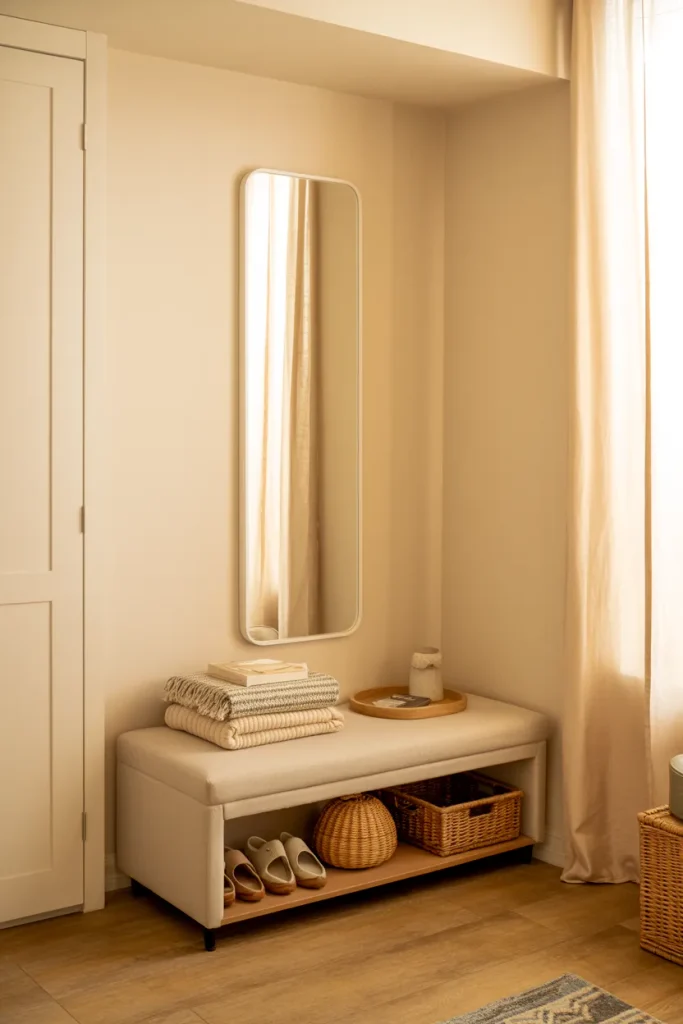
Choose an ottoman with a hinged lid and a firm, flat top so it can serve as both seating and storage. Keep bulky items inside, such as extra blankets, handbags, or winter accessories, instead of filling it with tiny objects.
A storage ottoman earns its footprint by performing two jobs at once. Place one at the foot of a bed, beside a sofa, or near the entryway for quick access. In a tiny apartment, concealed storage like this keeps visible surfaces calmer while giving everyday clutter a convenient home.
Doorway Shoe Cabinet
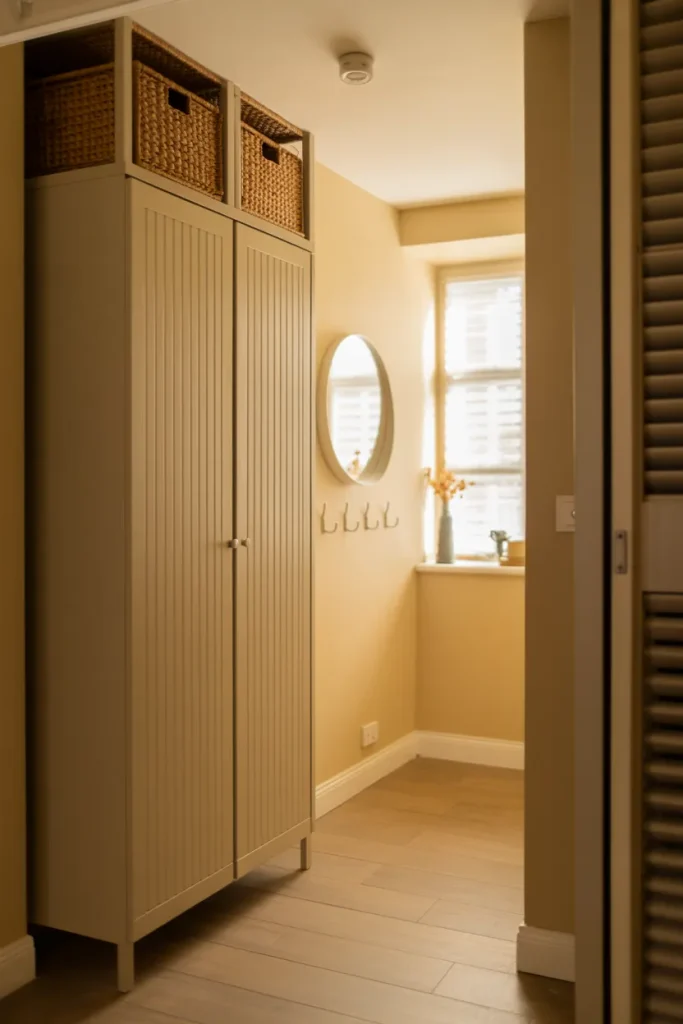
BEFORE: Shoes pile beside the doorway, making the narrow entrance feel crowded. Bags and small accessories often end up on nearby chairs or counters because there is no dedicated drop zone.
AFTER: A shallow shoe cabinet keeps footwear behind closed doors while its narrow profile preserves walking space. Add a small tray or basket on top for keys and sunglasses, giving everyday essentials one predictable home.
For compact entrances, measure the available wall depth before choosing furniture. A tall, shallow cabinet usually stores more footwear than a wide bench while taking less floor area. Keep frequently worn shoes on the lowest shelves and reserve higher compartments for occasional pairs.
Tall Narrow Bookcase
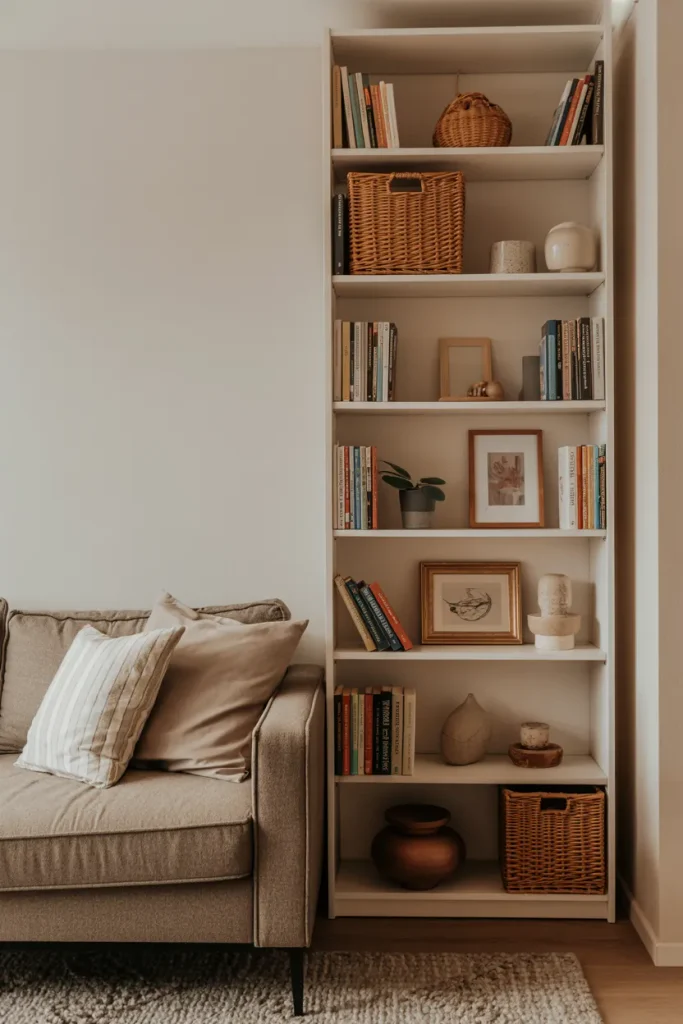
- Measure the wall: Choose a bookcase that uses available height without interfering with doors, windows, or switches.
- Place heavy items low: Store books and heavier baskets on the bottom shelves for stability.
- Group belongings: Dedicate individual shelves to books, paperwork, decor, or household supplies.
- Use the top: Keep seasonal or rarely used items in attractive lidded baskets above eye level.
A tall storage unit uses vertical capacity instead of spreading furniture across the floor. Keep the shelves visually balanced by mixing closed baskets with open sections. I’ve noticed that narrow bookcases work especially well beside desks, sofas, and unused corners where a wider cabinet would restrict movement.
Pull-Out Kitchen Cart
| Comparison Point | Option A: Counter Storage | Option B: Pull-Out Cart |
| Floor Space | Uses counter area | Uses a narrow gap |
| Access | Items stay visible | Items slide out when needed |
| Best For | Daily appliances | Spices, cans, oils, supplies |
| Visual Clutter | Can increase quickly | Mostly hidden when closed |
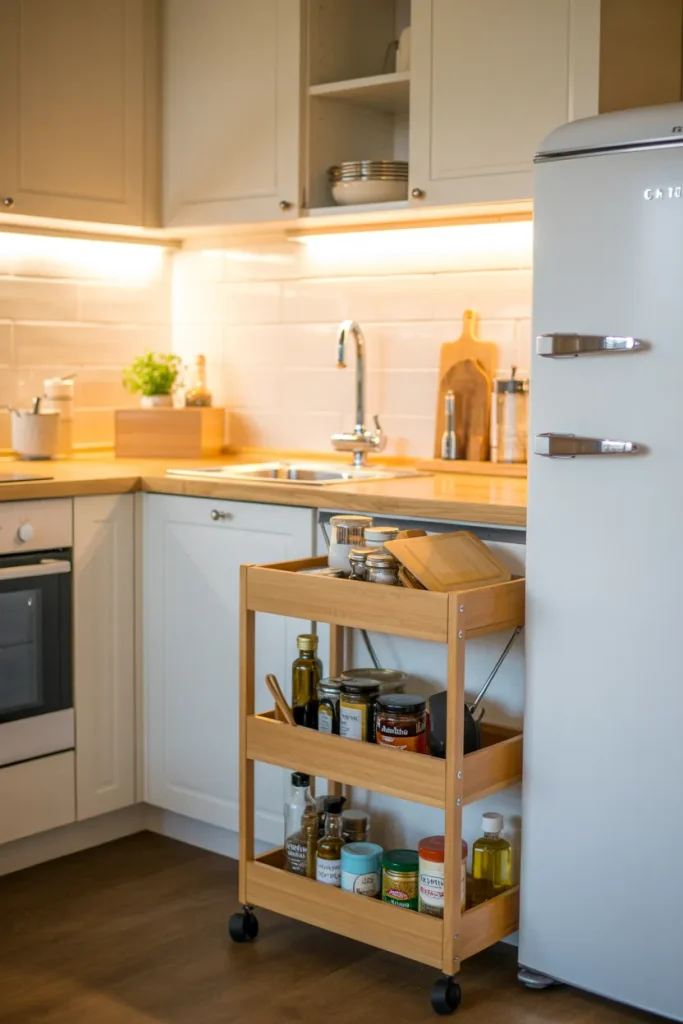
A narrow gap beside a refrigerator or cabinet can become useful pantry space with a rolling cart. Measure the opening carefully, including handles and trim. Choose smooth casters and enough depth for stable containers. This setup is especially helpful for renters who cannot add permanent cabinetry.
Over-Door Organizer
DO:
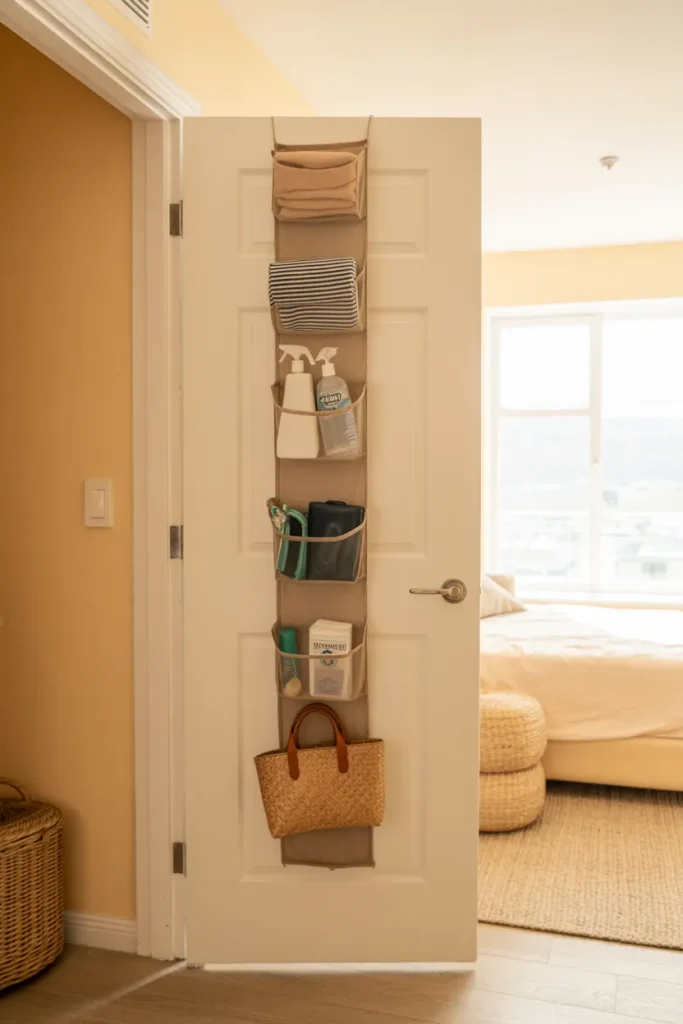
- Choose an organizer with reinforced hooks that fit securely over the door.
- Assign each pocket a specific category to prevent small items from mixing.
- Use clear pockets for accessories you reach for often.
- Keep heavier belongings in lower sections for better balance.
DON’T:
- Don’t overload pockets with bulky objects that strain the door.
- Don’t block the door from closing completely.
- Don’t store sharp items where they could damage fabric pockets.
- Don’t let rarely used belongings take up your easiest-to-reach spaces.
Over-door organizers turn overlooked vertical space into accessible storage for small belongings. They work particularly well in bedrooms, bathrooms, and utility areas where cabinets may be limited. Keep everyday items at eye level and place less frequently used supplies toward the bottom. A simple category system makes the organizer much easier to maintain.
Pegboard Storage Wall
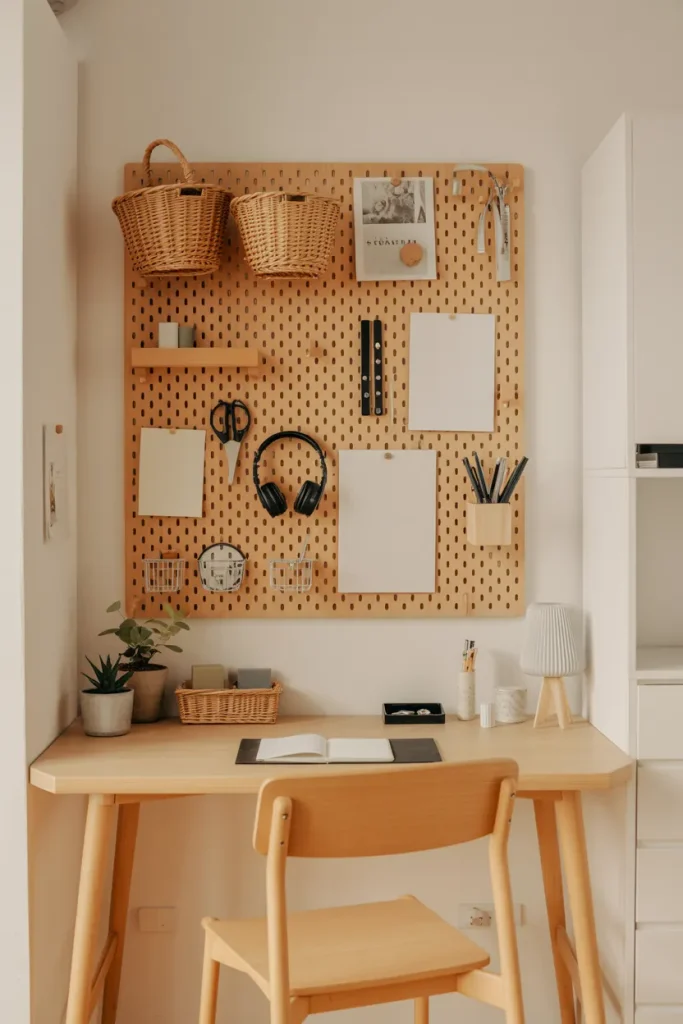
Cost: Low to moderate | Time: 1 to 2 hours | Skill Level: Beginner to intermediate
Best For: Home offices, craft corners, kitchens | Works In: Small unused wall sections
Result: Flexible vertical storage | Difficulty: Easy with basic mounting tools
A pegboard gives you adjustable storage without committing to fixed shelf positions. Move hooks, baskets, and holders whenever your needs change. For renters, use an appropriate mounting method approved for the wall surface. Keep the most frequently used tools within arm’s reach and group everything else by task.
Mirror With Cabinet
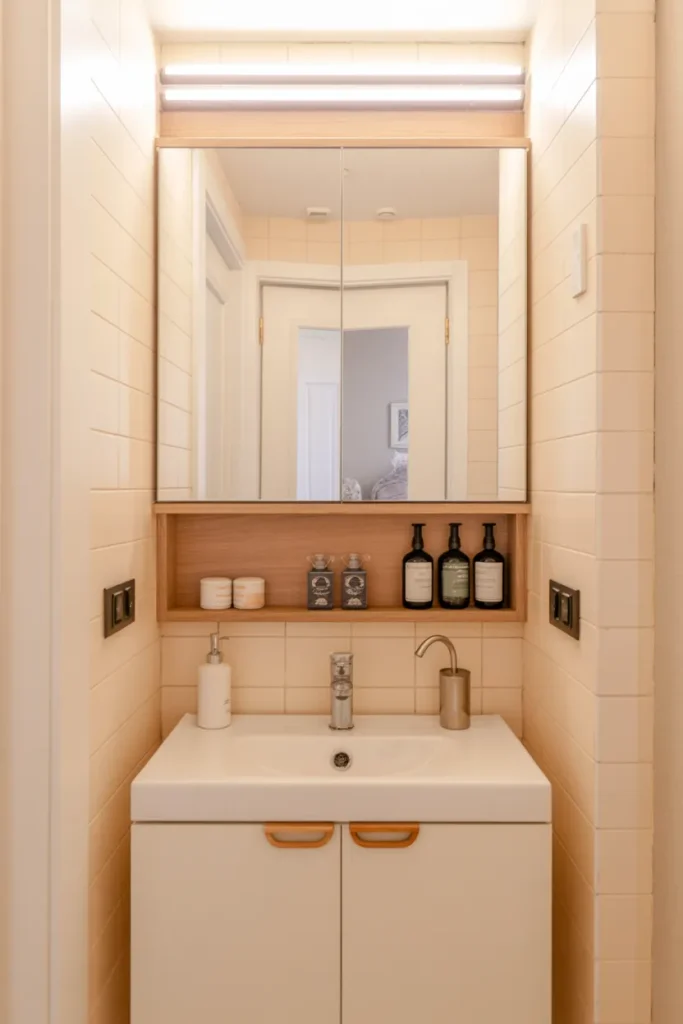
Two functions can share one footprint when a mirror also provides hidden cabinet storage. Replace a basic wall mirror with a recessed or surface-mounted medicine cabinet for toiletries, skincare, and grooming supplies. I’ve seen this approach work especially well in tiny bathrooms because it adds capacity without making the room feel filled with furniture.
Choose adjustable shelves so tall bottles and smaller containers can share the cabinet efficiently. Keep daily products at eye level and backup supplies higher up. A mirrored front also reflects light around a compact bathroom, helping the room feel brighter while concealing the visual clutter that usually collects around a small sink.
Sofa Side Storage
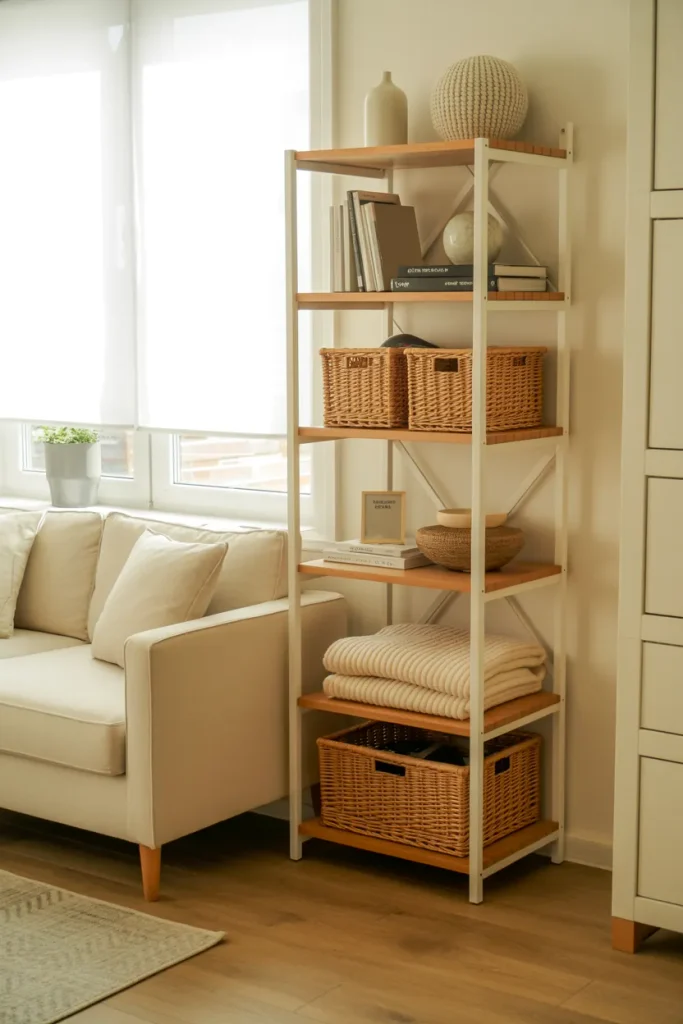
- Choose a narrow cabinet or shelving tower that fits beside the sofa without blocking pathways.
- Store blankets and pillows in a lidded basket on the lowest level.
- Keep books, remotes, and chargers in small containers within easy reach.
- Use the upper surface for a lamp, small plant, or decorative tray.
A few inches beside a sofa can become surprisingly useful storage. Measure the gap before buying anything, especially around armrests and nearby doors. For the best result, reserve this spot for items used in the living room so you do not create another catch-all area that becomes difficult to organize.
Hidden Bench Compartments
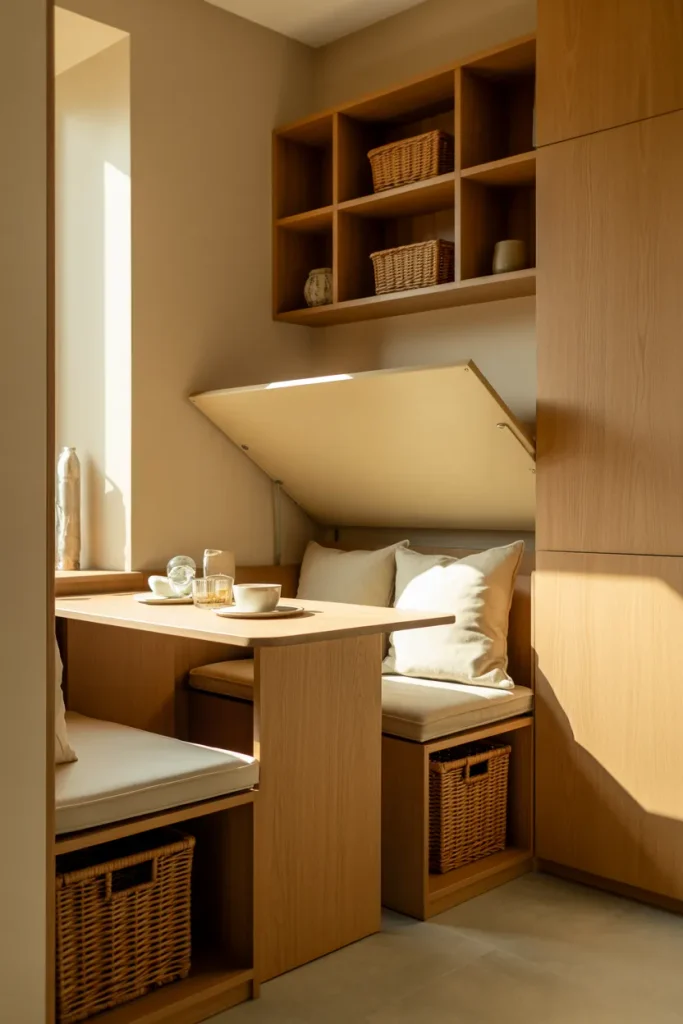
Quick Tip:
Choose a bench with divided compartments instead of one large cavity when possible. Separate table linens, small appliances, board games, and seasonal items so retrieving one thing does not disturb everything else.
A storage bench makes a compact dining nook work harder without adding another cabinet. Use the space beneath the seat for belongings that are useful but not needed every day. Before installing a built-in version, check ventilation and access requirements, particularly if the bench will sit against a radiator or utility connection.
Corner Ladder Shelf
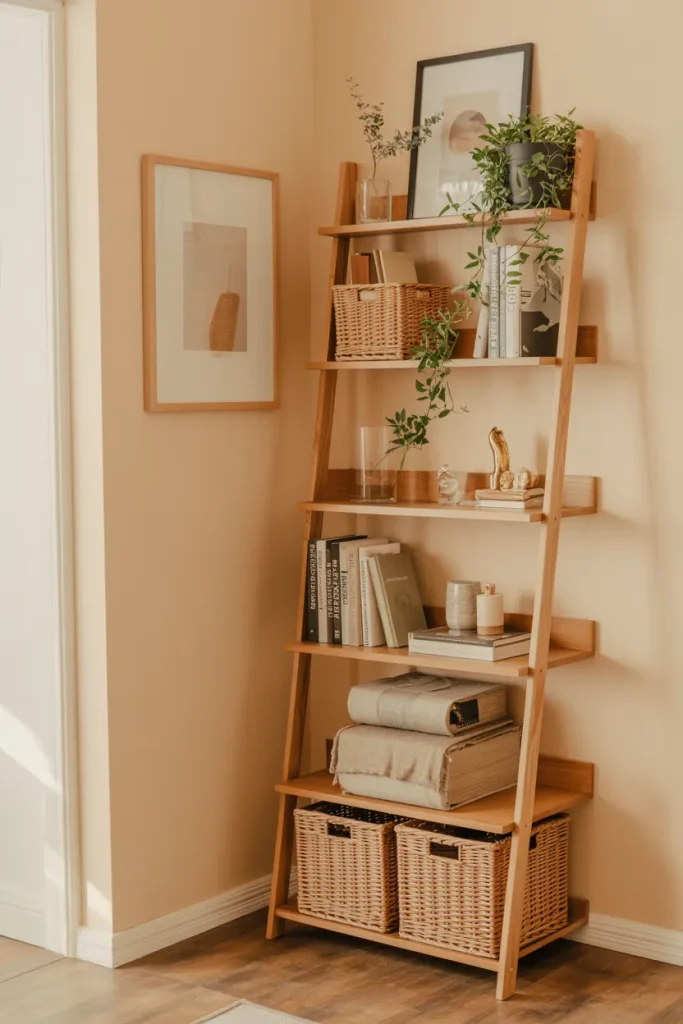
BEFORE: An awkward corner sits empty while books, plants, and small household items occupy valuable table or floor space. The room feels less organized because useful storage is spread across several surfaces.
AFTER: A slim ladder shelf fills the corner vertically while keeping the footprint small. Place baskets on lower tiers for concealed storage and lighter decor higher up, creating a practical arrangement that still leaves the floor visually open.
For narrow apartments, choose a ladder shelf with a shallow base and stable feet. Anchor it according to the manufacturer’s instructions, especially in homes with children or pets. Keep heavier baskets on the lower levels and use the upper shelves for lighter objects that add personality without overwhelming the room.
Rolling Under-Desk Drawers
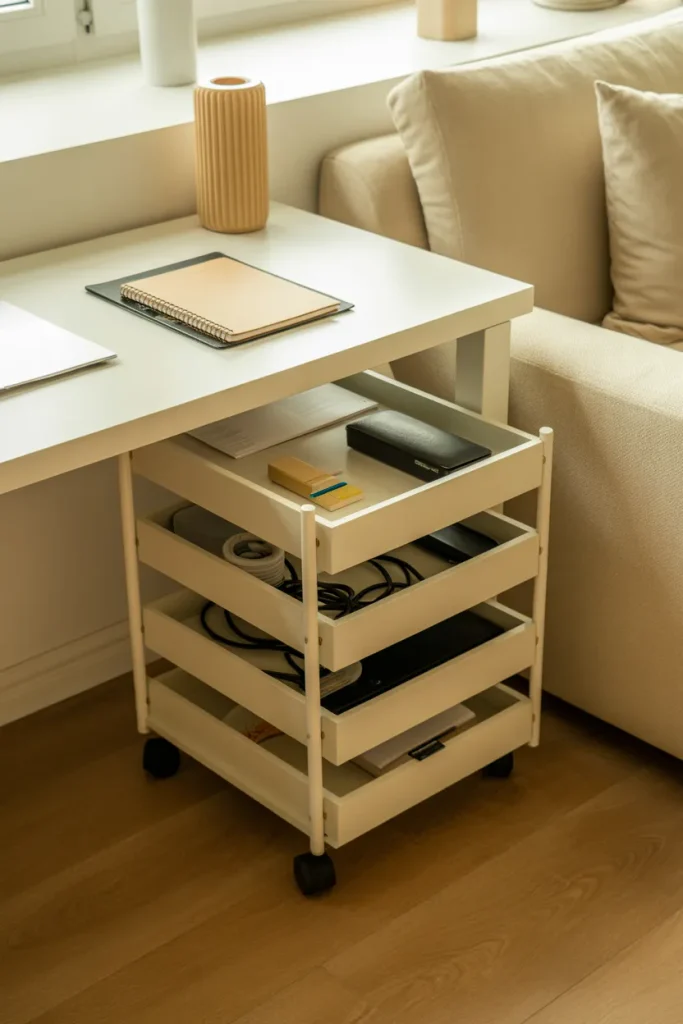
- Measure underneath: Check the desk clearance, including leg placement, before choosing a drawer unit.
- Sort supplies: Keep pens, notebooks, chargers, and paperwork in separate drawers for quicker access.
- Use drawer dividers: Add small organizers to stop cables and stationery from becoming tangled.
- Keep it mobile: Choose casters so the unit can slide out when you need deeper access.
A rolling drawer unit adds storage without requiring a larger desk or permanent installation. It can also move between work zones when your layout changes. For tiny apartments, choose a model that sits fully beneath the desktop when closed. That keeps walking space clear and gives unused floor area a practical purpose.
Fold-Down Dining Table
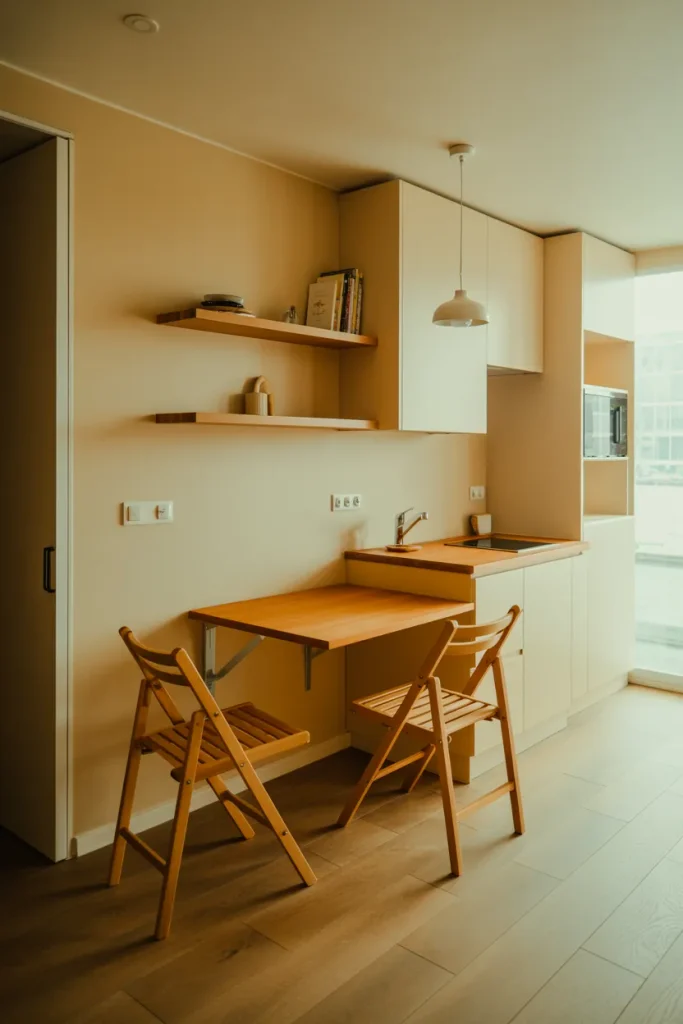
| Comparison Point | Option A: Fixed Table | Option B: Fold-Down Table |
| Floor Usage | Occupies space all day | Frees floor space when folded |
| Seating | Usually more permanent | Flexible for one or two people |
| Storage | Often needs extra room | Can include wall shelves above |
| Best Use | Larger dining areas | Tiny kitchens and studios |
A fold-down table is especially useful when the same floor area needs to serve several purposes. Mount it at a comfortable dining height and check that chairs can pull out fully. Add a slim shelf above it for dishes or glassware, creating a compact eating station without crowding the kitchen.
Magnetic Fridge Storage
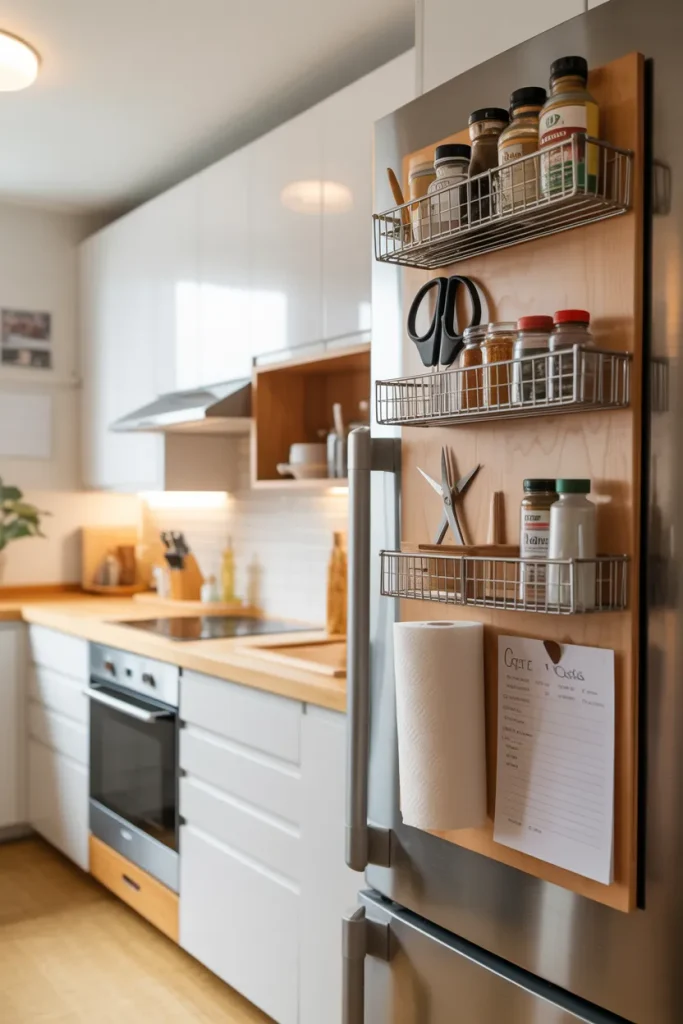
DO:
- Choose strong magnetic containers designed for appliance surfaces.
- Keep lightweight spices, notes, and small utensils in accessible holders.
- Group cooking essentials by task for faster meal preparation.
- Check the refrigerator manufacturer’s guidance before attaching accessories.
DON’T:
- Don’t overload magnetic shelves with heavy glass containers.
- Don’t cover vents, controls, or appliance labels.
- Don’t place magnets where they could interfere with sensitive equipment.
- Don’t let loose papers become a permanent clutter pile.
The refrigerator side can provide valuable vertical capacity in a small kitchen. Magnetic shelves and hooks keep spices, scissors, recipes, and lightweight tools off the counter. Arrange frequently used items near the handle side for easy access. This approach is particularly helpful when cabinet space is already occupied by larger cookware.
Slim Entry Console
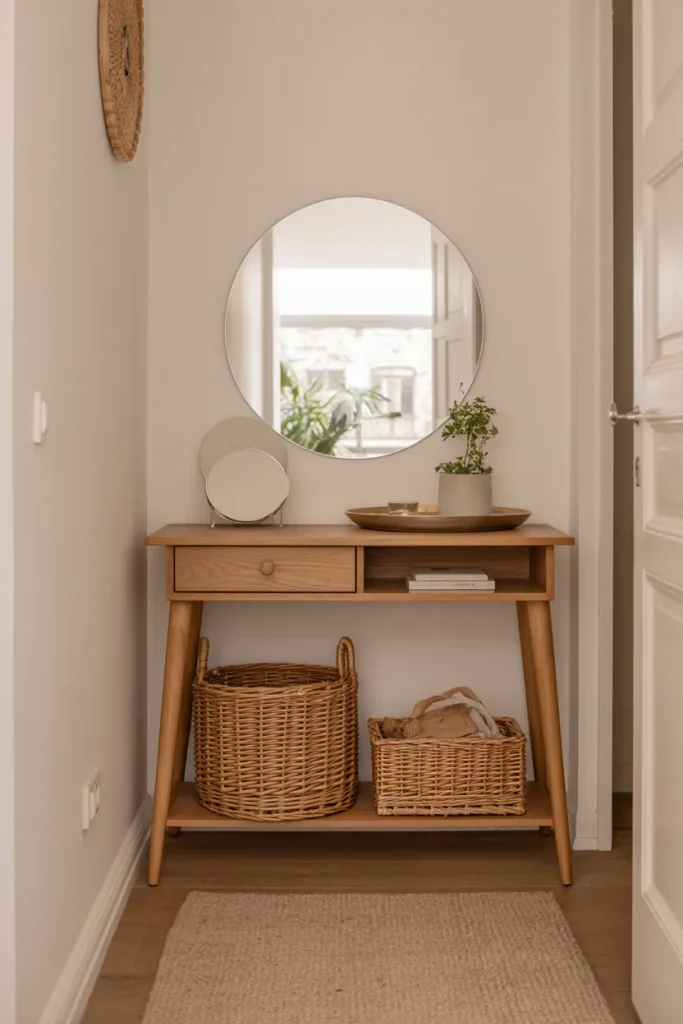
Cost: Moderate | Time: 30 minutes | Skill Level: Beginner
Best For: Entryways, hallways, narrow walls | Works In: Apartments with limited floor depth
Result: Organized drop zone | Difficulty: Easy
A slim console creates a dedicated landing spot without consuming much walking space. Choose a design with a drawer for keys, mail, and small electronics, then slide one or two baskets underneath for shoes or reusable bags. Keep the tabletop mostly clear so it remains useful rather than becoming another clutter magnet.
Cabinet Above Toilet
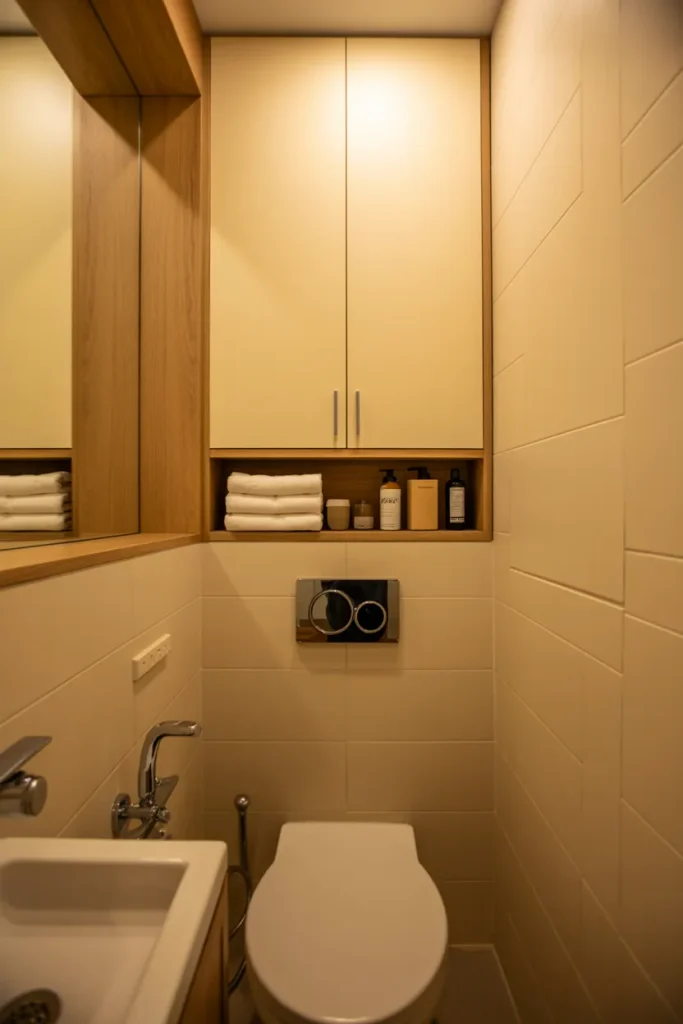
Bathroom walls often have valuable vertical space sitting completely unused. A shallow cabinet above the toilet can hold spare toilet paper, towels, cleaning supplies, and toiletries without reducing the usable floor area. Choose moisture-resistant materials and secure the cabinet properly, leaving enough clearance around plumbing, ventilation, and the toilet.
For a cleaner appearance, use closed doors rather than completely open shelving. Place backup supplies higher up and keep everyday items at a comfortable reaching height. I’ve noticed that dividing the cabinet into clear categories makes small bathrooms easier to maintain because every product has a defined location.
Bedside Wall Pocket
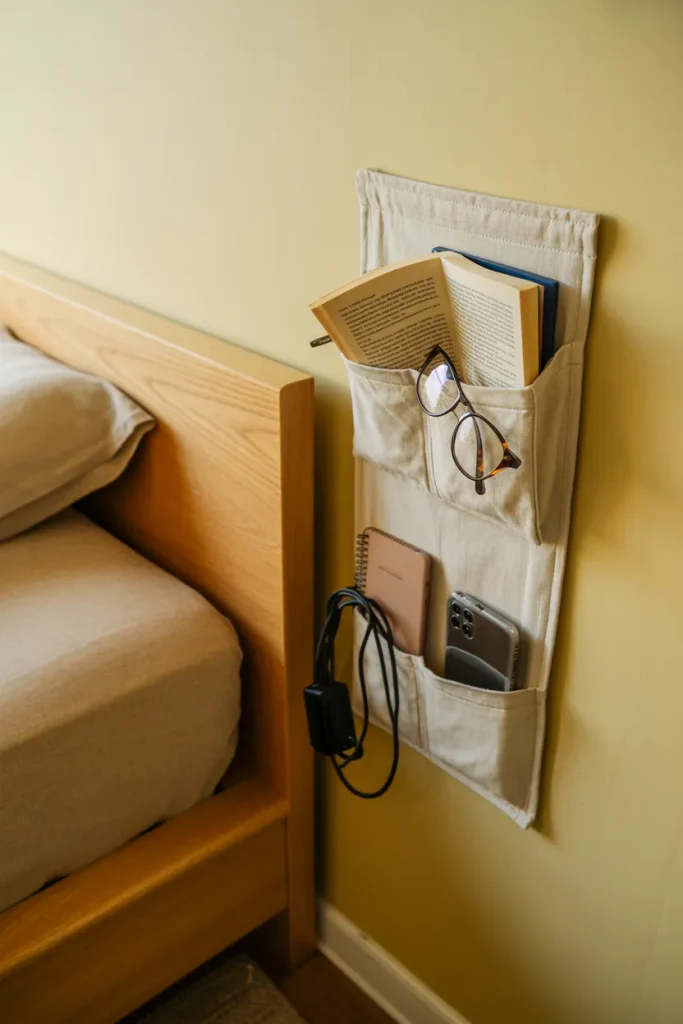
Before: A bedside table may take up precious floor space while books, phones, chargers, and glasses collect on the bed or floor.
After: A fabric wall pocket keeps those essentials within reach without requiring a nightstand. Mount it beside the mattress at a comfortable height and use separate compartments for small belongings.
Look for a sturdy cotton, canvas, or felt organizer with reinforced mounting points. Keep heavier objects out unless the pocket is specifically designed to carry them. This small storage solution works especially well in narrow bedrooms where even a compact bedside table makes the walking path feel cramped. It also keeps charging cables easier to locate.
Kitchen Rail Organizer
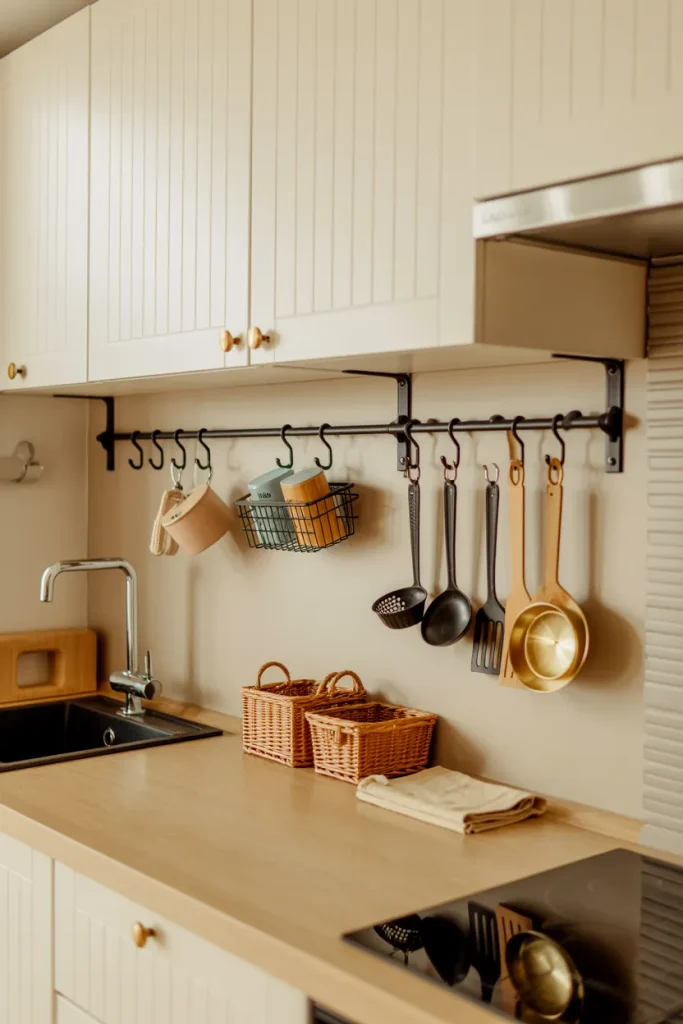
DO:
- Mount the rail where frequently used tools are easy to reach.
- Group utensils by cooking task instead of mixing everything together.
- Use small hanging baskets for lightweight packets and kitchen accessories.
- Keep enough clearance below the rail for safe countertop use.
DON’T:
- Don’t overload hooks with heavy cookware unless the rail supports it.
- Don’t place sharp utensils within easy reach of children.
- Don’t mount the rail where cabinet doors cannot open fully.
- Don’t let rarely used items occupy prime hanging positions.
A simple rail can reclaim drawer and countertop space in a compact kitchen. Hang measuring spoons, utensils, towels, and lightweight baskets where they remain visible and accessible. I’ve noticed that keeping only everyday tools on the rail prevents it from looking crowded while making meal preparation noticeably quicker.
Vertical Closet Dividers
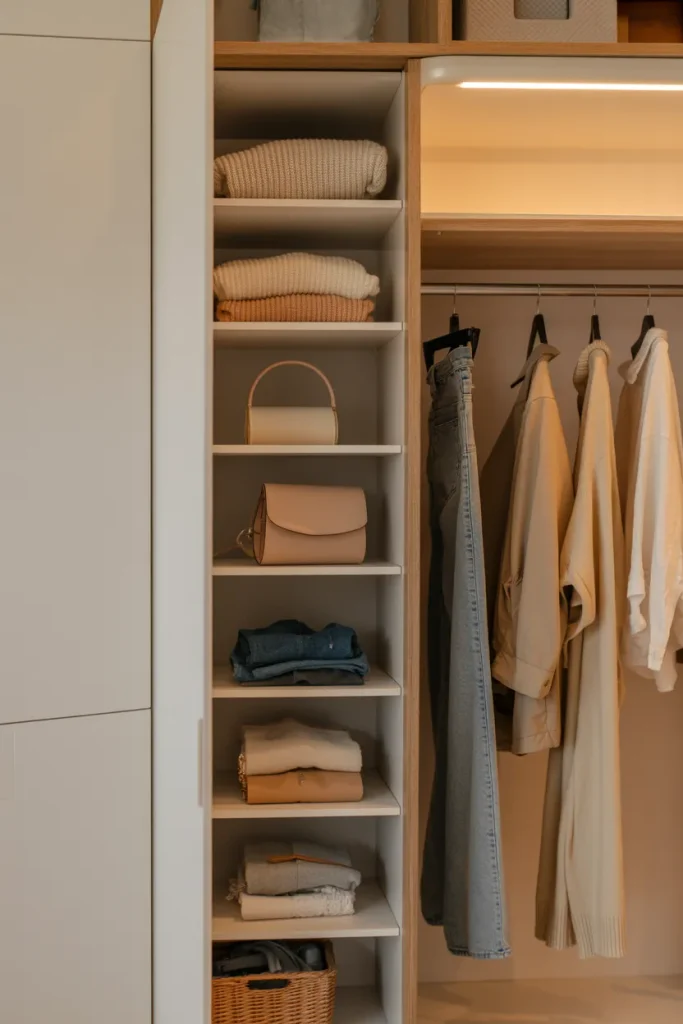
Cost: Low | Time: 30 minutes | Skill Level: Beginner
Best For: Closets, wardrobes, linen storage | Works In: Narrow or shallow cabinets
Result: Neater stacked storage | Difficulty: Easy
Tall stacks often waste the space above them and become unstable when one item is removed. Vertical dividers create separate compartments for clothing, bags, towels, or linens, allowing you to use more of the cabinet height. Choose adjustable dividers when possible so the layout can change as your storage needs evolve.
Pegged Kitchen Backsplash
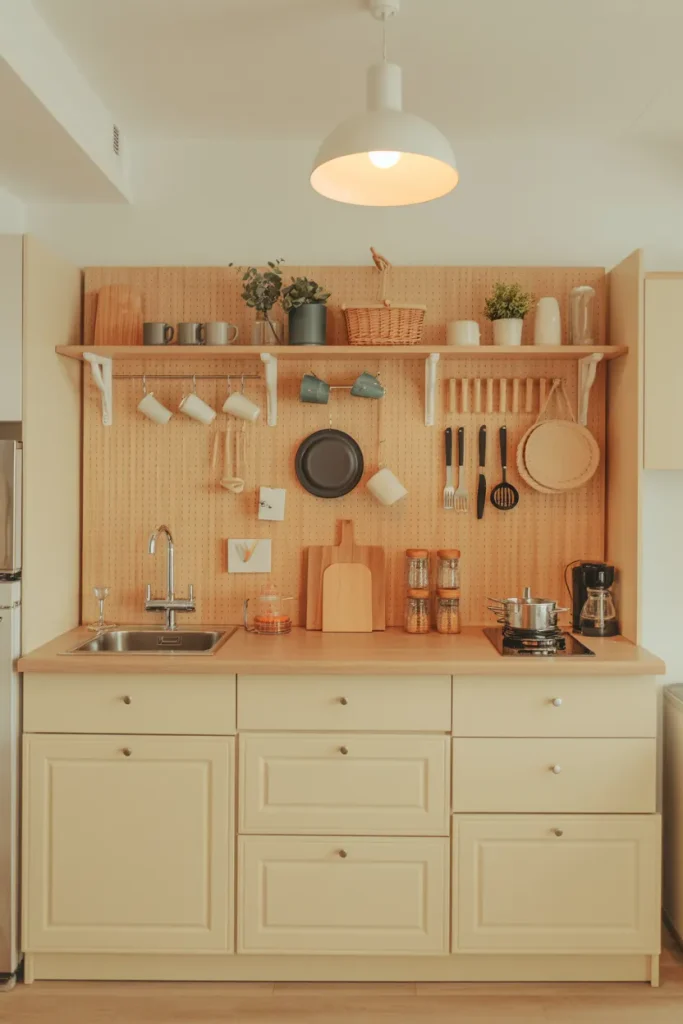
A blank backsplash can become functional storage without taking over the countertop. Install a pegboard or rail system across an appropriate wall section, then arrange hooks and small shelves around your cooking routine. Keep cutting boards and utensils near the prep zone while storing less-used tools higher up or toward the edges.
Before drilling, confirm the wall construction and check for plumbing or electrical lines in the intended area. Renters can look for removable systems designed for their wall type. Leave a little empty space between groups of items so the setup stays easy to use and does not become visual clutter.
Overhead Kitchen Cabinets
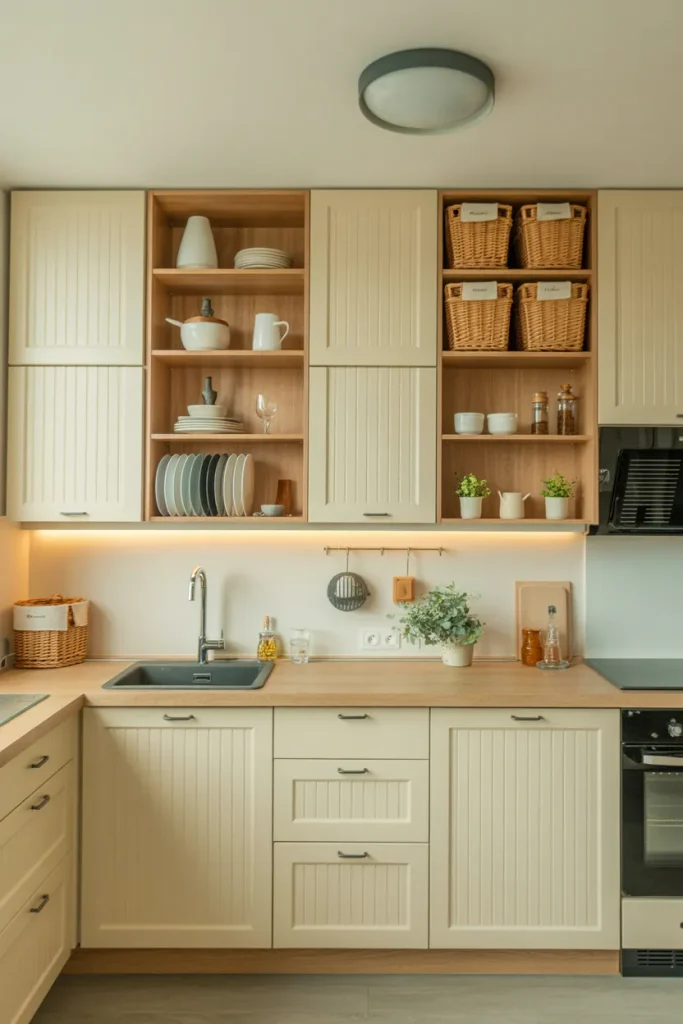
- Use the highest cabinets: Store holiday dishes, serving pieces, and appliances you rarely need.
- Add matching bins: Group small items inside labeled baskets so they remain easy to retrieve.
- Keep daily items lower: Place plates, glasses, and cooking essentials within comfortable reach.
- Use a step stool: Keep a compact folding stool nearby for safe access to upper shelves.
- Leave counters clear: Move bulky appliances into upper storage when they are not used regularly.
Kitchen height is valuable real estate in a tiny home. Cabinets that reach closer to the ceiling provide extra room without expanding the kitchen footprint. Reserve the highest areas for occasional items and keep everyday cookware between waist and shoulder height. This simple zoning system makes extra cabinet capacity practical rather than difficult to access.
Hanging Closet Rod
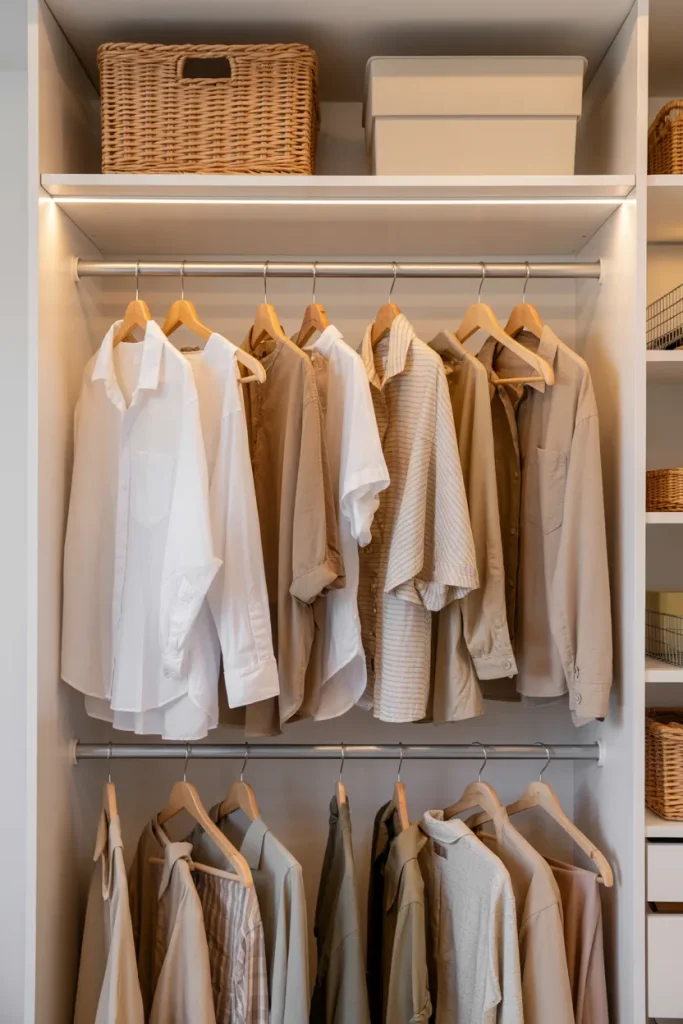
Quick Tip:
Before installing a second rod, measure the vertical clearance between both rods and the closet floor. Hang shorter clothing above or below the existing rail so you gain a second usable level without forcing garments to bunch together.
Doubling hanging space can dramatically improve a small wardrobe when much of your clothing is short or lightweight. Use the upper rod for shirts and jackets and the lower level for skirts or folded-hanger pieces. Avoid this setup for long dresses and coats unless the closet height comfortably accommodates both levels.
CONCLUSION
A tiny apartment does not need to feel short on storage. With smart vertical solutions, hidden compartments, narrow furniture, and multi-purpose pieces, even overlooked spaces can become genuinely useful.
The best Clever Storage Ideas for Tiny Apartments are the ones that fit naturally into your daily routine and make frequently used belongings easier to reach. Start with one problem area, such as a crowded entryway or overflowing closet, and choose one solution to test. I’ve seen how small changes like these can completely shift the way a space feels. Save this post on Pinterest, try your favorite ideas, and share it with someone who could use more room.