22 Best Art Deco House Exterior Design Examples
Explore 22 stunning Art Deco house exterior ideas that blend bold geometry, luxury details, and timeless elegance—perfect inspiration for creating a visually striking and sophisticated home.
1. Sleek White Geometry Facade
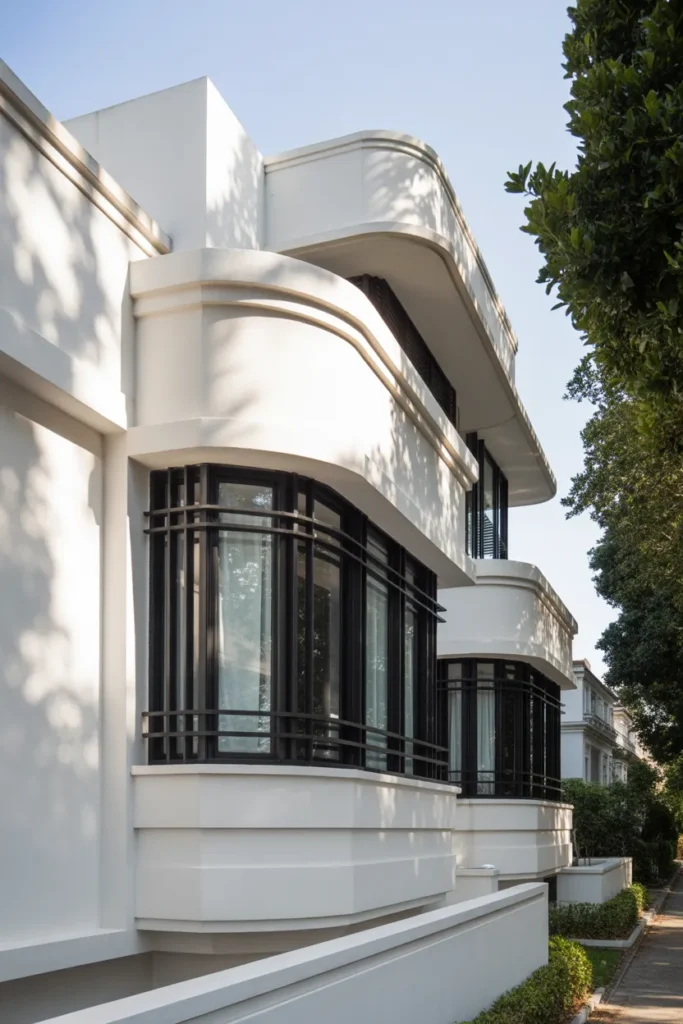
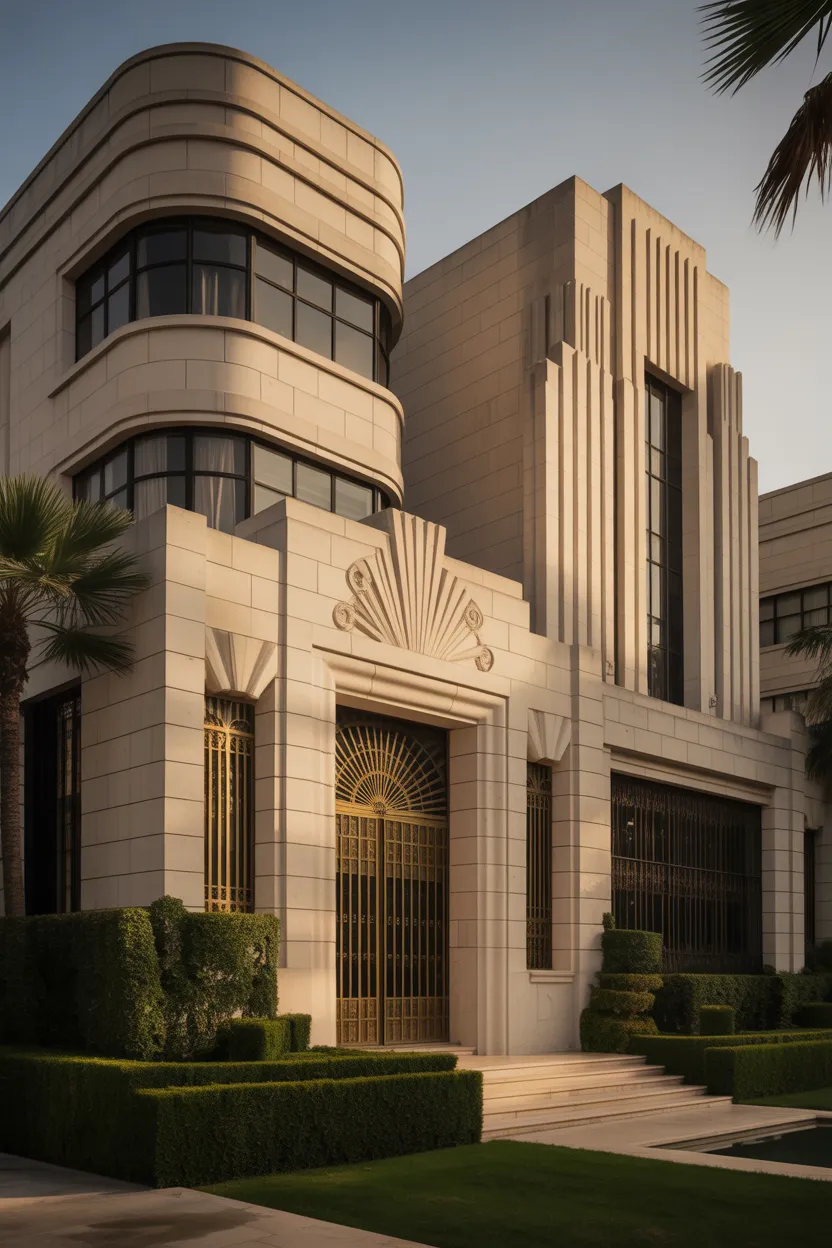
Art Deco design thrives on bold geometry, and a sleek white facade perfectly captures this timeless aesthetic. Clean lines, curved edges, and layered shapes create a visually dynamic exterior that feels both modern and classic. The contrast of light and shadow enhances depth, making even simple forms feel architectural and intentional.
To elevate the look, incorporate black-framed windows and subtle metallic details. Minimal landscaping with sculpted greenery complements the structure without overwhelming it. This approach works especially well for urban homes where a refined, elegant presence stands out effortlessly.
2. Bold Black and Gold Accents
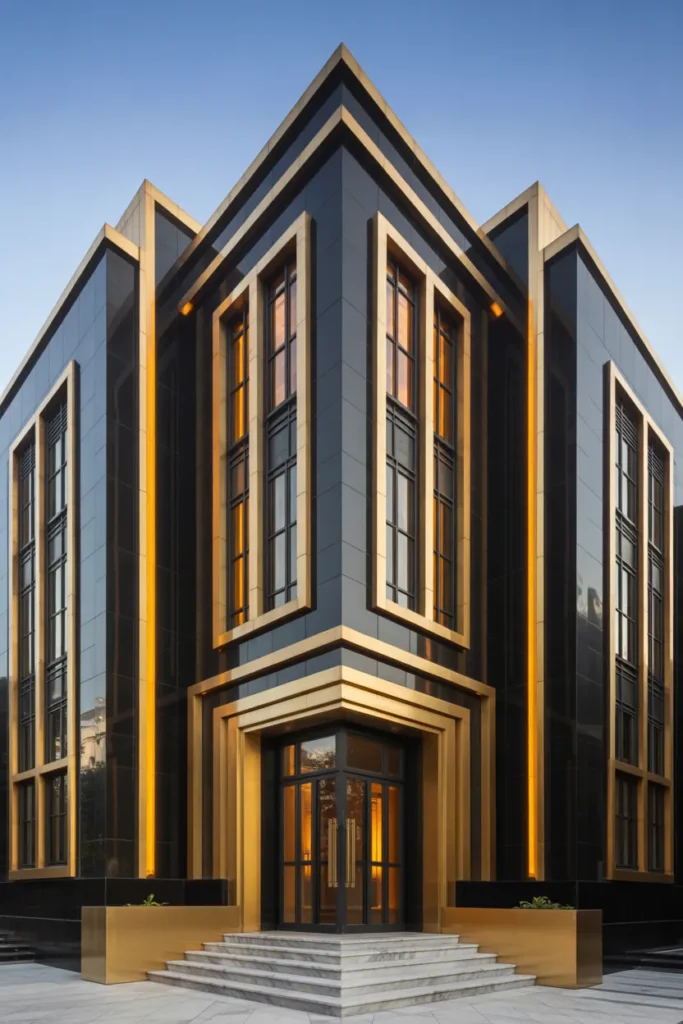
A black exterior paired with gold detailing instantly evokes Art Deco luxury. The richness of black creates a dramatic base, while gold accents highlight architectural features such as window frames, railings, and entryways. This combination reflects the opulence associated with the Art Deco era.
To maintain balance, keep the structure symmetrical and clean. Soft lighting enhances the metallic elements at night, creating a glamorous glow. This design is perfect for homeowners wanting a bold yet sophisticated exterior statement.
3. Curved Corner Architecture
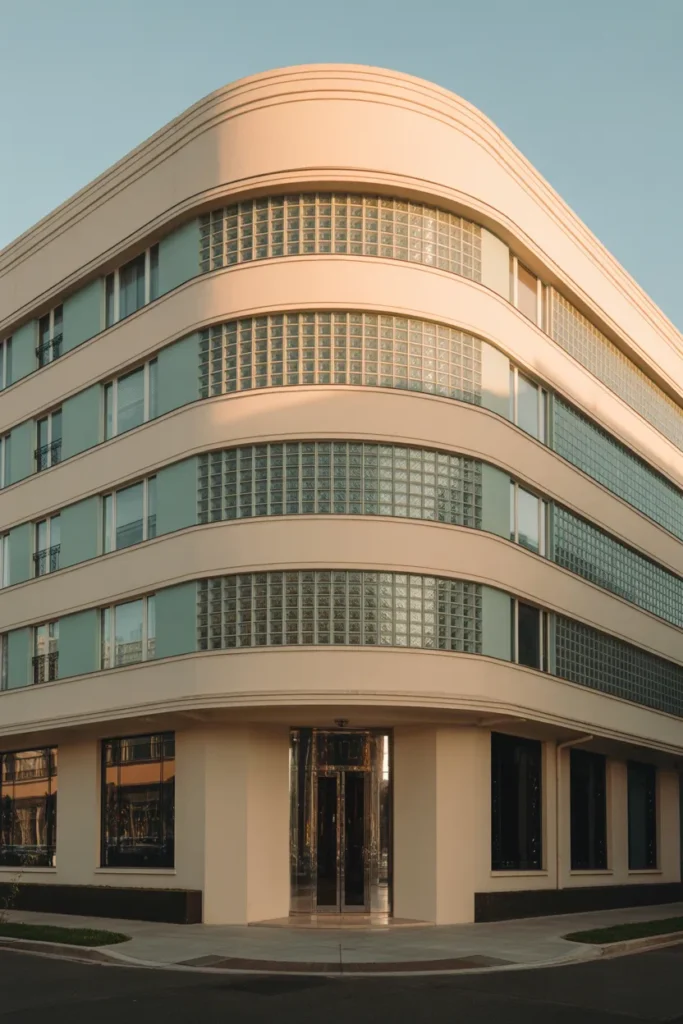
Curved corners are a signature Art Deco feature that soften the overall geometry of a home. Instead of sharp edges, rounded walls create a fluid, streamlined appearance that feels elegant and inviting. This design element is particularly striking on corner lots.
Pair the curves with horizontal banding or glass block windows to enhance the vintage aesthetic. Light pastel shades such as cream or pale peach can further emphasize the softness of the structure while maintaining a timeless appeal.
4. Vertical Emphasis Towers
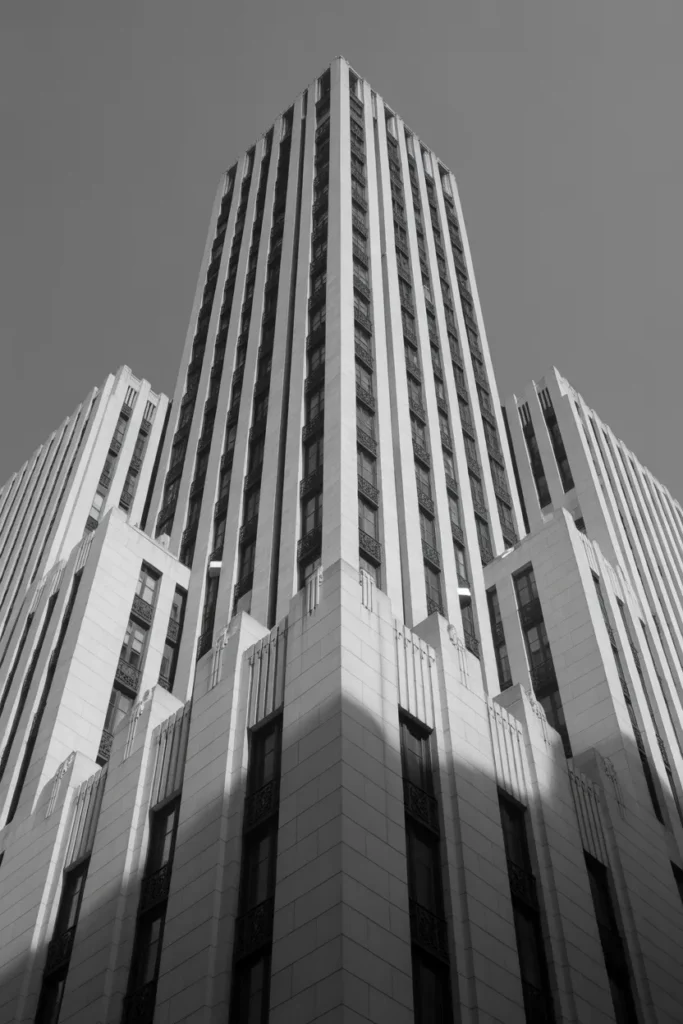
Art Deco homes often highlight verticality through tower-like structures or elongated facade elements. These vertical lines draw the eye upward, creating a sense of grandeur and height even in modest homes.
Incorporating narrow windows or decorative vertical grooves enhances this effect. This design works beautifully when combined with symmetrical layouts, giving the house a strong and commanding architectural presence.
5. Streamline Moderne Style
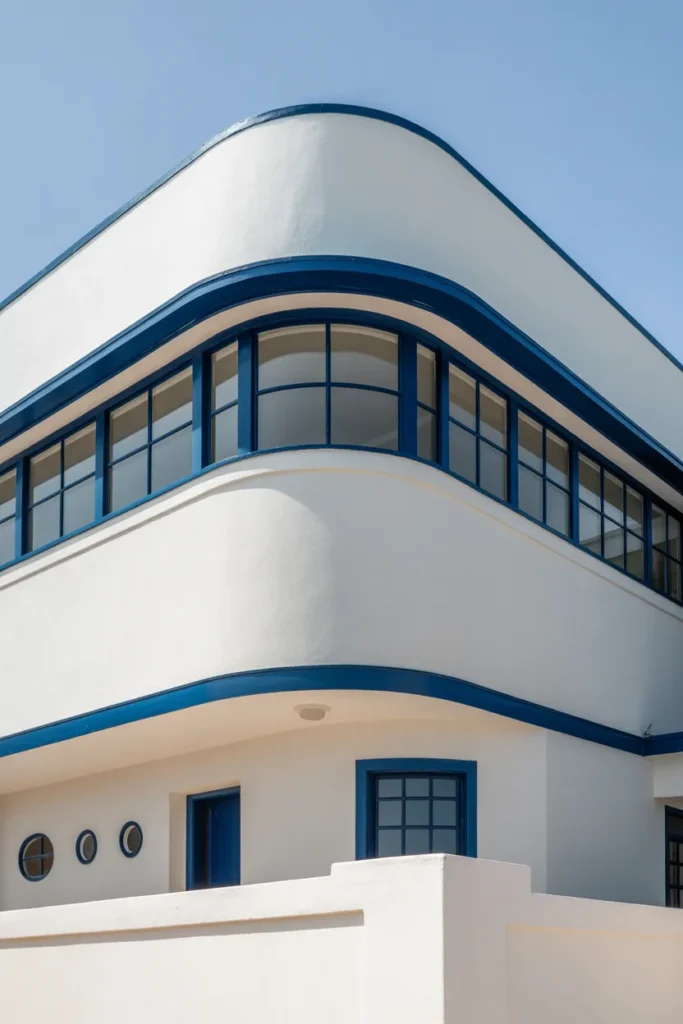
Streamline Moderne is a softer evolution of Art Deco, inspired by speed and motion. Horizontal lines, curved edges, and smooth surfaces create a sleek, aerodynamic look reminiscent of ocean liners.
Using a white and blue palette enhances the nautical vibe. Add metal railings and long windows to emphasize the flow of the design. This style is ideal for those who prefer subtle elegance over bold ornamentation.
6. Geometric Pattern Facade
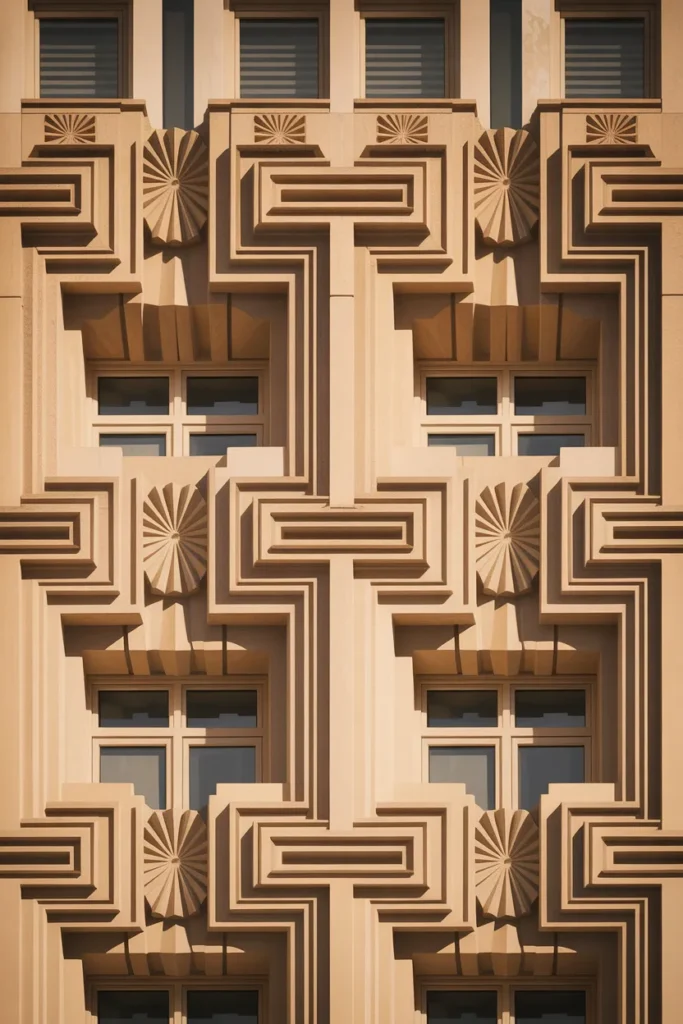
Geometric patterns are at the heart of Art Deco design. Incorporating zigzags, chevrons, or stepped motifs into the facade adds texture and visual intrigue. These patterns can be subtle or bold depending on your preference.
Use contrasting colors or materials to highlight the designs. Even a simple home can become eye-catching with the addition of these iconic decorative elements.
7. Glass Block Windows
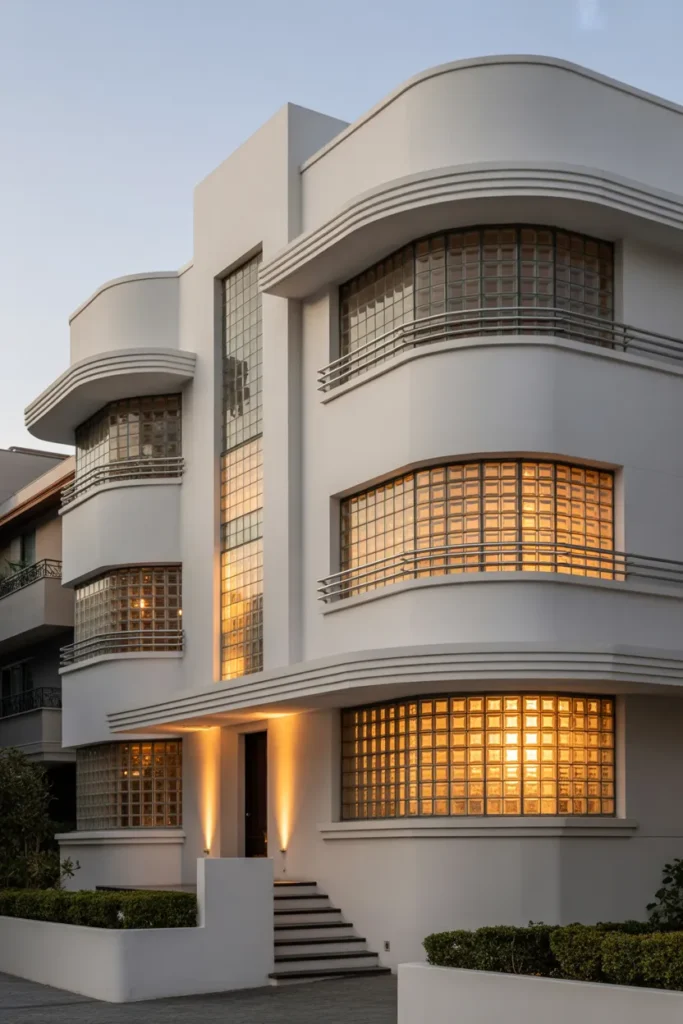
Glass block windows provide privacy while allowing natural light to filter through beautifully. They are a classic Art Deco feature that adds both function and style to the exterior.
Placed along staircases or curved walls, they create a glowing effect, especially at night. Pair them with smooth plaster finishes for a cohesive look that feels both retro and modern.
8. Symmetrical Grandeur Entrance
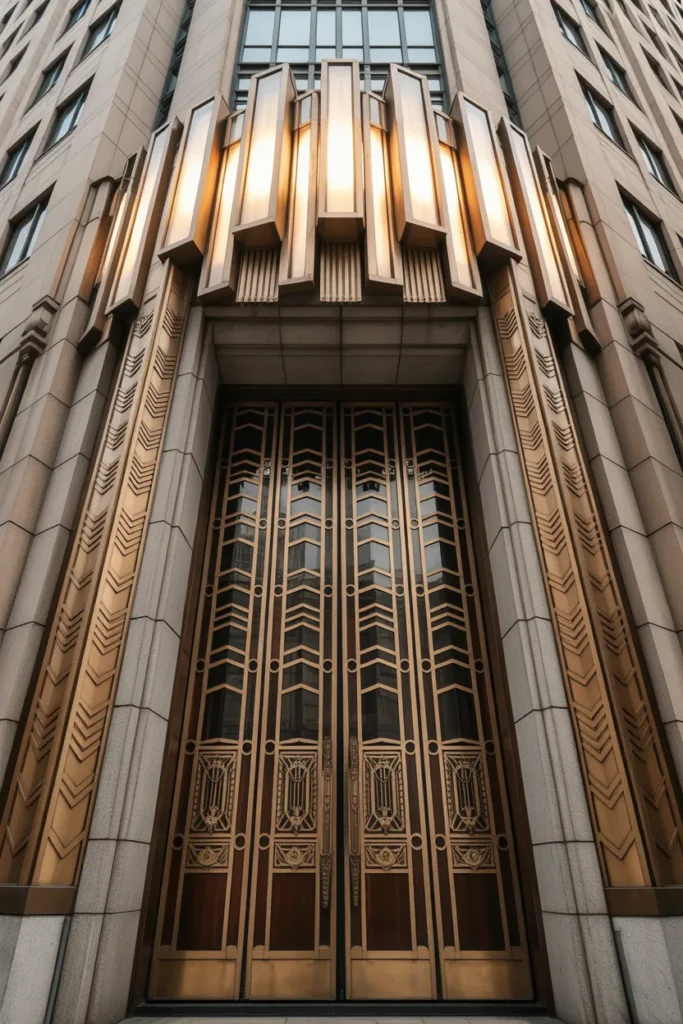
A symmetrical entrance instantly creates a sense of balance and sophistication. Double doors, framed by vertical elements or subtle columns, form a strong focal point.
Add lighting fixtures and metallic accents to elevate the design. This approach works well for larger homes aiming to achieve a luxurious, timeless appeal.
9. Pastel Art Deco Palette
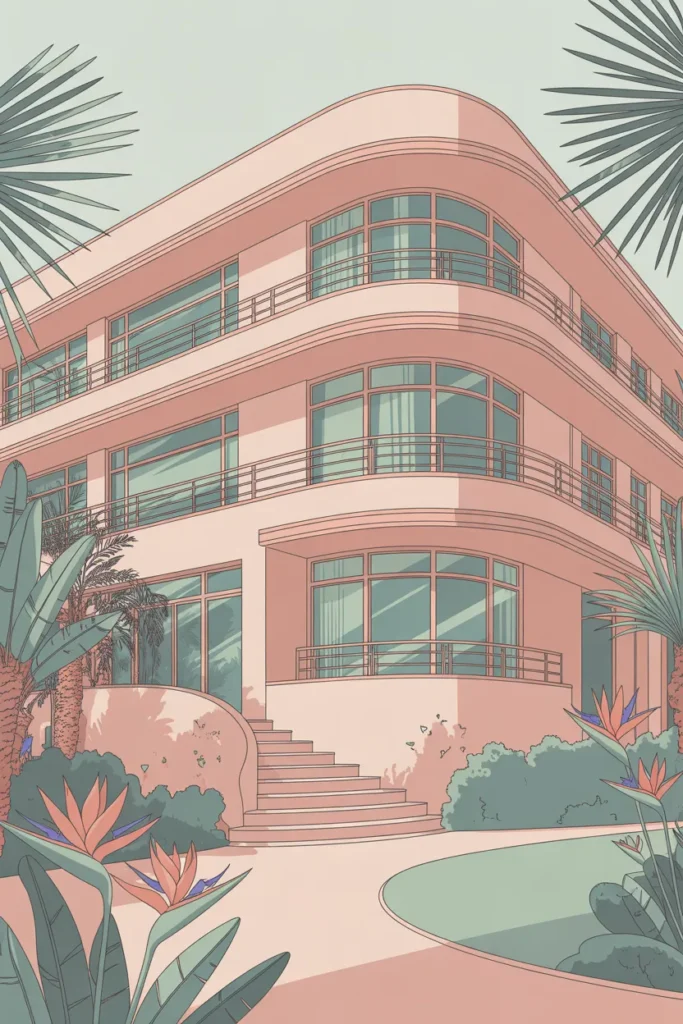
Soft pastel colors bring a fresh, playful twist to Art Deco architecture. Shades like mint green, blush pink, and cream maintain the vintage charm while feeling light and inviting.
Pair these colors with curved forms and minimal detailing. This style is especially popular in coastal or tropical settings, where it blends beautifully with natural surroundings.
10. Metallic Detail Highlights
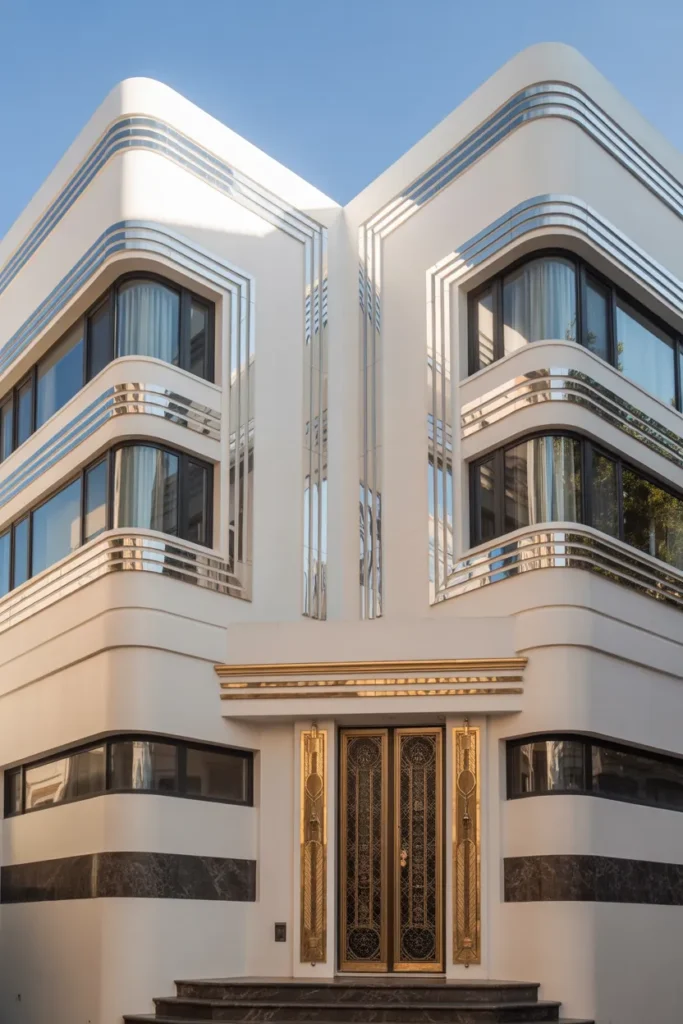
Metallic finishes such as chrome, brass, or gold add a luxurious touch to any Art Deco home. These accents highlight architectural features and create visual contrast.
Use them sparingly on railings, trims, or lighting fixtures. The key is balance—too much can overwhelm the design, while subtle touches elevate it effortlessly.
11. Stepped Rooflines
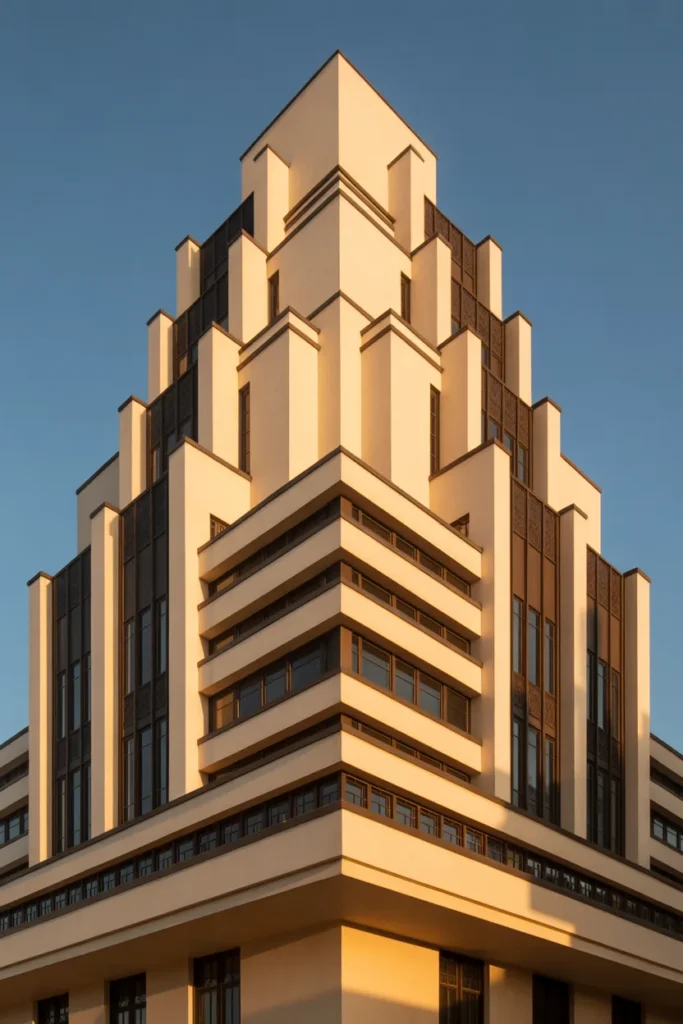
Stepped rooflines create a striking silhouette that is instantly recognizable. This design element adds dimension and rhythm to the exterior.
Combine it with clean walls and minimal decoration to let the structure shine. It’s a perfect way to introduce Art Deco character without excessive ornamentation.
12. Tropical Art Deco Fusion
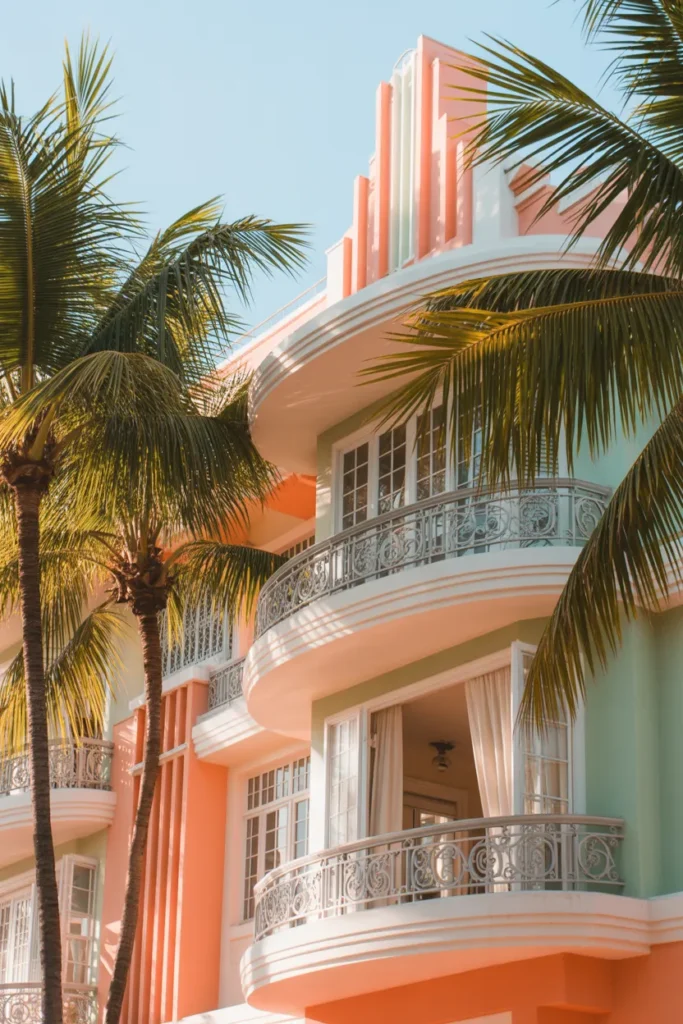
Blending Art Deco with tropical elements results in a relaxed yet stylish exterior. Think open balconies, pastel walls, and lush greenery.
This fusion creates a vacation-like atmosphere while maintaining the elegance of Art Deco design. It’s ideal for warm climates and outdoor-focused living.
13. Monochrome Elegance
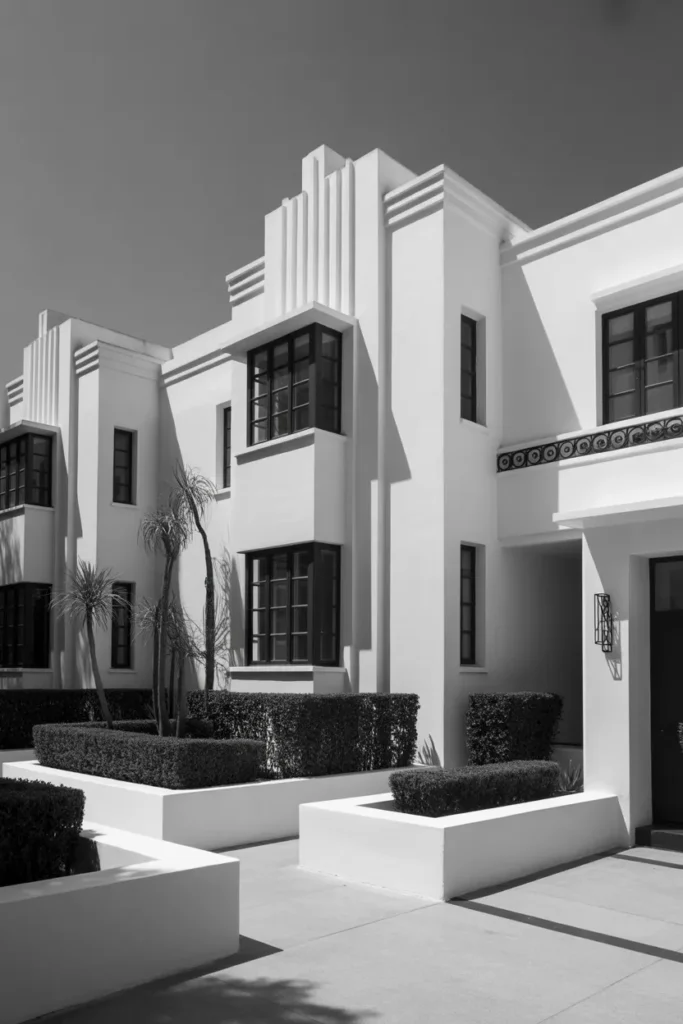
A monochrome palette emphasizes the geometry of Art Deco architecture. Black and white contrasts highlight shapes, patterns, and symmetry.
This approach keeps the design clean and modern while preserving its historical roots. Add subtle textures to prevent the look from feeling flat.
14. Decorative Ironwork Details
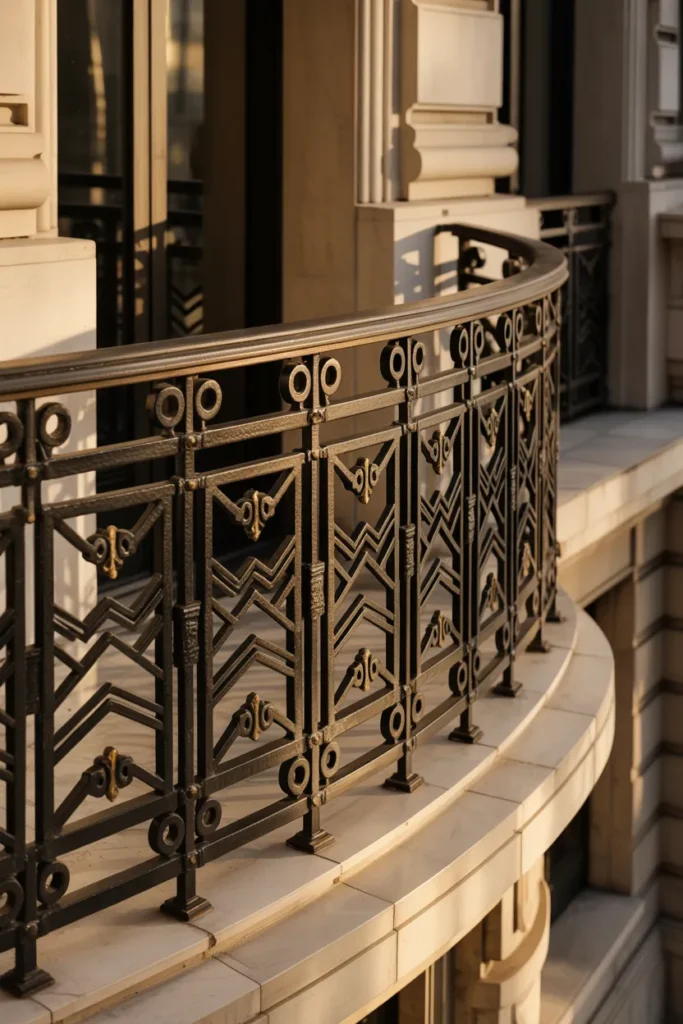
Decorative ironwork adds intricate detail to balconies, gates, and windows. Geometric patterns in metal reflect the essence of Art Deco design.
These elements provide both function and beauty, enhancing the overall aesthetic without overwhelming the structure.
15. Minimalist Art Deco Hybrid
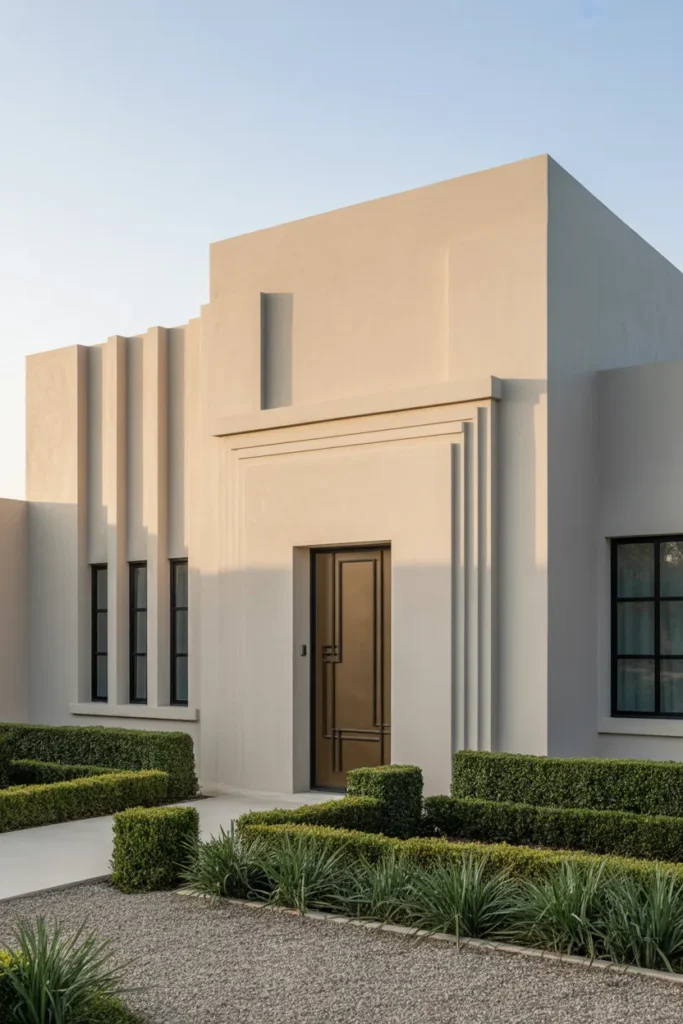
A minimalist approach to Art Deco focuses on clean lines and subtle detailing. It removes excess ornamentation while retaining key design elements.
Neutral colors and simple forms create a timeless look that blends well with contemporary architecture.
16. Dramatic Lighting Effects
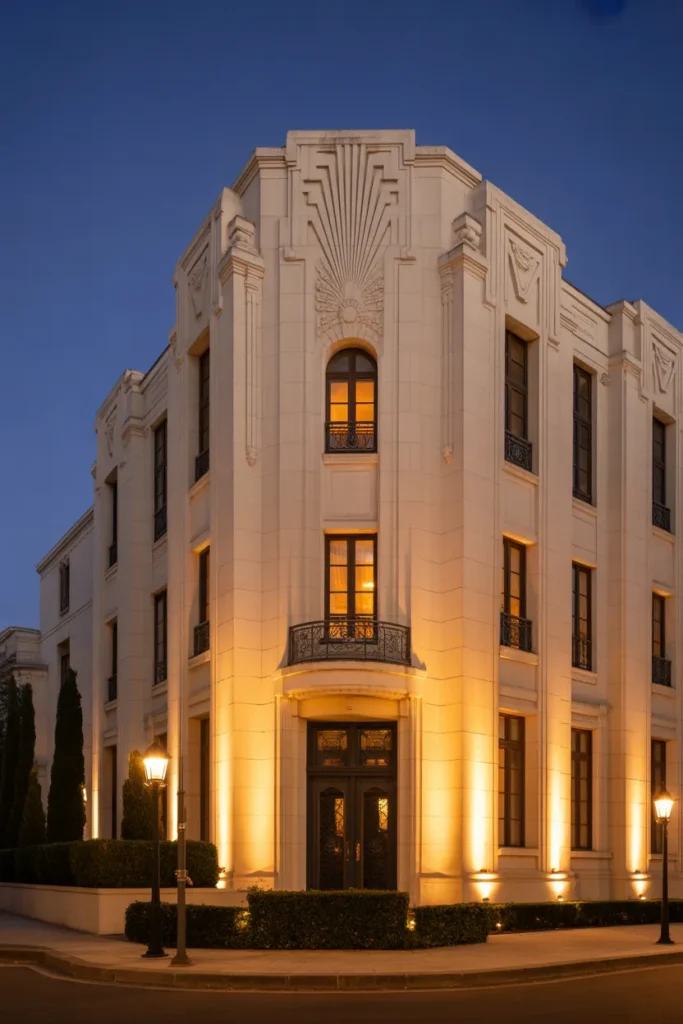
Lighting plays a crucial role in highlighting architectural features. Strategic placement can enhance curves, lines, and textures.
Warm lighting creates a welcoming feel, while cooler tones add a modern edge. Nighttime illumination brings the design to life.
17. Grand Staircase Exterior
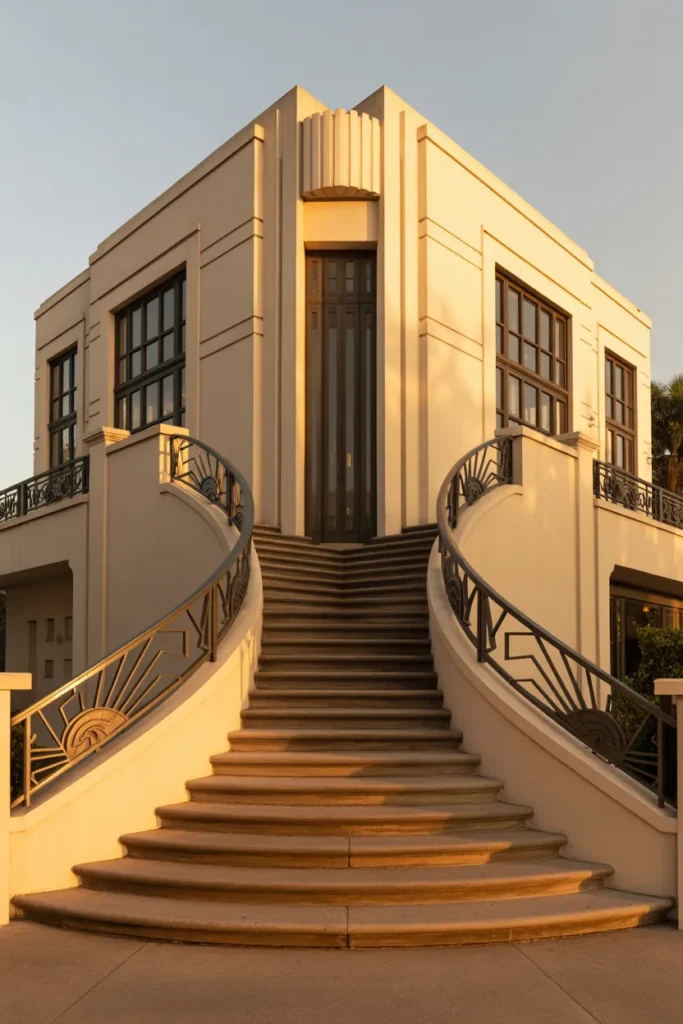
An exterior staircase adds drama and elegance to the entrance. Wide, symmetrical steps lead to a grand doorway.
This feature creates a sense of arrival and enhances the overall visual impact of the home.
18. Textured Stucco Finishes
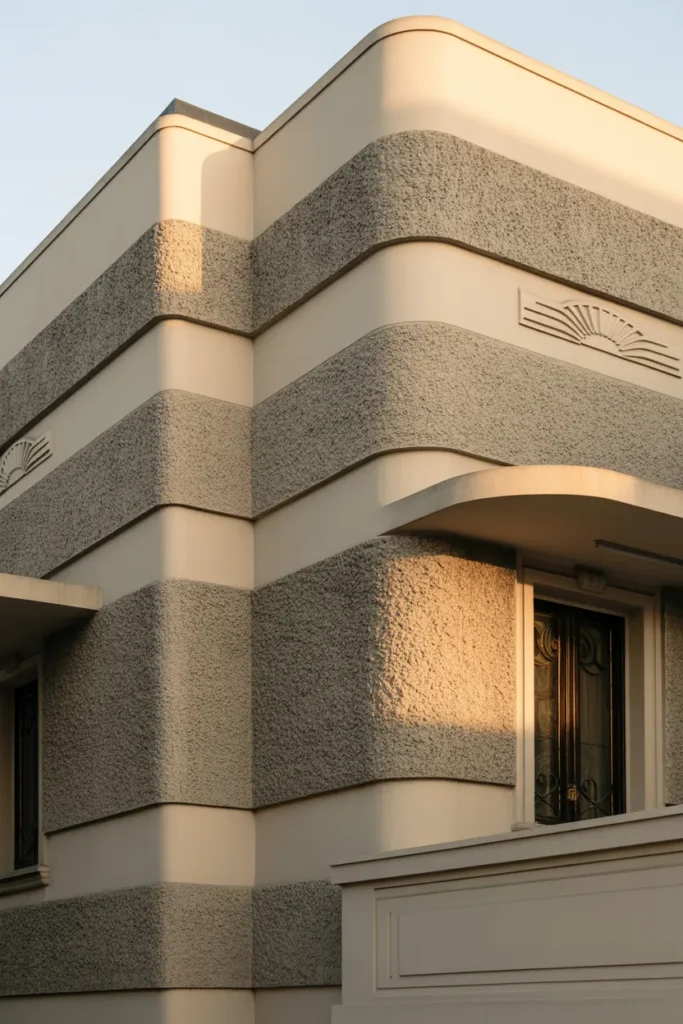
Stucco finishes provide subtle texture while maintaining a clean look. Combining smooth and rough surfaces adds depth.
This approach works well for both modern and traditional Art Deco homes, offering versatility in design.
19. Futuristic Art Deco Blend
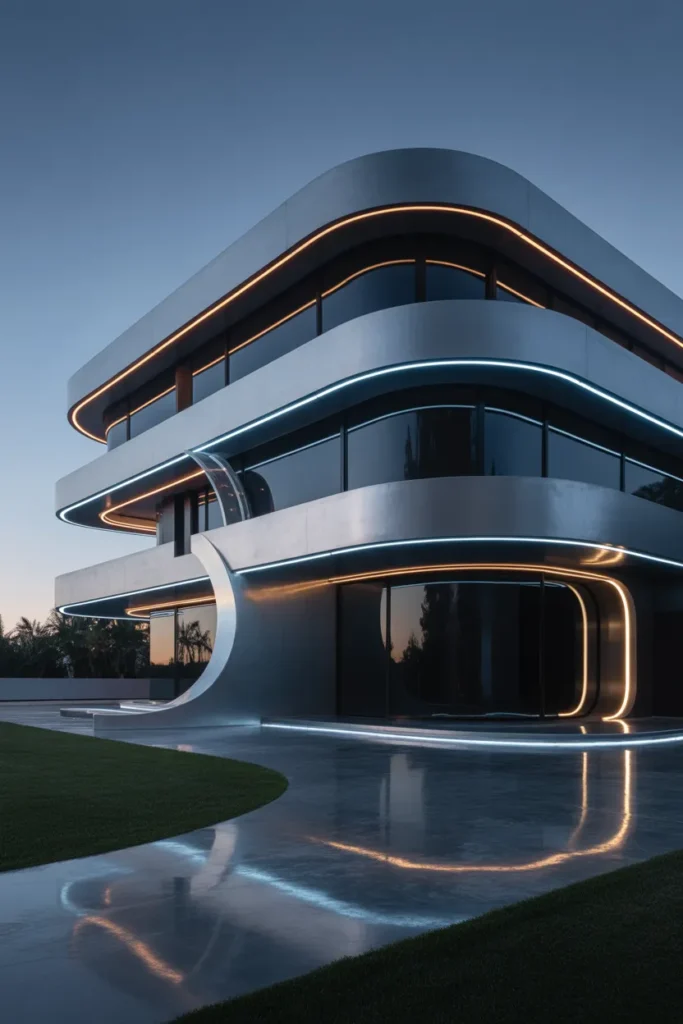
Combining Art Deco with futuristic elements creates a unique and innovative design. Smooth curves and modern materials redefine the classic style.
This approach is perfect for homeowners looking to push boundaries while staying rooted in iconic design principles.
20. Balcony-Focused Design
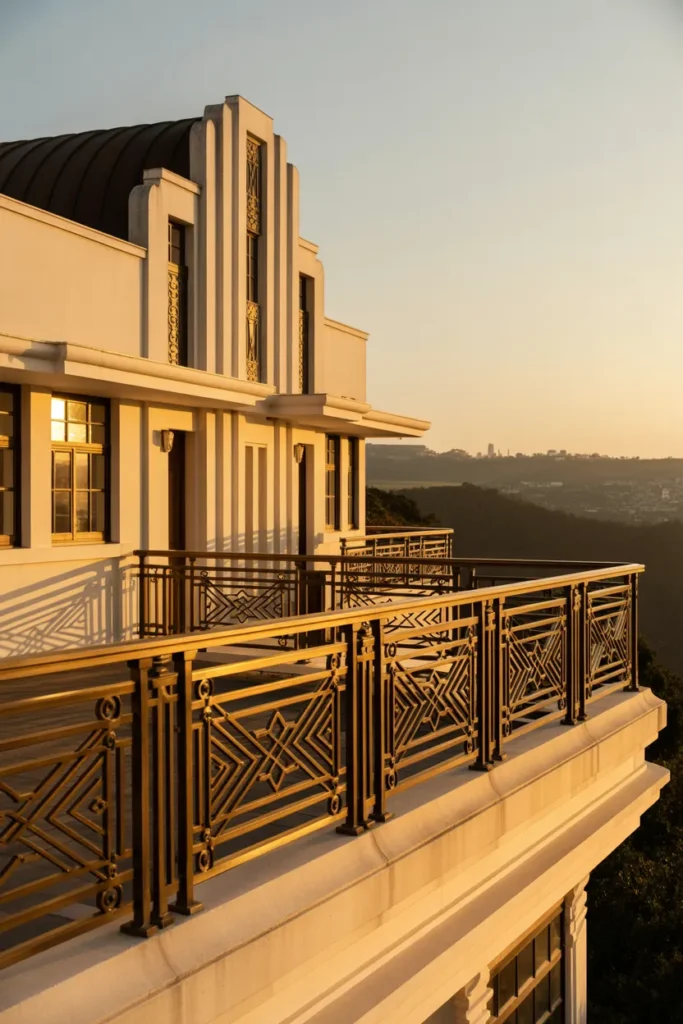
Balconies are a key feature in many Art Deco homes. Large, open spaces with geometric railings enhance both aesthetics and functionality.
They provide outdoor living space while contributing to the overall architectural style.
21. Sculptural Facade Elements
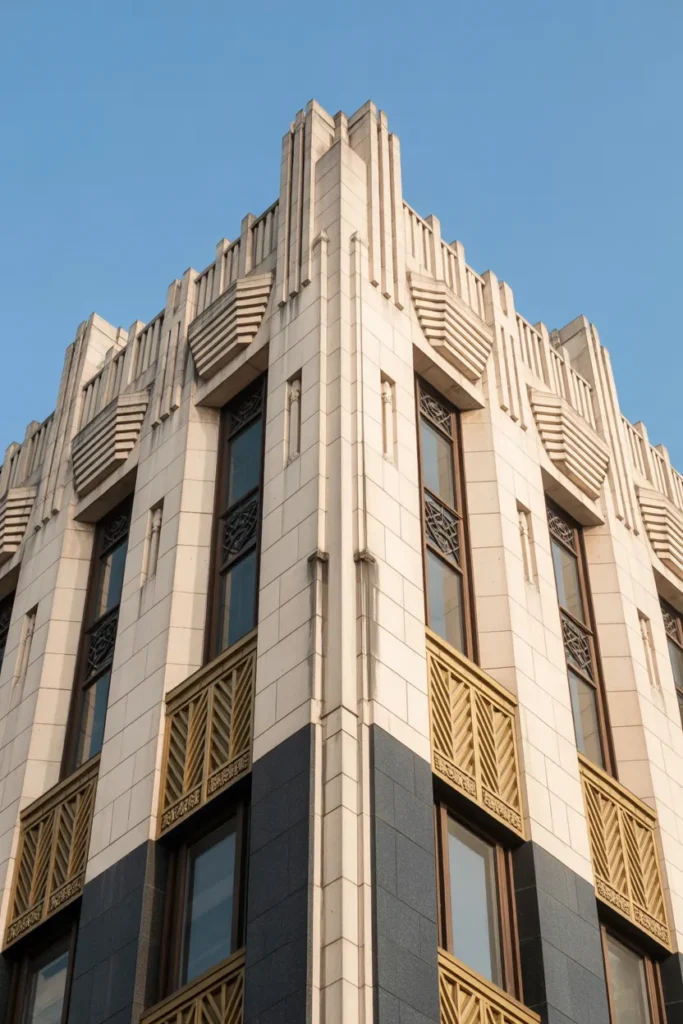
Sculptural elements transform the facade into a work of art. Bold shapes and forms create visual interest from every angle.
This design approach emphasizes creativity while staying true to Art Deco’s geometric roots.
22. Classic Cream and Gold Luxury
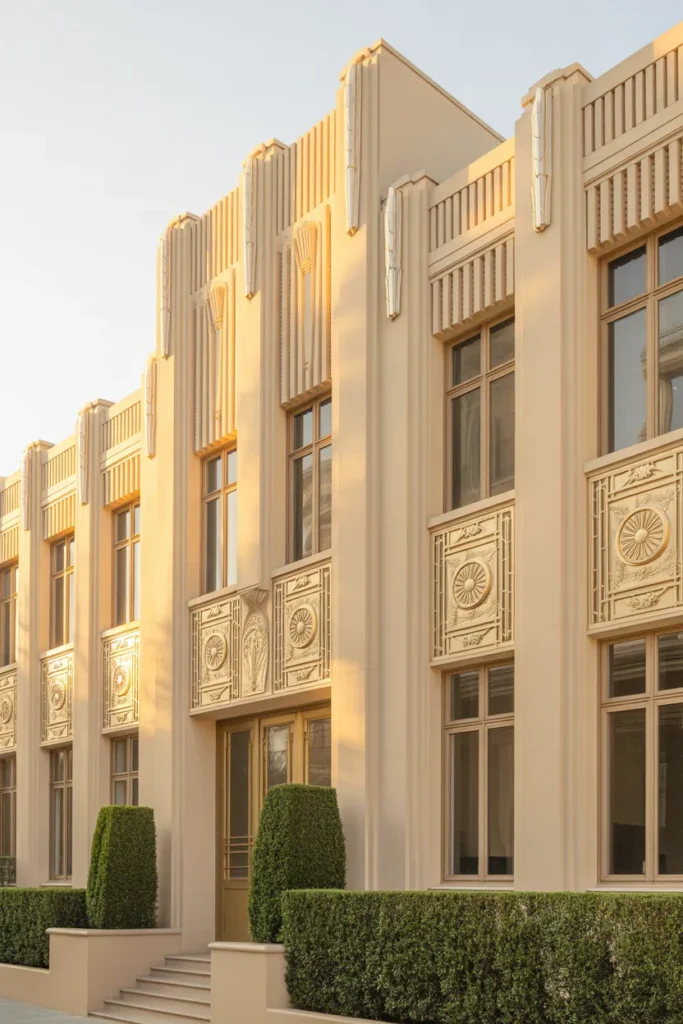
Cream and gold create a timeless and luxurious color combination. The softness of cream balances the richness of gold accents.
This palette works beautifully for large homes, giving them an elegant and refined appearance that never goes out of style.