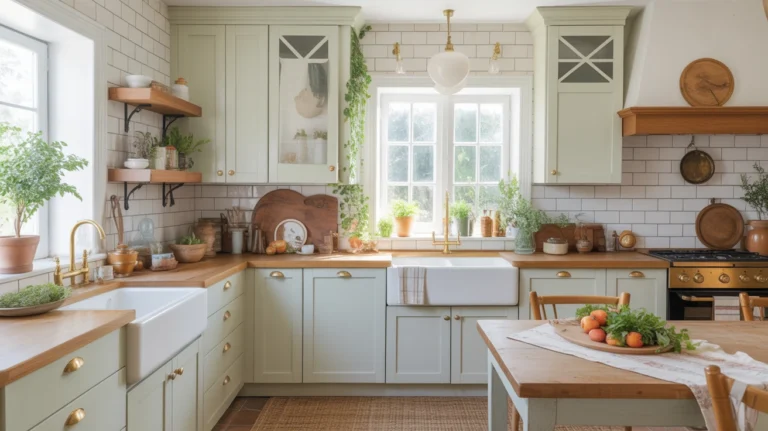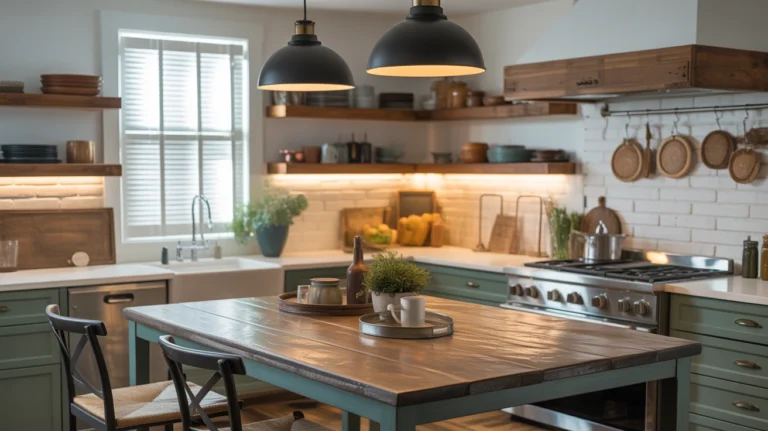

23 Black Kitchen Backsplash Ideas for Bold Style
A black backsplash can turn an ordinary kitchen into a space that feels bold, stylish, and beautifully put together. The secret is choosing the right texture, pattern, and color combination.
These Black Kitchen Backsplash Ideas will help you find a design that suits your home, whether you love modern minimalism, cozy farmhouse details, or luxurious finishes. From glossy subway tiles and dramatic black marble to geometric patterns and warm wood accents, there are plenty of ways to make dark surfaces feel inviting rather than overwhelming.
Choosing black can feel intimidating, especially in a small kitchen or a room with limited natural light. I’ve noticed that pairing dark finishes with pale countertops, warm lighting, and natural materials can create a much more balanced look. Explore these 23 ideas to discover practical design inspiration, compare different finishes, and find a backsplash you’ll love seeing every day.
Matte Black Subway Tile

Matte black subway tiles bring instant definition to a kitchen without making the design feel overly dramatic. Their understated finish absorbs light rather than reflecting it, creating a rich backdrop for white cabinets, wooden accents, and metallic fixtures. The classic rectangular shape also keeps the overall look familiar and timeless.
For a polished result, choose tiles with a subtle texture and charcoal grout that blends into the surface. I’ve noticed that this combination helps the backsplash feel cohesive instead of visually busy. Pair it with warm under-cabinet lighting to reveal the tile’s texture and make evening meal preparation feel more inviting.
ALSO READ : Cardboard Halloween Decor Ideas
Glossy Black Brick Tiles
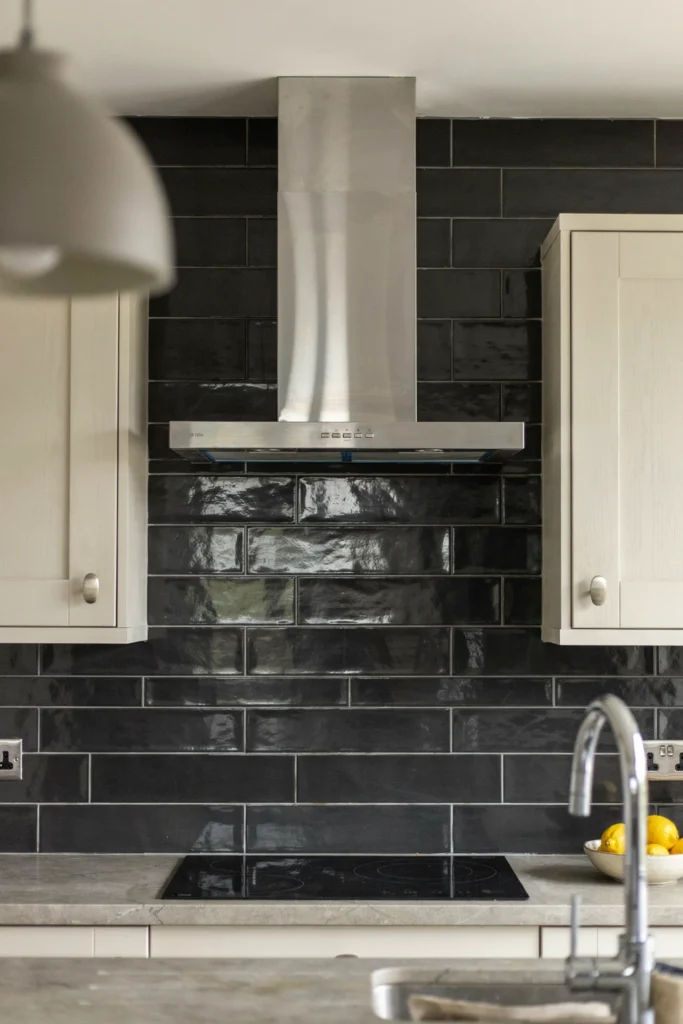
Glossy black brick tiles bring a little drama to the kitchen by bouncing light around the room. Their reflective surface creates depth, making them especially useful in kitchens that lack large windows or have limited natural illumination. The elongated brick shape adds structure without competing with colorful accessories or decorative hardware.
- Choose balanced grout: Light gray grout emphasizes the brick pattern, while dark grout creates a more continuous surface.
- Add pale cabinetry: White or ivory cabinets keep the darker backsplash from dominating the room.
- Introduce warm metals: Brass handles and fixtures soften the glossy finish.
- Control reflections: Position task lighting to avoid harsh glare directly above the cooking area.
- Keep counters simple: Pale quartz or light stone provides a clean visual contrast.
For everyday practicality, wipe glossy tiles regularly because fingerprints, water spots, and cooking splashes can show on dark reflective surfaces. The extra maintenance is worthwhile if you love a sleek kitchen with noticeable shine and a bold, contemporary personality.
Pinterest Account : HavenAndHue2
Black Marble Veining

Few finishes create the same sense of depth as black marble with contrasting veins. The dark background anchors the kitchen, while white or gold markings introduce movement and visual interest. This combination works particularly well behind a range, where the backsplash can become a focal point without requiring elaborate decoration elsewhere.
Quick Tip:
Choose a slab or large-format porcelain panel with veining that complements your countertop rather than competing with it. Before installation, inspect the pattern placement and discuss seam positions with your installer. A coordinated layout creates a more continuous appearance, especially across a wide cooking area.
For a practical alternative to natural marble, consider marble-look porcelain, which offers a similar dramatic pattern with less concern about staining and routine sealing. Pair it with simple cabinet fronts and restrained hardware so the stone remains the star. The result feels luxurious while remaining approachable for everyday cooking.
Black Herringbone Tile

A herringbone pattern gives a dark kitchen backsplash movement without introducing another color. The angled arrangement draws the eye across the wall, making the cooking area feel thoughtfully designed. Against simple white cabinets, the black tiles provide contrast while the repeating pattern adds detail that feels more sophisticated than a plain surface.
BEFORE
A basic black tile wall can look flat, especially when the cabinets and countertops have simple finishes. The cooking area may lack a distinctive feature that draws attention.
AFTER
Black tiles arranged in a herringbone pattern create visual rhythm and a stronger focal point. Light grout makes each angled tile stand out, while dark grout produces a quieter, more seamless effect.
For the best result, plan the pattern around the center of the range or sink rather than starting randomly at one edge. Herringbone layouts require more precise cuts than straight rows, so allow extra installation time and budget for additional tile waste.
Black Hexagon Tiles

Geometric tiles can make even a compact kitchen feel custom-designed. Black hexagons introduce a repeating pattern that feels modern, while their angular edges provide more visual interest than traditional square tiles. They work especially well behind a stove or beneath open shelving, where the shape can be appreciated without overwhelming the entire room.
- Measure the focal wall: Calculate the backsplash area and account for extra tiles needed around outlets and corners.
- Choose the grout: Charcoal grout creates a subtle pattern, while pale gray highlights each hexagon.
- Mark the centerline: Align the design with the range or the center of the main cabinet run.
- Test a sample: Place several tiles beside your countertop and cabinet finish before committing.
- Finish the edges: Use a suitable trim or carefully cut border for a clean transition.
Small hexagons create a busier, mosaic-like appearance, while larger shapes feel bold and architectural. For a balanced kitchen, keep surrounding finishes simple and let the geometric backsplash supply the detail. A sample board is especially useful because grout color can dramatically change the finished look.
Black Tile With White Grout

High-contrast grout turns ordinary black tiles into a striking design feature. The white lines outline every tile, creating a crisp grid that pairs naturally with white cabinetry and monochrome accessories. This approach suits modern, industrial, and retro-inspired kitchens, particularly when the rest of the room uses clean shapes and restrained decoration.
| Design detail | Option A: White grout | Option B: Dark grout |
| Overall effect | Bold, graphic grid | Smooth, unified surface |
| Visual emphasis | Individual tile shapes | Tile texture and finish |
| Maintenance | Grout discoloration may show more | Dust and residue can still show |
| Best pairing | White cabinets and pale counters | Dark cabinets and dramatic stone |
For a long-lasting finish, select grout designed for kitchen backsplash use and follow the manufacturer’s sealing instructions where applicable. White grout offers beautiful contrast, but it may need more frequent cleaning near the stove. A stain-resistant grout can help preserve the crisp lines without sacrificing the graphic effect.
Black and White Checkerboard

A checkerboard backsplash brings personality to a kitchen while keeping the color palette simple. The alternating squares create a strong visual rhythm that works beautifully with white cabinetry, stainless steel appliances, and natural wood accents. For a vintage-inspired room, choose slightly softened black and ivory tiles instead of stark black and bright white.
DO
- Use evenly sized square tiles for a clean checkerboard pattern.
- Align the pattern with the center of the range or sink.
- Choose warm white cabinets to soften the contrast.
- Keep nearby countertops relatively simple.
DON’T
- Mix several competing geometric patterns in the same area.
- Use uneven tile spacing that disrupts the checkerboard.
- Overload the counter with colorful decorative accessories.
- Forget to plan the pattern around outlets and wall edges.
For a balanced finish, consider using the checkerboard only behind the cooking area rather than across every wall. This creates a defined focal point without making a small kitchen feel visually crowded. The look is especially appealing for homeowners who enjoy retro details with a fresh, modern finish.
Black Marble Subway Tiles

Black marble subway tiles combine the familiar shape of classic brick tiles with the distinctive movement of natural stone. Fine white veins soften the dark surface, giving the backsplash depth without relying on a bold geometric pattern. This style suits transitional kitchens where traditional cabinetry meets contemporary finishes.
Cost: Varies by material, stone quality, and installation.
Skill Level: Intermediate for DIY projects; professional installation is helpful for natural stone.
Best For: Transitional, contemporary, and upscale kitchens.
Finish: Polished for reflection or honed for a softer appearance.
I’ve noticed that patterned stone looks most cohesive when the surrounding finishes repeat one or two of its colors. Pair the backsplash with a pale countertop and warm wood accents to bring out the veining. Natural marble generally needs appropriate sealing and careful cleaning, so marble-look porcelain is worth considering for lower-maintenance kitchens.
Black Fluted Tile Backsplash
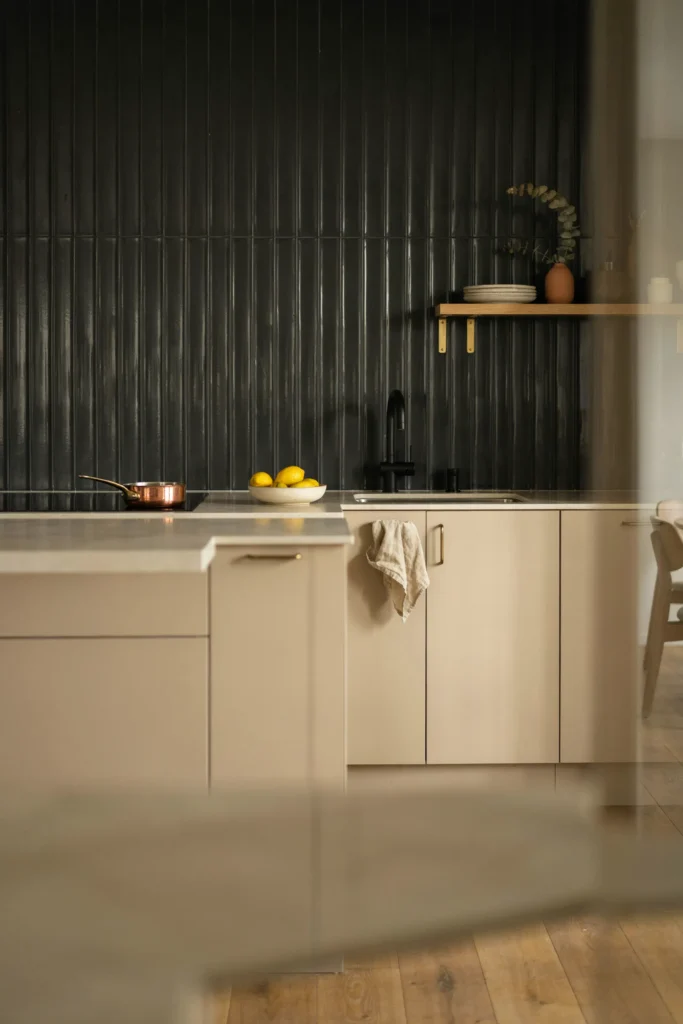
Texture can make a dark backsplash feel rich rather than flat. Black fluted tiles feature narrow raised lines that catch side lighting and create subtle shadows across the wall. Their vertical rhythm works particularly well with streamlined cabinetry, adding architectural detail without introducing extra colors or complicated decorative patterns.
For the strongest effect, install the fluted tiles in a consistent direction and use lighting that grazes the surface rather than shining directly into it. A warm LED strip beneath upper cabinets can emphasize the ridges while illuminating the worktop. Keep in mind that deep grooves may collect grease, so choose a finish that is practical to clean near cooking zones.
Black Slab Backsplash

A continuous black slab creates a bold backdrop with fewer visible interruptions than individual tiles. The uninterrupted surface makes the kitchen feel streamlined, particularly when the backsplash matches the countertop or features complementary stone veining. It also eliminates many grout lines, which can simplify routine cleaning around food preparation areas.
- Select the material: Consider granite, quartz, porcelain, or another suitable slab material based on your budget and cooking habits.
- Coordinate the edges: Plan seams and corners before installation for a consistent finish.
- Check heat requirements: Follow the manufacturer’s specifications around cooktops and ranges.
- Balance the darkness: Pair the slab with light cabinets, warm wood, or reflective hardware.
- Plan professional installation: Large slabs are heavy and require accurate measurements and secure support.
For a cohesive design, carry the same stone from the counter up the wall or choose a slab with subtle movement rather than dramatic competing veins. Black Kitchen Backsplash Ideas like this work particularly well in open-plan homes where the kitchen is visible from the living or dining area.
Black Penny Round Tiles

Small circular tiles introduce a softer look than sharp-edged squares or rectangles. Their repeated rounded shapes create a subtle texture that feels playful yet sophisticated, especially against simple cabinetry. A black penny round backsplash also offers a useful way to introduce pattern into a compact kitchen without adding multiple colors or elaborate ornamentation.
Quick Tip:
Choose grout in a shade that supports the look you want. Charcoal grout creates a relatively continuous dark surface, while light gray grout makes each circle stand out. Request a sample sheet before buying enough tile for the entire wall.
Penny rounds contain many grout joints, so installation and cleaning may take longer than with large-format tiles. Use a suitable grout and follow the recommended maintenance instructions, particularly behind the stove. Pair the mosaic with a simple countertop and restrained hardware to keep the small-scale pattern from competing with other finishes.
Black and Wood Backsplash

Black and natural wood create a striking balance between modern contrast and organic warmth. The dark backsplash anchors the kitchen, while oak shelves or timber cabinetry prevent the room from feeling cold. This combination works especially well in Scandinavian, Japandi, and modern rustic interiors where natural materials play an important role.
BEFORE
An all-white kitchen can sometimes feel visually flat, particularly when the cabinetry, walls, and countertop share similar pale tones. Introducing several unrelated finishes may create clutter rather than character.
AFTER
A black backsplash establishes a clear focal point, while warm wood adds grain, texture, and a softer natural tone. The contrast makes both materials more noticeable without requiring bright colors or decorative patterns.
For a balanced result, repeat the wood tone in two or three places, such as open shelves, stools, or cabinet fronts. Keep wooden accessories away from direct heat and splashing, and follow appropriate care instructions for the material. The combination is especially effective when paired with warm lighting and a light-colored countertop.
Black Fish Scale Tiles
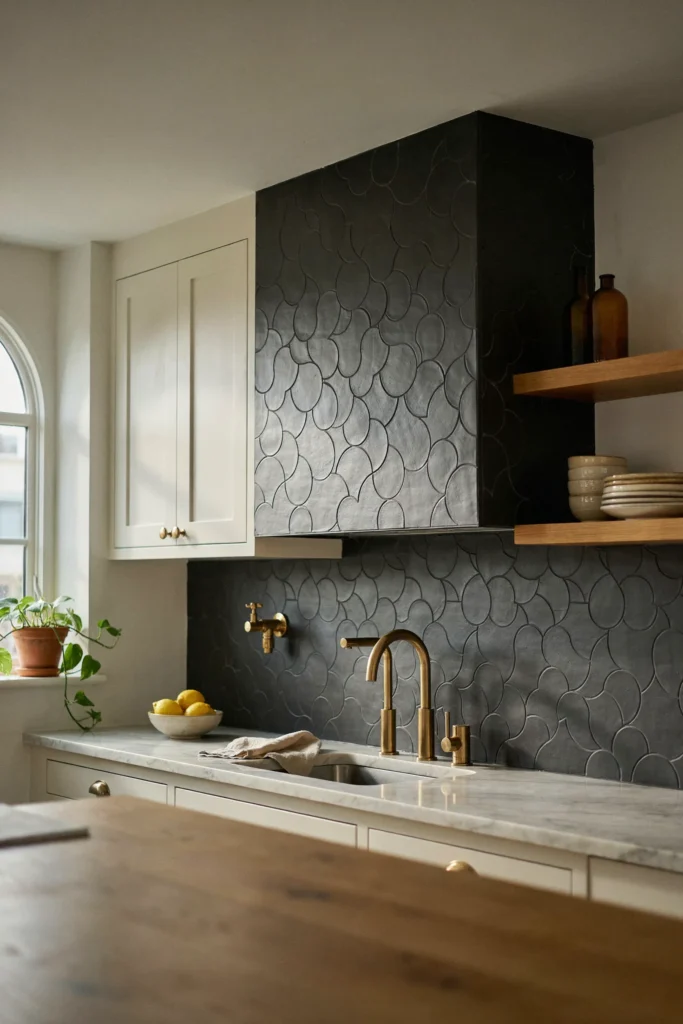
Curved fish scale tiles soften the strong appearance of a black backsplash while adding a distinctive decorative pattern. Their overlapping shapes create gentle movement across the wall, making them an interesting choice for kitchens that need texture without extra colors. Against simple white cabinetry, the scalloped edges become a subtle architectural feature.
- Choose the finish: Matte black creates a softer look, while glazed tiles provide reflective highlights.
- Plan the layout: Arrange a sample sheet to check how the curved edges meet at corners.
- Coordinate the grout: Select a compatible grout color that complements the tile shape.
- Keep other patterns simple: Use understated countertops and cabinet fronts to maintain visual balance.
Fish scale tiles often require careful cutting around outlets, cabinets, and corners, so professional installation may be worthwhile. I’ve noticed that unusual tile shapes look most intentional when repeated consistently rather than mixed with several other patterns. A backsplash behind the range is an ideal place to showcase this distinctive design.
Black Concrete Finish
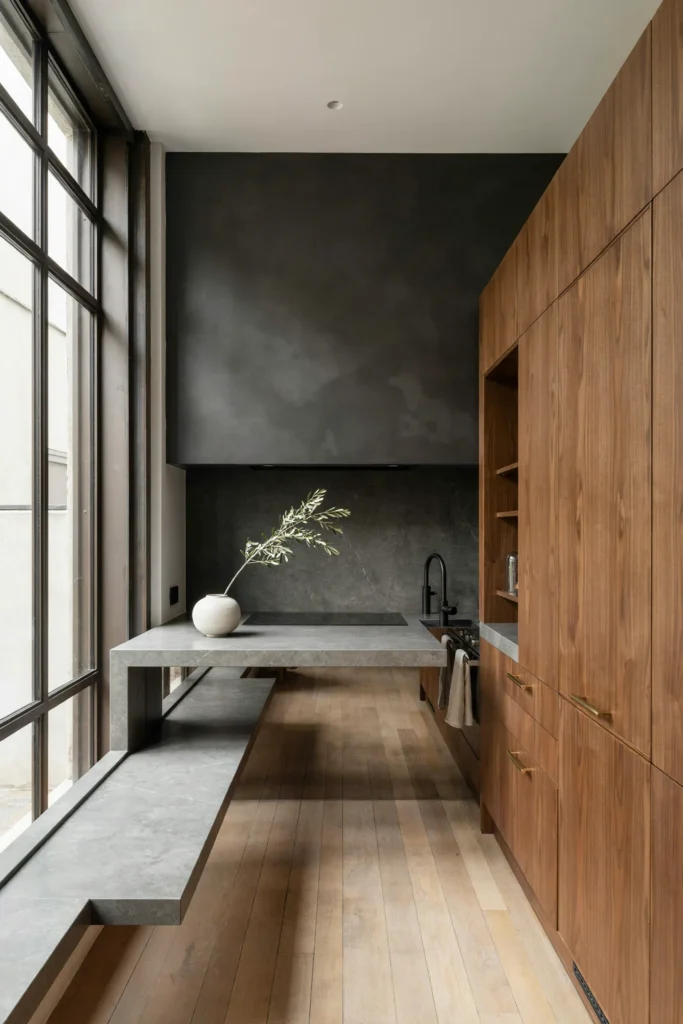
A concrete-look backsplash gives a kitchen an understated industrial character without relying on decorative tile patterns. Its cloudy charcoal variations add depth, while the matte surface pairs naturally with walnut, stainless steel, and simple black hardware. This finish works especially well in loft-inspired spaces and contemporary kitchens with clean cabinet lines.
Cost: Depends on whether you choose concrete-look porcelain, panels, or a specialty concrete finish.
Skill Level: Beginner-friendly for some prefabricated panels; professional installation may be needed for heavier materials.
Best For: Industrial, minimalist, and contemporary kitchens.
Maintenance: Follow the specific cleaning and sealing requirements of the chosen material.
For a convincing concrete aesthetic, look for subtle tonal variation rather than a perfectly uniform black surface. Pair it with warm wood or a creamy countertop to soften the industrial mood. Actual concrete may require sealing and careful moisture management, while suitable porcelain alternatives can offer easier everyday upkeep.
Black Mosaic Tile Wall

Small mosaic tiles create a layered black backdrop that catches light differently across the surface. The slight variation between charcoal, smoky gray, and deep black pieces prevents the wall from appearing completely flat. This design suits compact cooking areas, contemporary apartments, and kitchens where a little extra texture can make a simple layout feel more considered.
DO
- Choose a coordinated palette of black and charcoal tiles.
- Test the mosaic beside your countertop under daytime and evening lighting.
- Use a suitable grout to support the desired overall appearance.
- Keep surrounding finishes simple to avoid visual competition.
DON’T
- Combine several unrelated mosaic patterns in one small area.
- Ignore grout maintenance near the stove and sink.
- Choose highly reflective tiles without checking their glare under task lighting.
- Skip edge planning around outlets and cabinet transitions.
Because mosaics have numerous grout joints, installation can take longer than with larger tiles. For easier maintenance, compare the grout options and cleaning requirements before purchasing. A restrained mosaic pattern can deliver rich texture while allowing your cabinetry, countertop, and lighting to remain the main supporting features.
Black Zellige Tiles
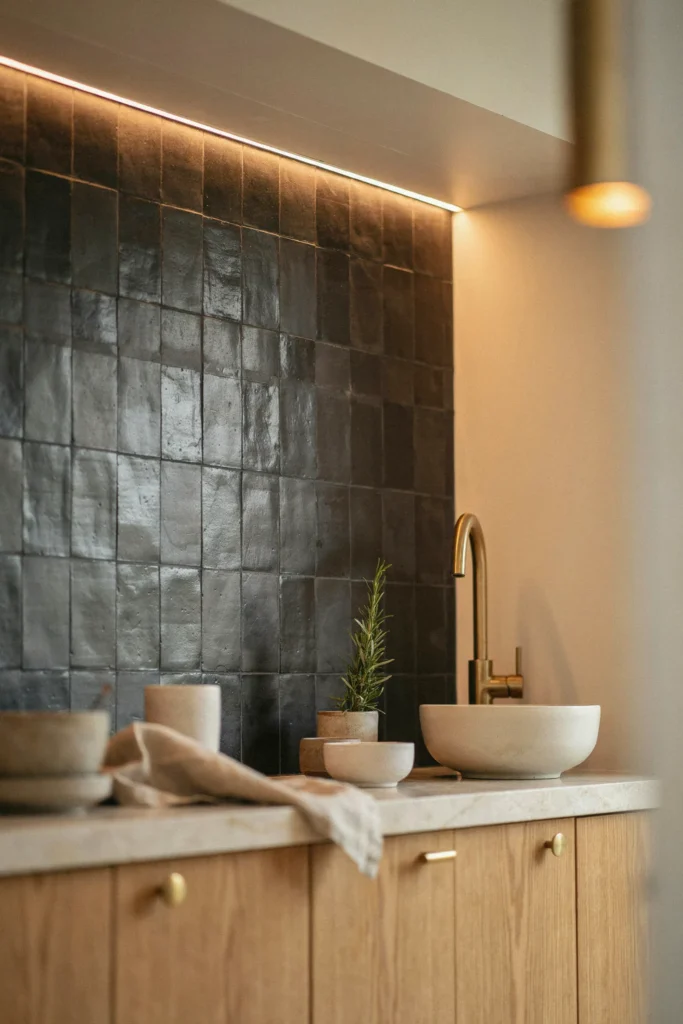
Handmade-look black zellige tiles bring depth and character to a kitchen through their slightly uneven surfaces and varied reflections. Unlike perfectly uniform tiles, each piece catches light differently, creating a rich finish that feels artisanal rather than overly polished. The effect pairs beautifully with natural wood, warm metals, and softly colored stone.
Cost: Moderate to high, depending on tile origin and installation requirements.
Time: Allow extra time for careful layout and precise fitting.
Skill Level: Intermediate to advanced for DIY installation.
Best For: Modern rustic, Mediterranean, and organic contemporary kitchens.
Choose a sample before committing because black glazed tiles can vary significantly in tone and sheen. Dark grout creates a more unified wall, while a contrasting grout highlights the irregular edges. For a balanced kitchen, combine the handcrafted surface with simple cabinets and avoid introducing too many competing textures.
Black Tiles With Brass Accents

Brass accents bring warmth to a black backsplash without taking away its bold character. The golden finish stands out against the dark surface, creating a refined contrast that feels equally suited to traditional and contemporary kitchens. Matching cabinet handles, a brass faucet, or a pot filler can tie the design together.
- Start with the backsplash: Choose matte black or satin tiles for a rich, understated foundation.
- Select one brass finish: Coordinate cabinet pulls, faucets, and other visible metal details.
- Balance the palette: Add cream cabinets, pale stone, or natural wood to soften the contrast.
- Plan the focal point: Position a brass pot filler or decorative fixture above the range if appropriate.
- Check undertones: Compare brass samples against the tile under both daylight and warm evening lighting.
Brushed brass generally offers a softer appearance than highly polished gold, making it easier to coordinate with textured black tiles. Avoid mixing too many metallic finishes unless the contrast is deliberate. A few repeated brass details can make the backsplash feel connected to the rest of the kitchen rather than like an isolated feature.
Black and Gray Tile Blend

A black and gray backsplash creates depth without the sharp contrast of pure black against bright white. The tonal variation gives the wall a layered appearance, making it especially useful in kitchens with gray cabinetry, stainless steel appliances, or concrete-look countertops. The result feels cohesive and modern without relying on an elaborate pattern.
BEFORE
A kitchen with gray cabinets, a gray countertop, and a plain dark wall can feel flat when every finish has a similar tone. The cooking area may lack enough variation to distinguish its different surfaces.
AFTER
Mixing black and charcoal gray tiles introduces subtle contrast while keeping the palette connected. Slight changes in tone create texture, and a pale countertop helps define the work area.
For the best balance, choose two or three related shades rather than mixing every available gray. Check samples beside the cabinets because cool gray and warm charcoal can look noticeably different under changing light. A restrained blend works particularly well in contemporary kitchens where a quiet, coordinated finish matters more than dramatic pattern.
Black Terrazzo Backsplash
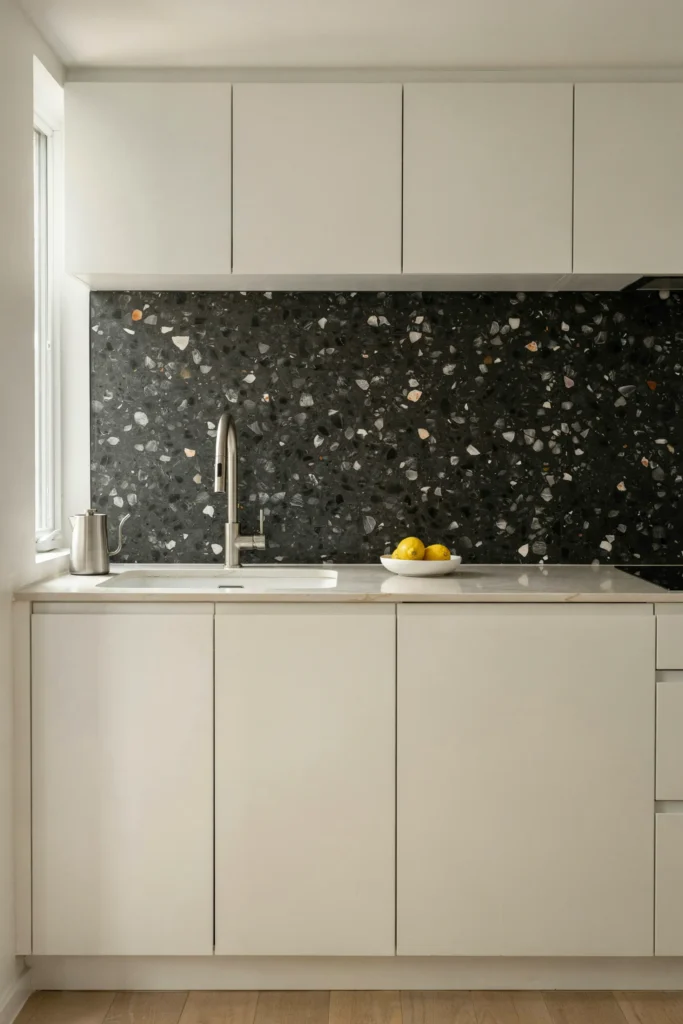
Black terrazzo adds personality through small flecks of contrasting color scattered across a dark background. Unlike a solid black surface, the speckled pattern introduces movement and texture while keeping the overall palette controlled. It pairs well with simple cabinetry, especially white, cream, or light oak finishes that allow the terrazzo to stand out.
- Match the chips: Choose white and cream flecks for a softer contrast or gray chips for a more understated effect.
- Coordinate the countertop: A solid light surface keeps the backsplash from feeling too busy.
- Repeat one accent color: Pick a tone from the terrazzo and echo it in accessories or hardware.
- Check the scale: Larger chips create a bolder look, while fine speckles feel more subtle.
- Choose practical materials: Terrazzo-look porcelain can provide a lower-maintenance alternative to some natural terrazzo products.
For a cohesive finish, let the backsplash supply most of the pattern and keep nearby surfaces relatively quiet. If you’re considering natural terrazzo, check its sealing and cleaning requirements before installation. A porcelain version can be particularly practical behind a busy cooking area where splashes and grease are common.
Black Vertical Stack Tiles
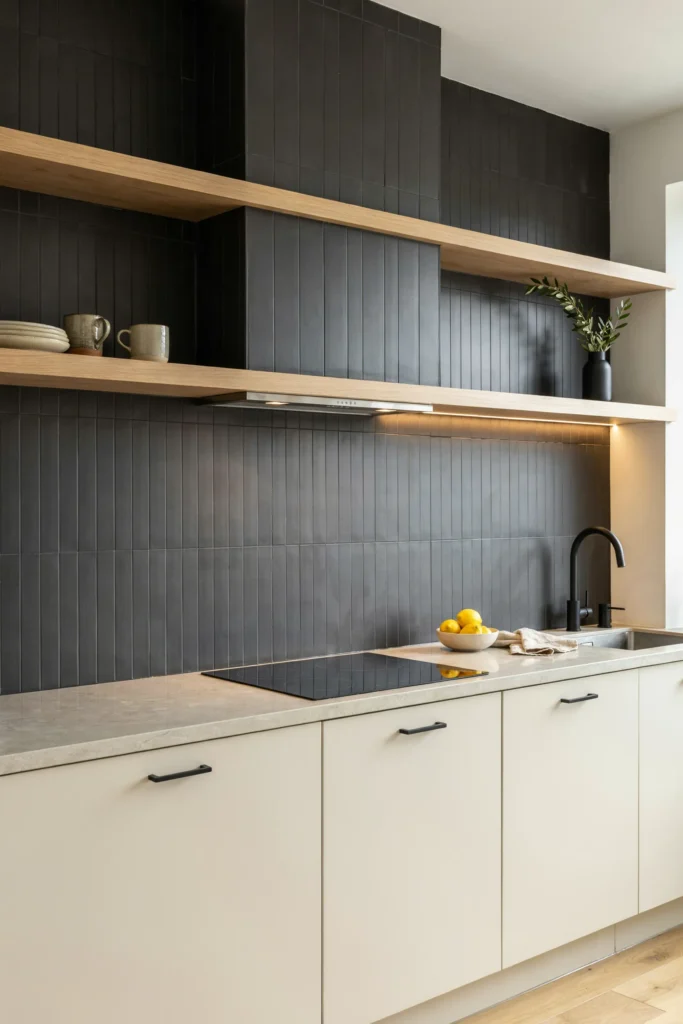
Vertical stack tiles create a clean, architectural look that feels fresh without relying on complicated patterns. Their upright lines draw attention to the height of the backsplash, making them useful in kitchens with tall ceilings or narrow wall sections. Matte black tiles provide a strong backdrop for pale cabinets and warm wood details.
Quick Tip:
Use a level and carefully marked guide lines to keep each vertical row straight. Even small alignment errors become noticeable across a large wall. If the backsplash includes several outlets or corners, plan the tile cuts before installation to avoid awkward narrow pieces.
For a polished result, choose grout that supports your intended look. Dark grout creates a continuous surface, while light gray makes the vertical arrangement more noticeable. This layout works especially well with simple cabinet doors and minimal countertop accessories, allowing the tall lines to provide enough visual interest on their own.
Black Geometric Pattern Tiles
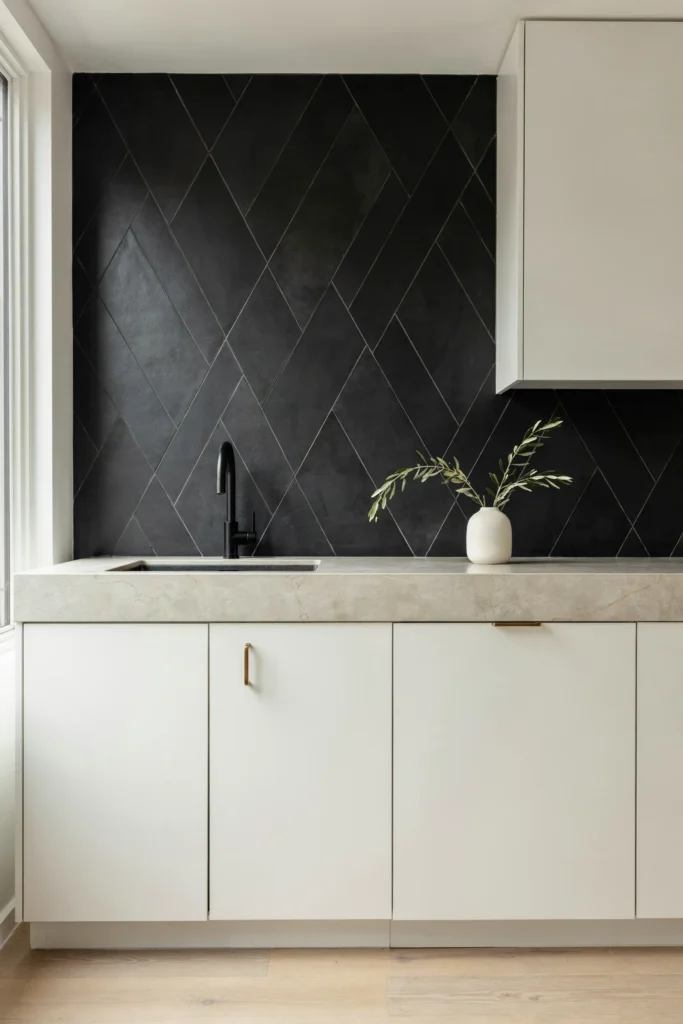
Geometric tiles turn a black backsplash into a decorative focal point without requiring a colorful palette. Repeating diamonds, angular shapes, or interlocking lines add movement and structure to the cooking area. This approach works particularly well in minimalist kitchens where the cabinets and countertops are intentionally simple.
| Design choice | Option A: Bold geometry | Option B: Subtle geometry |
| Pattern contrast | Black and white shapes | Black and charcoal tones |
| Visual effect | Strong, graphic focal point | Quiet texture and depth |
| Best cabinet pairing | Plain white or cream | Oak, gray, or white |
| Styling approach | Minimal accessories | Natural textures and simple decor |
Before ordering, lay out a few sample tiles together to see how the pattern repeats across seams and corners. Some geometric designs look very different when installed than they do on a single sample. Keep surrounding finishes understated so the pattern remains clear, and use appropriate task lighting to reveal its details without creating distracting glare.
Black Slate Stone Backsplash

Black slate brings natural texture and a grounded, earthy feel to the kitchen. Its subtle variations in charcoal and deep gray make the backsplash more interesting than a perfectly uniform black wall. This finish works beautifully with rustic wood, matte hardware, and light countertops, creating contrast without making the room feel overly formal.
DO
- Choose slate with consistent thickness for easier installation.
- Pair the stone with warm wood or creamy cabinetry.
- Check sealing requirements before installation.
- Use gentle lighting to reveal the natural surface texture.
DON’T
- Assume every slate product has the same maintenance needs.
- Use harsh cleaners that may damage the finish.
- Ignore uneven surfaces around outlets and cabinet edges.
- Combine too many competing stone patterns nearby.
Natural slate can vary in texture and color, so inspect several pieces before finalizing your selection. Some products require sealing and careful cleaning, especially in areas exposed to grease and moisture. If you love the earthy appearance but prefer a more uniform surface, slate-look porcelain offers another option worth comparing.
Black Backsplash With Open Shelves

Open shelving against a black backsplash creates a striking contrast while giving everyday kitchen essentials a decorative role. Light-colored dishes, glass jars, and natural wood stand out against the dark wall, making the arrangement feel organized and intentional. This design suits smaller kitchens where a few carefully styled shelves can replace bulky upper cabinets.
- Choose the shelf material: Natural oak or walnut adds warmth against matte black tiles.
- Plan the spacing: Leave enough room for frequently used dishes and taller kitchen items.
- Group similar objects: Arrange ceramics by color and stack plates neatly to reduce visual clutter.
- Add practical lighting: Install suitable under-shelf lighting to illuminate both the backsplash and worktop.
- Keep cooking zones safe: Follow local requirements for shelf placement and combustible materials near cooking appliances.
CONCLUSION
A black backsplash can bring depth, contrast, and personality to almost any kitchen style. Whether you’re drawn to classic subway tiles, textured slate, dramatic marble, or a simple matte finish, the right combination can make your space feel more intentional and welcoming.
The best Black Kitchen Backsplash Ideas are the ones that suit your daily routine, lighting, budget, and personal taste. Start with one favorite design, compare samples with your cabinets and countertops, and choose materials that fit your maintenance needs.
Save this post on Pinterest for your next kitchen refresh, try an idea that inspires you, and share this article with someone planning a kitchen makeover. Your dream kitchen can start with one thoughtful detail!