20 Tiny Cottage Kitchen Ideas for a Delightful Retreat
A tiny kitchen can still feel warm, charming, and full of personality. The secret is making every corner count while choosing details that make you smile.
These Tiny Cottage Kitchen Ideas combine cozy cottage charm with practical solutions for small spaces. From cream shaker cabinets and rustic wooden shelves to compact breakfast nooks and clever pantry storage, each idea helps you create a kitchen that feels inviting without sacrificing functionality.
Small kitchens often come with everyday challenges, such as limited counter space, awkward corners, and too little room for dining. Thoughtful choices can help solve these problems while making the room feel brighter and more organized. I’ve noticed that natural materials, soft colors, and carefully chosen accessories can make even a modest kitchen feel more welcoming.
Whether you’re refreshing a rental, updating an older cottage, or planning your dream country home, these ideas offer inspiration you can adapt to your budget and layout. Get ready to discover practical details worth saving for your next kitchen makeover.
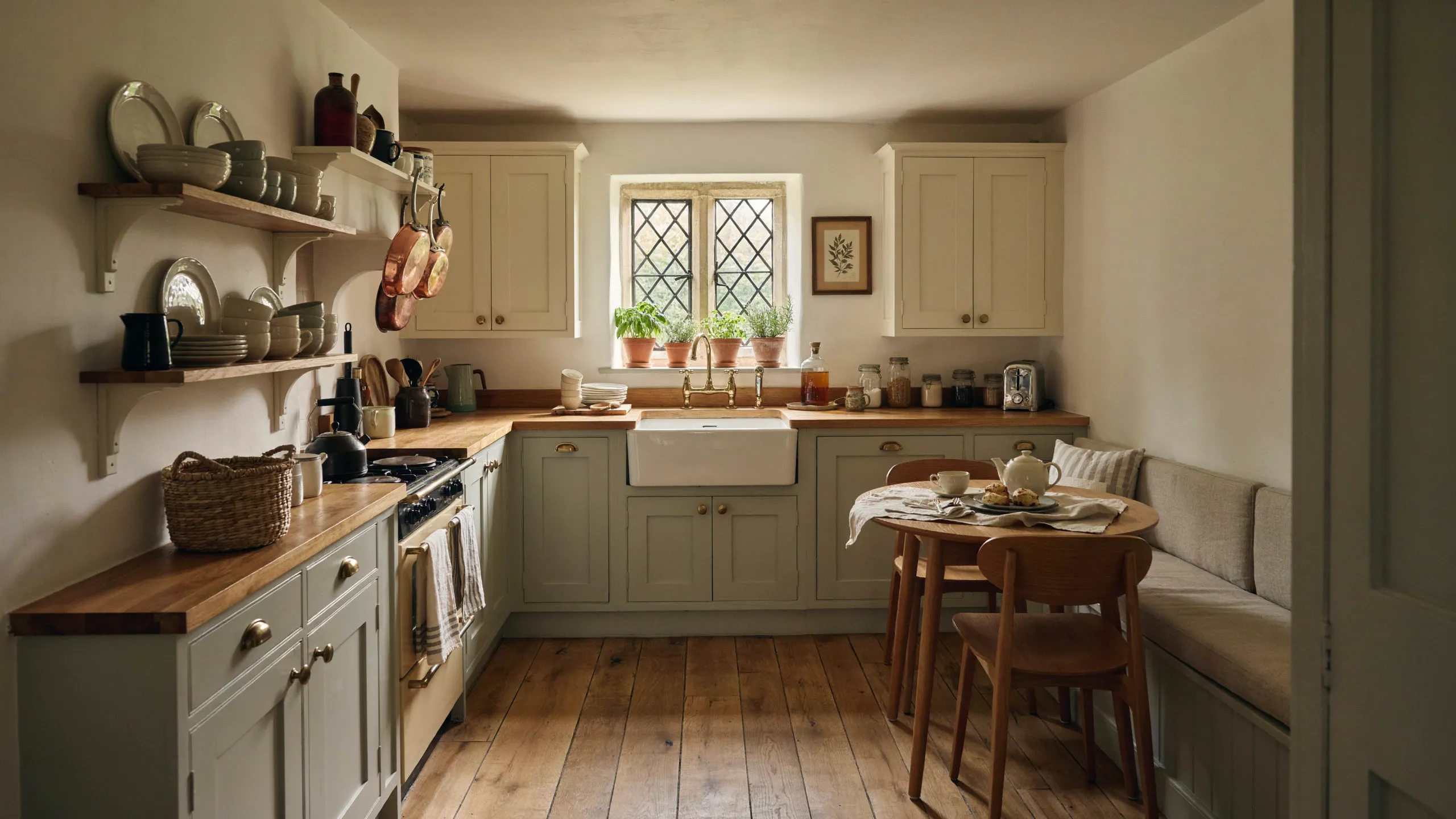
Cream Shaker Cabinets
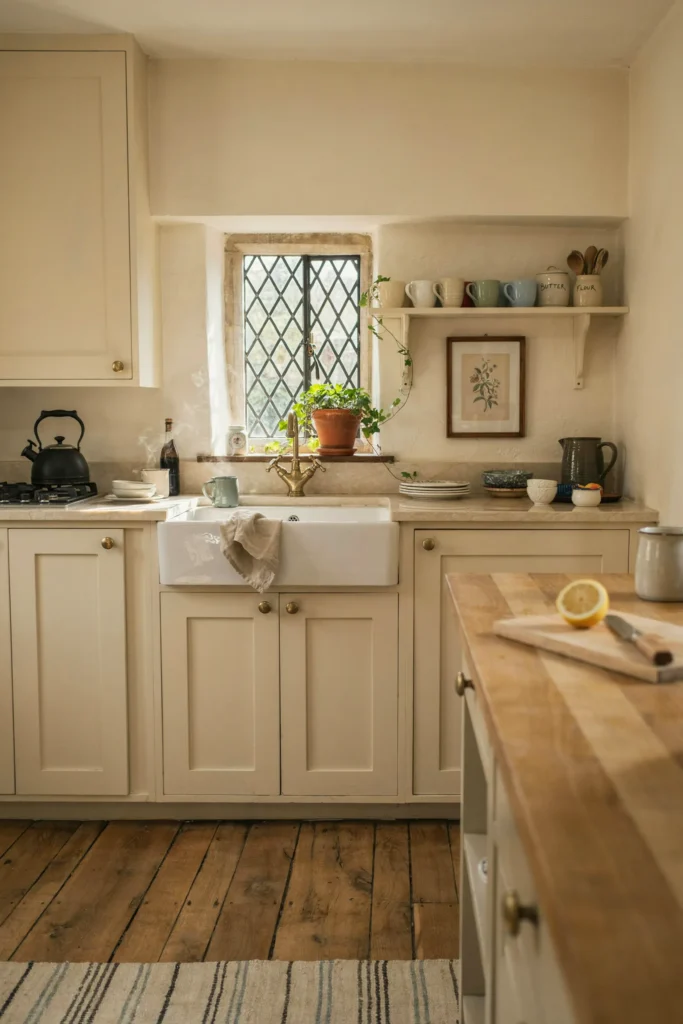
Cream shaker cabinets bring a soft, timeless look to a small kitchen without making it feel crowded. Their simple recessed panels add character, while the light color reflects natural light and helps the room feel more open. Pair them with warm wood countertops and antique brass hardware for a welcoming cottage finish.
In a compact layout, choose cabinets that reach close to the ceiling to gain extra storage without taking up more floor space. Keep everyday plates, glasses, and cooking essentials behind closed doors, then display a few favorite ceramics on an open shelf. The balance creates a kitchen that feels charming, organized, and practical.
ALSO READ : Halloween Tiered Tray Decor Ideas
Open Wooden Shelving

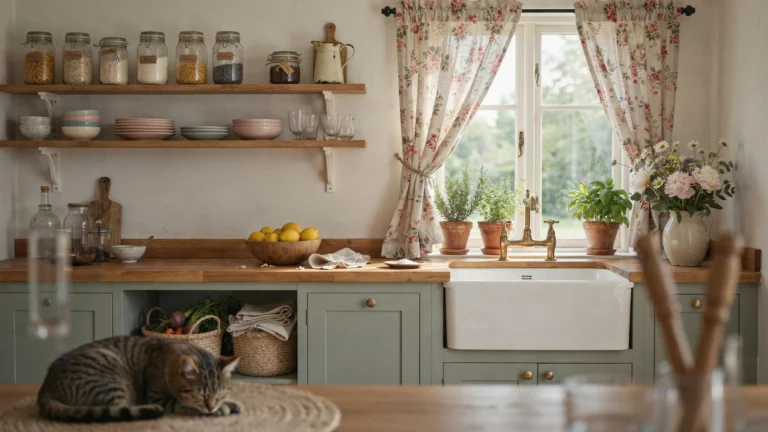
Open wooden shelving gives a tiny kitchen an airy appearance while keeping frequently used items within easy reach.
- Choose natural wood: Oak, pine, or reclaimed timber adds warmth against white or cream walls.
- Display everyday dishes: Keep matching plates, bowls, and mugs together for a tidy arrangement.
- Use glass storage jars: Store dry ingredients in clear containers to make shelves practical and attractive.
- Add a little greenery: A small herb pot brings freshness without occupying much room.
- Leave breathing space: Avoid filling every inch with decorative objects.
For the best result, install shelves above a countertop or beside the cooking area, away from direct heat and splashes. Check wall construction and use suitable anchors before installation. Keep heavier items on lower shelves, and reserve higher spaces for lightweight accessories you rarely need.
Pinterest Account : HavenAndHue2
Sage Green Accents

Muted sage green adds a fresh, nature-inspired touch without overwhelming a small cottage kitchen. The color works especially well with creamy whites, honey-toned wood, and aged brass details. For anyone exploring Tiny Cottage Kitchen Ideas, it offers a simple way to create personality while keeping the overall space calm and bright.
Start with sage green lower cabinets if you prefer a subtle change, or introduce the shade through a painted backsplash, bar stools, or a small freestanding cupboard. Pair it with warm white walls to prevent the room from feeling dark. A few leafy herbs on the windowsill can reinforce the natural palette without adding unnecessary decoration.
Butcher Block Countertops
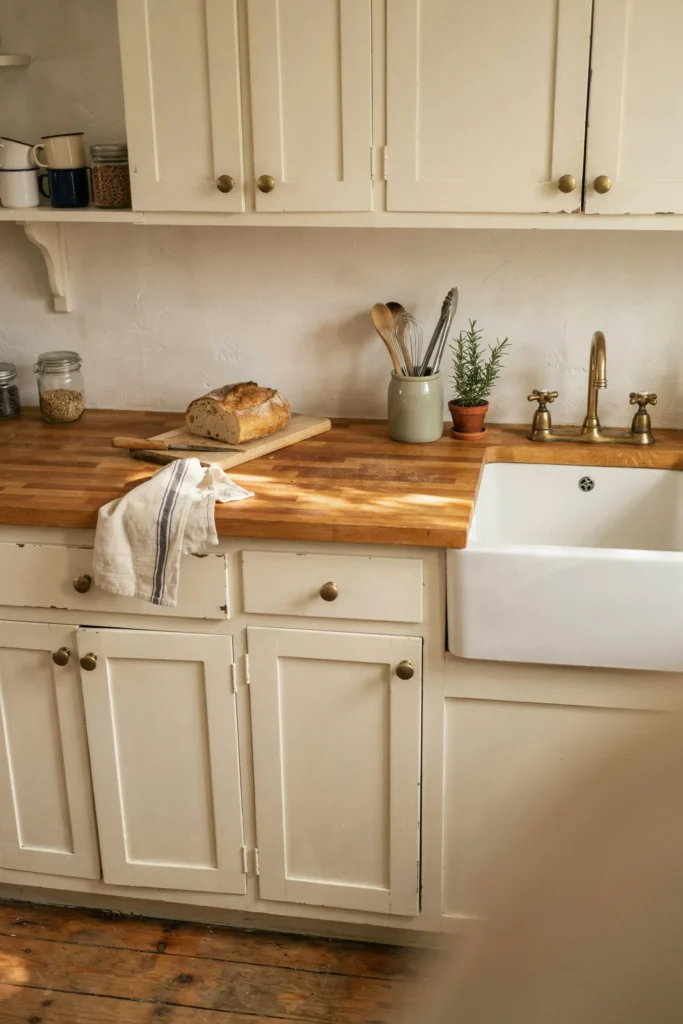
BEFORE: A small kitchen with mismatched surfaces and cold finishes can feel less inviting, especially when surrounded by plain cabinets and limited natural light. Scratched laminate may also make the room look tired.
AFTER: Warm butcher block countertops introduce natural grain, gentle color, and a handcrafted cottage character. Paired with light cabinets, they create a welcoming contrast without adding visual clutter.
For everyday practicality, choose a countertop finish designed for kitchen use and follow its maintenance instructions. Keep standing water away from seams, wipe spills promptly, and use cutting boards to protect the surface. A small wooden worktop can become the visual centerpiece of your cottage kitchen.
Farmhouse Sink Styling

A farmhouse sink can give even the smallest cottage kitchen a distinctive focal point. Follow these steps to create a practical setup around it.
- Measure the cabinet: Check the available width, depth, and support requirements before choosing a sink.
- Select a compact design: A single-bowl model often provides useful washing space without demanding an oversized countertop.
- Pair it with a suitable faucet: A high-arc faucet helps accommodate pots while complementing the traditional look.
- Keep the surrounding counter clear: Store dish soap in a small tray and keep a drying rack to one side.
White fireclay and porcelain finishes suit classic cottage interiors, while stainless steel can work in a more relaxed, modern design. Check installation requirements carefully because farmhouse sinks may need cabinet modifications and additional support. The result is a charming workstation that earns its space through everyday use.
Vintage Patterned Backsplash

| Design Detail | Option A: Busy Pattern | Option B: Subtle Pattern |
| Visual effect | Bold, decorative focal point | Calm, understated charm |
| Best color palette | Blue, terracotta, cream | Sage, ivory, soft gray |
| Small kitchen suitability | Best on a limited area | Works across a larger backsplash |
| Styling approach | Keep nearby finishes simple | Add a few vintage accessories |
A patterned backsplash brings personality to a compact kitchen without requiring a complete renovation. For a balanced look, choose tiles with one or two colors already present in your cabinets or countertops. A narrow strip behind the stove or sink can provide enough decorative impact while keeping the rest of the room visually restful.
Before purchasing tiles, order samples and view them under your kitchen’s actual lighting. Check that the material is suitable for the installation area and follow the manufacturer’s guidance for grout, sealing, and cleaning. Simple cabinet fronts and uncluttered countertops help intricate patterns stand out without making the room feel smaller.
Built-In Breakfast Nook
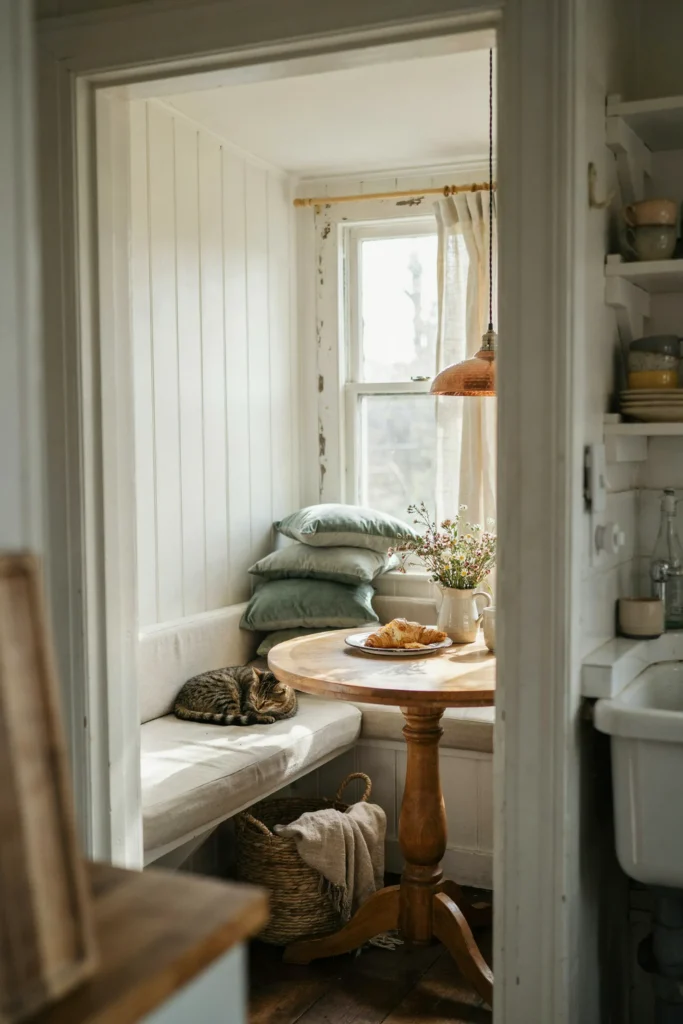
DO:
- Fit an L-shaped bench into an unused corner to create seating without crowding the walkway.
- Choose a round pedestal table for easier movement around the seating area.
- Add lift-up bench seats or drawers for storing linens, placemats, and small kitchen items.
- Use washable cushions in cream, sage, or muted floral prints.
DON’T:
- Block cabinet doors or refrigerator access with oversized seating.
- Choose thick armrests that take up valuable room.
- Fill every cushion with bold patterns that compete with nearby finishes.
- Forget to measure the space needed to pull out chairs or sit comfortably.
A breakfast nook makes a tiny cottage kitchen feel more personal while giving you a spot for morning coffee, quick meals, or recipe planning. I’ve noticed that built-in seating works especially well in awkward corners that would otherwise remain unused. Keep the table appropriately sized and preserve a clear path through the kitchen.
Ceiling-Height Cabinets
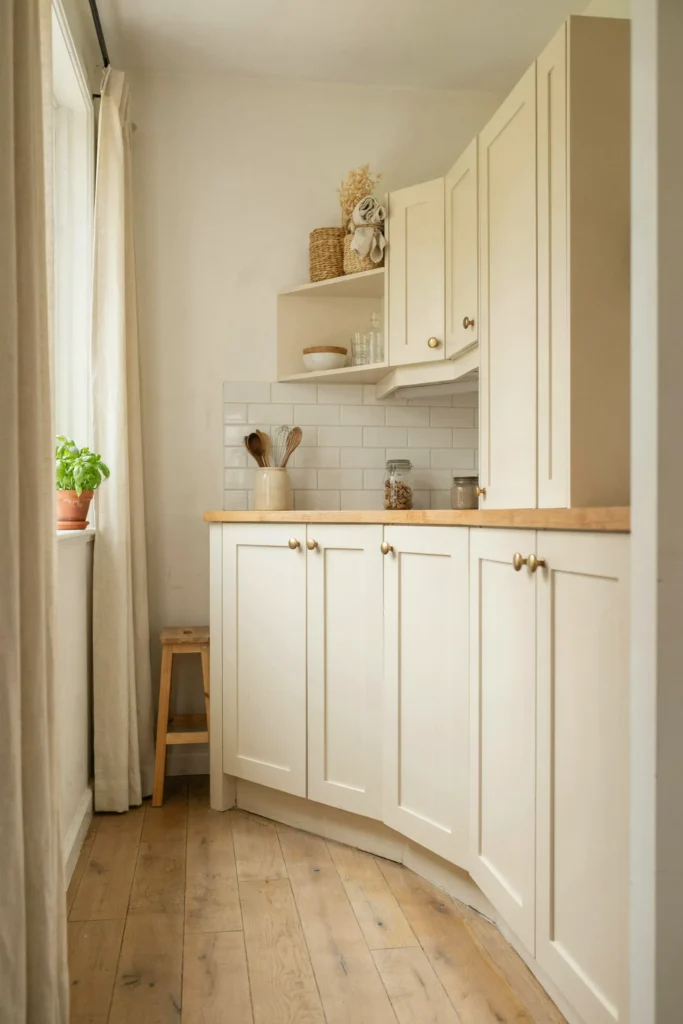
Storage Capacity: High, especially for seasonal dishes and rarely used cookware.
Visual Effect: Creates a continuous vertical line and reduces the appearance of awkward gaps above cabinets.
Best For: Small kitchens with limited floor space and sufficient ceiling height.
Practical Consideration: Upper shelves may require a stable step stool or other safe access solution.
Extending cabinets to the ceiling helps use space that often becomes a collection point for dust and miscellaneous items. Choose closed cupboards for a tidy appearance, and reserve the highest shelves for lightweight items you use infrequently. Keep everyday glasses, dishes, and cooking tools at comfortable heights so your kitchen remains convenient as well as attractive.
Compact Cottage Island
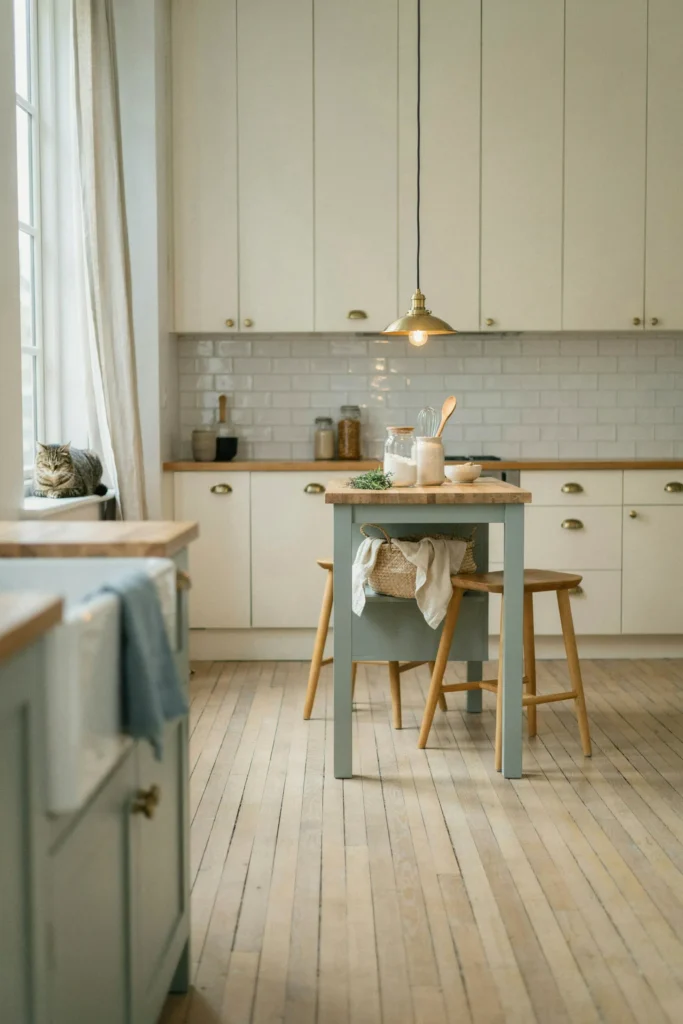
A compact island can provide extra preparation space, storage, and casual seating without requiring a large kitchen footprint. Before buying one, measure the room carefully and map out the walking routes between the island, cabinets, oven, and refrigerator. The island should support your routine rather than become another obstacle.
- Measure first: Check the island dimensions and available clearance on every side.
- Choose open shelving: Store mixing bowls, baskets, or frequently used cookware below the worktop.
- Look for wheels with locks: A movable island offers flexibility when you need additional floor space.
- Keep the finish simple: Sage green, cream, or natural wood complements classic cottage cabinetry.
For particularly narrow kitchens, a slim worktable or butcher block cart may be more useful than a fixed island. Aim for comfortable circulation and follow appliance and installation requirements when planning the layout. Even a small movable surface can make meal preparation easier while preserving the cozy character of your cottage kitchen.
Vintage Pendant Lighting

- Choose the right scale: Select a pendant that suits the ceiling height and kitchen dimensions without dominating the room.
- Match the finishes: Aged brass, antique bronze, and opal glass complement traditional cottage cabinetry.
- Layer your lighting: Combine decorative pendants with under-cabinet lights for safer food preparation.
- Keep the silhouette simple: A single glass shade can provide character without adding visual clutter.
- Check the light output: Choose suitable brightness and color temperature for both cooking and relaxed meals.
Thoughtful lighting makes a small kitchen feel warmer and more functional throughout the day. Place a pendant over a breakfast table or island when the ceiling and layout allow, rather than hanging it where it obstructs movement. For work surfaces, add task lighting that reduces shadows and makes chopping, reading recipes, and cleaning easier.
Ceramic Display Rails
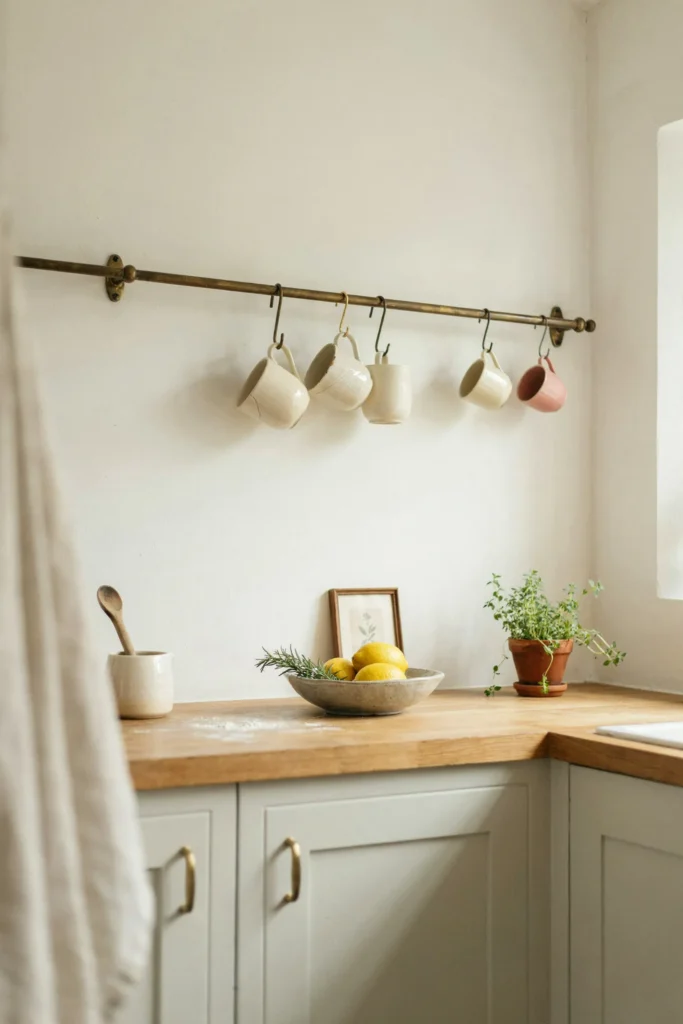
Quick Tip: Install a sturdy rail where hanging cups and utensils will not interfere with cooking or sink activities. Check the wall material and use suitable fixings for the combined weight of the rail and its contents. Keep frequently used pieces within easy reach.
A ceramic display rail adds storage while showing off the everyday objects that give a cottage kitchen its personality. Choose mugs in similar shades, such as ivory, soft blue, or sage, to create a cohesive display. Leave small gaps between items so the wall does not feel crowded, and place heavier cookware in a cupboard instead.
Window Herb Garden

BEFORE: A small kitchen windowsill often becomes cluttered with unrelated objects, leaving little room for useful greenery. Herbs may also struggle when placed in a dim corner without enough natural light.
AFTER: A neatly arranged herb garden adds fresh color and keeps cooking ingredients close at hand. Matching pots and a simple tray make the display look intentional while helping contain soil and excess water.
Choose herbs according to the light your window receives. Basil and parsley generally appreciate bright conditions, while rosemary and thyme need plenty of light and well-drained soil. Use pots with drainage holes and waterproof saucers, and avoid placing plants where they obstruct the window or interfere with food preparation. A few well-kept herbs bring practical freshness to a tiny cottage kitchen.
Reclaimed Wood Accents

- Select a focal point: Choose one reclaimed wood element, such as a shelf, countertop section, or decorative beam.
- Check the material: Use properly cleaned, structurally sound wood suitable for its intended indoor application.
- Pair contrasting finishes: Combine weathered timber with cream cabinetry and simple brass hardware.
- Protect the surface: Apply a suitable food-safe finish to wood used for food preparation, following the product instructions.
Reclaimed wood adds the aged character that makes cottage kitchens feel collected rather than overly polished. Keep the amount restrained so the room does not become visually heavy. A single shelf above the counter or a small timber serving ledge can introduce natural texture without sacrificing precious storage space.
Glass-Front Cabinets

| Design Choice | Option A: Clear Glass | Option B: Reeded Glass |
| Appearance | Open, bright, and traditional | Soft, textured, and slightly concealed |
| Best Display | Coordinated plates and glassware | Mixed everyday dishes |
| Visual Effect | Shows every item clearly | Softens visual clutter |
| Maintenance | Fingerprints and contents remain visible | Textured surfaces may need careful cleaning |
Glass-front cabinets can make a compact kitchen feel lighter by breaking up a solid wall of cupboard doors. Choose clear glass if you enjoy displaying matching dishes, or reeded glass if you prefer a little privacy for everyday items. Keep the contents simple, grouping similar colors together for a tidy appearance.
For a practical arrangement, place frequently used cups and plates on lower shelves and reserve higher shelves for occasional serving pieces. Check that cabinet hinges and glass panels are suitable for the doors, and avoid overcrowding the shelves. A few well-arranged items will create a more relaxed display than a cabinet packed from edge to edge.
Fold-Down Dining Table
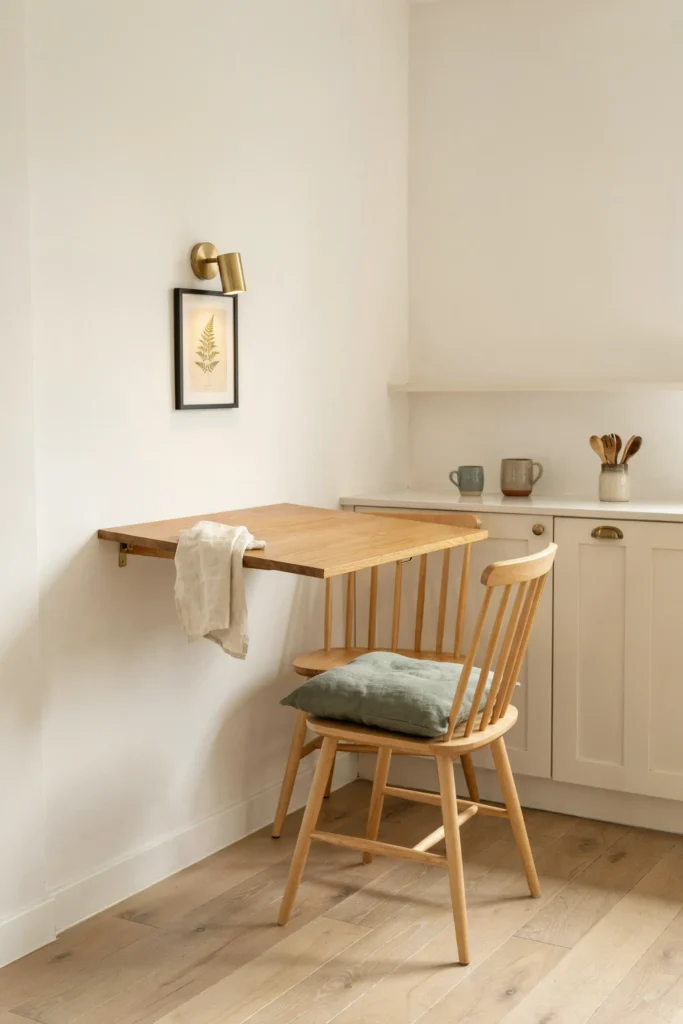
DO:
- Mount the table to a structurally suitable wall with hardware rated for its intended load.
- Measure the open table depth and chair clearance before installation.
- Choose a rounded or softly edged tabletop to reduce sharp corners in tight walkways.
- Keep folding chairs nearby or select seating that stores flat.
DON’T:
- Attach a load-bearing table to drywall without appropriate structural support.
- Position the open table where it blocks an exit, appliance, or cabinet door.
- Overload the tabletop beyond its rated capacity.
- Forget to check the folding mechanism periodically for loose fixings.
A fold-down table provides a flexible dining spot without permanently claiming valuable floor space. It can serve as a breakfast table, a place to sort groceries, or an occasional baking station. In a particularly narrow kitchen, pair it with lightweight chairs that tuck away easily. Measure the complete setup before buying so the open table remains comfortable to use.
Beadboard Wall Panels

Cost: Low to moderate, depending on panel material and installation.
Time: One weekend for a small wall, depending on preparation and finishing.
Skill Level: Beginner to intermediate, depending on cutting and fitting requirements.
Best For: Adding traditional cottage character to plain walls, breakfast corners, or suitable backsplash areas.
Beadboard introduces subtle vertical lines that give a small kitchen texture without relying on bold patterns. Painted in warm white or pale sage, it pairs beautifully with natural wood and traditional hardware. Use moisture-resistant materials in areas exposed to humidity, and follow the manufacturer’s guidance for cleaning and finishing.
For a cohesive look, install panels on one feature wall or below a suitable chair rail rather than covering every surface. Keep the surrounding decor simple so the grooves remain visible without competing with other details. Before installing beadboard near a sink or cooking area, confirm that the chosen product is appropriate for the exposure and local building requirements.
Woven Basket Storage

Natural baskets can turn awkward shelves and open storage areas into attractive, organized spaces. Choose baskets that fit your available dimensions, then assign each one a specific purpose.
- Store tea towels and cloth napkins in a shallow basket near the dining area.
- Group onions, garlic, or other suitable dry produce in a well-ventilated basket away from damp surfaces.
- Keep baking accessories together in a labeled basket inside a pantry cupboard.
- Use handled baskets for lightweight items that need to move between shelves and countertops.
- Select washable or wipeable alternatives for areas exposed to food spills.
For Tiny Cottage Kitchen Ideas that combine charm with everyday function, woven storage is a useful place to start. Natural fibers soften hard cabinet edges and complement wood countertops, but baskets should stay dry and clean. Avoid storing wet produce or damp cloths in enclosed wicker containers, as trapped moisture can encourage mold.
Two-Tone Cottage Cabinets

BEFORE: A single uninterrupted row of cabinets can make a small kitchen feel flat, especially when the finishes lack contrast. Dark cabinetry throughout may also absorb more light in a room with limited windows.
AFTER: Two-tone cabinetry creates visual depth while allowing the upper portion of the kitchen to remain bright. Sage, dusty blue, or muted olive on the lower cabinets pairs naturally with ivory or warm white above.
For a balanced finish, keep the countertop and backsplash relatively simple. Brass hardware adds warmth, while oak shelves can connect the two cabinet colors. If repainting existing cabinets, clean and prepare the surfaces properly, then choose a durable coating designed for cabinetry. Test paint samples in morning and evening light before committing to the final shades.
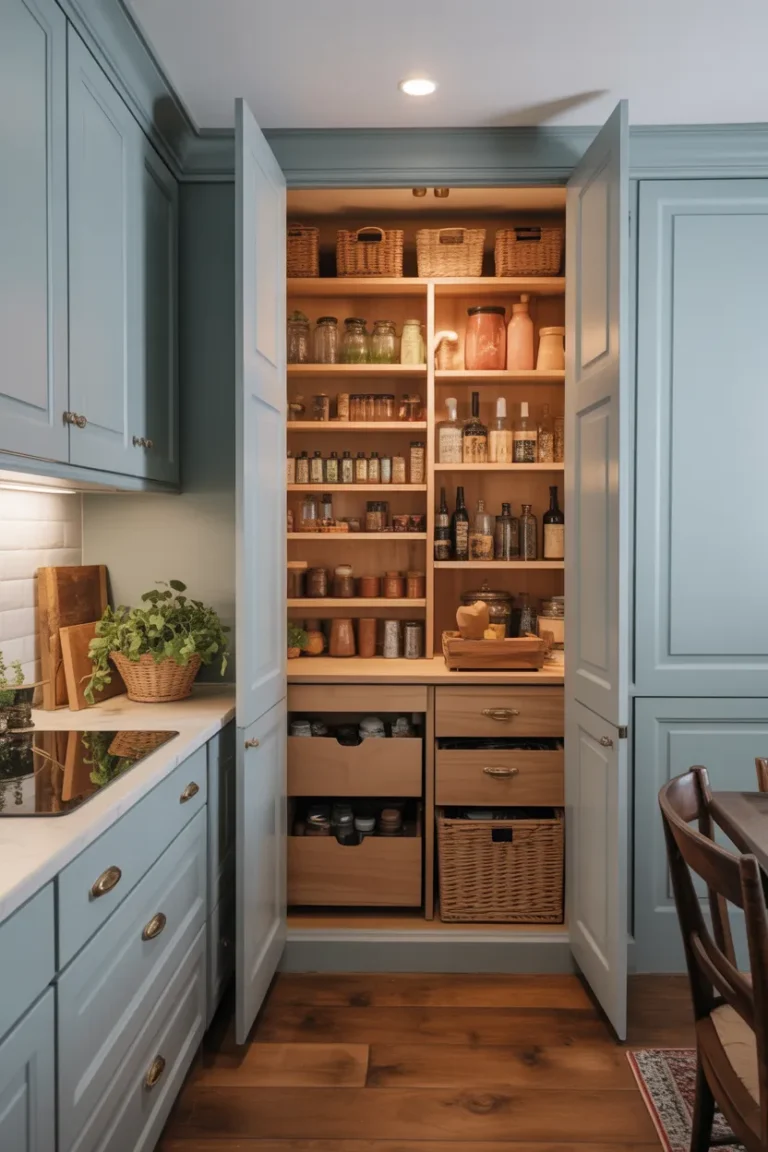
Narrow Pantry Pullouts
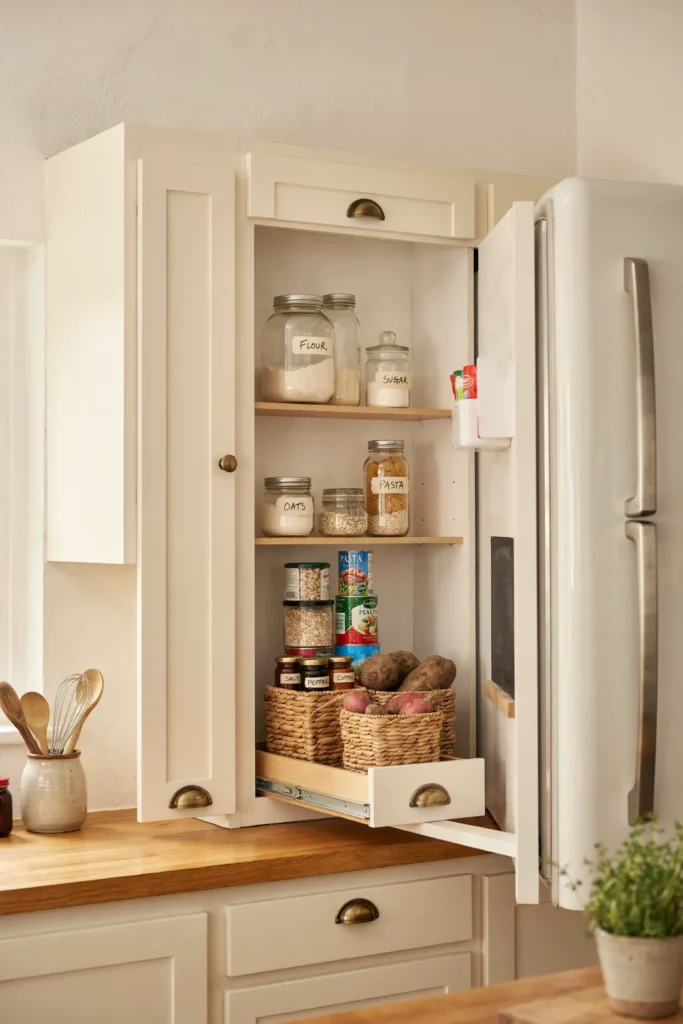
- Measure the gap: Check the opening width, depth, height, and any nearby door or appliance clearances.
- Choose a suitable pullout: Select a narrow cabinet organizer with sturdy runners and shelves designed for pantry goods.
- Group items by use: Keep spices together, place frequently used ingredients at comfortable heights, and store heavier containers on lower shelves.
- Secure the installation: Follow the manufacturer’s mounting instructions and check the loaded unit for smooth, stable movement.
A narrow pullout can turn an overlooked gap into valuable storage for a compact cottage kitchen. It works particularly well beside a refrigerator or between cabinet units, provided there is enough clearance for the mechanism. Keep labels facing outward so ingredients are easy to find, and avoid overloading shelves beyond their rated capacity.
Cozy Cottage Breakfast Bar

A small breakfast bar creates a casual place to sip coffee, eat toast, or chat while meals are being prepared. In a narrow cottage kitchen, a slim countertop extension can offer the benefits of a dining spot without requiring a separate table.
- Keep the depth practical: Choose a size that provides comfortable space for a plate and cup while preserving circulation.
- Select compact stools: Backless or neatly tucked stools can help the kitchen feel less crowded.
- Coordinate materials: Pair an oak bar with cream cabinetry, sage accents, or antique brass details.
- Plan comfortable clearance: Check legroom and make sure seating does not obstruct appliances, drawers, or walkways.
For a cohesive cottage look, style the bar with just a small vase or a simple ceramic bowl when it is not in use. Keep the main worktop clear for food preparation, and make sure the support structure is appropriate for the countertop. Even a modest breakfast bar can give a tiny kitchen a useful everyday gathering spot.
CONCLUSION
A delightful cottage kitchen isn’t about having more space. It’s about making the space you have work beautifully for your everyday life. From sage green cabinets and vintage lighting to fold-down tables and clever storage, these Tiny Cottage Kitchen Ideas show how small details can bring warmth, character, and function into one compact room.
Start with one change that suits your needs and budget, then build on it as time allows. I’ve seen how thoughtful touches like natural wood, soft lighting, and organized shelves can make a kitchen feel more inviting.
Save this article on Pinterest for future inspiration, try your favorite ideas, and share it with someone who loves cozy cottage style. Your little kitchen can become a place you’ll love spending time in.