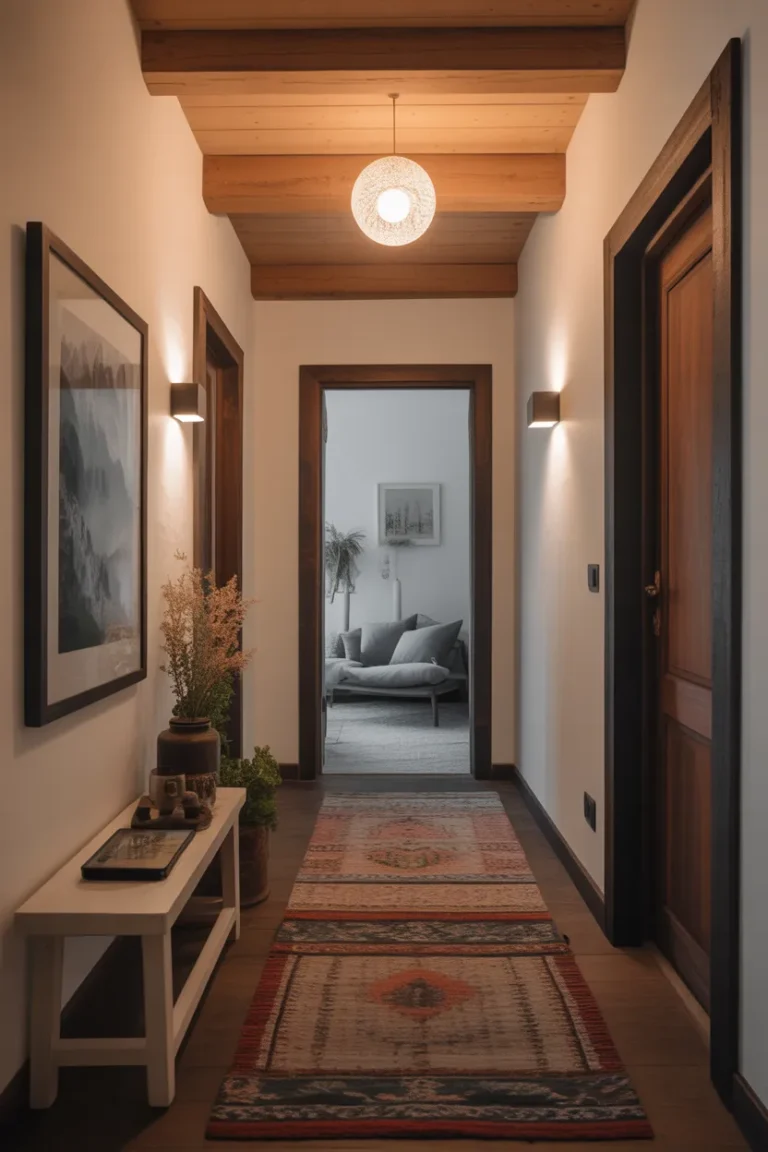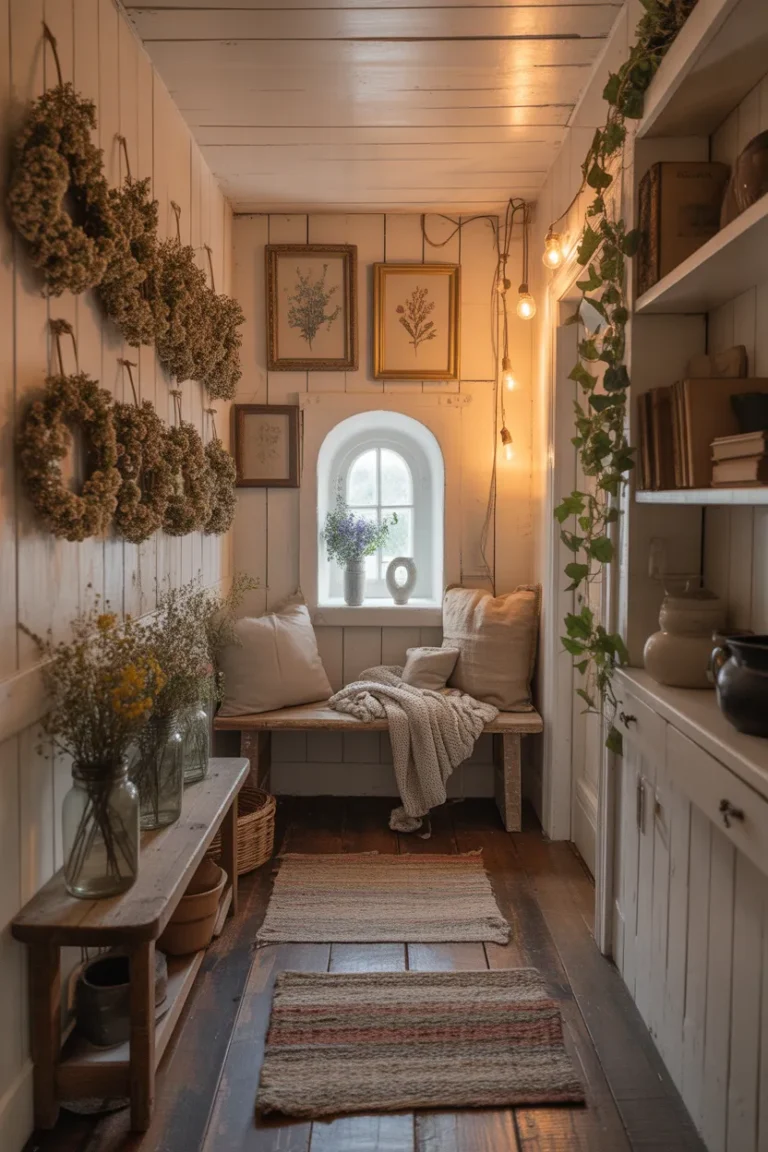
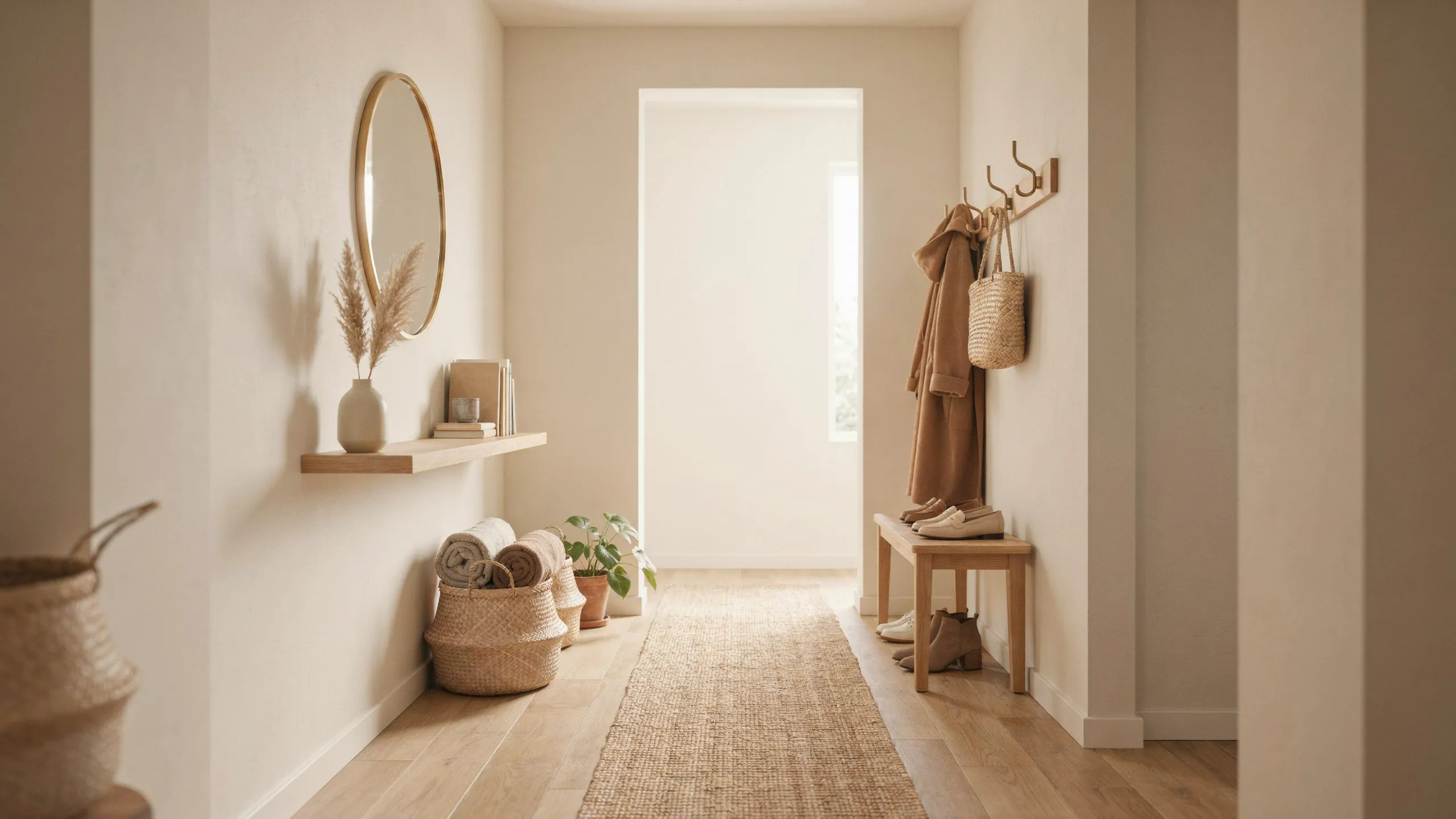
23 Narrow Entryway Ideas for Small Spaces You’ll Love
A narrow entryway can feel cramped, cluttered, and difficult to organize. Narrow Entryway Ideas for Small Spaces can help you create a welcoming entrance without sacrificing valuable walking room.
The right combination of slim furniture, vertical storage, mirrors, hooks, and thoughtful lighting can make even a tight hallway feel more functional and inviting. Instead of trying to squeeze too much into the space, these ideas focus on using every inch with purpose.
You’ll find practical setups for shoes, coats, bags, keys, and everyday essentials, along with simple decorating touches that add personality without creating visual clutter. In my experience, the biggest improvements often come from choosing furniture with the right depth and giving frequently used items a dedicated home. Whether you’re decorating a small apartment or working with an unusually narrow hallway, these ideas can help you create an entrance that feels organized, stylish, and easy to live with.
Slim Floating Console
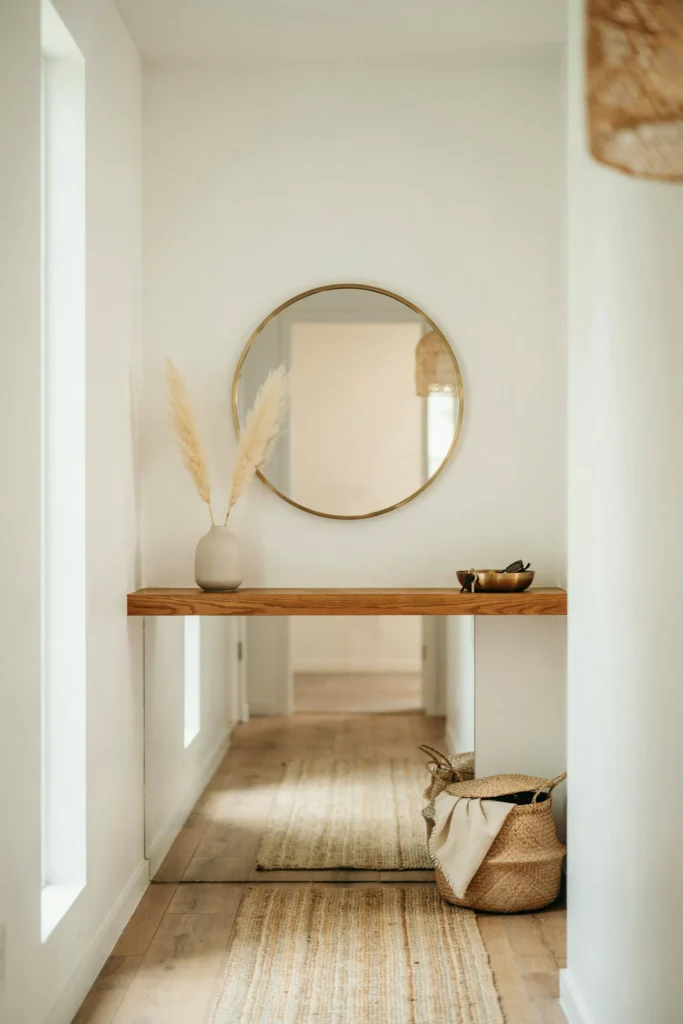
A floating console keeps the floor visually open while still giving you a useful landing spot for keys, mail, and everyday essentials. Choose a design no deeper than 8 to 10 inches so the walkway remains comfortable. A drawer is especially helpful for hiding small clutter near the door.
I’ve noticed shallow wall-mounted furniture works particularly well in tight entrances because it provides storage without creating another obstacle at floor level. Pair the console with a compact mirror and one decorative object rather than filling the surface. Leaving some breathing room makes the entire entry feel wider and more organized.
ALSO READ : Affordable Fall Decor Ideas for Apartments
Wall-Mounted Coat Hooks
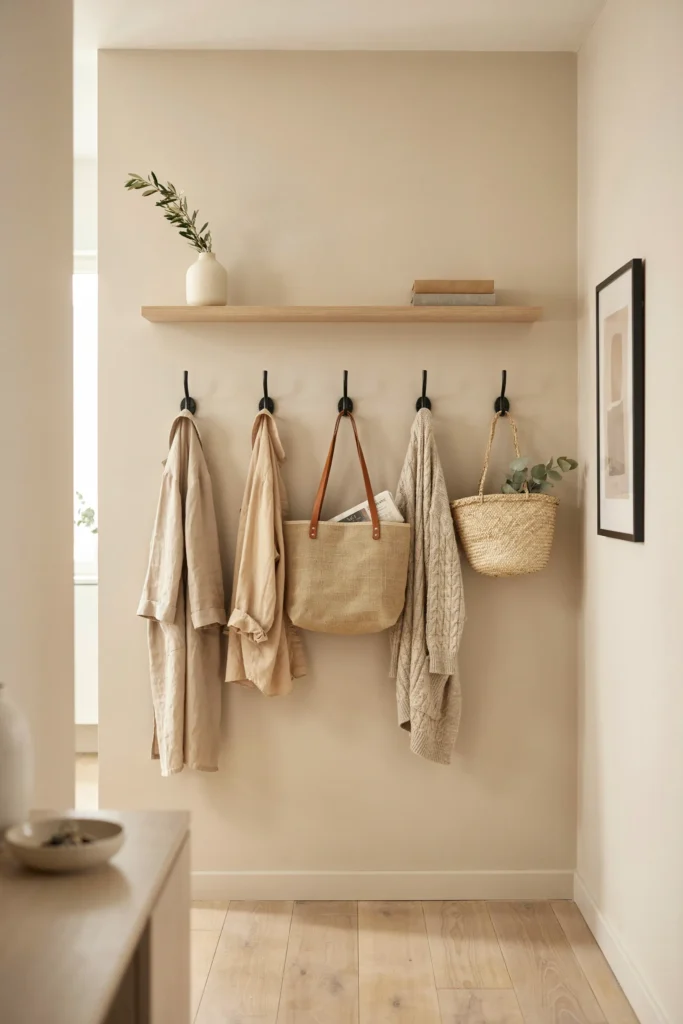
- Mount hooks in a single horizontal row to keep coats visually organized.
- Leave enough space between hooks so jackets do not overlap.
- Place everyday bags on the outer hooks for quick access.
- Add a narrow shelf above for keys, sunglasses, or small baskets.
- Choose hooks with rounded edges for safer movement through the hallway.
A row of hooks gives a narrow entrance practical storage without demanding floor space. For households with children, place a few hooks lower so backpacks and jackets stay easy to reach. Keep the number limited to what you actually use, because overcrowded walls can make a small hallway feel busy rather than functional.
Pinterest Account : HavenAndHue2
Round Mirror Focal Point
Quick Tip:
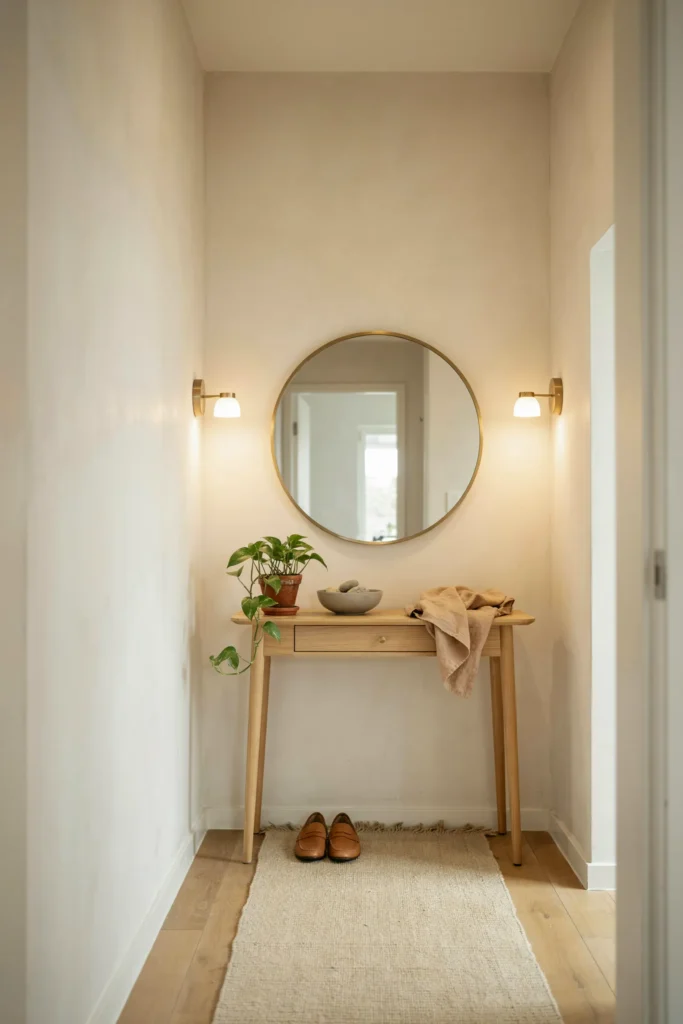
Choose a mirror that is wider than the console beneath it but still leaves visible wall space around the edges. Position it where it can reflect natural or warm light rather than a blank wall.
A round mirror softens the straight lines common in narrow hallways while reflecting light across the entrance. I’ve seen this work especially well above slim furniture because the curved shape creates contrast without taking up additional floor area. Keep the surrounding decor restrained so the reflection adds openness instead of visual clutter.
Slim Shoe Cabinet
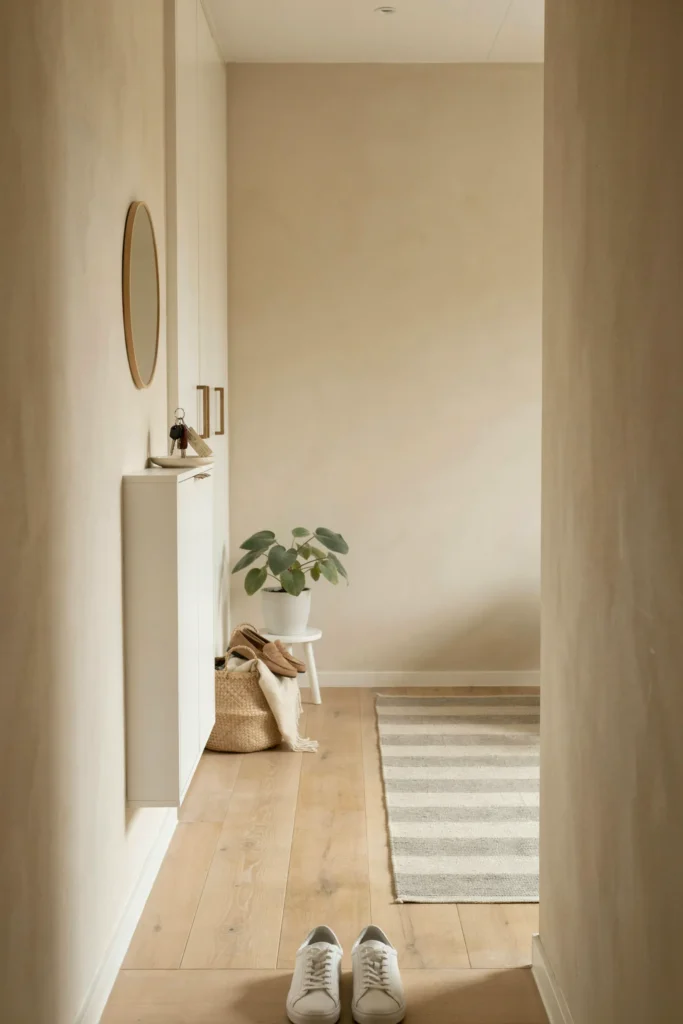
Shoes can quickly make a tight entrance feel crowded, so a shallow cabinet is worth considering when floor space is limited. Look for a vertical design with tilt-out compartments rather than a deep open rack. Closed storage keeps footwear contained and gives the hallway a cleaner visual line.
Measure the cabinet depth before buying, especially if your door swings inward. A unit around 8 to 12 inches deep can provide useful storage while preserving the walking path. Keep only frequently worn pairs near the door and move seasonal footwear elsewhere. That simple habit prevents the cabinet from becoming another clutter zone.
Picture Ledge Display
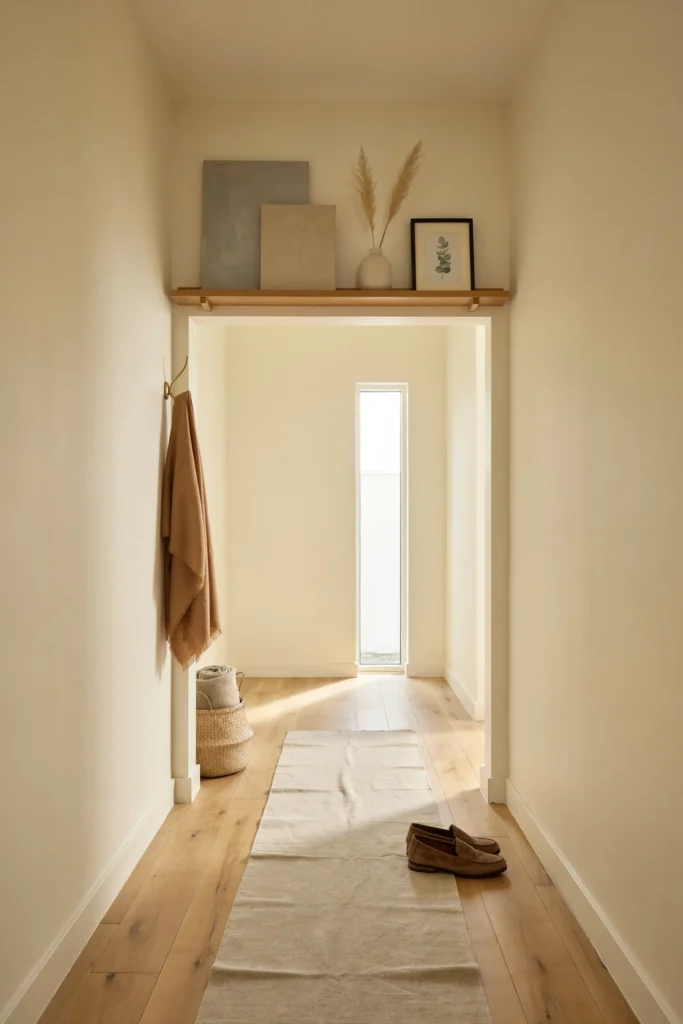
- Install a ledge only a few inches deep to preserve walking clearance.
- Layer two or three lightweight frames instead of filling the entire shelf.
- Add one small ceramic object for texture without creating clutter.
- Keep artwork in related tones such as cream, tan, black, and muted green.
- Secure the ledge properly, especially when displaying framed glass pieces.
A picture ledge adds personality without requiring a bulky console or gallery wall. It also makes seasonal decorating simple because you can swap prints without drilling new holes. For a rental, check the wall and mounting rules before installation. A restrained arrangement keeps the entrance decorative while preserving its narrow proportions.
Fold-Down Entry Table
Quick Tip:
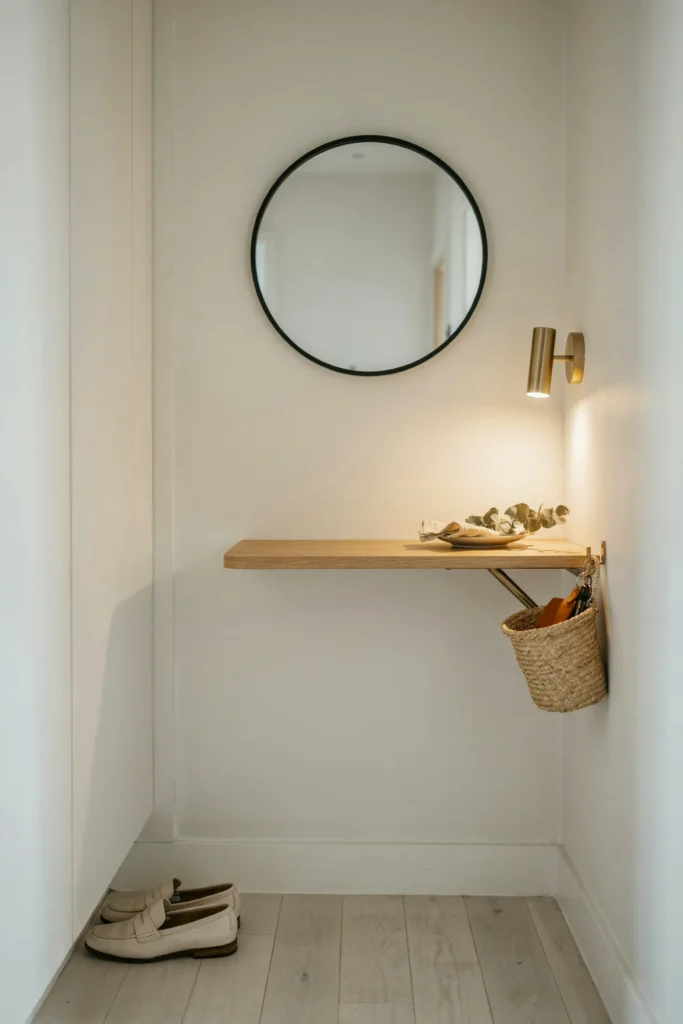
Choose a fold-down surface with a sturdy locking mechanism and enough depth for your daily essentials. Keep the tabletop mostly clear so you can fold it away quickly when the hallway needs maximum clearance.
A fold-down table is especially useful where even a slim console would interfere with movement. Open it when you need a spot for keys, mail, or a small lamp, then close it when the area gets busy. I’ve seen this approach work well in compact apartments where every few inches of floor clearance matters.
Vertical Storage Tower
DO:
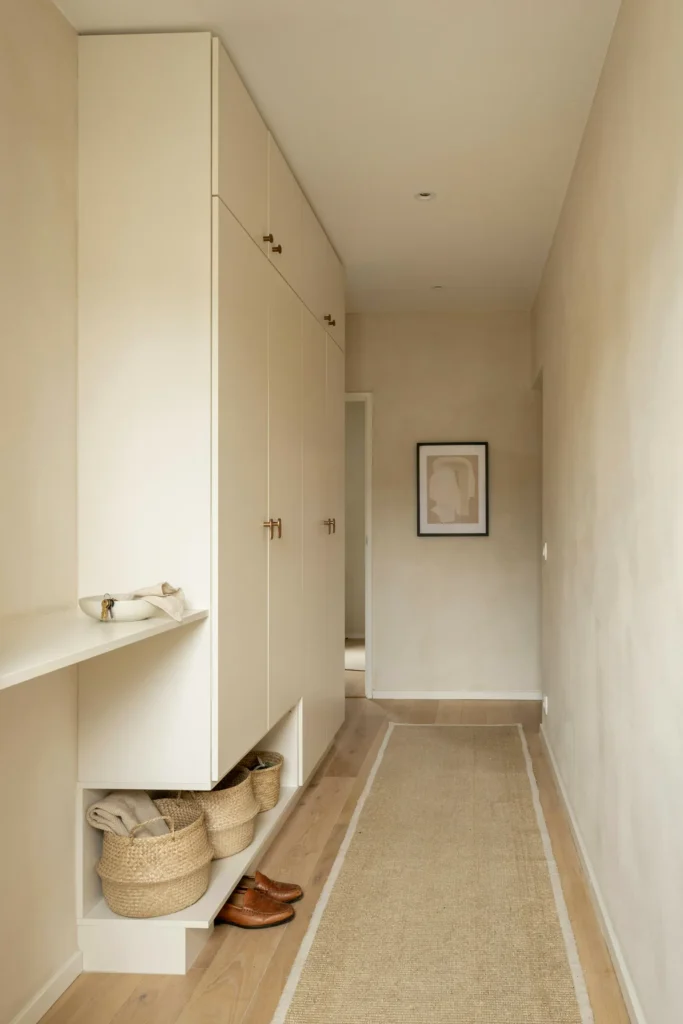
- Choose a tower that is tall and narrow rather than wide and bulky.
- Reserve lower compartments for shoes and heavier items.
- Use upper shelves for seasonal accessories and spare bags.
- Match the cabinet color closely to the wall for a lighter visual effect.
DON’T:
- Don’t place a deep unit where it narrows the walking path.
- Don’t fill every shelf with visible objects.
- Don’t store frequently used items above comfortable reach.
- Don’t ignore the cabinet’s door swing when measuring.
A vertical cabinet makes better use of unused wall height than horizontal furniture. It can hold shoes, umbrellas, hats, bags, and seasonal accessories while keeping the floor relatively clear. In my experience, matching tall storage to the wall color helps it recede visually, which is especially useful in a tight hallway.
Peg Rail Organizer
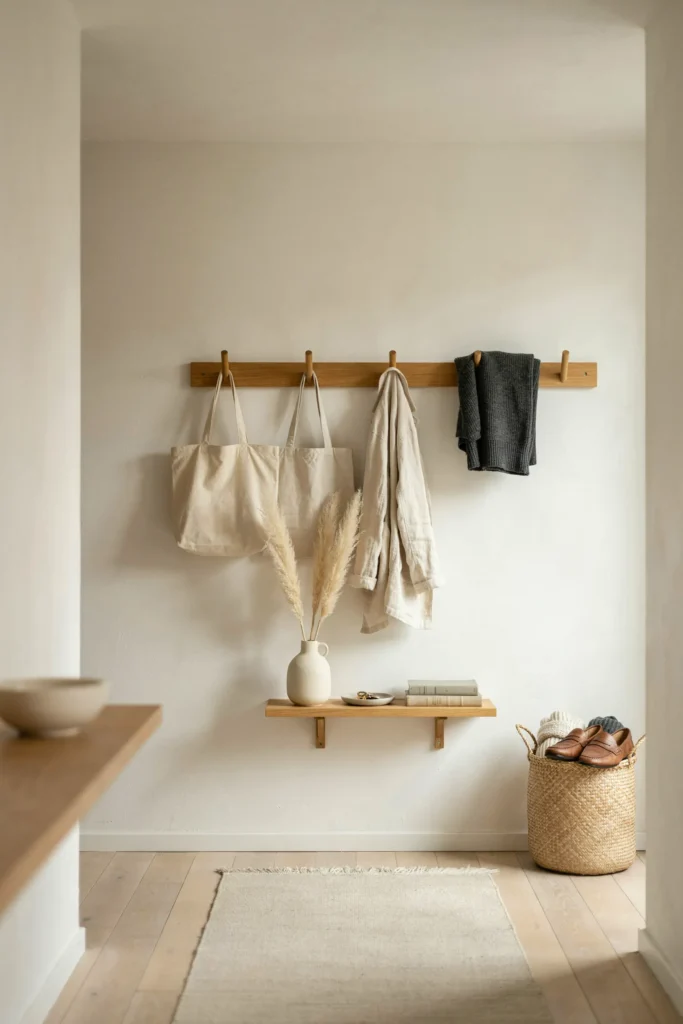
Cost: Low to moderate | Time: About 1 hour | Skill Level: Beginner
Best For: Coats, bags, hats, and daily accessories
Works In: Apartments, rentals, compact family homes
Result: Clearer floors with easy-access storage
A peg rail creates several storage points without the visual weight of a large coat rack. Select a rail with enough spacing for your household’s daily items, then reserve one peg for each regular user. Add a shallow shelf above if wall height allows. This setup keeps frequently used belongings close without crowding the doorway.
Light-Colored Runner
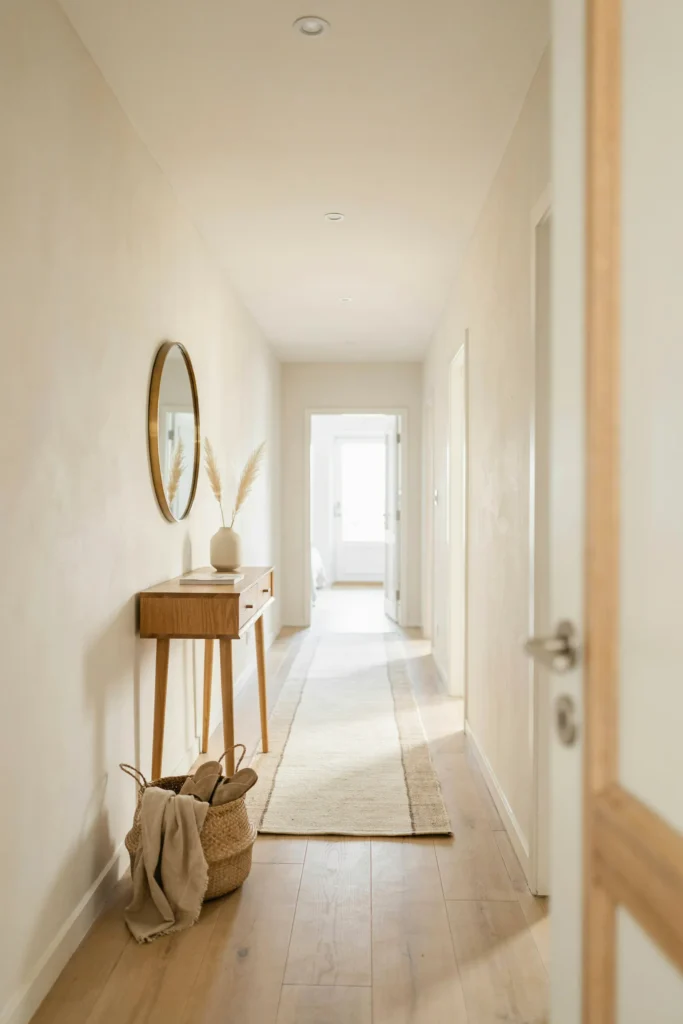
A carefully sized runner can visually guide the eye through a narrow entrance while protecting high-traffic flooring. Choose a low-pile style that sits securely beneath the door clearance. Light beige, cream, or muted taupe shades keep the space feeling open, while a subtle pattern helps conceal everyday dust and footprints.
Wall-Mounted Shoe Rack
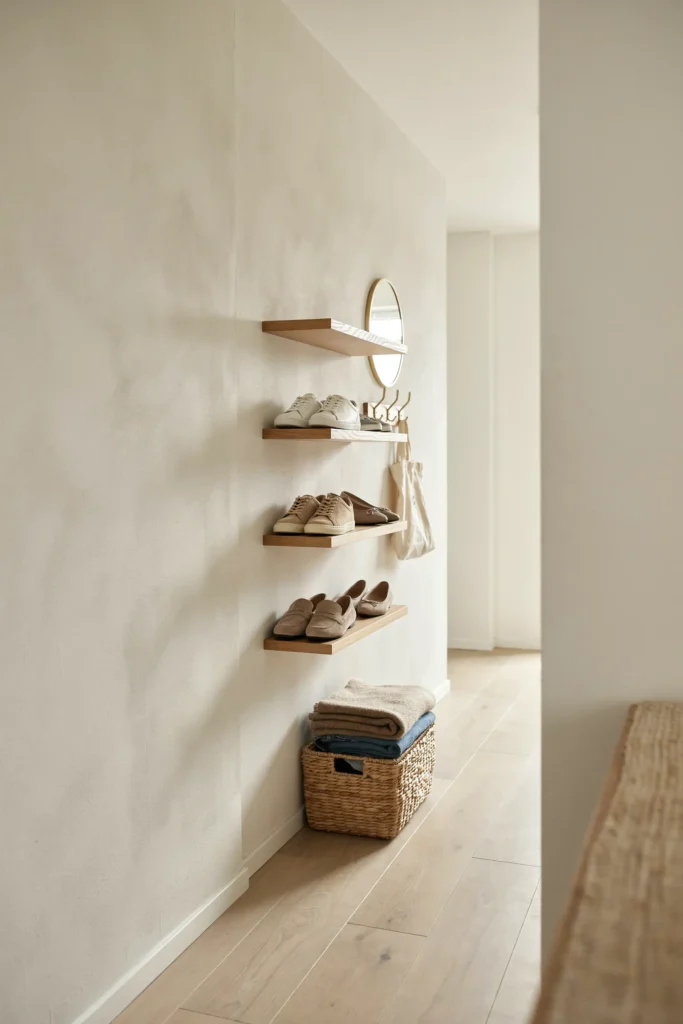
- Mount the rack above the floor to keep the walkway visually open.
- Choose shelves that fit the shoe sizes your household uses most.
- Keep everyday footwear on the lower levels for quick access.
- Leave a little space between pairs so the rack stays orderly.
- Add a small tray nearby for keys and loose accessories.
A raised shoe rack works well when a traditional cabinet feels too bulky. The open design makes footwear easy to grab while allowing the floor underneath to stay accessible for cleaning. For a polished appearance, limit visible pairs and move rarely worn shoes into bedroom or closet storage.
Narrow Bench With Storage
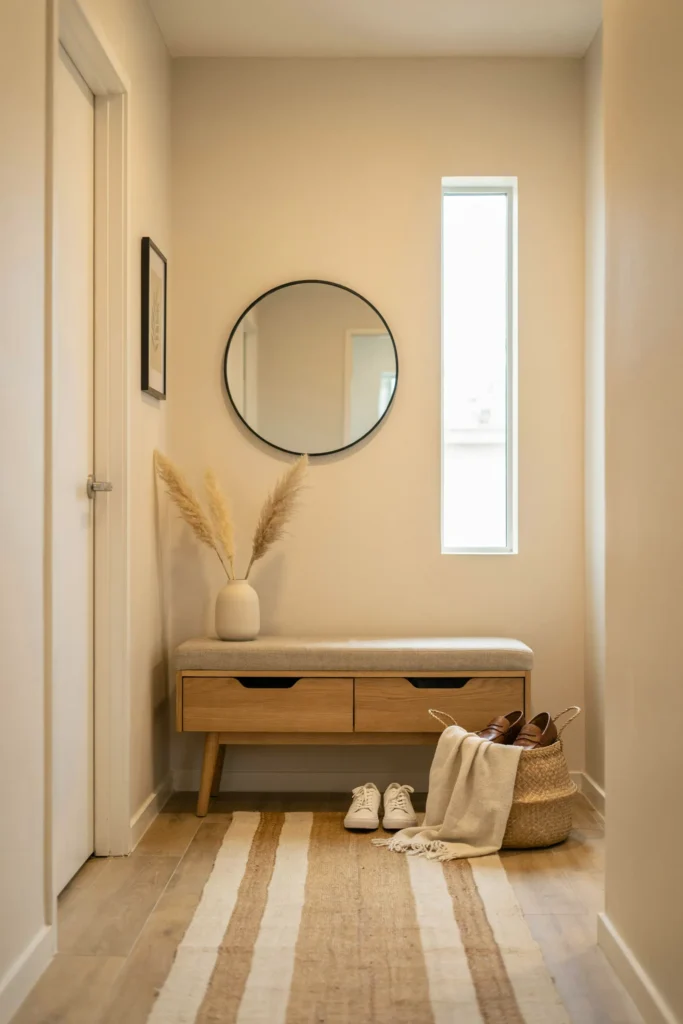
BEFORE: Shoes collect along the doorway, while putting them on often means balancing against the wall. The entrance feels cramped because furniture takes up more floor depth than necessary.
AFTER: A shallow storage bench creates one defined place to sit and tuck away footwear. The walkway stays clearer because shoes disappear beneath the seat.
Look for a bench around 12 to 14 inches deep, then measure the remaining passage before buying. Lift-up lids work well for larger footwear, while cubbies make daily pairs easier to grab. I’ve seen storage benches become especially useful in family entrances because they combine seating and organization in one compact footprint.
Tall Arched Mirror
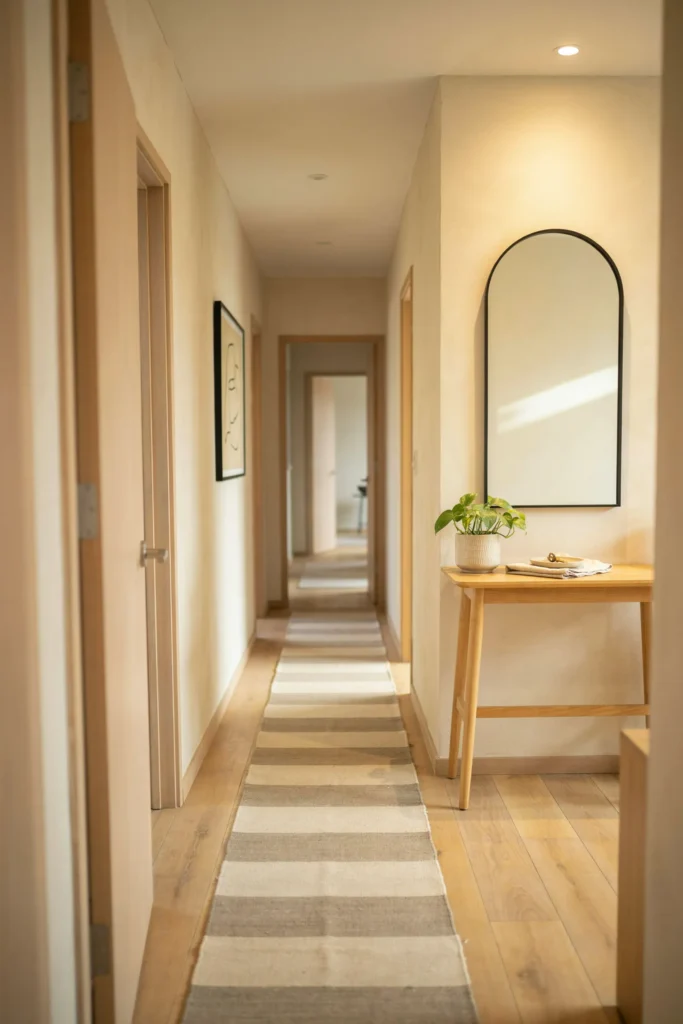
Option A vs Option B:
| Comparison Point | Option A: Tall Mirror | Option B: Wide Mirror |
| Visual effect | Draws the eye upward | Expands the wall sideways |
| Best placement | Tight vertical hallway | Wider entry zone |
| Floor space | Minimal | Minimal |
| Style | Elegant and streamlined | Open and relaxed |
A tall mirror can make a narrow entrance feel more vertically balanced while giving you a practical last-look spot before leaving. Choose a frame that complements nearby hardware, then keep the wall around it relatively quiet. This approach works particularly well where horizontal furniture space is limited but wall height is generous.
Floating Entry Shelf
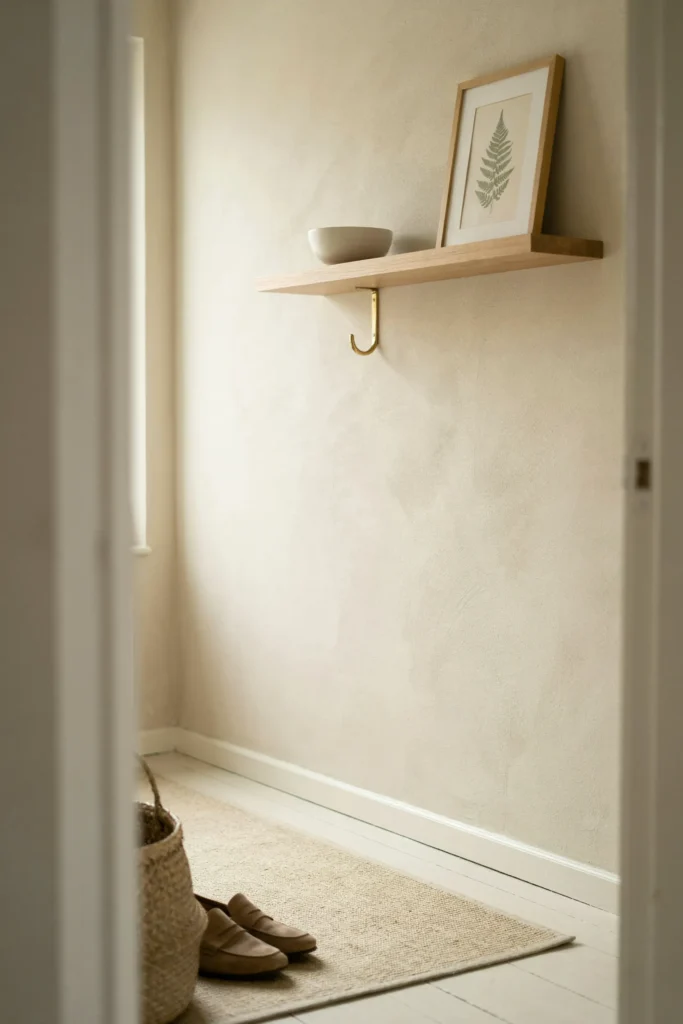
- Choose a shelf about 6 to 8 inches deep for better walkway clearance.
- Install a small tray to contain keys, coins, and other loose items.
- Add one compact hook underneath for a lightweight bag or umbrella.
- Keep decorative pieces low and simple so the shelf remains functional.
- Match the wood tone with nearby furniture for a cohesive finish.
A floating shelf gives you a practical drop zone without the bulk of a freestanding table. It works especially well near the door because everyday items stay within reach while the floor remains completely open. For renters, removable mounting solutions can provide a similar effect when the wall surface allows them.
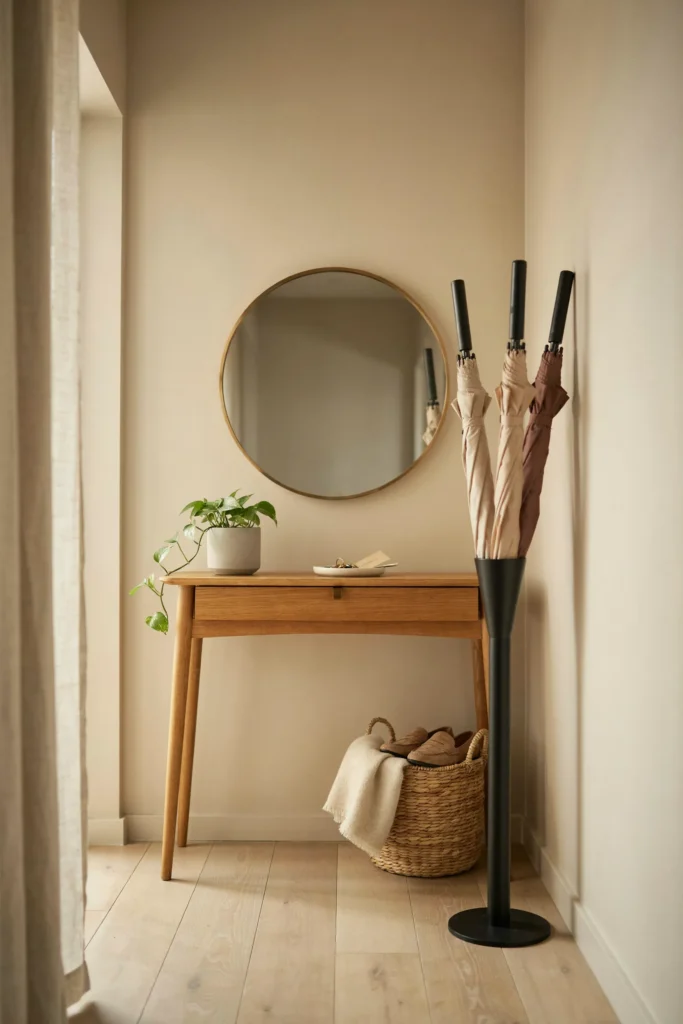
Slim Umbrella Stand
Quick Tip:
Choose a narrow, weighted stand with a drip tray so wet umbrellas do not leave water on the floor. Position it beside the door rather than directly in the main walking lane.
An umbrella stand gives one awkward everyday item a dedicated home. In a narrow entrance, a tall cylindrical shape usually takes less visual space than a wide storage bin. Select a finish that blends with your hardware, and empty the stand regularly so unused umbrellas do not quietly become clutter.
Built-In Wall Niche
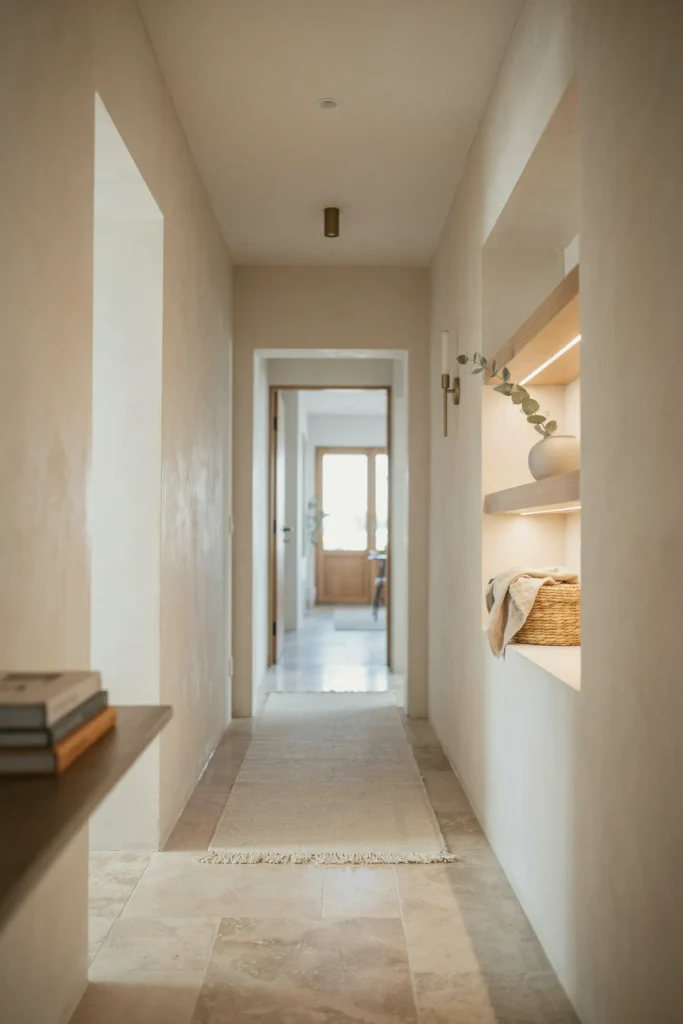
BEFORE: A tight hallway may have unused wall depth but little room for furniture. Keys, mail, and small accessories end up scattered across nearby surfaces.
AFTER: A recessed niche creates useful storage without projecting into the walkway. Shelves keep essentials organized while integrated lighting adds gentle definition.
A wall niche is most practical during a renovation because the framing and wall structure need careful planning. Use shallow shelves for lightweight items and reserve deeper sections for baskets. If construction is not an option, a slim wall cabinet can provide a similar storage effect without modifying the wall itself.
Hidden Coat Cabinet
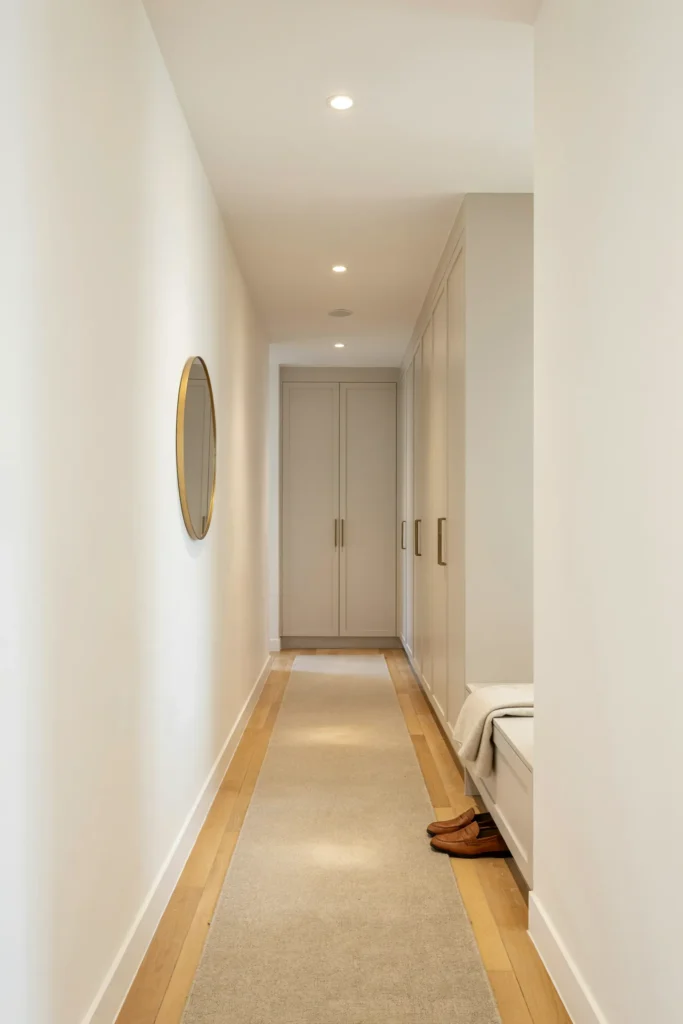
- Measure first. Check the available wall width, cabinet depth, door swing, and remaining walking clearance before choosing a unit.
- Prioritize daily items. Reserve the easiest-to-reach section for coats, jackets, bags, and accessories used throughout the week.
- Add internal organizers. Use hooks, slim shelves, and small bins to separate scarves, hats, shoes, and seasonal pieces.
- Keep the exterior simple. Choose flat doors in a wall-friendly color so the cabinet blends into the narrow hallway.
A concealed coat cabinet keeps bulky outerwear out of sight while giving the entrance a calmer appearance. In my experience, assigning each category its own section makes a small storage unit far easier to maintain. Keep seasonal coats elsewhere so the cabinet remains useful without becoming tightly packed.
Vertical Slat Accent
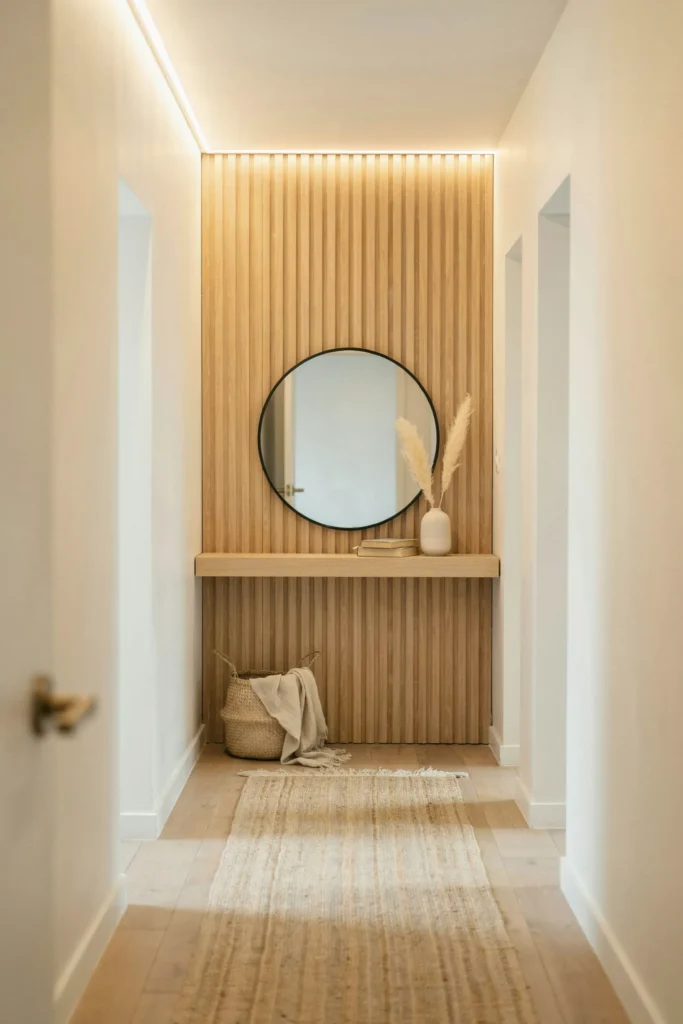
| Comparison Point | Option A: Full Slat Wall | Option B: Partial Slat Panel |
| Visual impact | Strong architectural feature | Subtle focal area |
| Material use | Higher | Lower |
| Best for | Larger wall sections | Very narrow entrances |
| Installation | More involved | Easier to manage |
| Storage pairing | Console or hooks | Small shelf or mirror |
Vertical slats can add texture while emphasizing the height of a narrow hallway. A partial panel is often the safer choice when the entrance already has several doors or architectural details. Pair the wood with simple furniture so the wall remains the focal point rather than competing with storage and artwork.
Basket Storage Nook
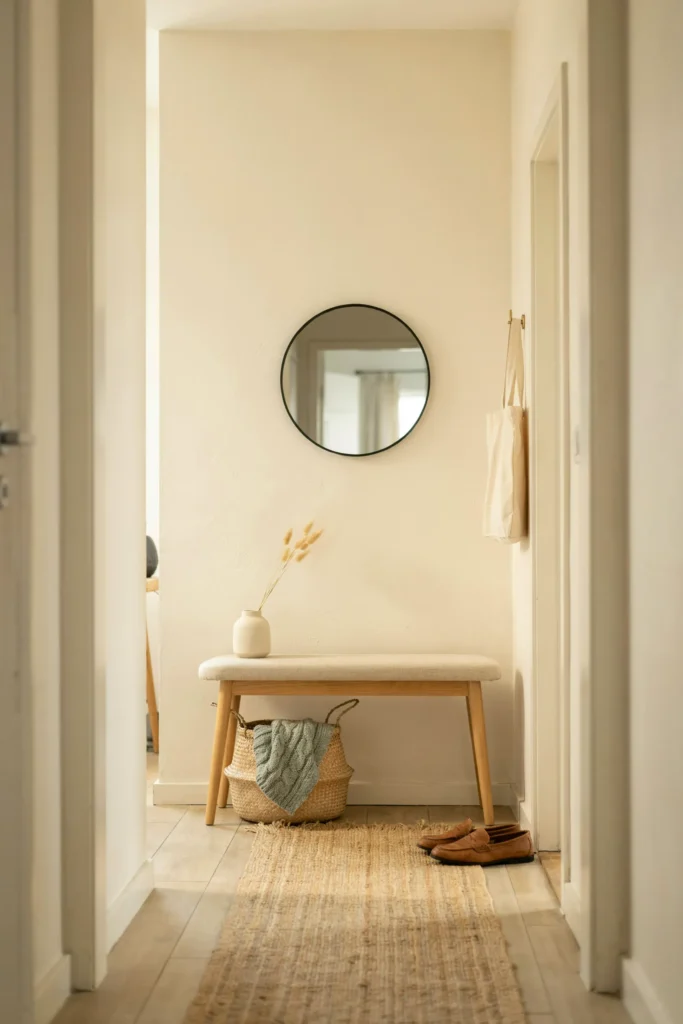
DO:
- Choose baskets that slide completely beneath the bench or shelf.
- Label baskets if multiple household members share the storage.
- Reserve each container for one category such as scarves, hats, or shoes.
- Select natural or neutral materials that keep the area visually calm.
DON’T:
- Don’t use oversized baskets that reduce walking clearance.
- Don’t mix too many basket colors or patterns.
- Don’t leave overflowing items above the basket rims.
- Don’t store wet footwear inside enclosed woven containers.
Baskets make awkward lower space useful without requiring another tall piece of furniture. They are especially handy for soft accessories that do not need rigid storage. Keep frequently used items in the easiest-to-reach basket, while less-used seasonal pieces can move to higher or less accessible storage areas.
Corner Coat Rack
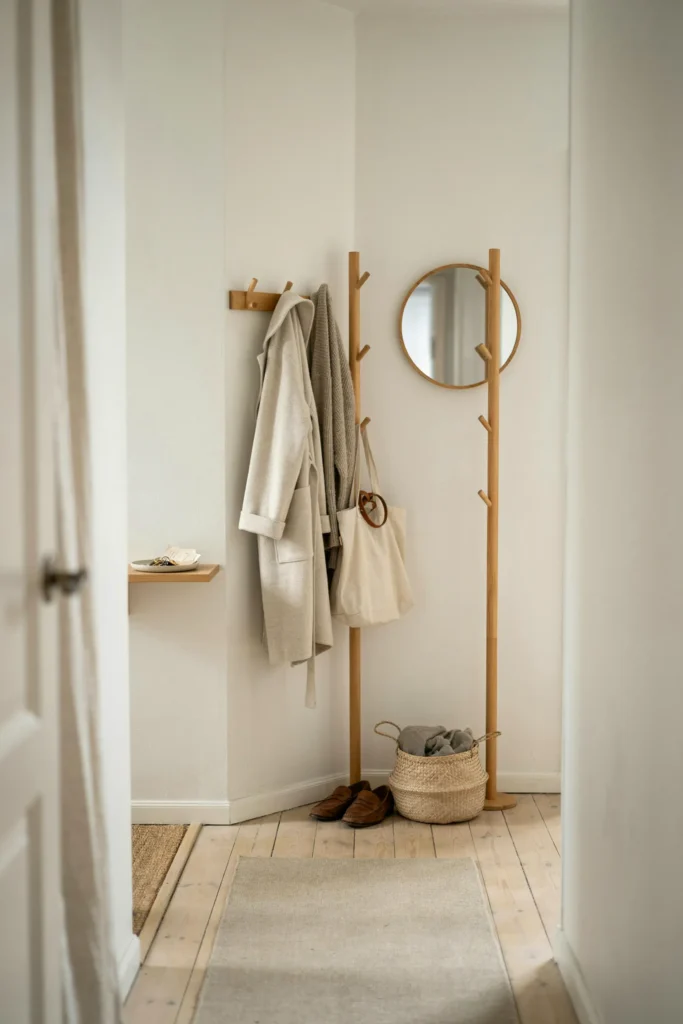
Cost: Low to moderate | Time: 30 to 60 minutes | Skill Level: Beginner
Best For: Corners that would otherwise remain unused
Works In: Apartments and narrow hallways
Result: More hanging storage without blocking the main walkway
A corner coat rack makes use of an often-overlooked section of the entrance. Choose a narrow vertical model and keep the surrounding floor clear. I’ve noticed this arrangement works especially well near a door that opens toward a long wall, because the rack can occupy the corner without interrupting the natural walking route.
Mirrored Cabinet Doors
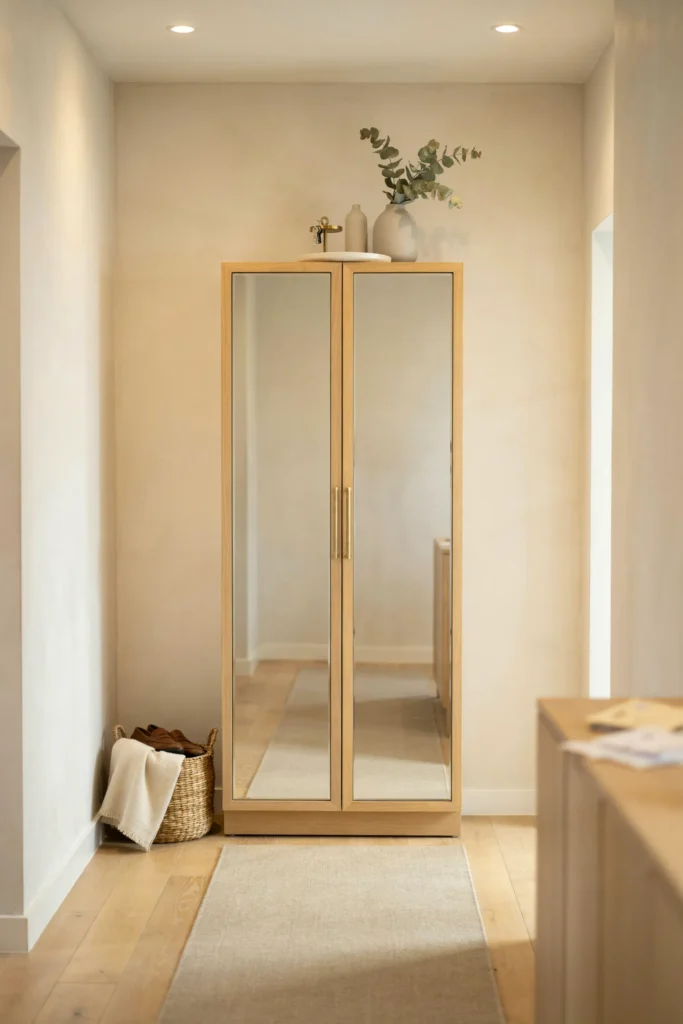
A mirrored cabinet can combine concealed storage with a reflective surface in one compact piece. Store shoes, bags, and accessories behind the doors while using the reflection to add brightness and visual depth. Keep the cabinet relatively shallow, and check that its doors can open fully without interfering with nearby furniture or the entry door.
The exact Narrow Entryway Ideas for Small Spaces that work best depend on your available wall depth and daily storage needs. A mirrored unit is especially useful when you have little room for both a wardrobe and separate mirror. Keep the surrounding area simple so the reflection does not multiply visible clutter.
Narrow Console With Drawers
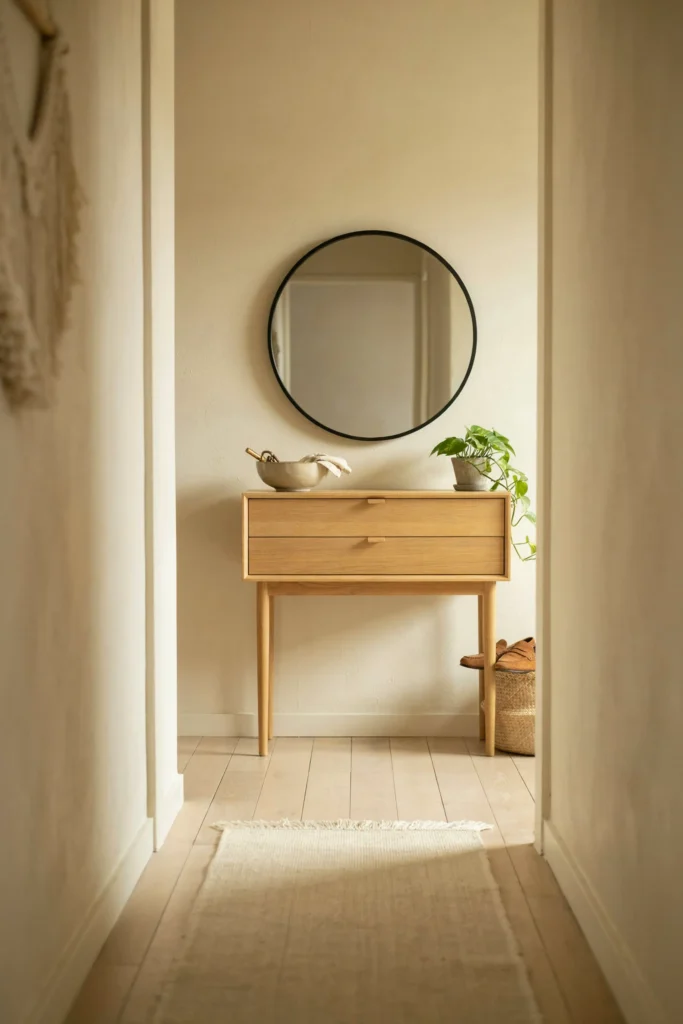
- Prioritize depth: Look for a console around 8 to 12 inches deep when the hallway is particularly tight.
- Use drawers wisely: Reserve them for keys, sunglasses, chargers, mail, and other small daily essentials.
- Keep the lower area open: A clear space underneath makes cleaning easier and prevents the entrance from feeling boxed in.
- Limit surface decor: One tray, a small lamp, or a vase is usually enough for a polished arrangement.
- Measure door clearance: Check every nearby door swing before bringing the console home.
A drawer console gives you the convenience of a landing surface without exposing every small item in the entryway. Choose one with clean lines and a light finish if the hallway already feels visually busy. For households with limited storage, the drawers can become a simple daily reset zone that keeps clutter contained.
Ladder Towel-Style Rack
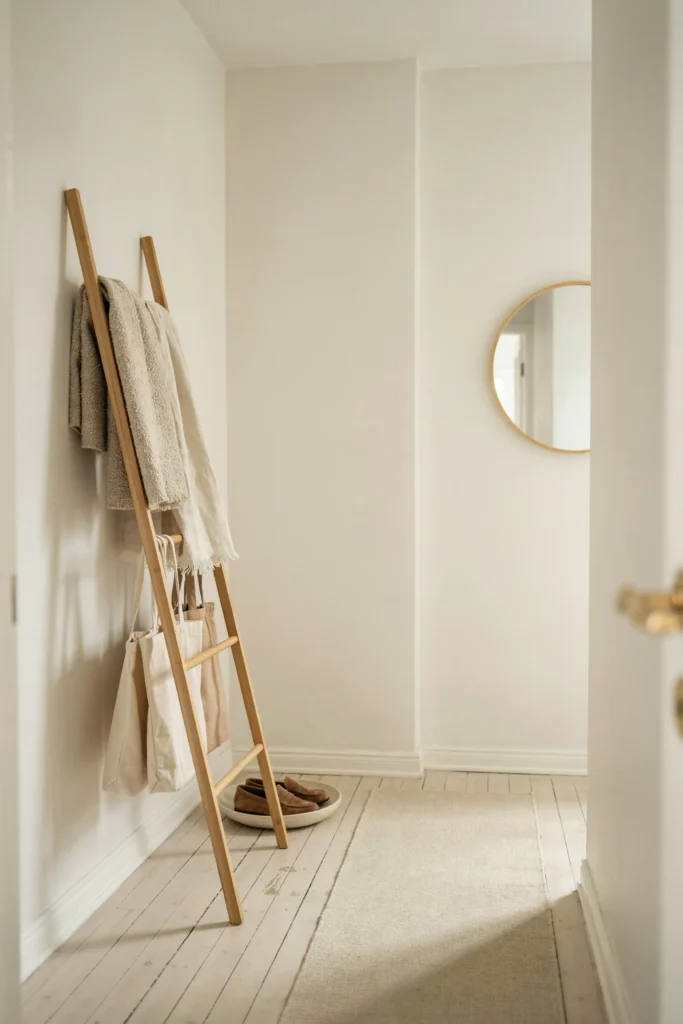
- Choose the right size. Select a ladder rack narrow enough to leave comfortable walking clearance beside it.
- Assign each rung. Use individual rungs for scarves, lightweight bags, hats, or small baskets.
- Secure the rack. Anchor it to the wall if needed, especially in homes with children or pets.
- Keep it edited. Limit the number of visible items so the vertical arrangement stays neat.
A ladder rack adds storage without the visual weight of a cabinet. Its open frame also allows the wall behind it to remain visible, helping the entrance feel less enclosed. I’ve seen this style work particularly well for households that need flexible storage but do not want permanent built-in furniture.
Slim Bench vs. Shoe Cabinet
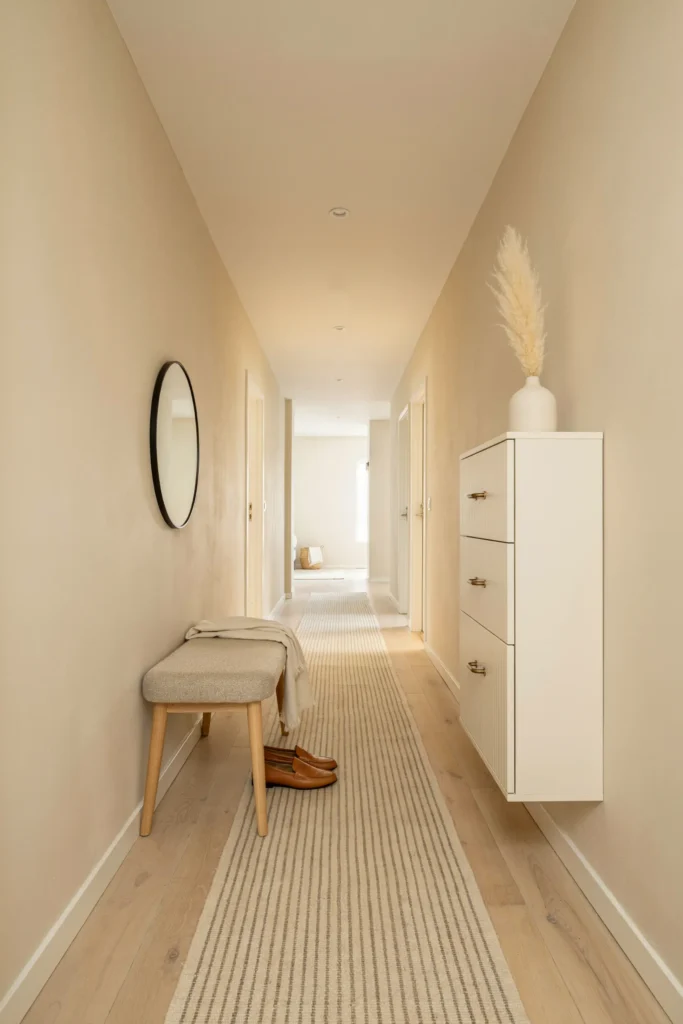
| Comparison Point | Option A: Slim Bench | Option B: Shoe Cabinet |
| Main purpose | Seating and simple storage | Dedicated shoe storage |
| Floor depth | Usually moderate | Often very shallow |
| Best feature | Easy shoe changing | Keeps footwear hidden |
| Storage style | Open or concealed | Mostly enclosed |
| Best for | Homes needing seating | Homes with many shoes |
Choosing between these two pieces depends on what creates the biggest daily problem. A bench is useful when putting on shoes is difficult, while a cabinet makes more sense when footwear keeps collecting by the door. Measure your available depth first, then give priority to the function you use most.
Conclusion
Small entryways do not need to feel frustrating or forgotten. With smart storage, carefully chosen furniture, useful wall space, and a few decorative touches, you can create an entrance that feels open and welcoming. These Narrow Entryway Ideas for Small Spaces offer practical inspiration for making every inch work harder without overcrowding the walkway.
I’ve seen how small changes, such as replacing bulky furniture with a floating shelf or adding vertical storage, can completely shift the way a space feels. Save this post on Pinterest, try the ideas that fit your home, and share it with someone who could use a little more style and function at the door.