20 Small Closet Organization Hacks for Easy Access
A small closet can feel crowded long before you actually run out of storage space. The right setup can make every shirt, shoe, and accessory easier to find.
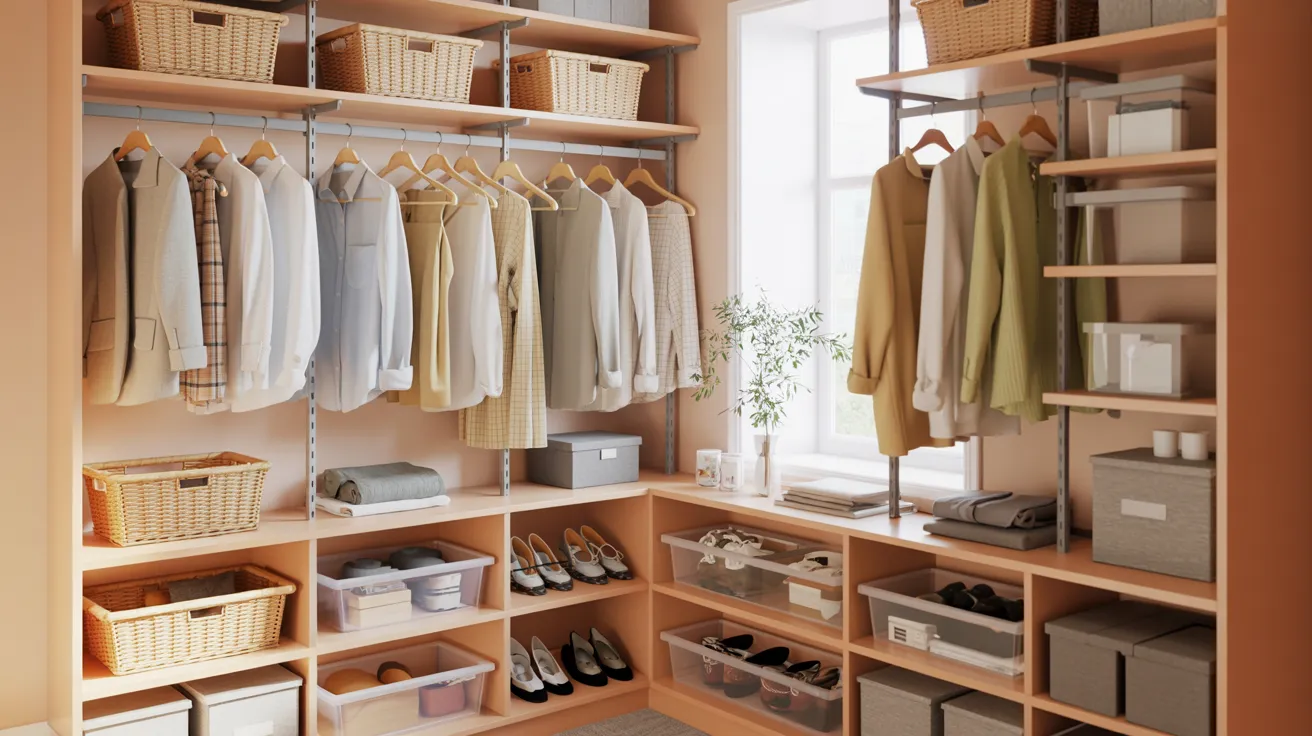
These Small Closet Organization Hacks focus on practical ways to use vertical space, overlooked corners, shelves, doors, and drawers more effectively. You’ll find simple ideas for arranging clothing, accessories, shoes, bags, and seasonal pieces without making your closet feel cramped. Some solutions cost very little, while others simply require changing how you fold, group, or position what you already own. In my experience, even moving everyday clothing into a more reachable zone can make a noticeable difference. As you work through these ideas, choose the ones that match your closet size, daily routine, and storage needs.
Double Hanging Rod
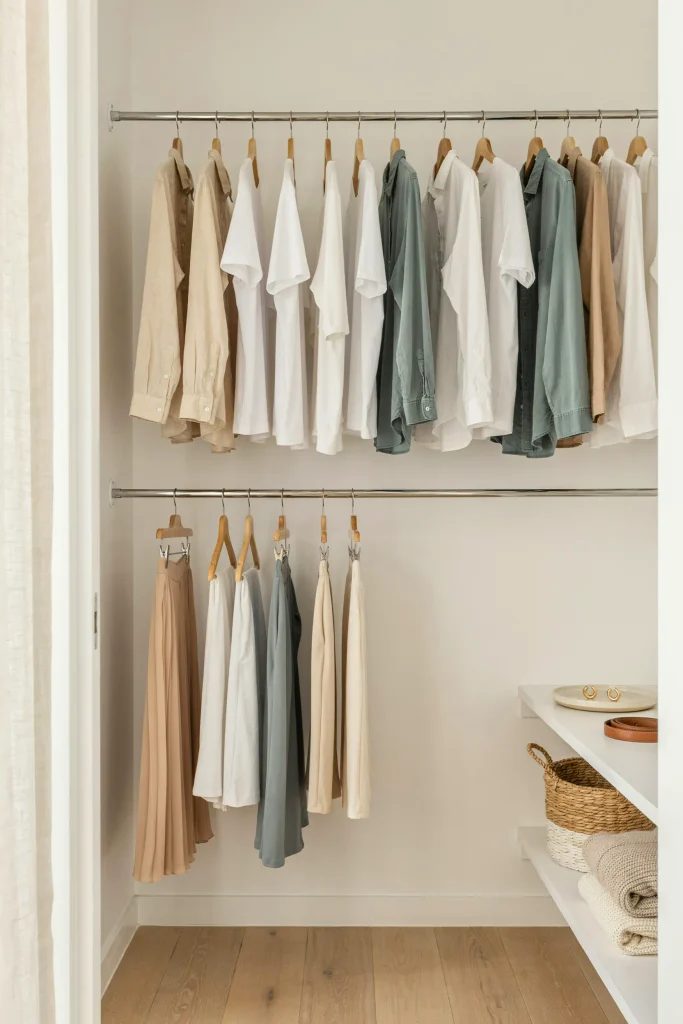
A cramped closet often has more vertical space than it seems. Install a slim second rod beneath the existing one to create a lower hanging zone for skirts, shirts, scarves, or folded-over trousers. Keep the upper rod for longer pieces so both levels stay easy to reach.
In my experience, separating clothing by length makes small wardrobes feel less crowded almost immediately. Leave enough clearance between the two rods for hangers to move freely without catching on each other. Matching slim hangers also saves valuable width while keeping the arrangement visually tidy.
ALSO READ : Bookshelf Ideas for Small Spaces
Slim Matching Hangers
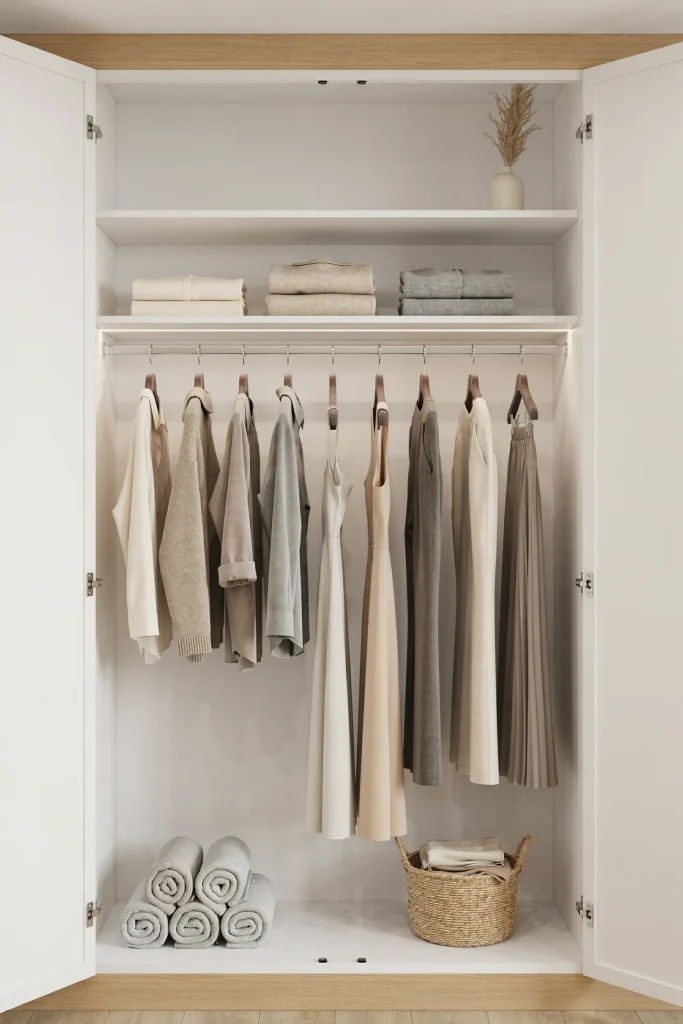
- Choose slim hangers that take up less horizontal space than bulky plastic versions.
- Keep the same hanger style throughout the main clothing section for a cleaner layout.
- Reserve sturdier hangers for coats, denim, and heavier garments.
- Turn seasonal pieces sideways only when the closet layout allows safe clearance.
- Remove broken or rarely used hangers so empty space does not become clutter.
Slim hangers help reclaim small strips of hanging space that bulky hangers quickly consume. I’ve noticed that grouping similar garments on matching hangers also makes clothing easier to scan. Arrange everyday pieces at eye level, then place occasional items toward the sides or higher sections where they remain accessible without crowding daily essentials.
Pinterest Account : HavenAndHue2
Shelf Divider Zones
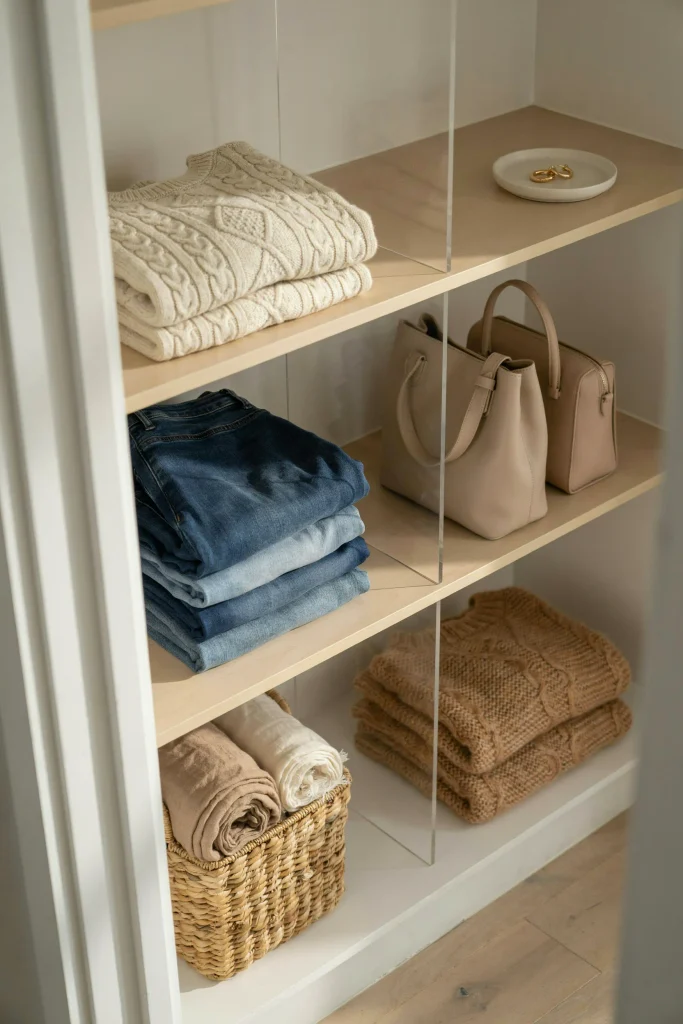
Quick Tip: Keep folded stacks low enough to pull from the middle without toppling the pile. Use clear or neutral dividers to create separate zones for sweaters, jeans, bags, and accessories.
A shelf divider turns one wide, messy surface into several controlled sections. Start by grouping similar items, then place dividers between categories that tend to mix together. Keep frequently worn pieces in the front half of each zone. This small adjustment makes browsing faster and prevents folded clothing from collapsing into one oversized pile.
Hanging Cubby Organizer
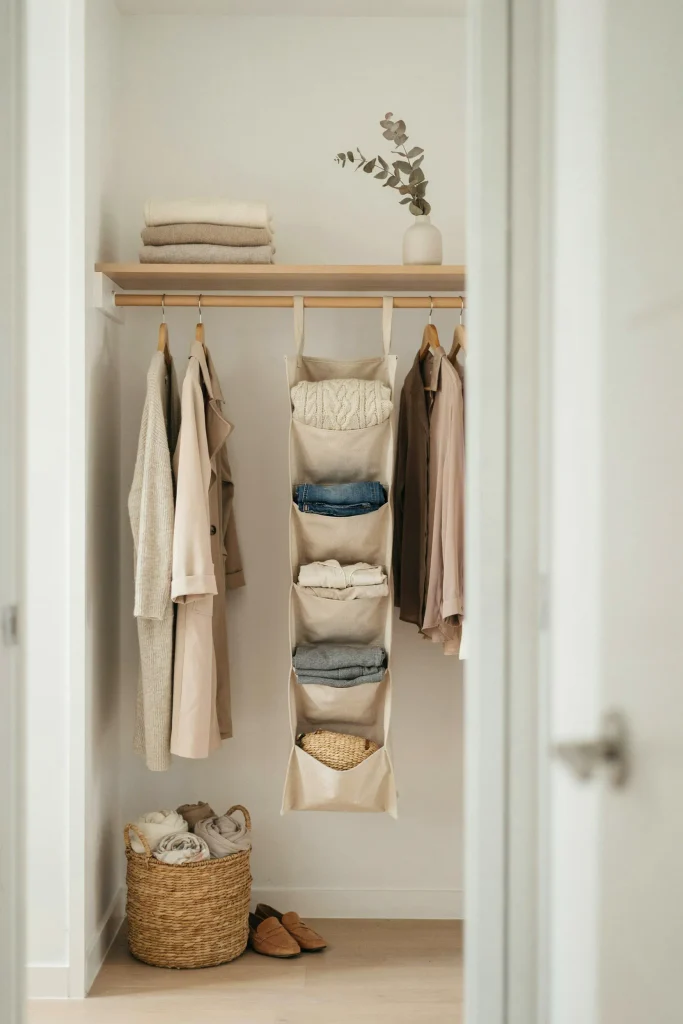
A vertical cubby can turn unused hanging space into several easy-access storage levels. Assign each compartment one category, such as sweaters, workout clothes, pajamas, or bags, so you know exactly where to reach when getting dressed.
Keep heavier folded pieces toward the lower compartments and lighter items above them. This helps the organizer stay balanced while keeping frequently used clothing within comfortable reach. For a rental closet, hanging shelves are especially useful because they add storage without permanent installation.
Clear Storage Bins
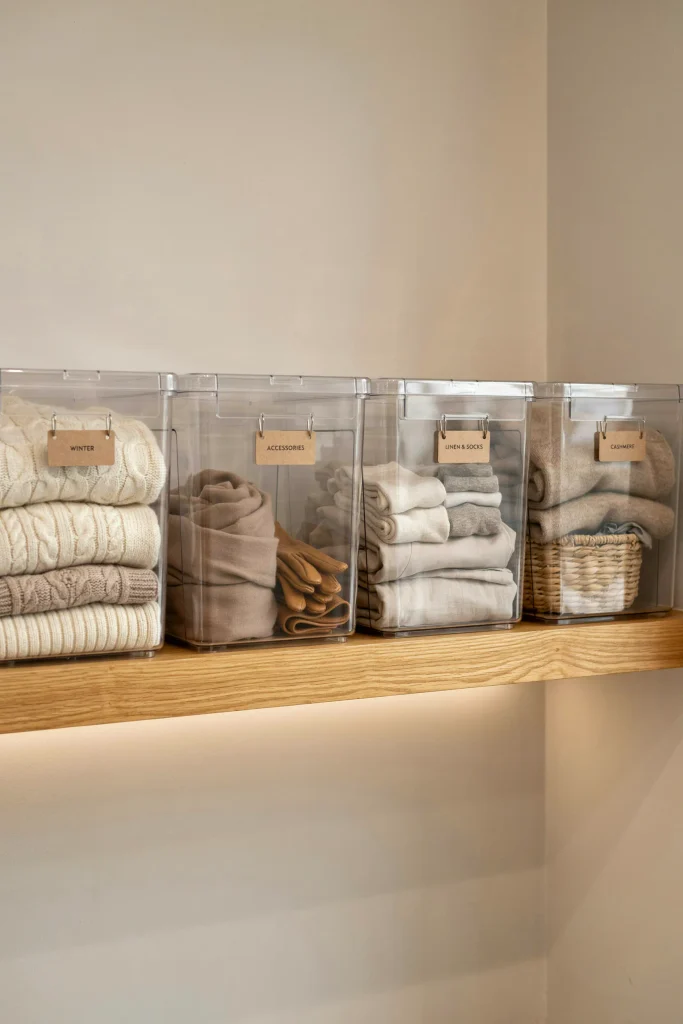
- Measure first: Check shelf width, depth, and height before buying containers.
- Group by category: Keep scarves, seasonal clothing, handbags, or accessories together.
- Label the front: Use simple labels so contents can be identified without opening every bin.
- Place rare-use items higher: Reserve upper shelves for pieces you need less often.
- Keep daily items lower: Store frequently used accessories where they can be reached quickly.
Clear containers reduce the digging that often turns a tidy closet into a mess. They also let you check contents at a glance, which is useful for seasonal clothing and accessories. Leave a little empty space inside each bin so items can be removed without forcing everything else out of place.
Door Pocket Storage
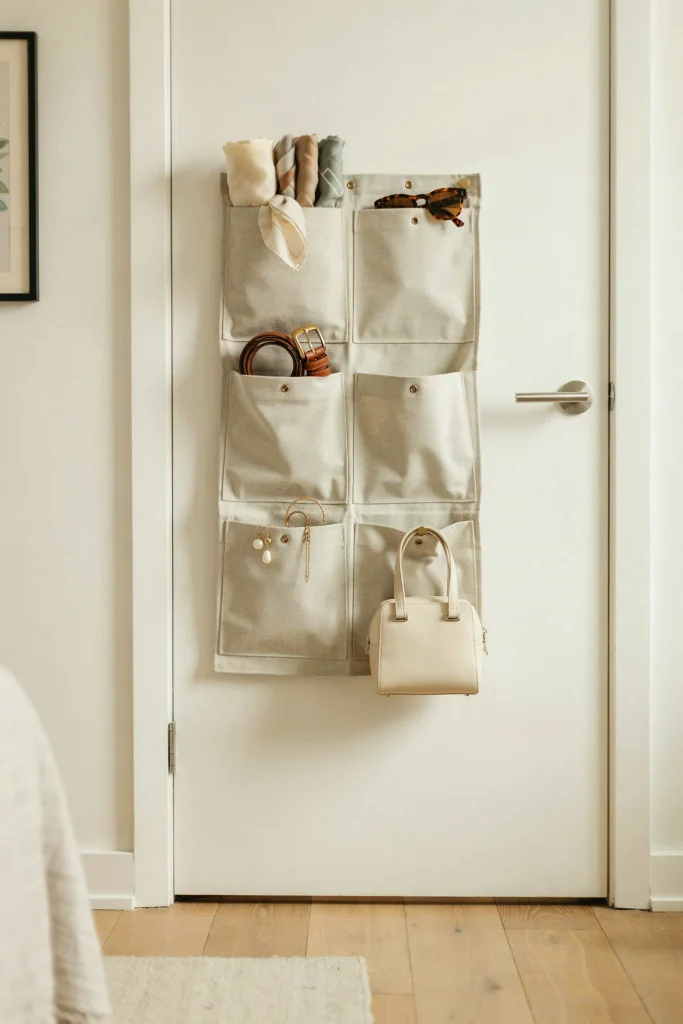
Quick Tip: Use the back of a hinged closet door for small items that otherwise disappear into drawers or shelves. Choose clear pockets when visibility matters most, or neutral fabric pockets for a softer visual appearance.
Give each pocket a specific job instead of filling them randomly. Keep belts together, scarves together, and smaller accessories in separate sections. Check the door clearance before installing the organizer, especially if your closet has sliding doors or shelves positioned close to the door.
Shoe Shelf Angles
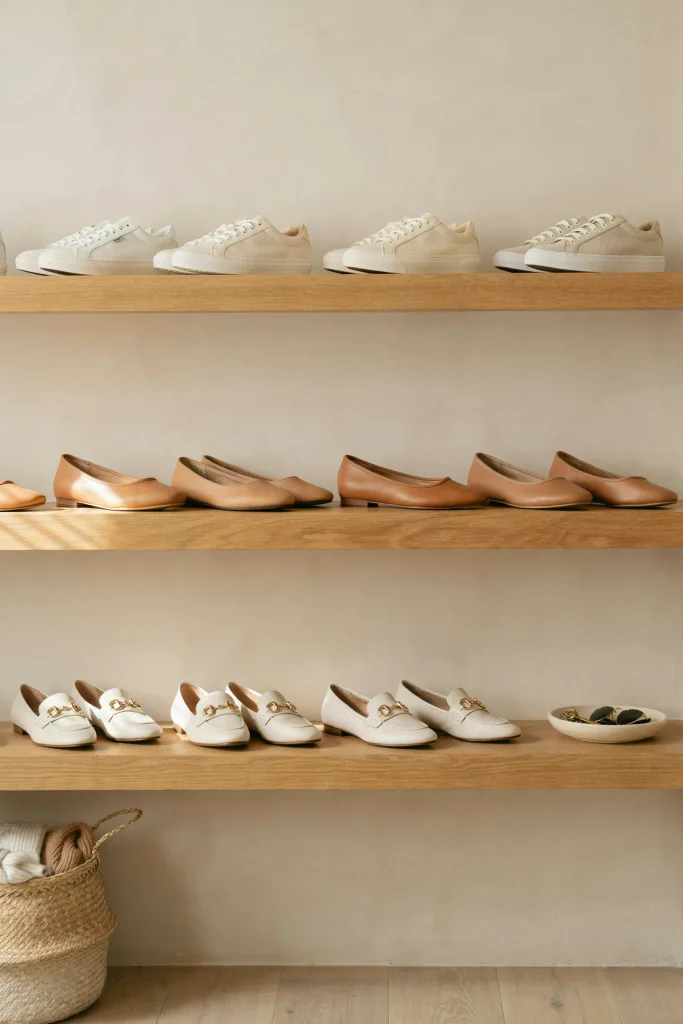
DO
- Angle shoes slightly to make each pair easier to see.
- Keep everyday footwear on the lowest shelf.
- Group similar shoe types together for faster selection.
- Leave a small gap between pairs so they slide out easily.
DON’T
- Stack shoes directly on top of delicate pairs.
- Push every pair against the back wall.
- Mix muddy outdoor shoes with clean indoor footwear.
- Fill every shelf edge to the point of blocking access.
A small adjustment in shoe placement can free up useful shelf depth. I’ve seen narrow closets work better when frequently worn pairs sit near the front and occasional footwear moves higher. Keep one simple rule: every pair should be visible enough to identify without pulling out several others.
Pull-Out Access Trays
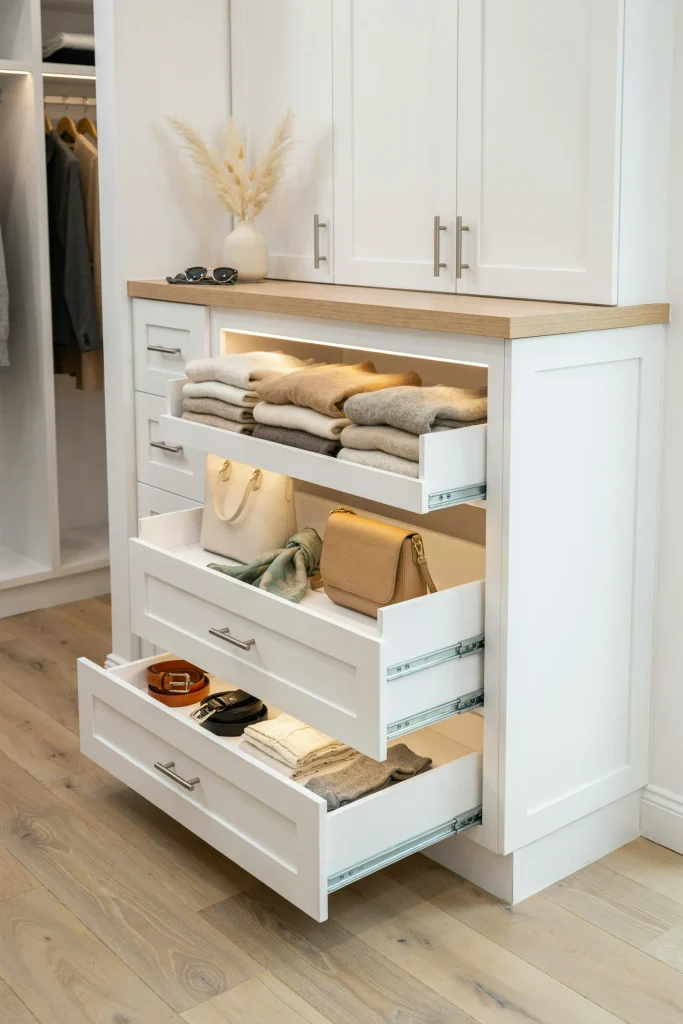
Cost: Moderate | Time: One afternoon | Skill Level: Beginner to intermediate
Best For: Deep shelves and narrow closets
Result: Easier access to items stored toward the back
Deep shelves often waste space because the items in front hide everything behind them. A pull-out tray solves that problem by bringing the entire storage surface forward. Measure carefully before choosing hardware, and leave enough side clearance for smooth movement. It works especially well for accessories and folded pieces.
Color-Coded Clothing
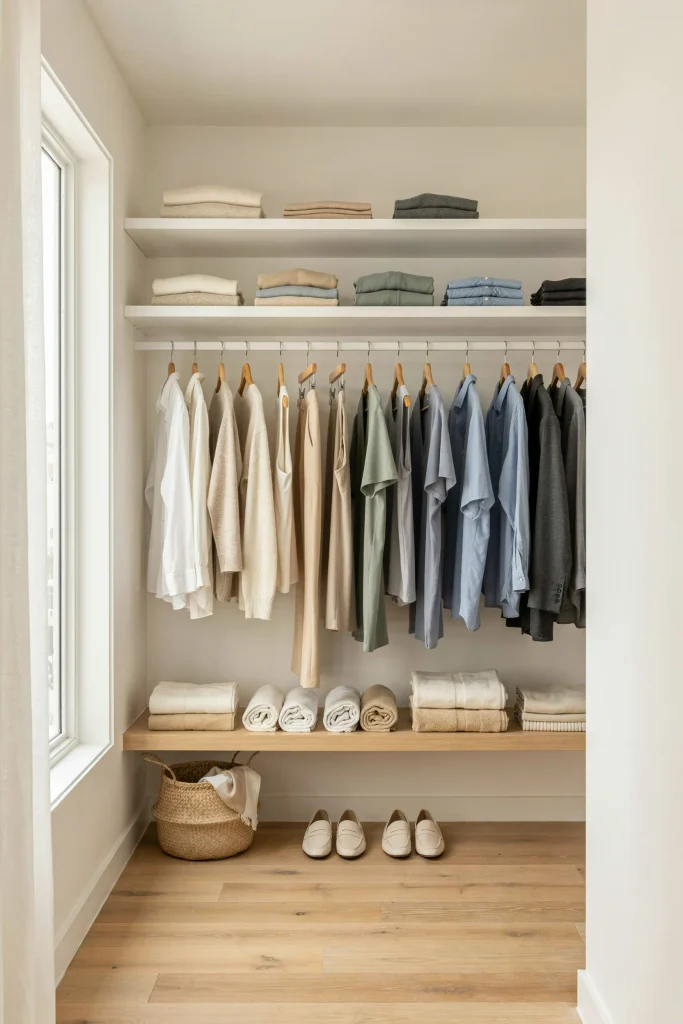
A quick glance becomes much easier when clothing follows a consistent visual order. Start by separating garments into broad color groups, then arrange each group from light to dark or by your preferred sequence.
| Old Way | Better Way |
| Clothes mixed randomly | Garments grouped by color |
| Hard-to-scan hanging section | Clear visual order |
| Extra searching | Faster outfit selection |
| Frequent reshuffling | Easier daily maintenance |
Color grouping does not require a perfect rainbow arrangement. Neutral wardrobes can simply move from white and cream to beige, brown, gray, and black. I’ve noticed this works particularly well for people who choose outfits quickly because the visual pattern helps locate familiar pieces without sorting through the entire closet.
Corner Hanging Hooks
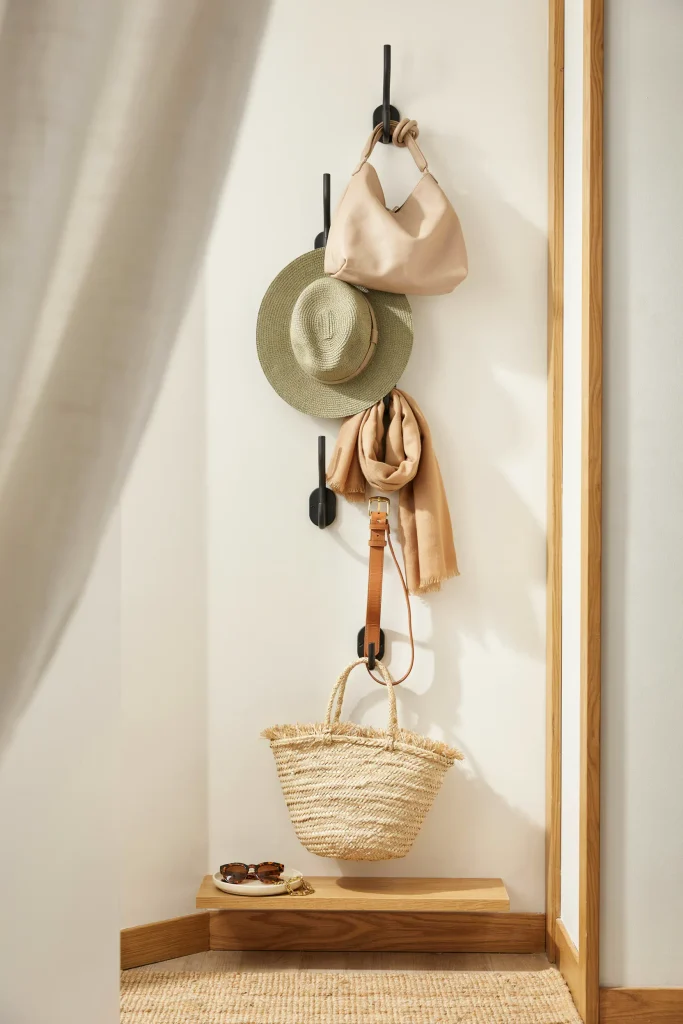
- Mount hooks on unused side walls or sturdy closet panels.
- Keep lightweight accessories on hooks to avoid unnecessary strain.
- Place frequently used bags between waist and shoulder height.
- Group scarves and belts together so they remain easy to grab.
DON’T
- Overload one hook with several heavy bags.
- Install hooks where clothing repeatedly catches on them.
- Use adhesive hooks on surfaces that cannot support their weight.
- Let accessories spread across multiple random locations.
Small corners often become dead space, but a few well-placed hooks can turn them into useful storage. Keep the arrangement selective rather than crowded. Two or three hooks may be enough for daily accessories, while less-used pieces can stay in drawers or bins. The goal is quick access without creating another clutter zone.
Rolling Clothing Cart
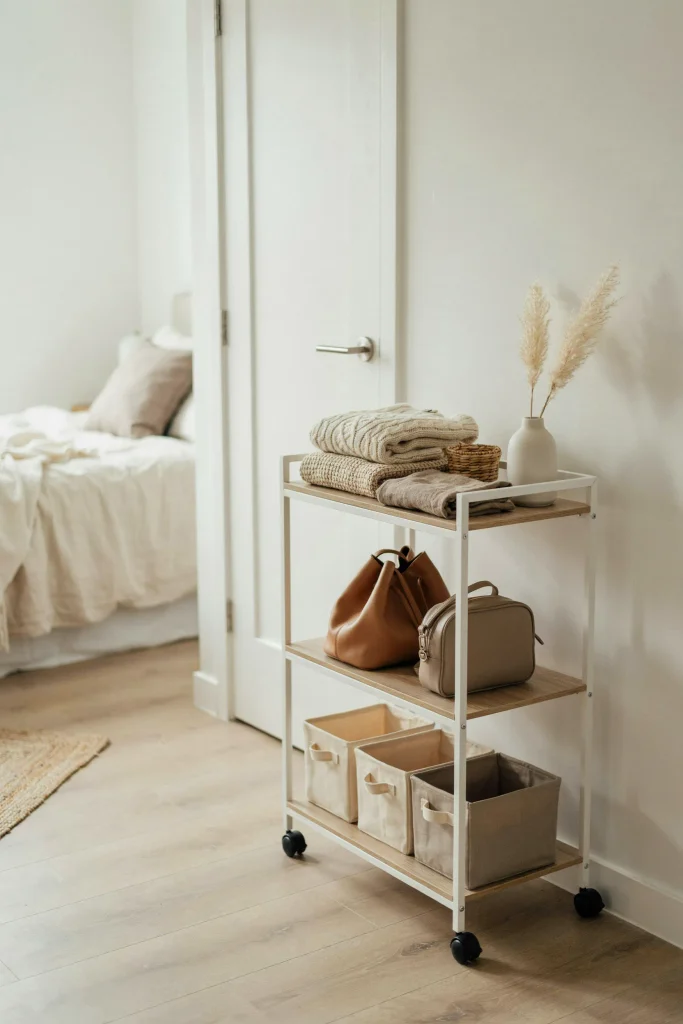
Cost: Moderate | Time: 30 minutes | Skill Level: Beginner
Works In: Walk-in closets and bedroom corners
Best For: Flexible overflow storage
Result: Extra capacity that can move when needed
A slim rolling cart adds storage without permanently taking over the closet floor. Choose a model narrow enough to leave a clear walking path, then use each tier for a specific category. It can hold folded clothing, handbags, accessories, or laundry supplies while remaining easy to move during cleaning.
Folded File Method
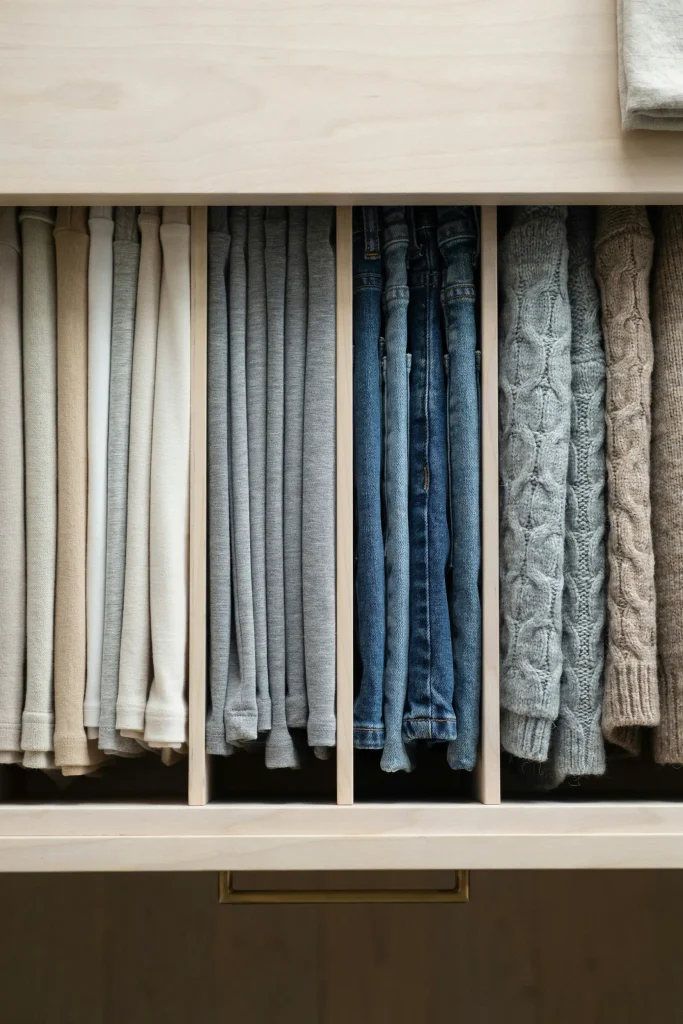
A drawer becomes far more useful when every item stands upright instead of disappearing beneath a stack.
Fold shirts, leggings, pajamas, and lightweight sweaters into compact rectangles, then place them vertically in rows. Use small dividers if the fabrics collapse or lean.
This arrangement lets you see most of the drawer contents at once. In my experience, it also makes putting laundry away easier because each category has a defined position. Keep similar items together and avoid packing the drawer so tightly that removing one piece disturbs the entire row.
Seasonal Swap Bins
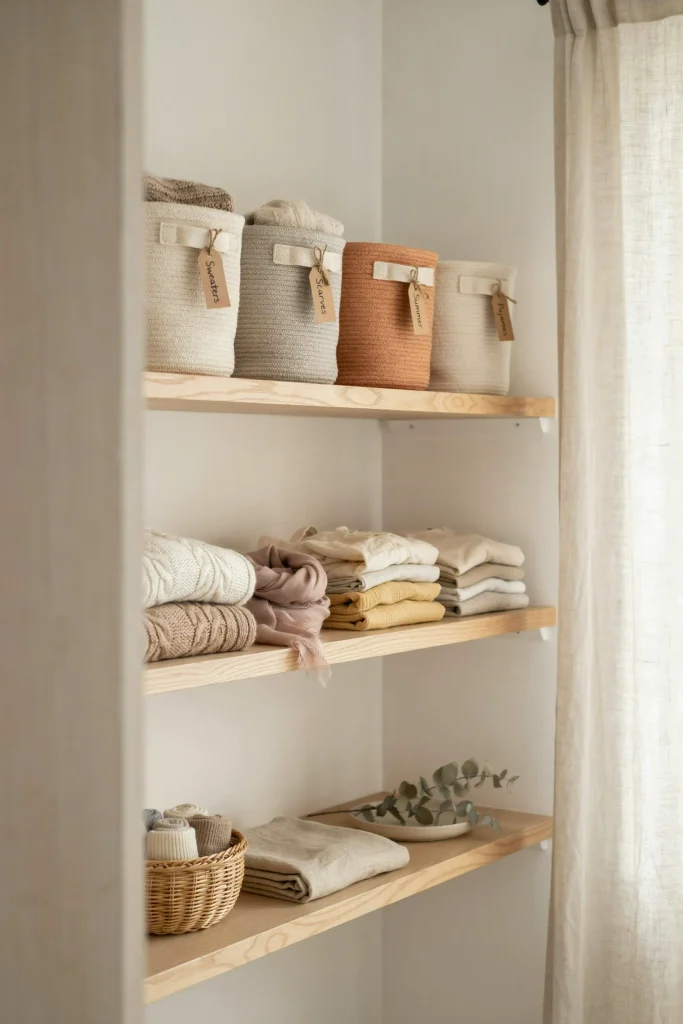
Cost: Low to Moderate | Time: One afternoon | Skill Level: Beginner
Best For: Seasonal wardrobes | Works In: Shelves and under-bed storage
Result: More room for current clothing
Bag Divider Shelf
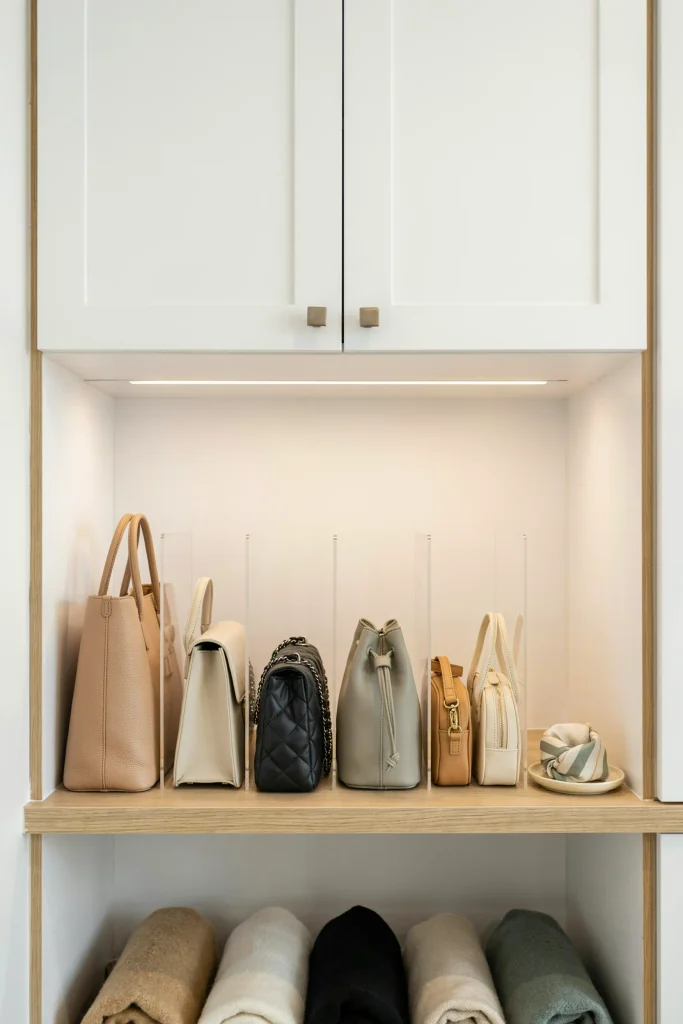
- DO: Store handbags upright so their shapes remain visible.
- DO: Use dividers to prevent bags from leaning into one another.
- DO: Place everyday bags at the easiest-to-reach height.
- DO: Stuff soft bags lightly with tissue paper to maintain their shape.
DON’T
- Crush structured handbags beneath clothing.
- Stack several bags where the bottom one becomes difficult to reach.
- Hide frequently used bags behind seasonal accessories.
- Overfill a shelf until dividers cannot hold items upright.
A divided shelf keeps bags visible and stops them from becoming a tangled pile. Choose dividers that match the shelf depth and leave enough room to remove each handbag independently. For smaller closets, reserve prime shelf space for everyday bags and move occasional styles to higher storage areas where they will stay protected.
Accessory Drawer Inserts
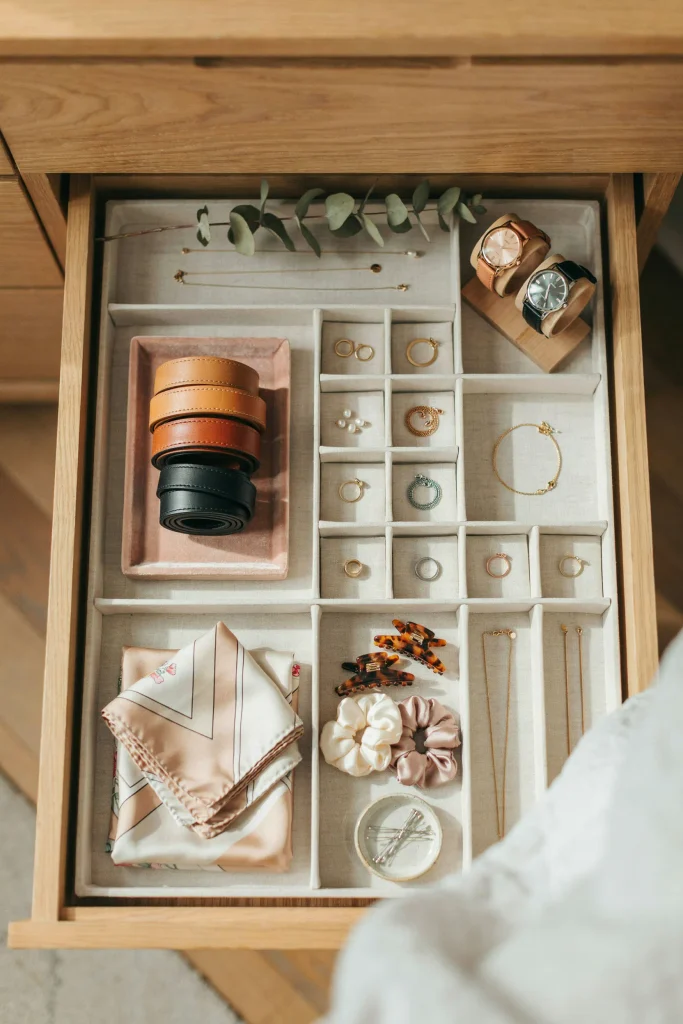
Quick Tip: Measure the drawer interior before buying inserts, including its height. Choose adjustable compartments when possible so small sections can fit changing accessory collections without leaving awkward gaps.
Assign each compartment one category and keep similar items together. Small dividers work especially well for belts, watches, hair accessories, and jewelry that tend to become tangled in open storage. I’ve noticed that shallow compartments are easier to maintain because every item remains visible rather than getting buried underneath another layer.
Vertical Jeans Folding
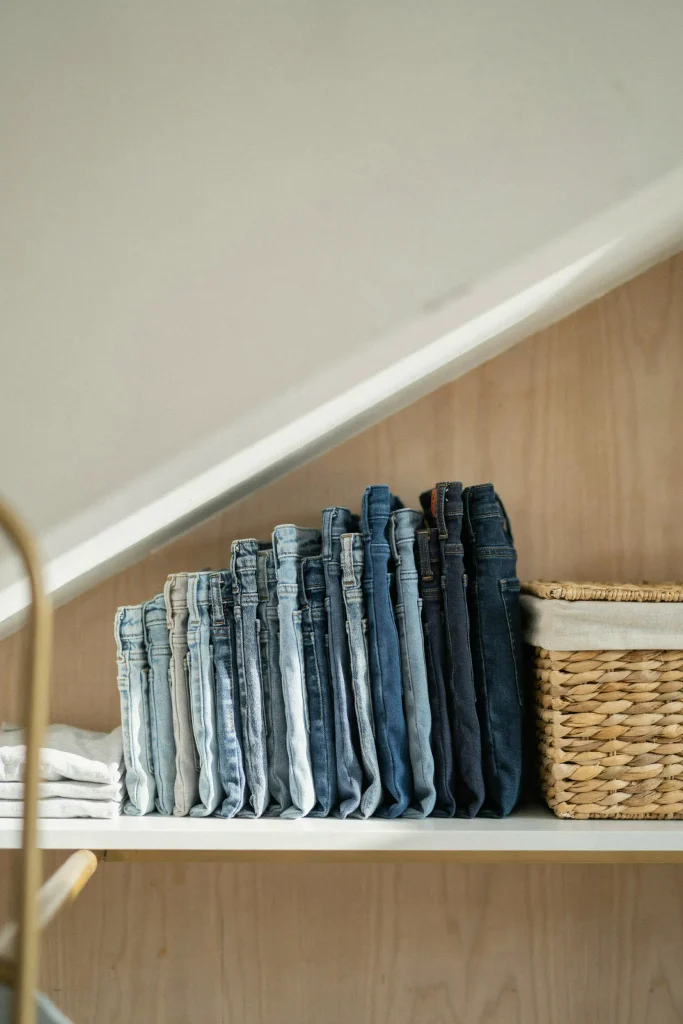
- Sort the denim: Separate jeans by fit, color, or frequency of wear.
- Fold lengthwise: Bring each leg together, then fold the jeans into a compact rectangle.
- Stand them upright: Place folded pairs vertically rather than stacking them flat.
- Add dividers: Use simple shelf dividers if the rows tend to lean.
- Keep favorites forward: Position your most-worn pairs where they are easiest to pull out.
Vertical folding makes a deep shelf easier to scan because each pair stays visible from the side. Instead of lifting several pairs to reach the bottom one, simply pull out the pair you need. Leave a little breathing room between rows so denim slides out without disturbing neighboring clothing.
Under-Shelf Baskets
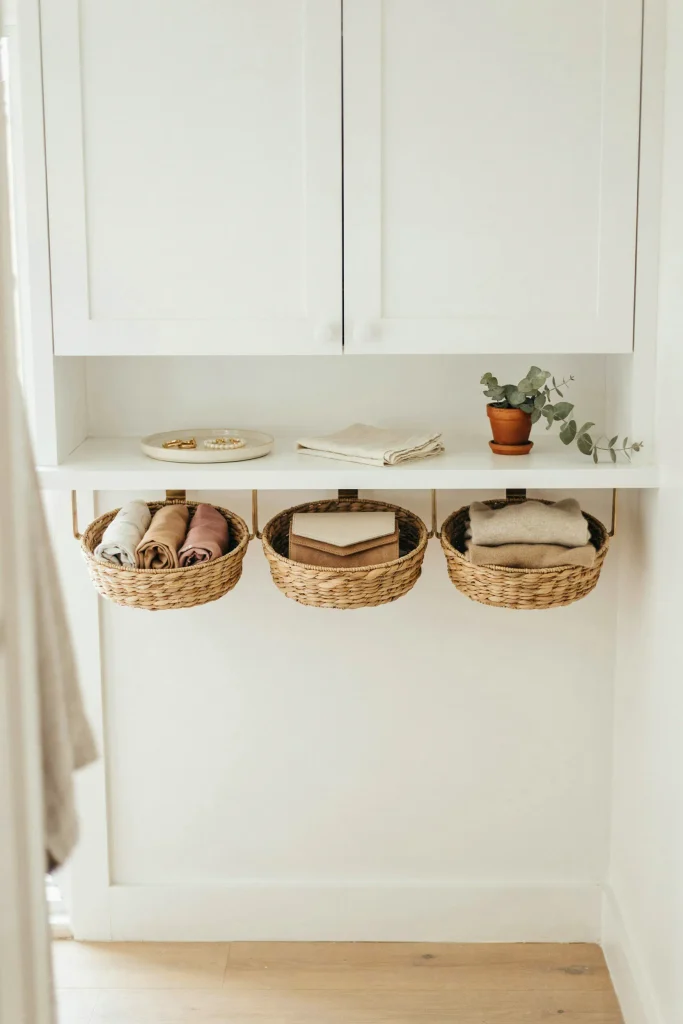
| Option A | Option B |
| Open shelf storage | Under-shelf baskets |
| Items remain exposed | Smaller items stay contained |
| Can look visually busy | Creates defined categories |
| Uses only shelf surface | Adds storage beneath the shelf |
Under-shelf baskets are useful when the closet has unused space beneath existing shelves. Choose shallow designs that leave enough clearance for clothing below. They work especially well for lightweight accessories and small folded pieces that otherwise slide around. Keep basket contents limited to one category so the extra storage does not become a hidden clutter trap.
Laundry Sorter Corner
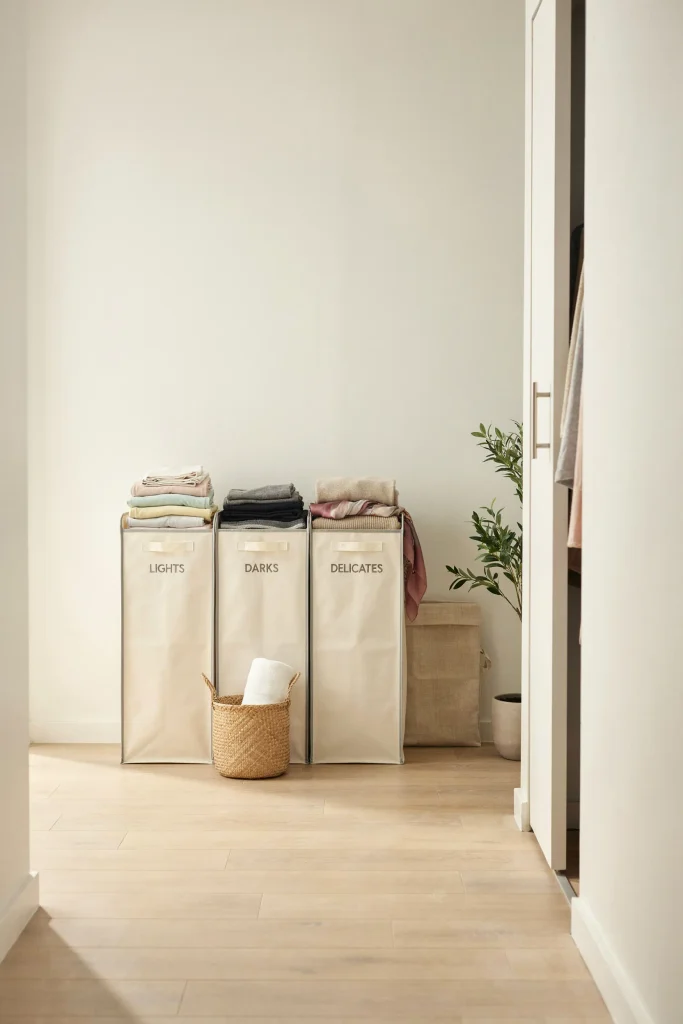
DO
- Choose a narrow sorter that preserves a clear walking path.
- Assign each compartment a simple laundry category.
- Keep the sorter close to the closet if space allows.
- Empty it regularly so clothing does not pile up.
DON’T
- Let the sorter become permanent storage for clean clothes.
- Choose a wide model that blocks closet doors.
- Mix damp garments with dry laundry.
- Fill compartments beyond their comfortable lifting weight.
A dedicated laundry corner keeps worn clothing from landing on the closet floor or getting mixed with clean pieces. In smaller bedrooms, a tall, narrow sorter usually uses less floor area than a wide basket. Keep it close enough to make laundry sorting automatic, but outside the main clothing access zone.
Tiered Accessory Rack
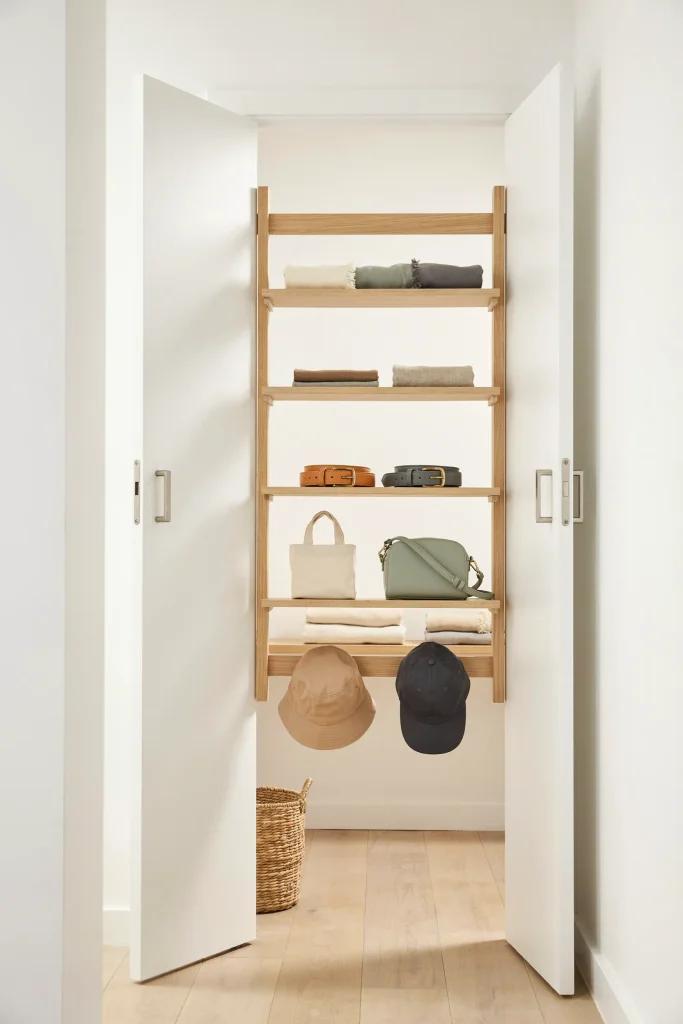
Cost: Low to Moderate | Time: 30 minutes | Skill Level: Beginner
Best For: Small accessories | Works In: Closet doors and side panels
Result: More visible storage in narrow spaces
A tiered rack keeps several accessory categories visible without consuming much shelf width. Arrange frequently worn pieces on the easiest-to-reach levels and reserve higher tiers for occasional items. Keep each level lightly filled so you can remove one accessory without pulling down everything around it.
Reachable Everyday Zone
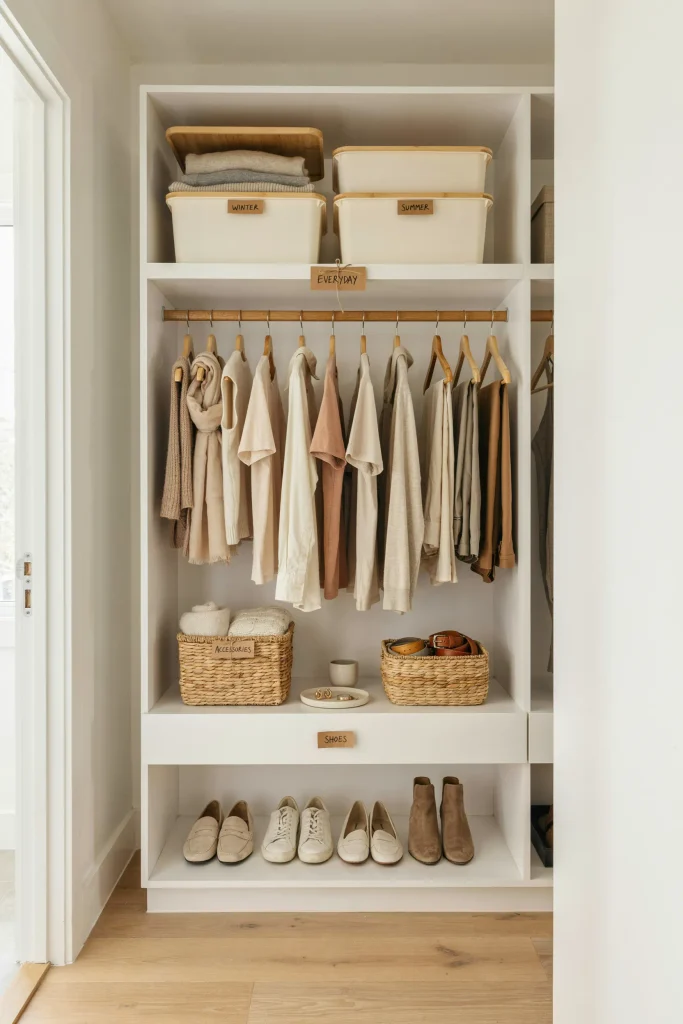
Quick Tip: Keep your most-used clothing between waist and eye level. Move seasonal pieces, special-occasion outfits, and backup accessories to higher or harder-to-reach areas.
A closet becomes easier to use when storage follows your daily routine. Place workwear, favorite tops, and frequently worn shoes in the center zone, then shift occasional items upward. I’ve noticed that this simple placement change reduces unnecessary searching because the things you reach for most are always in the same visual area.
CONCLUSION
A well-organized closet does not need to be large to work beautifully. Small changes such as vertical folding, slim hangers, shelf dividers, door storage, and clearly defined zones can make everyday dressing faster and less frustrating. The best Small Closet Organization Hacks are the ones that fit naturally into your routine and remain easy to maintain. I’ve seen how a few thoughtful adjustments can make a crowded space feel calmer and more usable. Save this post on Pinterest so you can revisit these ideas later, try one or two this week, and share it with someone who could use more closet space.