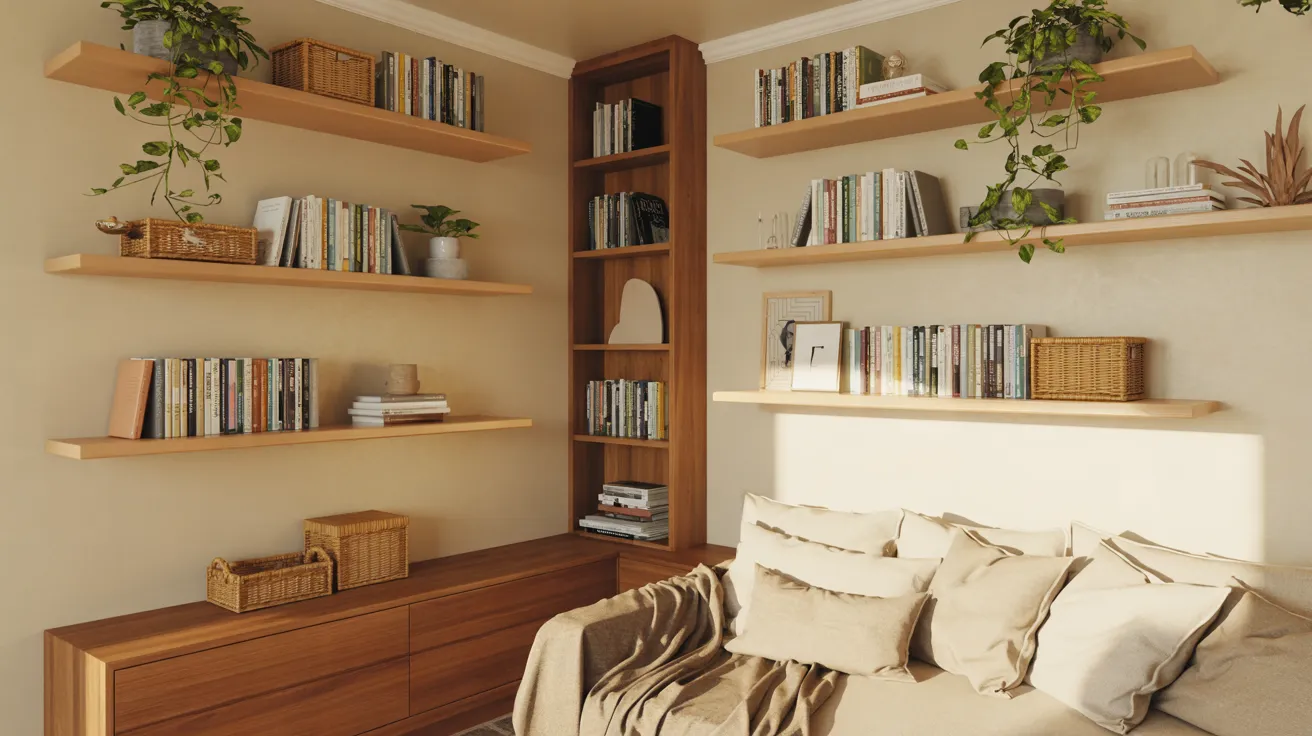
24 Bookshelf Ideas for Small Spaces That Wow
Small rooms do not need to mean small reading collections. Bookshelf Ideas for Small Spaces can turn overlooked corners, narrow walls, and unused areas into practical storage with plenty of personality.
Whether you live in a compact apartment, a cozy bedroom, or a home where every inch matters, the right shelving can make books easier to organize without making the room feel crowded. You will find ideas for floating shelves, slim book towers, window storage, under-stair displays, rolling carts, and more.
In my experience, the most useful small-space shelving solutions are the ones that work with the room instead of fighting its layout. A shallow shelf can free valuable floor space, while vertical storage makes use of walls that might otherwise sit empty. These ideas also show how books can become part of your decor rather than simply something that needs to be stored.
Floating Corner Shelves
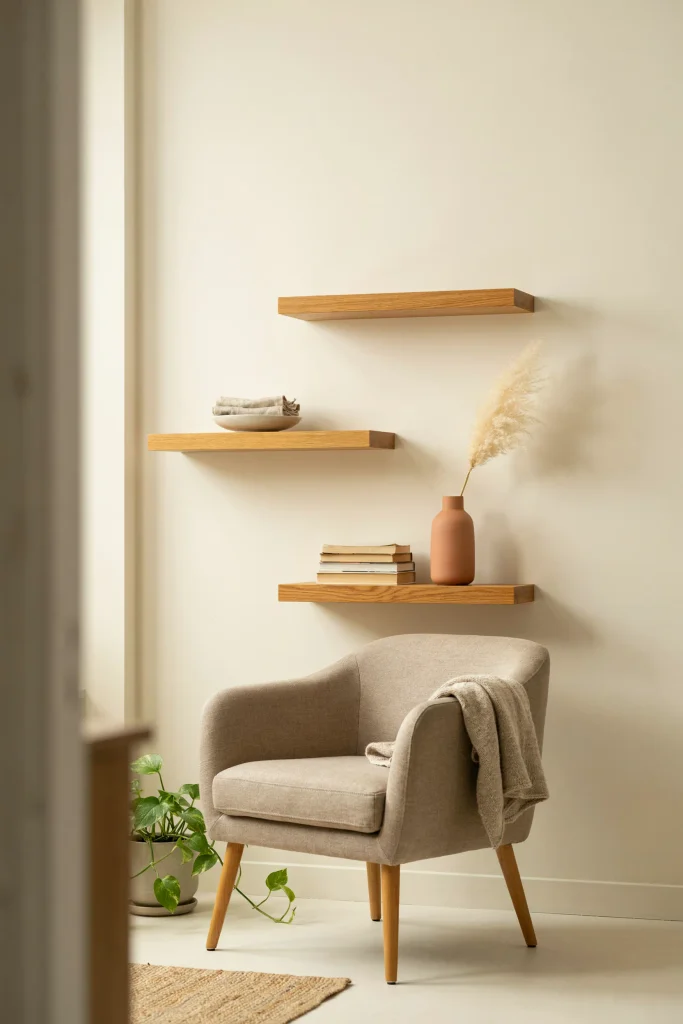
A forgotten corner can become valuable storage with a few slim floating shelves. Mount them vertically rather than spreading them across the wall. This draws the eye upward while keeping precious floor space open. Choose shelves with shallow depth so books stay contained without making the corner feel crowded.
Keep the arrangement visually balanced by mixing upright books with two or three horizontal stacks. Leave some wall visible between each shelf for breathing room. In my experience, alternating books with small plants or ceramic pieces prevents a compact display from looking too heavy.
ALSO READ : Fall Decorating Ideas for Small Homes
Built-In Window Shelves
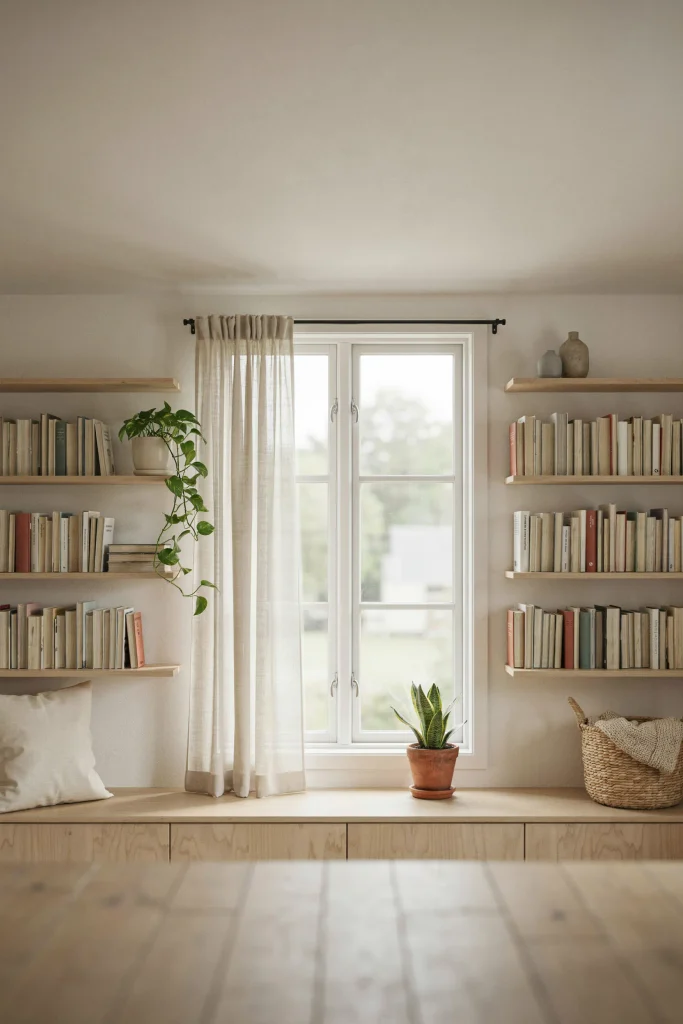
- Use shallow shelves: Keep the depth around 8 to 10 inches when possible so the window area remains open.
- Frame the window: Install matching shelves on both sides to create a balanced built-in appearance.
- Keep lower space useful: Reserve the bottom section for baskets, larger books, or folded blankets.
- Mix display heights: Combine tall books with short stacks to create a relaxed visual rhythm.
- Repeat materials: Match the shelving finish to nearby furniture for a more connected look.
Window framing works especially well in small bedrooms, living rooms, and home offices where every wall needs to earn its space. Keep the shelves slightly below the window line if possible, and avoid blocking natural light. The result is practical storage that makes the architecture feel intentional rather than crowded.
Pinterest Account : HavenAndHue2
Ladder Book Display
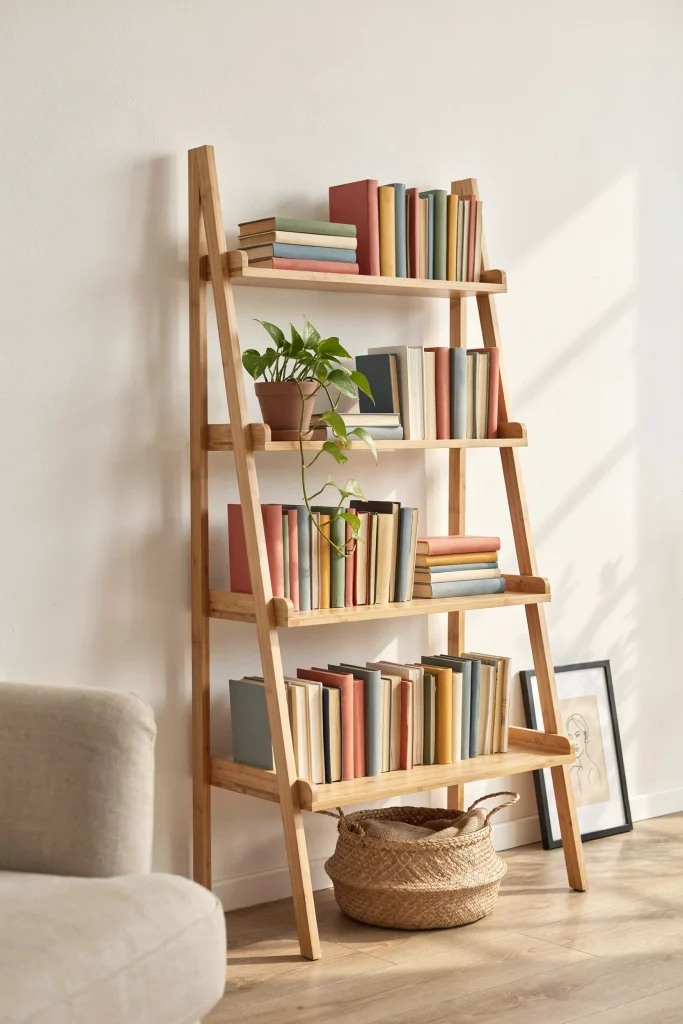
Quick Tip: Choose a ladder shelf with a narrow footprint and progressively deeper lower tiers. Place heavier books on the bottom levels and lighter paperbacks higher up. Secure the unit to the wall if children or pets regularly use the room.
A leaning ladder shelf adds vertical storage without requiring a wide cabinet footprint. Its open sides also let the wall remain visible, which helps a small room feel lighter. I’ve noticed this style works particularly well beside desks, sofas, or narrow entryway walls where traditional bookcases would feel bulky.
Wall-To-Wall Alcove Shelves
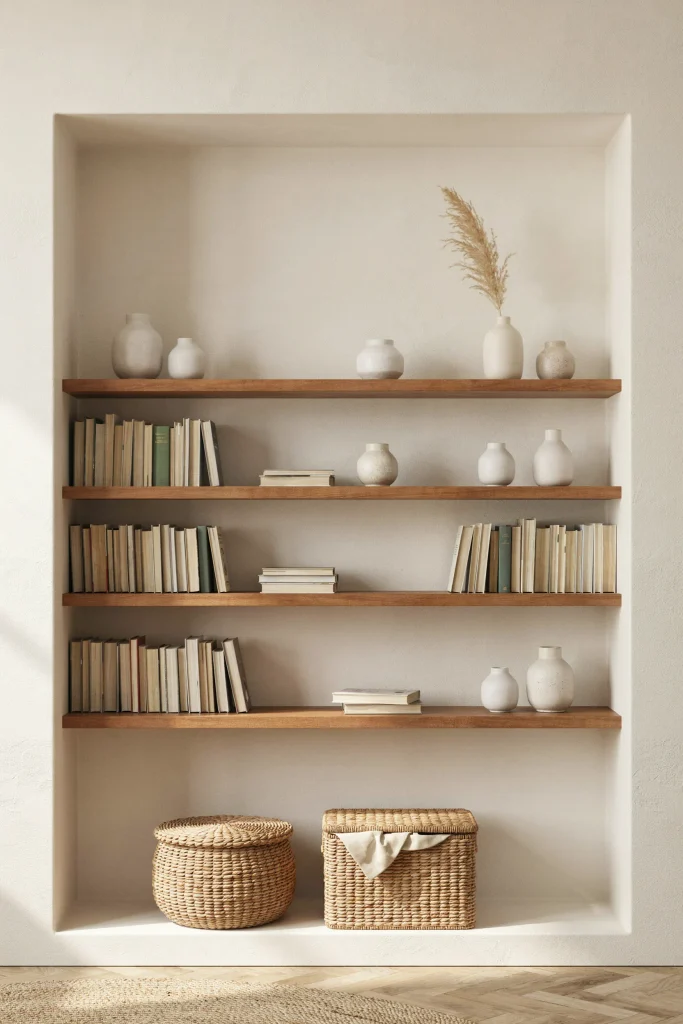
BEFORE: The alcove sits unused, collecting dust or becoming a drop zone for random items. A standard bookcase may project too far into the room and make the passage feel tighter.
AFTER: Fitted shelves use the full width of the recess while keeping their fronts nearly flush with the surrounding wall. Books, baskets, and small decor pieces now have dedicated homes.
Measure the alcove at several points before cutting or buying shelves because older walls are rarely perfectly square. Adjustable supports are especially useful when your collection includes different book sizes. For a rental, freestanding narrow units can mimic the built-in effect without permanent alterations.
Tall Narrow Book Tower
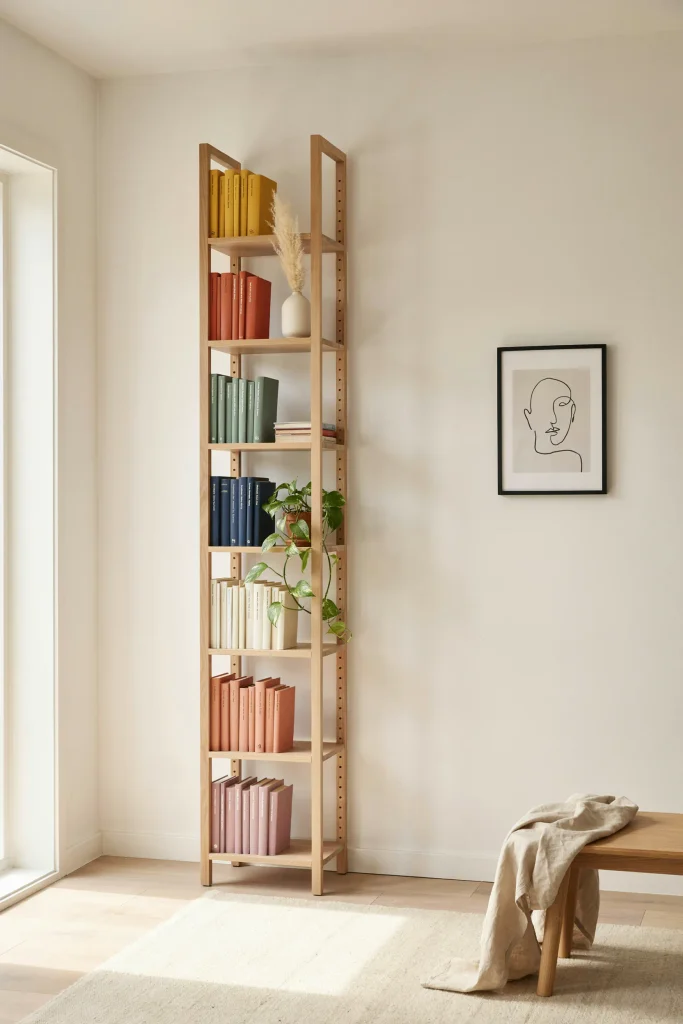
- Measure the wall: Find a narrow strip beside a doorway, window, or cabinet where a wider bookcase cannot fit.
- Choose height: Select a tall unit that uses available vertical space without interfering with trim or ceiling fixtures.
- Anchor securely: Fasten a tall freestanding unit to the wall using hardware suitable for your wall type.
- Load from below: Place heavier books on lower shelves and lighter paperbacks toward the top.
Going upward is one of the simplest ways to increase storage without sacrificing much floor area. A narrow tower also creates a strong vertical line, making the room feel taller. Keep frequently used books between waist and eye level, while reserving upper shelves for occasional reads or decorative pieces.
Above-Door Book Ledge
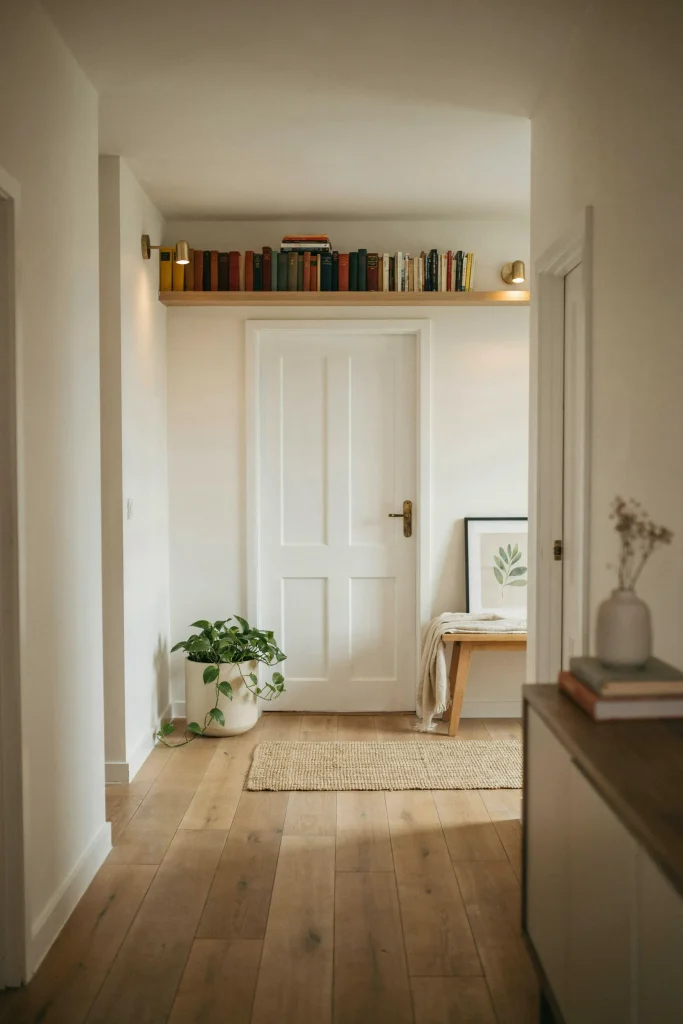
Quick Tip: Measure the full door opening before choosing the shelf length, then leave comfortable clearance around the frame. Keep heavier books on properly supported shelving rather than relying on lightweight decorative ledges.
The wall above a doorway is often overlooked storage territory, especially in compact homes. A shallow ledge keeps books elevated and out of walking paths while adding personality to an otherwise plain wall. Use it for books you read less often, and keep everyday favorites at an easier-to-reach height.
Under-Stair Book Storage
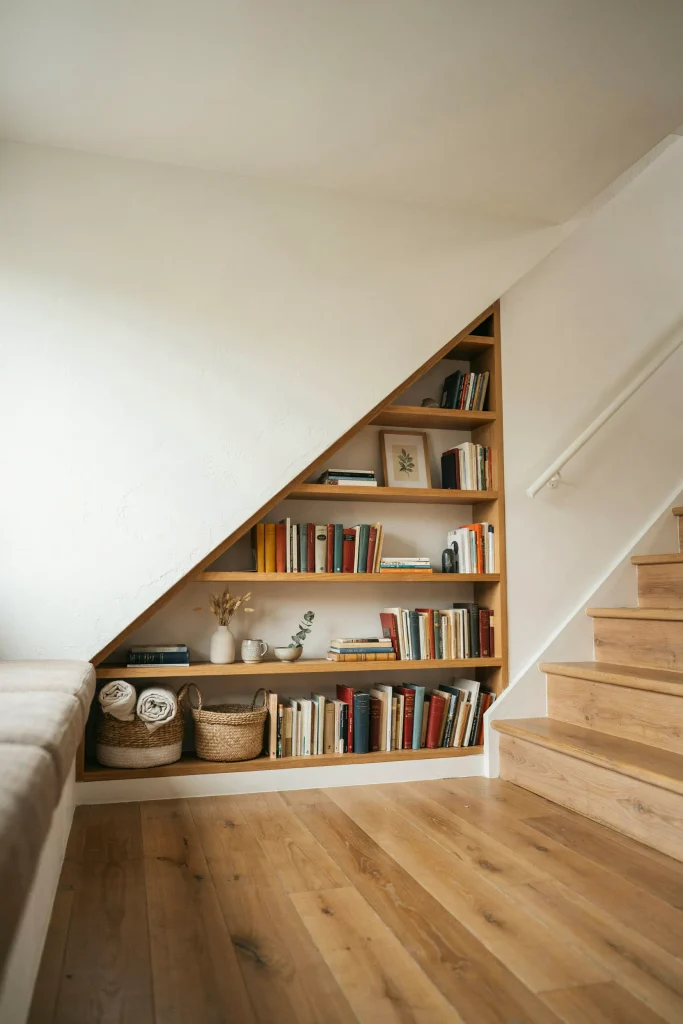
DO
- Measure the sloping wall carefully before choosing shelf sizes.
- Place taller books near the highest section of the staircase.
- Use baskets on lower shelves for magazines and small items.
- Leave a few sections open to keep the arrangement visually light.
DON’T
- Block the stair walkway with oversized shelving.
- Pack every shelf tightly with books.
- Store fragile decor where people may brush against it.
- Ignore wall studs when securing taller units.
Under-stair storage turns an awkward architectural area into useful book space without claiming another section of the room. Custom shelves provide the cleanest fit, but modular cubes can work on a budget. I’ve seen this approach work particularly well in entryways, where books and everyday storage can share the same compact footprint.
Behind-Sofa Bookcase
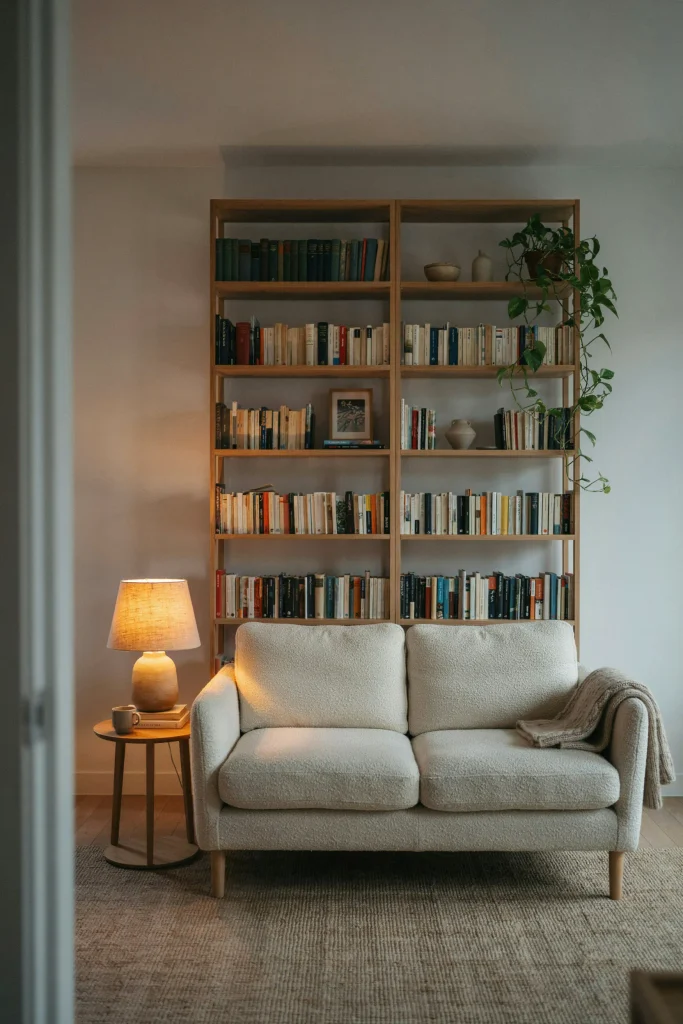
Cost: Moderate | Time: One afternoon | Skill Level: Beginner | Best For: Small living rooms
The narrow zone behind a sofa can become valuable storage instead of wasted floor space. Choose a bookcase that stays close to the sofa’s height and depth, leaving enough clearance for walking. A low profile keeps sightlines open, while baskets can hide chargers, blankets, or other small living-room essentials.
Desk-Side Mini Shelves
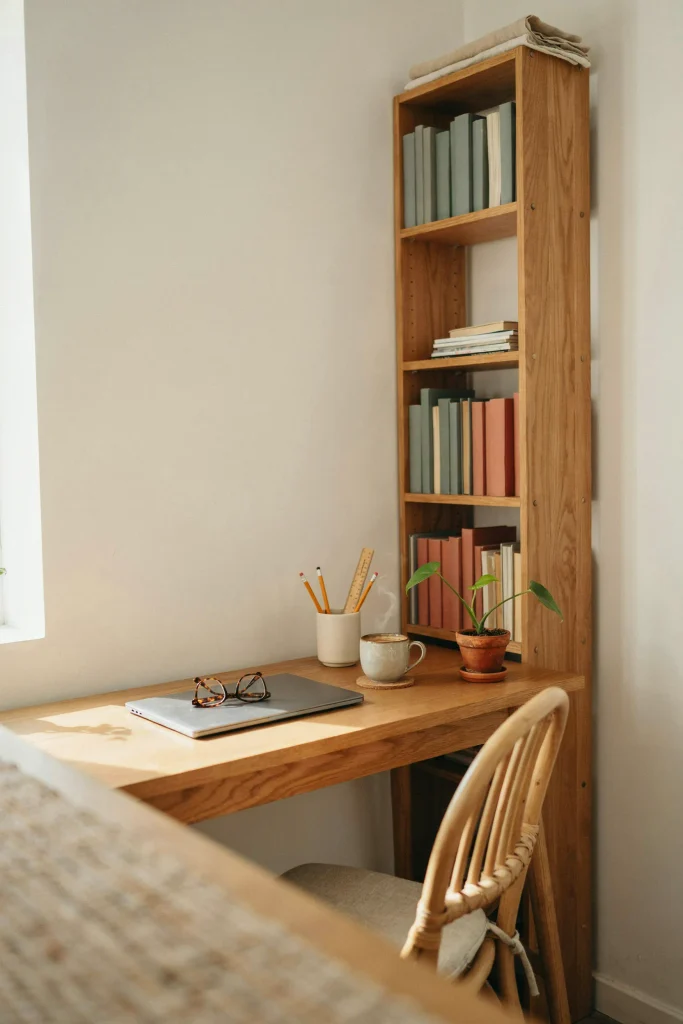
A small shelf beside the desk keeps reference books within reach without consuming valuable work surface. Look for a narrow vertical unit that fits between the desk and wall, then reserve its middle shelves for frequently used titles. The lower section can hold baskets, notebooks, or office supplies.
Keep the display useful rather than overly decorative. Group books by purpose, such as work, study, and reference, so finding something takes seconds. I’ve noticed that compact workspaces feel calmer when shelves provide clear categories instead of becoming another place to pile miscellaneous items. A small plant can soften the arrangement without taking much room.
Floating Bedside Shelves
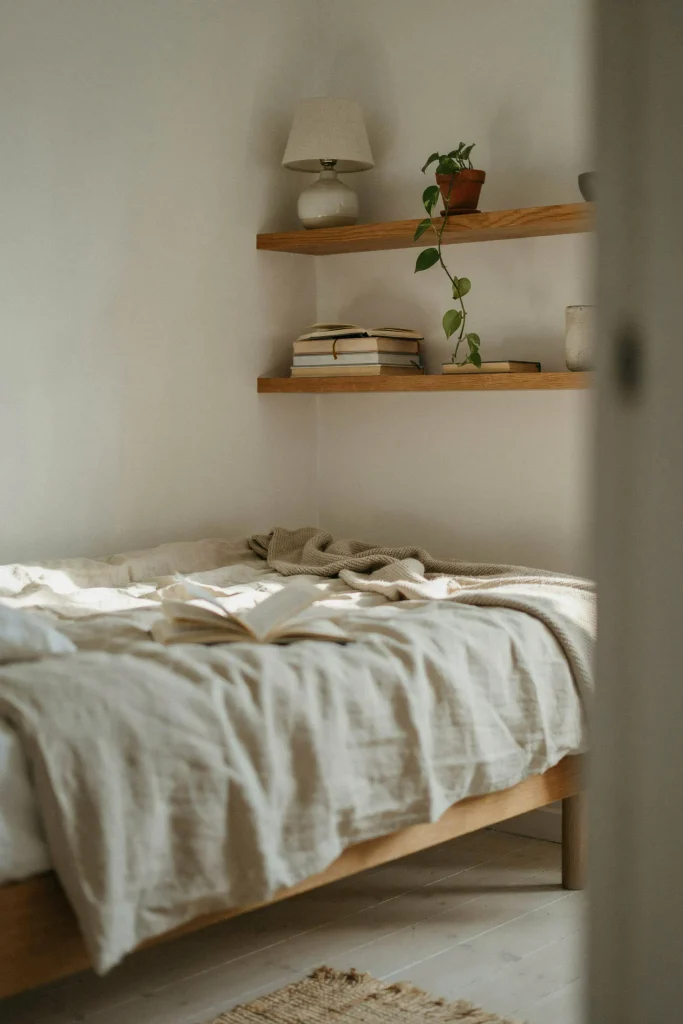
- Mount shelves beside the bed instead of using a bulky nightstand.
- Keep the lower shelf high enough to avoid bumping it while getting in or out.
- Reserve the upper shelf for books, a small lamp, or lightweight decor.
- Use matching wood tones to connect the shelves with the bed frame or flooring.
A bedside shelf creates a useful reading station while preserving precious floor space. Keep your current reads within arm’s reach and move less-used books elsewhere. For very narrow bedrooms, two shallow ledges may provide enough storage without making the sleeping area feel boxed in. This setup also keeps the floor easier to clean.
Corner Book Nook
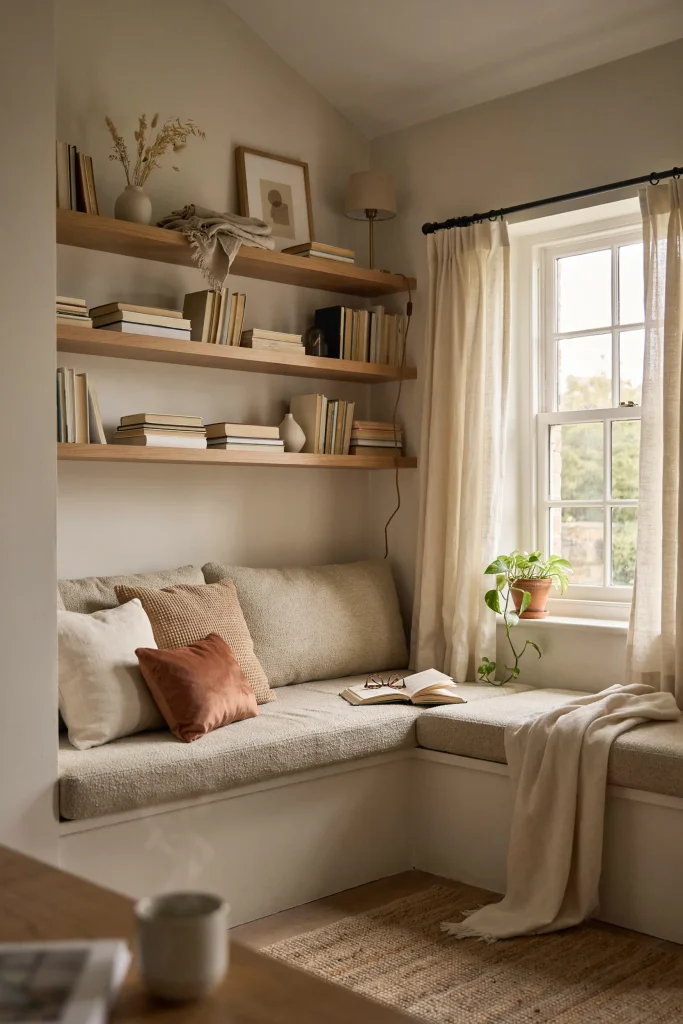
Quick Tip: Treat the corner as a vertical display rather than filling the entire floor area. Install shelves above a compact chair or bench, then keep the seating footprint narrow. Leave one or two shelves partially empty so the nook feels breathable rather than packed.
An unused corner can become a dedicated reading spot with surprisingly little furniture. Position a comfortable chair below the shelves and add a small side table only if space allows. Group books by size instead of color for easier access, then add one plant or framed print to break up the rows.
Entryway Book Ledges
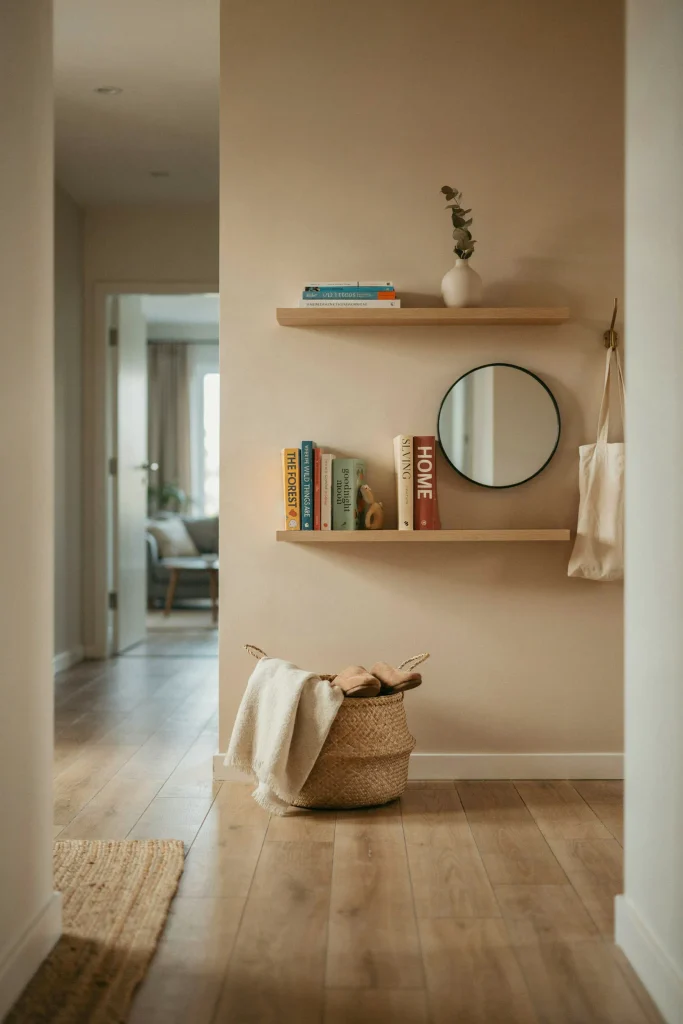
BEFORE: The entry wall provides little practical storage, while books end up scattered across tables or tucked into inconvenient corners. A deep cabinet would make the narrow passage feel even tighter.
AFTER: Slim ledges display favorite books directly on the wall while preserving walking clearance. A small basket underneath can collect keys, mail, or other everyday items without competing with the book display.
Picture ledges work especially well when you want storage that feels decorative rather than bulky. Choose sturdy ledges with a front lip and install them at staggered heights for visual movement. Keep frequently handled books lower and reserve higher rows for decorative covers or occasional reads that do not need daily access.
Rolling Library Cart
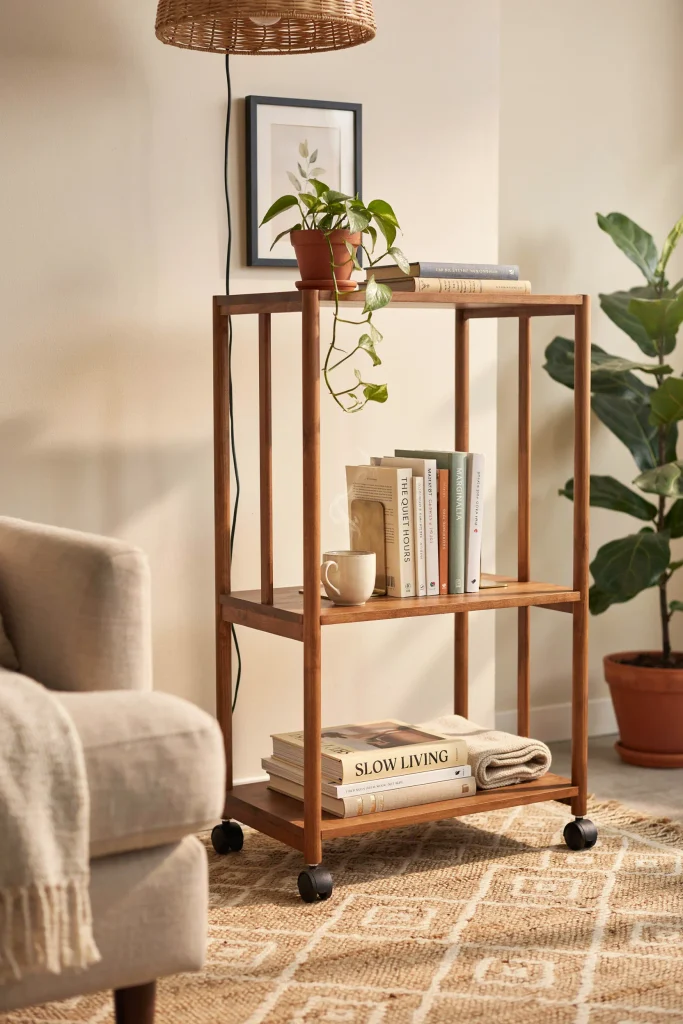
- Choose a narrow cart: Select a three-tier model that fits beside a sofa, desk, or reading chair without restricting movement.
- Sort by use: Keep current reads on the top tier and larger or less-used books on the lower levels.
- Add small accents: Use one plant or decorative object to soften the rows without sacrificing storage.
- Keep wheels accessible: Leave enough clearance around the cart so it can roll out for cleaning or repositioning.
A rolling cart gives small rooms flexible storage that can move wherever reading happens. It works particularly well in apartments where furniture needs to serve several purposes. Keep the heaviest books on the lowest tier to improve stability, and avoid overloading the top shelf with tall objects.
Staircase Wall Shelves
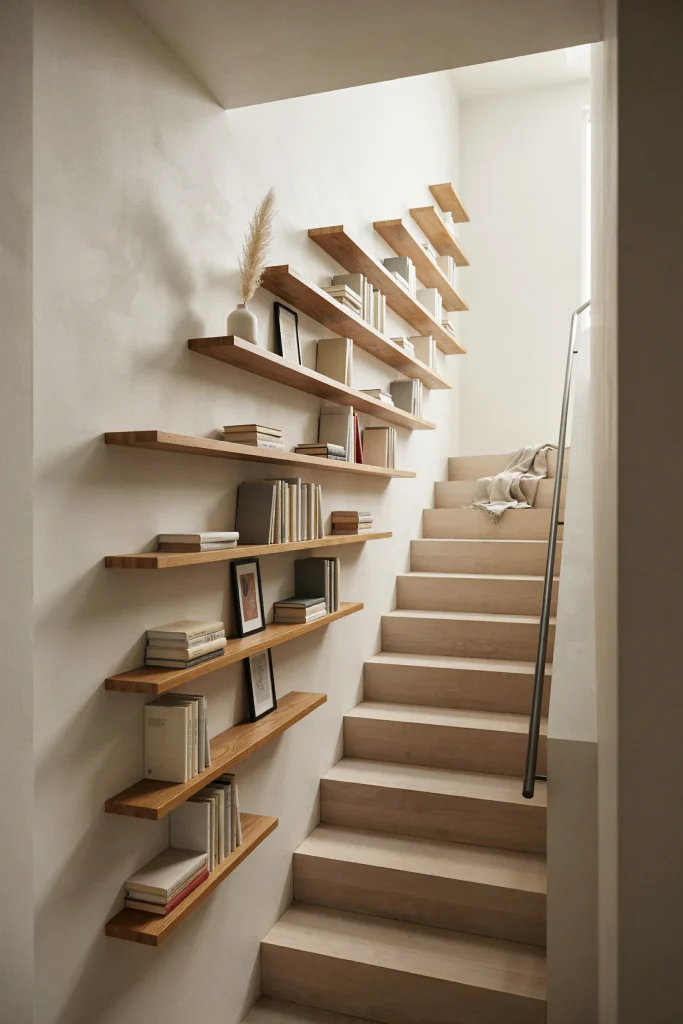
| Comparison Point | Option A: Straight Shelves | Option B: Stair-Step Shelves |
| Wall use | Leaves some areas unused | Follows the staircase shape |
| Visual effect | Simple and uniform | Creates movement and rhythm |
| Best placement | Flat walls | Sloped or stepped walls |
| Styling | Easy to arrange | Works well with varied book sizes |
Shelving that follows the staircase makes use of wall space that can otherwise be difficult to decorate. Keep the lowest shelves safely outside the walking path, and check that every bracket is firmly secured. The stepped arrangement naturally creates display levels, making books and small objects easier to organize attractively.
Slim Hallway Bookcase
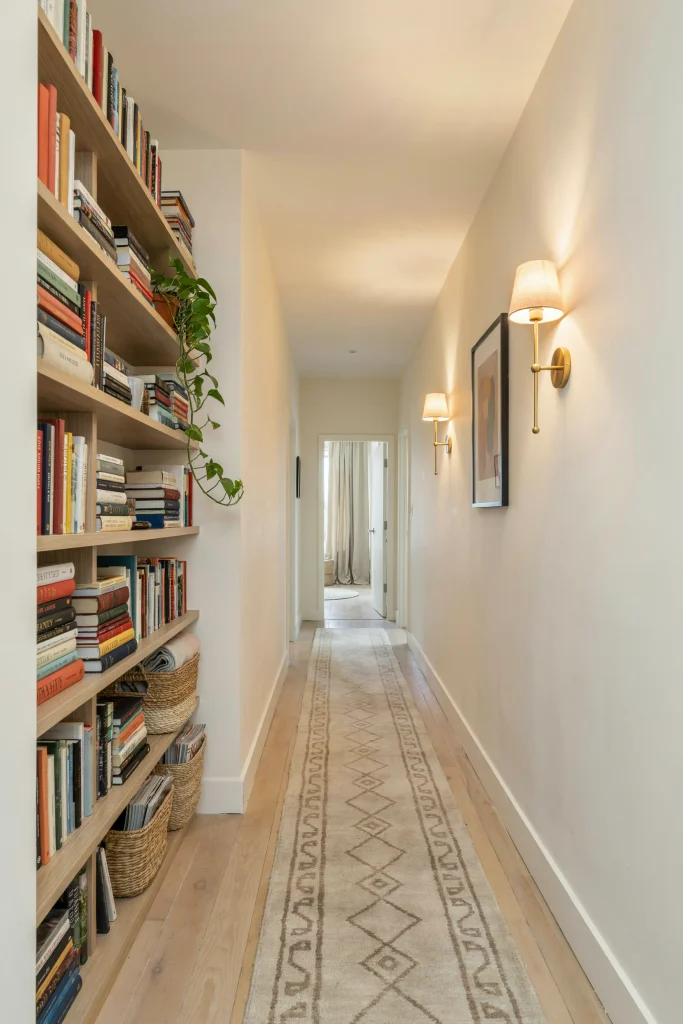
DO
- Measure the hallway clearance before purchasing the unit.
- Choose a shallow bookcase with adjustable shelves.
- Keep heavier books toward the bottom.
- Secure tall furniture to the wall.
DON’T
- Let shelves project into the main walking route.
- Fill every level from edge to edge.
- Place fragile objects where they can be knocked easily.
- Ignore door swings when selecting the location.
A hallway bookcase can provide serious storage without competing with larger furniture. Aim for a slim profile and keep the deepest shelves near the floor. In my experience, limiting the display to books and a few practical baskets keeps narrow corridors feeling organized rather than visually congested.
Hanging Rope Shelves
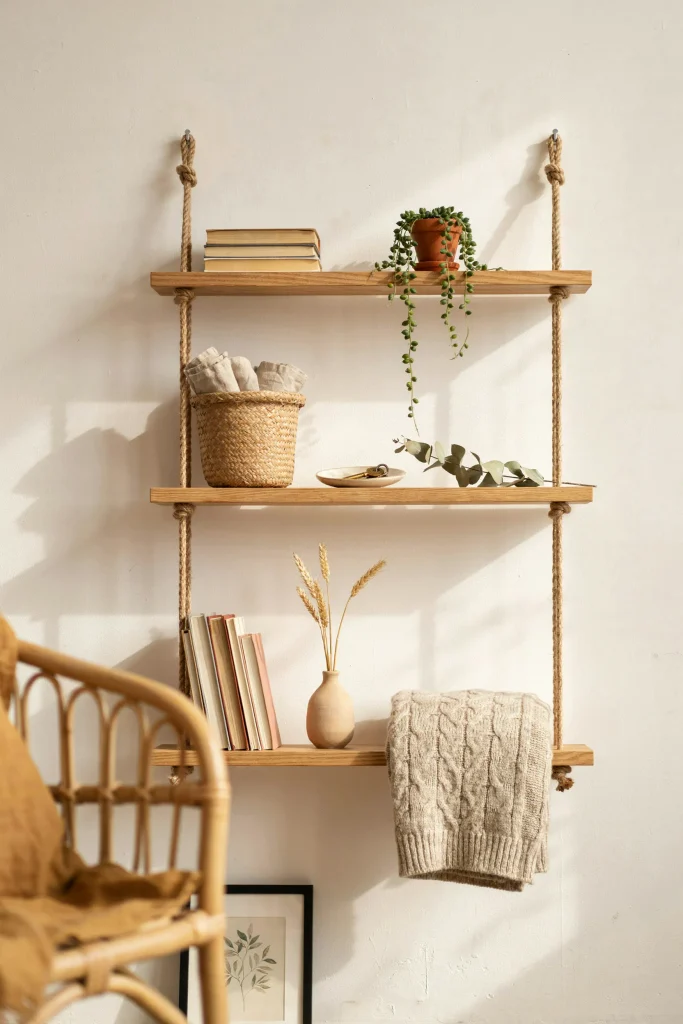
Cost: Low to moderate | Time: One afternoon | Skill Level: Beginner | Best For: Bedrooms and reading corners
Hanging shelves add book storage without the visual weight of a traditional cabinet. Use sturdy boards and properly rated hardware for the wall and ceiling surface involved. Keep heavier books on lower levels and leave enough spacing between shelves for comfortable access. Their vertical shape makes them useful beside chairs or desks.
Cube Shelf Grid
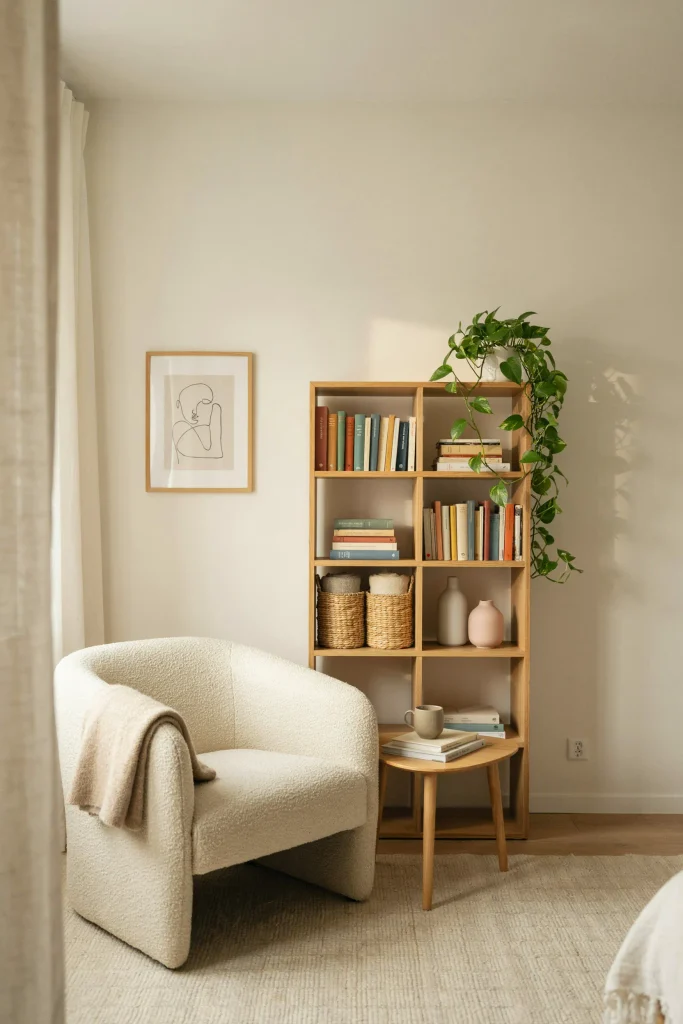
A cube grid gives you storage that can adapt as your collection changes. Fill some compartments with books and reserve others for baskets or decorative pieces. For a lighter look, avoid filling every cube completely. Keeping a few open sections creates visual breathing room while still providing plenty of organized storage.
Place larger books horizontally in selected cubes to vary the rhythm of the display. Small baskets can conceal cables, notebooks, or other items that do not deserve shelf space. If you live in a rental, a freestanding cube unit also offers flexibility because you can reposition it without modifying the wall.
Closet Door Shelving
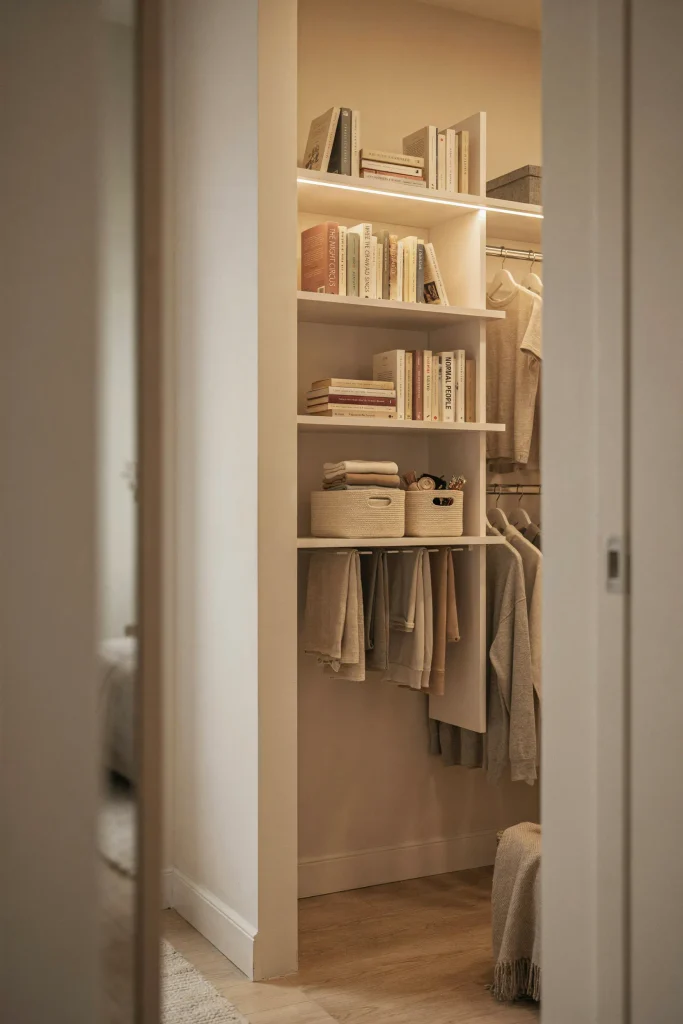
A hidden storage zone can hold more books than you might expect. Install a purpose-built over-door organizer or shallow shelving system on a suitable closet door, keeping the added weight within the door and hardware limits. This approach preserves your visible walls for art, mirrors, or other functional needs.
Check door clearance before installing anything, especially around hinges and shelving edges. Keep lightweight paperbacks and small books in the upper sections, while heavier items should stay lower. This setup is especially helpful in bedrooms where floor space is limited and a conventional bookcase would crowd the sleeping area.
Under-Cabinet Book Ledges
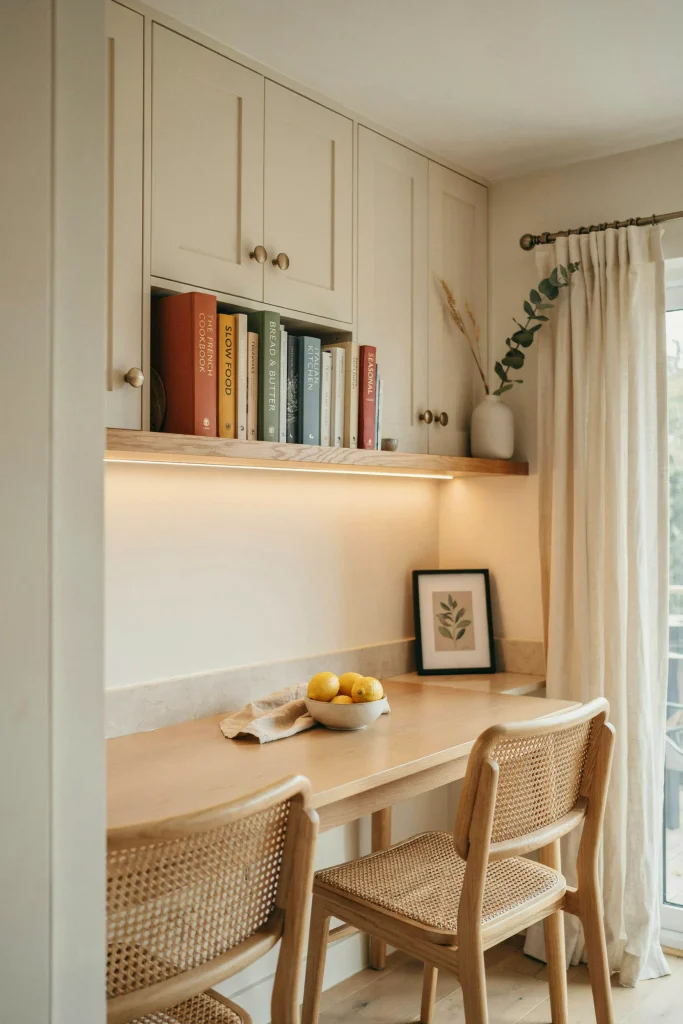
- Choose shallow ledges: Keep the profile narrow so books do not interfere with nearby counters or seating.
- Match existing finishes: Coordinate the shelf wood with cabinets, flooring, or nearby furniture.
- Display useful titles: Keep cookbooks, craft books, or frequently referenced guides within easy reach.
- Leave breathing room: Avoid filling every inch so the compact area stays visually calm.
Book ledges beneath cabinets turn an otherwise overlooked strip of wall into practical display space. In kitchens, they can hold favorite cookbooks without taking over the counter. In craft rooms or home offices, the same approach works for manuals and reference books while keeping the main work surface clear.
Room-Dividing Bookcase
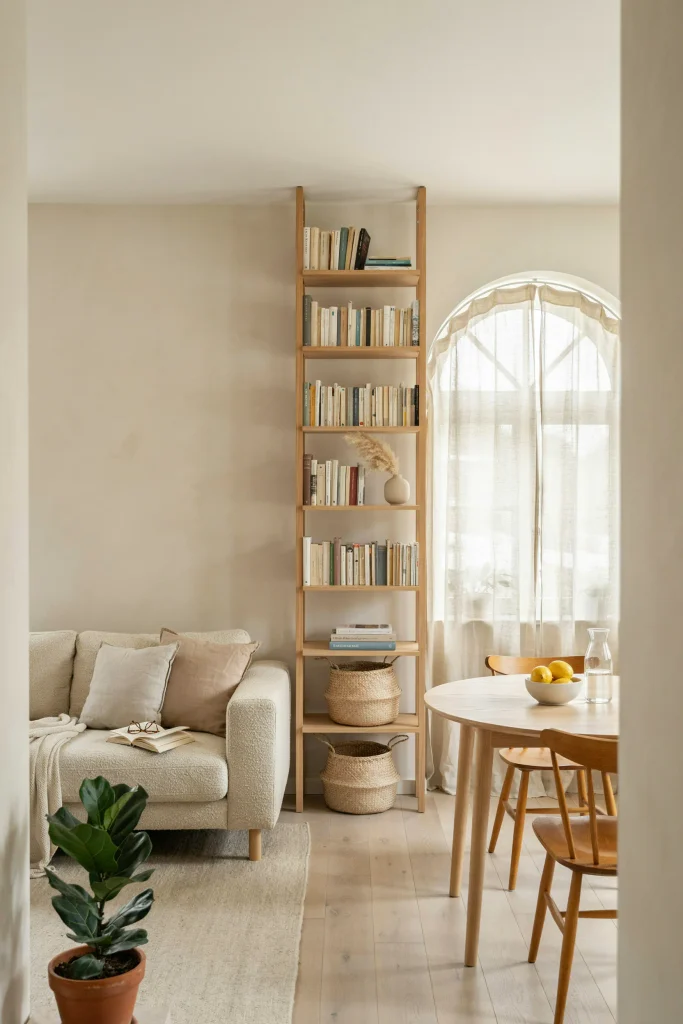
BEFORE: A studio or open room has no clear visual separation between living and working areas. Furniture may float without defining where one zone ends and another begins.
AFTER: An open-backed bookcase creates a gentle boundary while allowing light to pass through. Books, baskets, and a few plants add storage and help distinguish the two areas without building a solid wall.
Choose an open shelving unit that does not completely block sightlines across the room. Anchor a tall unit securely, especially when it will divide a frequently used walkway. Keeping some compartments open preserves the airy character of a small home while giving each zone a clearer purpose.
Picture Ledge Library
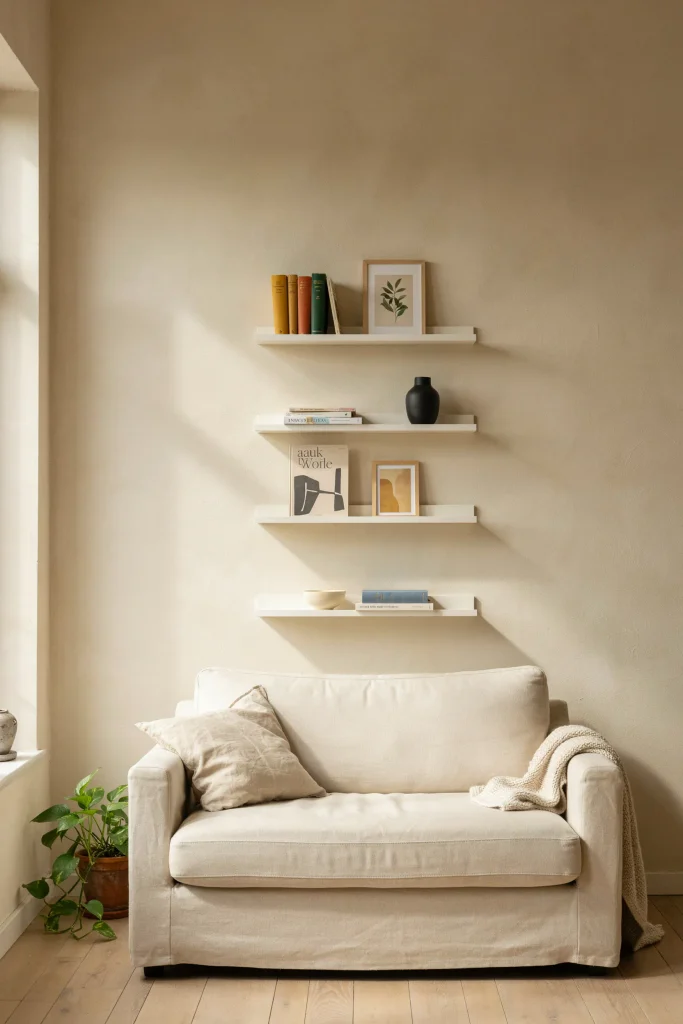
The slim profile of picture ledges makes them especially useful when floor space is limited. Mount three or four rows vertically, keeping enough distance between each ledge for your tallest books. Face a few favorite covers outward while stacking the rest horizontally to create a display that feels intentional without becoming crowded.
Keep the lower ledges within easy reach and place less-used books higher up. A small gap between each book group gives the wall room to breathe. For a cohesive finish, repeat one material or color, such as white ledges with warm wood frames, throughout the arrangement.
Bed-End Bookcase
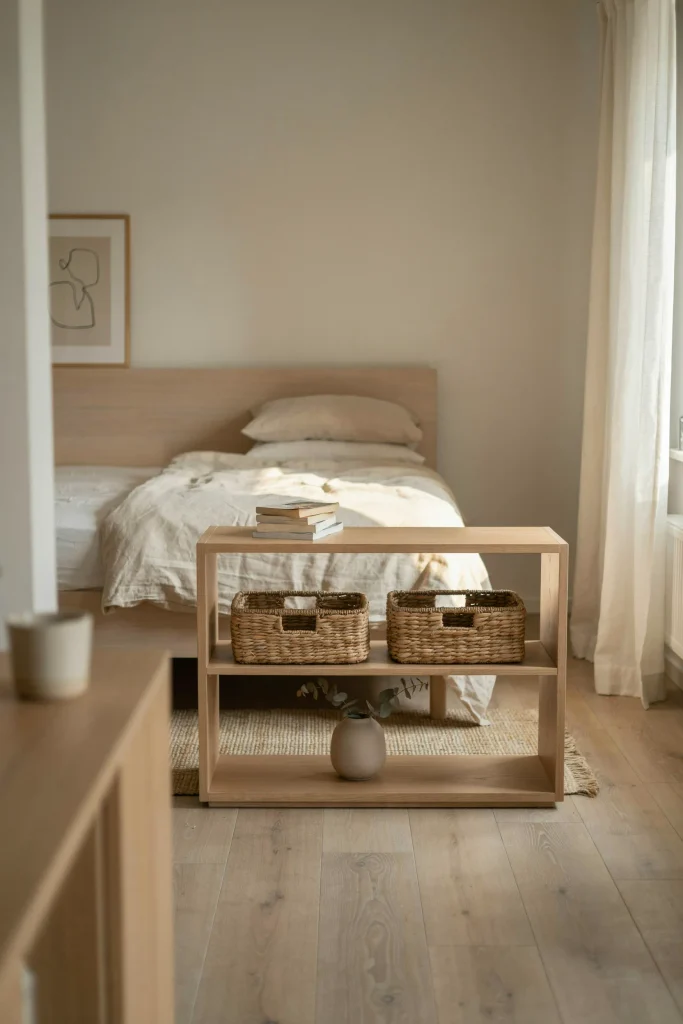
Cost: Moderate | Time: One afternoon | Skill Level: Beginner | Best For: Small bedrooms
A low bookcase at the foot of the bed adds storage without requiring another wall. Choose a unit shorter than the mattress height so the room retains an open sightline. Keep favorite books in the upper compartments and use lower sections for baskets, blankets, or seasonal reading material.
Measure the gap between the bed and opposite wall before buying anything. You need enough clearance to walk comfortably around the furniture. A shallow unit works best in tight bedrooms because it provides useful storage while keeping circulation practical.
Kitchen Book Nook
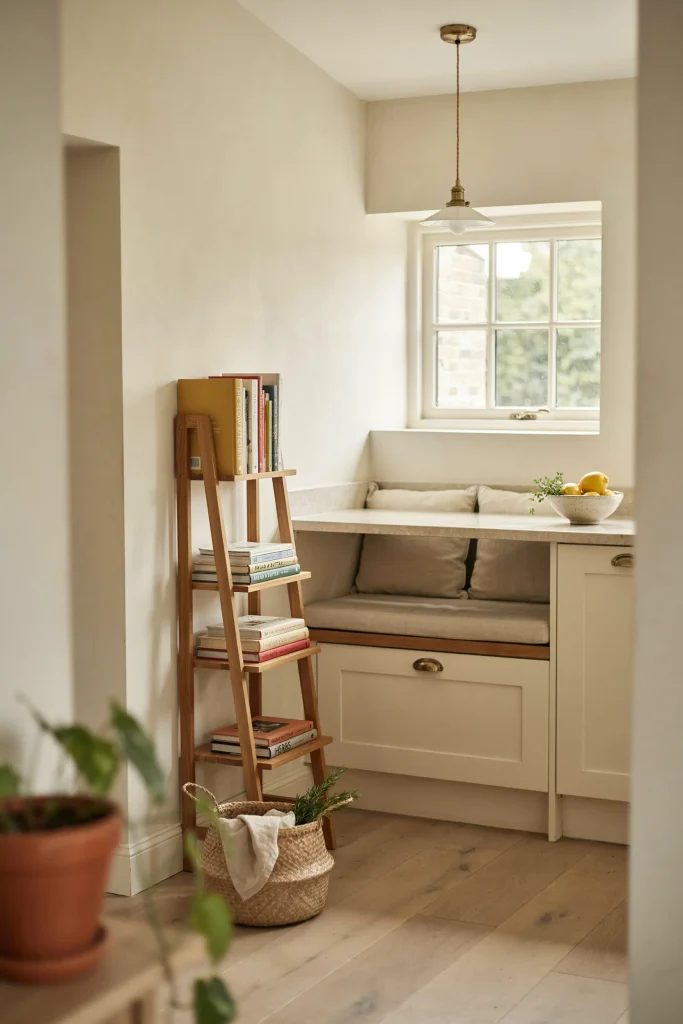
A tiny kitchen corner can become a dedicated cookbook station with the right proportions. Choose a narrow shelf beside the breakfast table or unused cabinet wall, then organize frequently used recipes between waist and eye level. Keep heavier cookbooks on lower shelves to make the unit more stable.
For a polished look, combine upright cookbooks with a few horizontal stacks and one practical kitchen accessory. Avoid placing books directly beside a sink or cooking surface where splashes and heat could damage them. This setup works particularly well for compact kitchens that lack generous cabinet storage.
Bench-Top Bookcase
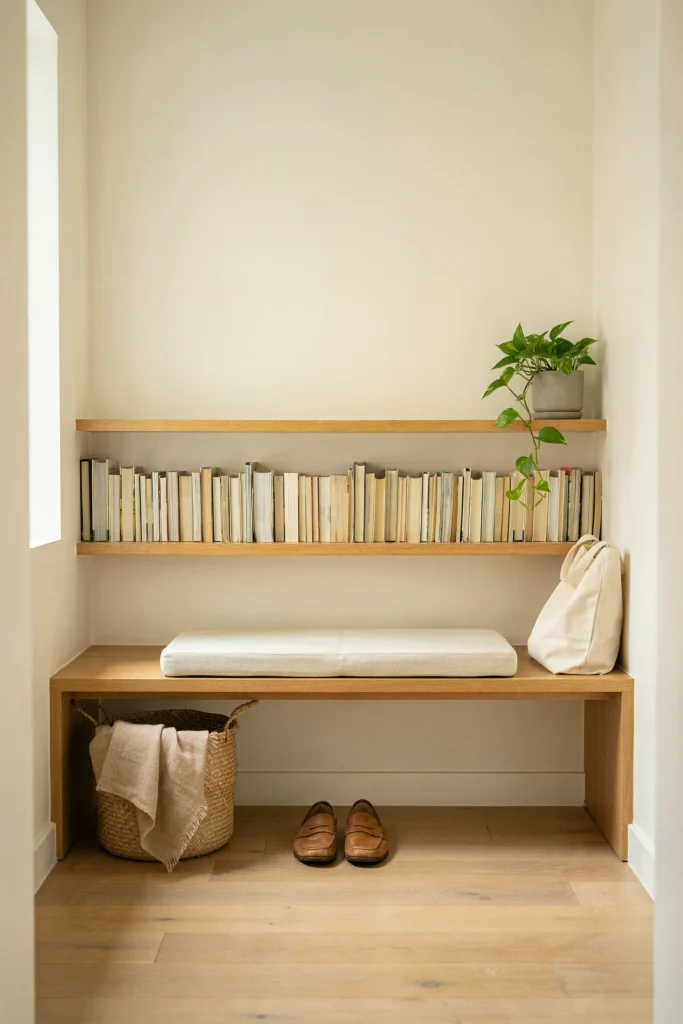
- Use vertical space: Install shelves above a bench to keep the floor available for seating and storage.
- Keep the bench clear: Reserve the seat for sitting rather than allowing books to pile up.
- Add baskets below: Use baskets for shoes, scarves, blankets, or small household items.
- Balance the display: Mix books with a few lightweight decorative pieces for visual variety.
- Secure the shelving: Anchor wall-mounted sections properly, especially above seating areas.
A bench-top bookcase combines two useful functions in one compact footprint. It works especially well in entryways, bedrooms, and reading corners where a separate chair and bookcase would consume too much space. Keep everyday books at comfortable reach and use the bench storage for items that would otherwise create clutter.
CONCLUSION
A small room can still have a thoughtful, beautiful home library. These Bookshelf Ideas for Small Spaces show how vertical walls, unused corners, narrow gaps, and overlooked areas can become useful storage without overwhelming the room.
Start with one area that currently feels wasted, then choose a shelf that matches its size and purpose. I’ve seen how a simple storage change can make a room feel more organized and welcoming.
Save this post on Pinterest so you can revisit your favorite ideas when you’re ready to decorate. Try one or two solutions, then share this article with someone who could use smarter book storage. Your perfect little reading space may be closer than you think.