22 Farmhouse Kitchen Design Ideas for Warm, Cozy Charm
Warm wood, creamy cabinets, vintage details, and a kitchen that feels welcoming from morning coffee to family dinner. Farmhouse Kitchen Design Ideas can help you create that comfortable look without making your space feel dated or overly rustic.
This collection brings together practical ways to add farmhouse character through cabinetry, lighting, countertops, shelving, sinks, flooring, and thoughtful decorative details. Whether you’re updating a small kitchen or planning a complete renovation, you’ll find ideas that can work with different layouts and budgets.
I’ve noticed that the most inviting farmhouse kitchens rarely rely on one dramatic feature. Instead, they combine a few hardworking materials and timeless details that feel natural together. Use these ideas as inspiration, then choose the elements that suit how you actually cook, store, gather, and live in your kitchen.
White Shaker Cabinets
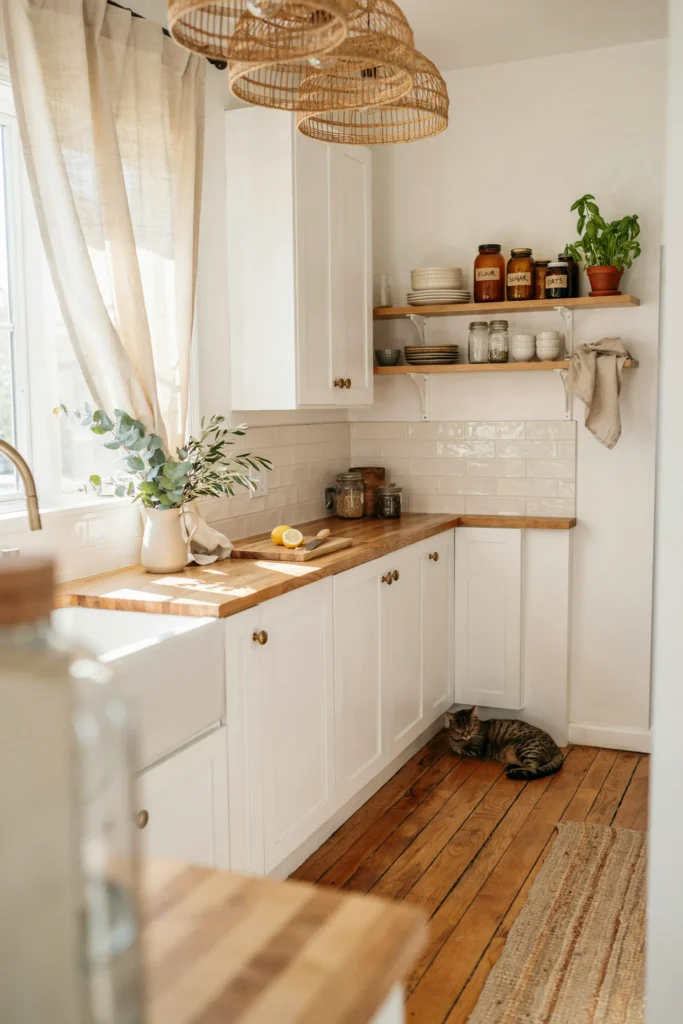
White Shaker cabinets give a farmhouse kitchen its cleanest foundation without making the room feel cold. Choose simple recessed-panel doors, slim hardware, and a soft white rather than a stark blue-white finish. The subtle detailing keeps the cabinetry traditional while allowing wood, stone, and woven accents to add warmth.
I’ve noticed this approach works especially well in kitchens that need more visual brightness. Pair the cabinets with natural oak shelves or a butcher block island so the room has contrast. For smaller kitchens, keeping the upper cabinets light can also make the ceiling feel taller and the entire space more open.
ALSO READ : Minimalist Fall Decorations
Open Wood Shelving
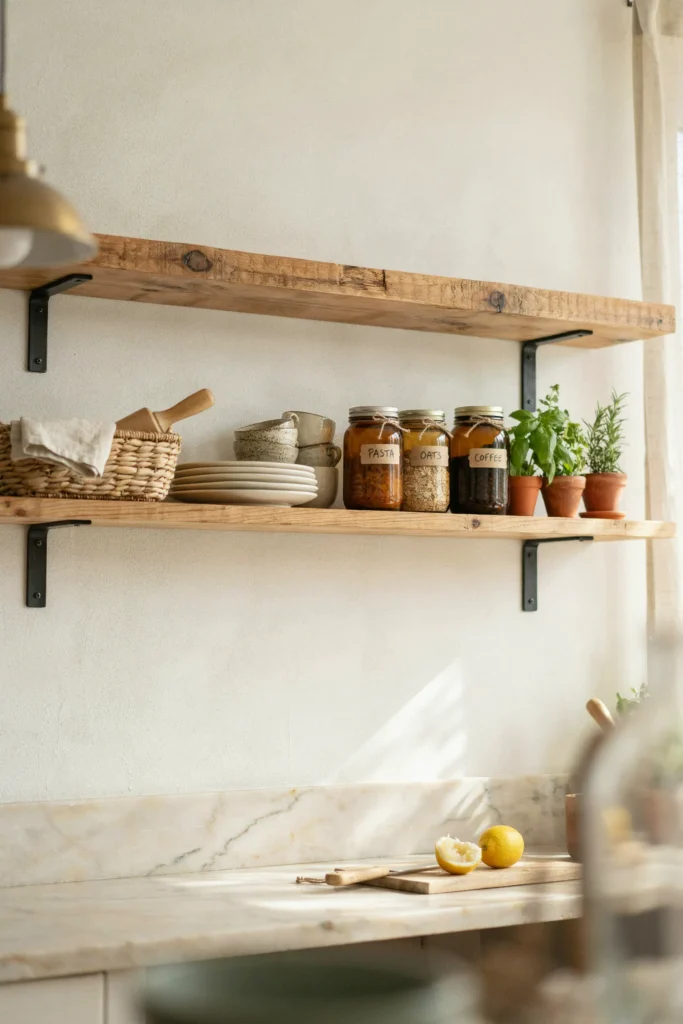
- Choose reclaimed or lightly stained wood with visible grain for authentic farmhouse character.
- Keep everyday dishes on the lower shelf so they remain easy to reach.
- Mix ceramics, glass jars, and one or two small plants instead of filling every inch.
- Install shelves where they will not interfere with cabinet doors or cooking zones.
- Use sturdy brackets when displaying heavier cookware or stoneware.
Open shelving works best when it combines storage with restraint. Leave some wall space visible so the display feels intentional rather than crowded. In my experience, two substantial shelves often look more polished than several narrow rows. Keep the most frequently used pieces within comfortable reach, especially near the sink or prep area.
Pinterest Account : HavenAndHue2
Apron Front Sink
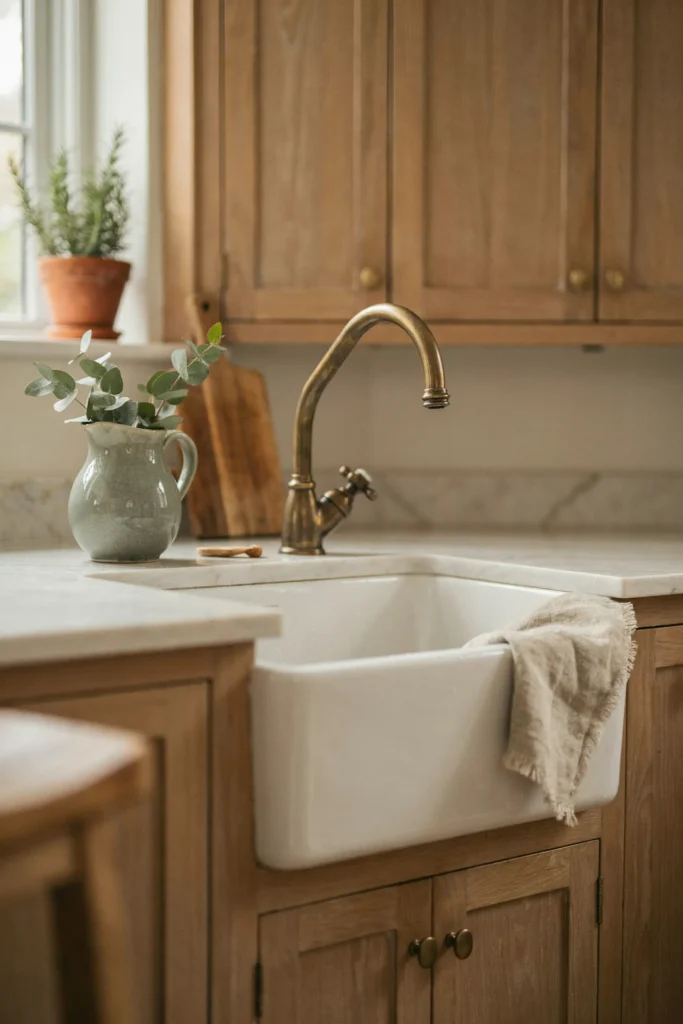
Quick Tip: Choose the sink size according to your counter layout, not just its appearance. A deep basin is useful for washing large pans, but leave enough landing space on both sides for dishes and food preparation.
An apron front sink instantly establishes a traditional farmhouse reference point, especially when paired with simple cabinetry and warm metal hardware. Fireclay offers a substantial look, while stainless steel can provide a more practical choice for busy households. Add a bridge-style or gooseneck faucet for useful clearance and classic character.
Warm Wood Island
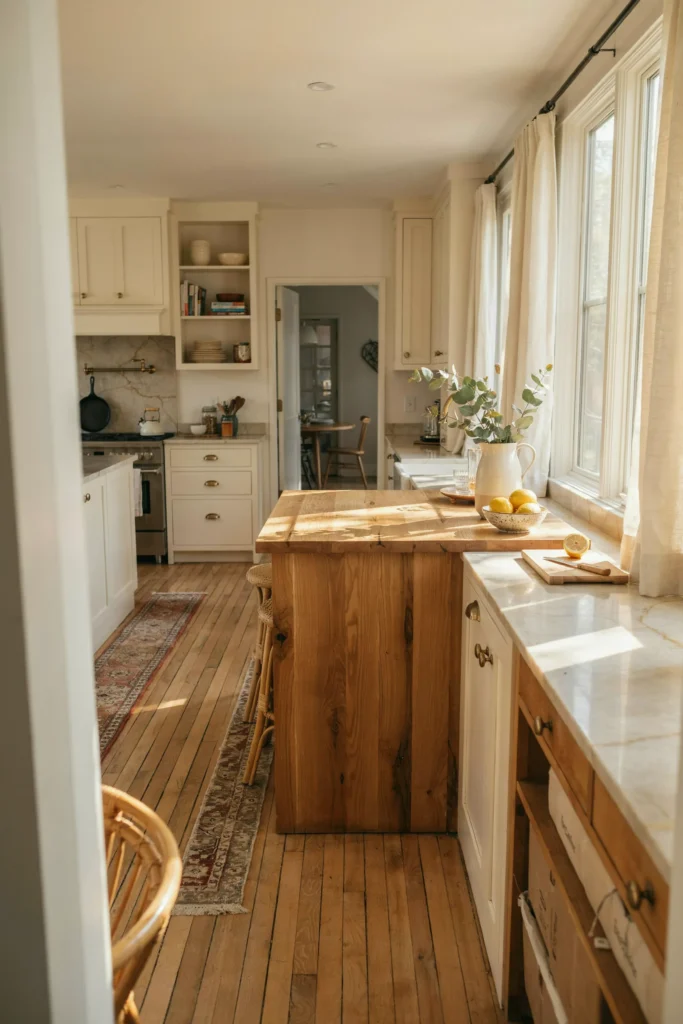
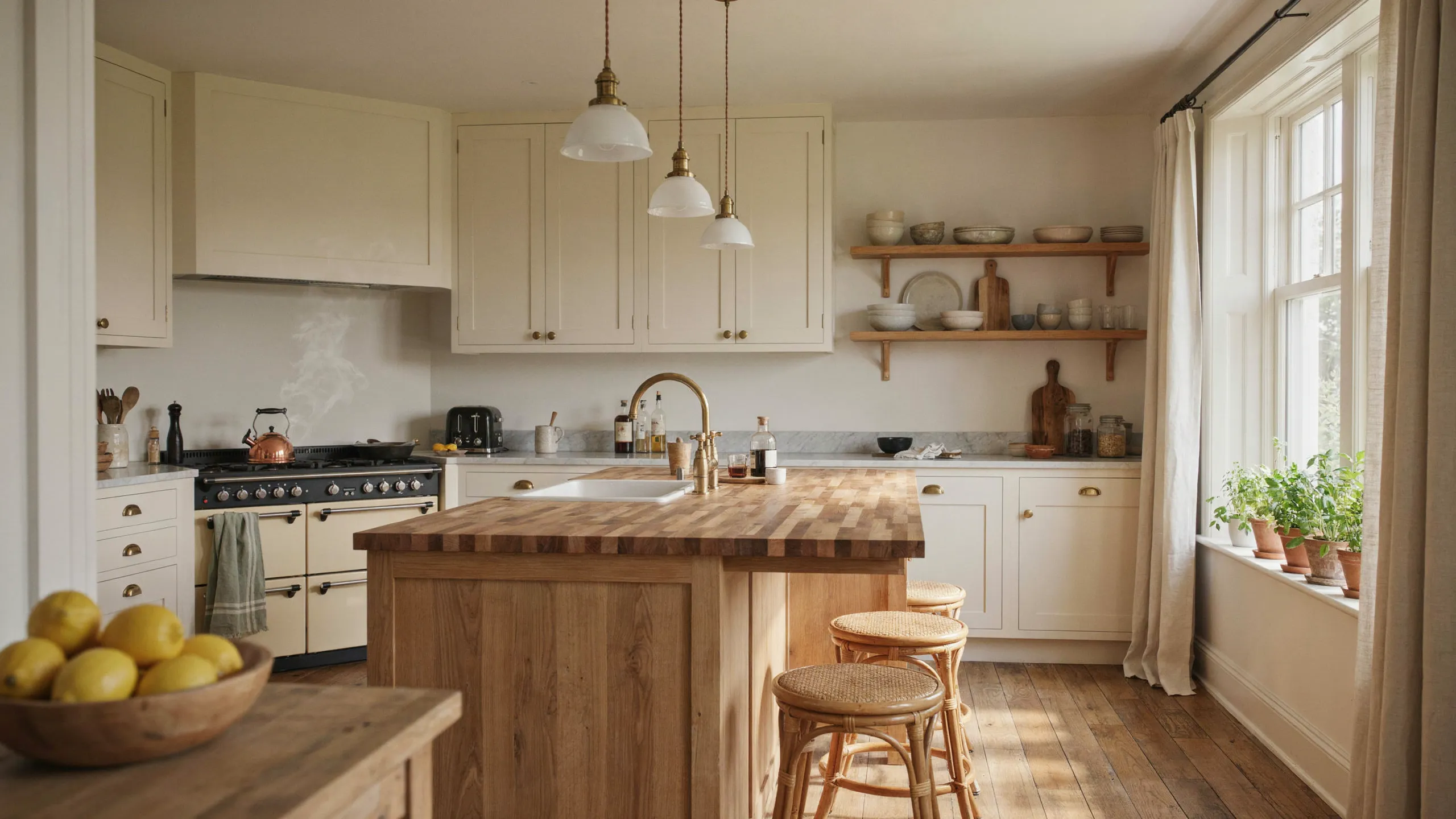
A warm wood island can anchor the entire kitchen without making the room feel overly rustic. Choose oak, walnut, or reclaimed timber with a finish that lets the natural grain remain visible. Keep surrounding cabinetry lighter so the island becomes a clear focal point without competing with other features.
For a hardworking kitchen, consider a durable stone perimeter with wood reserved for the island top. That combination adds useful material contrast while keeping the palette controlled. I’ve seen this approach work especially well in open kitchens because the wood visually connects the cooking area with nearby dining and living spaces.
Vintage Pendant Lights
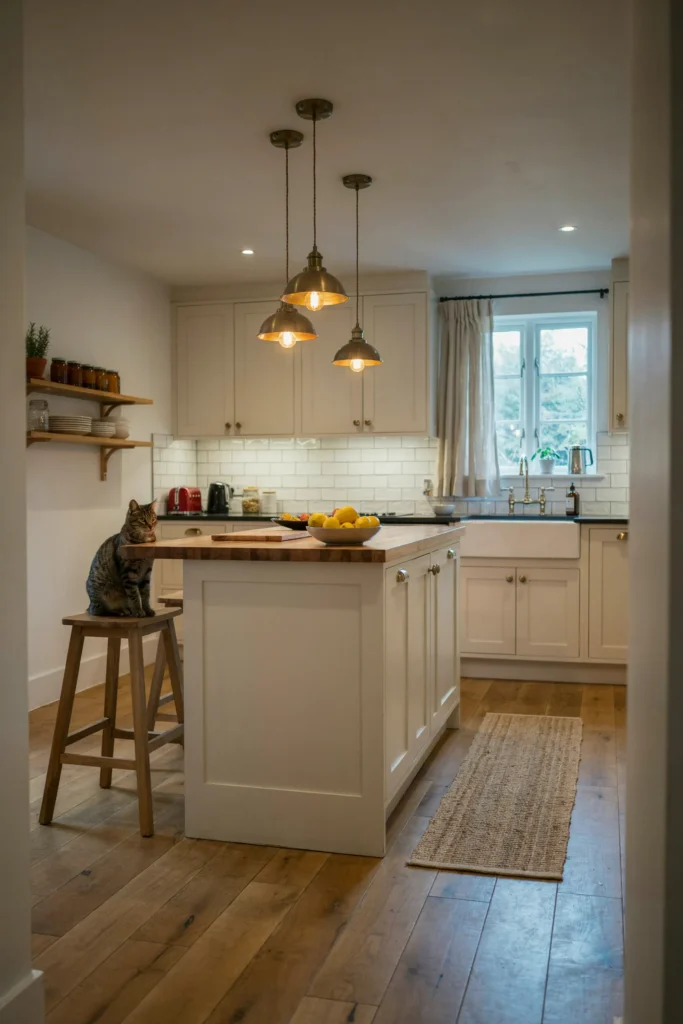
- Choose lantern, schoolhouse, or simple dome shapes for a recognizable farmhouse profile.
- Hang two matching pendants over a larger island for balanced visual weight.
- Select warm bulbs around 2700K to create a comfortable evening glow.
- Match the fixture finish with cabinet pulls or faucets for a cohesive look.
- Keep oversized shades away from sightlines if the kitchen has a low ceiling.
Lighting should serve the work area first and the decor second. Position pendants so they illuminate food preparation without blocking views across the room. Aged brass adds softness, while matte black creates stronger contrast. For smaller kitchens, one substantial fixture can provide enough character without overcrowding the ceiling.
Cream Subway Tile
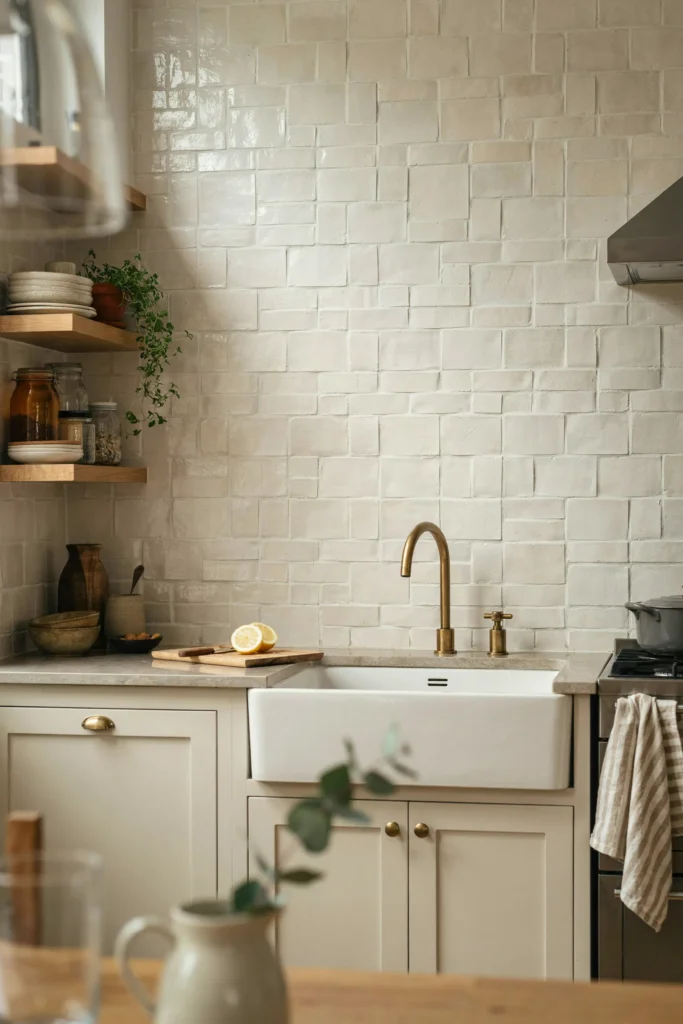
Quick Tip: Choose warm white or cream grout when you want a softer, traditional finish. A slightly darker grout can highlight the brick pattern, but very strong contrast may make a small backsplash feel busier.
Cream subway tile brings texture and traditional character while keeping the backsplash light. Look for tiles with subtle variation rather than perfectly uniform surfaces if you want a handcrafted appearance. Keep the surrounding finishes simple so the tile provides texture without competing with wood grain, hardware, or decorative pieces.
Butcher Block Counters
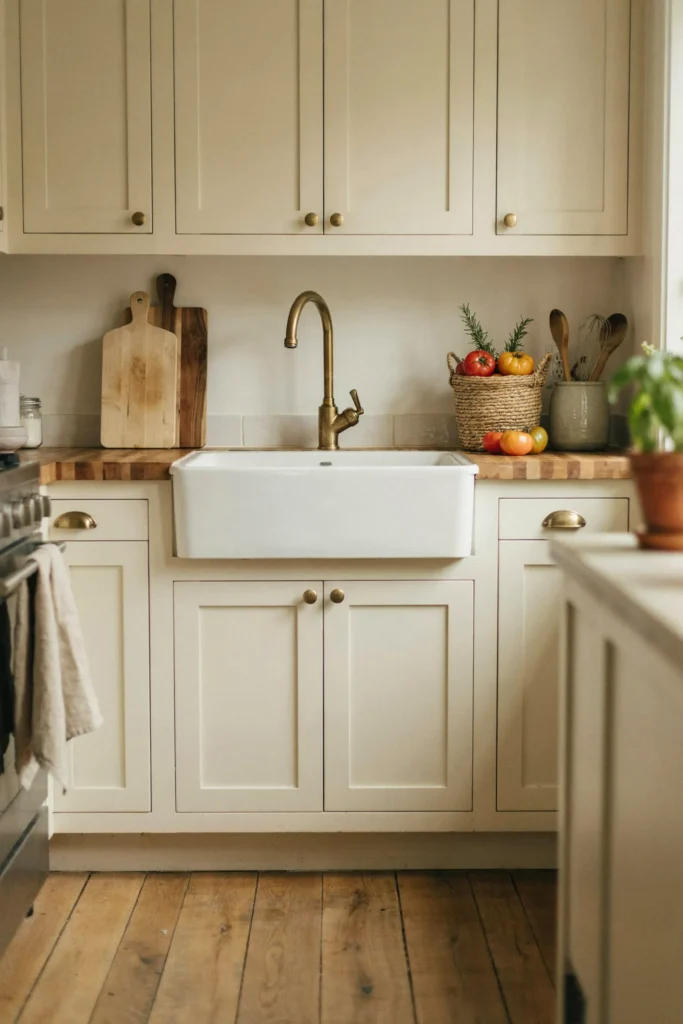
Wood countertops bring a softer, more tactile finish to farmhouse kitchens, especially when paired with painted cabinetry. Maple, oak, and walnut each create a different level of warmth, so choose a tone that connects with your flooring or island. A clear protective finish helps the surface handle everyday cooking.
I’ve noticed butcher block looks especially inviting when a small section is kept visually simple. Instead of covering it with appliances, leave room for a cutting board, ceramic bowl, or fresh produce. Regular maintenance matters too, particularly around sinks where standing water can affect unfinished or poorly sealed wood.
Woven Counter Stools
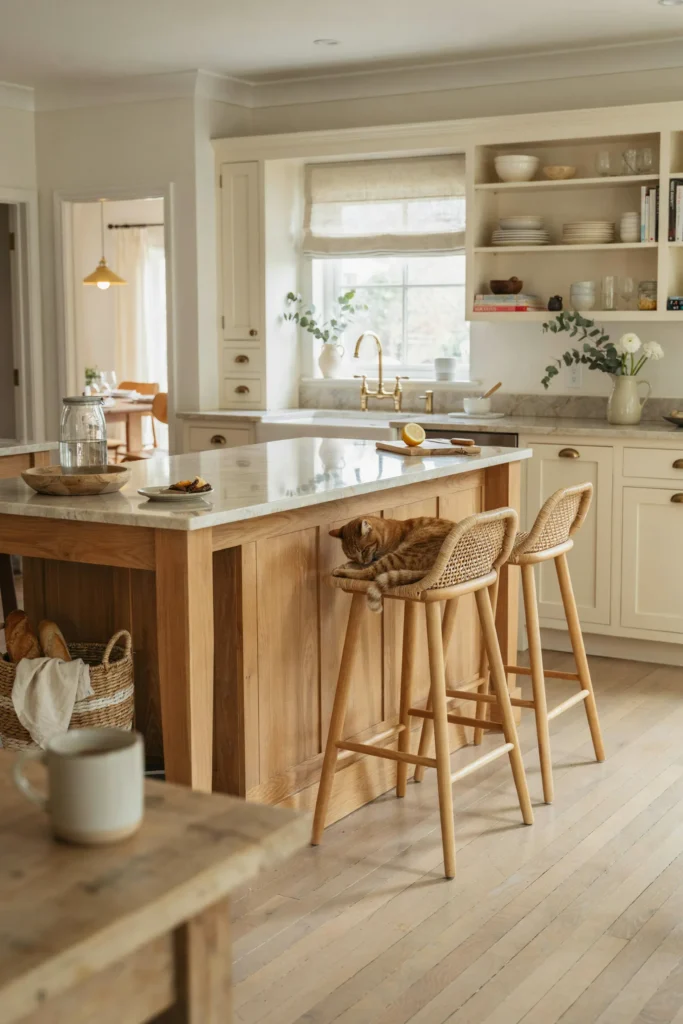
- Measure the island height before choosing stools so the seat leaves comfortable legroom.
- Select woven seats with sturdy frames that can handle frequent daily use.
- Keep the stool finish close to other natural wood tones in the kitchen.
- Choose backless stools for a cleaner look or supportive backs for longer meals.
Woven seating adds texture without introducing another strong color. Rattan, cane, and seagrass work particularly well beside painted cabinets and wood surfaces because their natural fibers soften harder materials. For busy households, choose a tightly woven design that is easier to wipe and less likely to catch crumbs during everyday breakfasts.
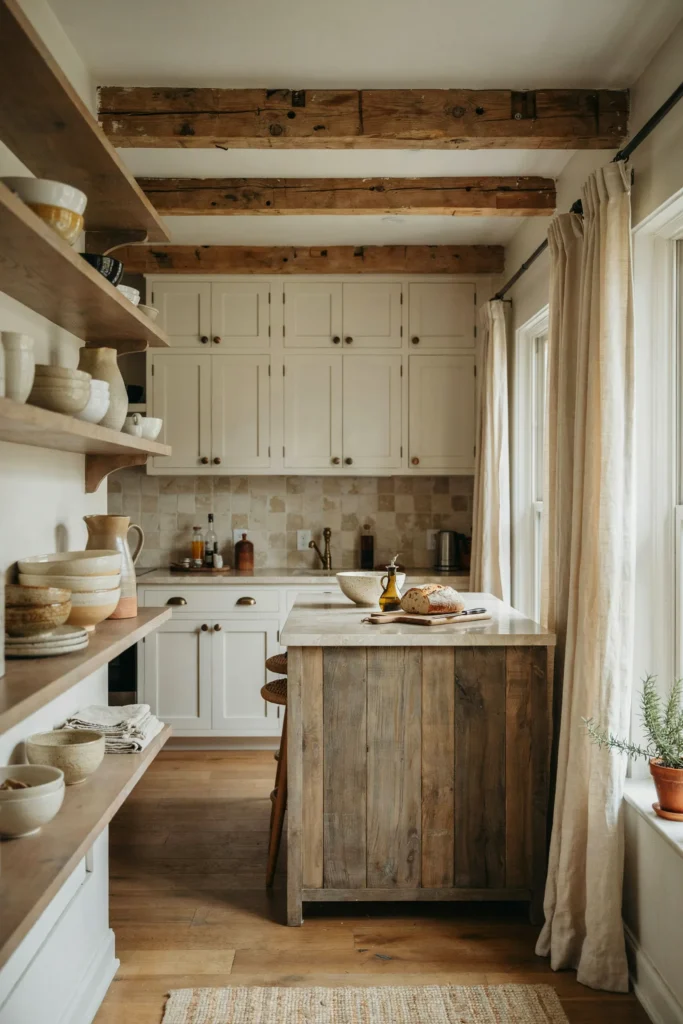
Reclaimed Wood Accents
| Option A | Option B |
| Lightly reclaimed oak | Deep weathered pine |
| Cleaner, brighter appearance | More rustic character |
| Works with cream cabinets | Best with neutral painted finishes |
| Easier to blend with modern details | Stronger traditional farmhouse feel |
Reclaimed wood adds history and texture without requiring a fully rustic kitchen. Use it selectively on shelving, beams, an island panel, or a decorative hood surround. Check that salvaged boards are properly cleaned, dried, and sealed before bringing them into a food-preparation area. A few authentic pieces usually have more impact than covering every surface.
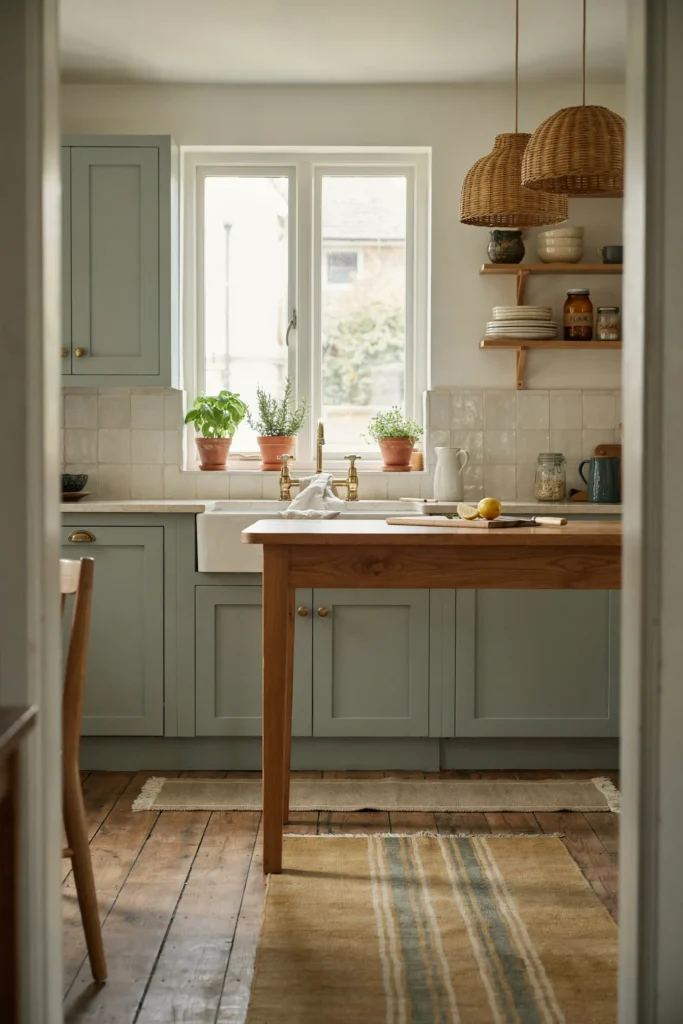
Sage Green Cabinets
DO
- Choose a muted sage with gray or earthy undertones.
- Pair green cabinets with warm white walls and creamy counters.
- Repeat natural wood through shelves, stools, or cutting boards.
- Use aged brass or antique bronze hardware for warmth.
DON’T
- Choose an overly bright green that dominates the room.
- Mix several competing green shades across cabinets and walls.
- Pair cool gray finishes with a yellow-based sage.
- Fill every open surface with decorative accessories.
Sage green brings gentle color to a traditional kitchen while keeping the overall palette relaxed. I’ve seen it work particularly well with oak because the warm wood balances the cooler green undertone. For a cohesive result, repeat the cabinet color subtly in textiles, pottery, or artwork rather than introducing another dominant shade.
Farmhouse Range Hood
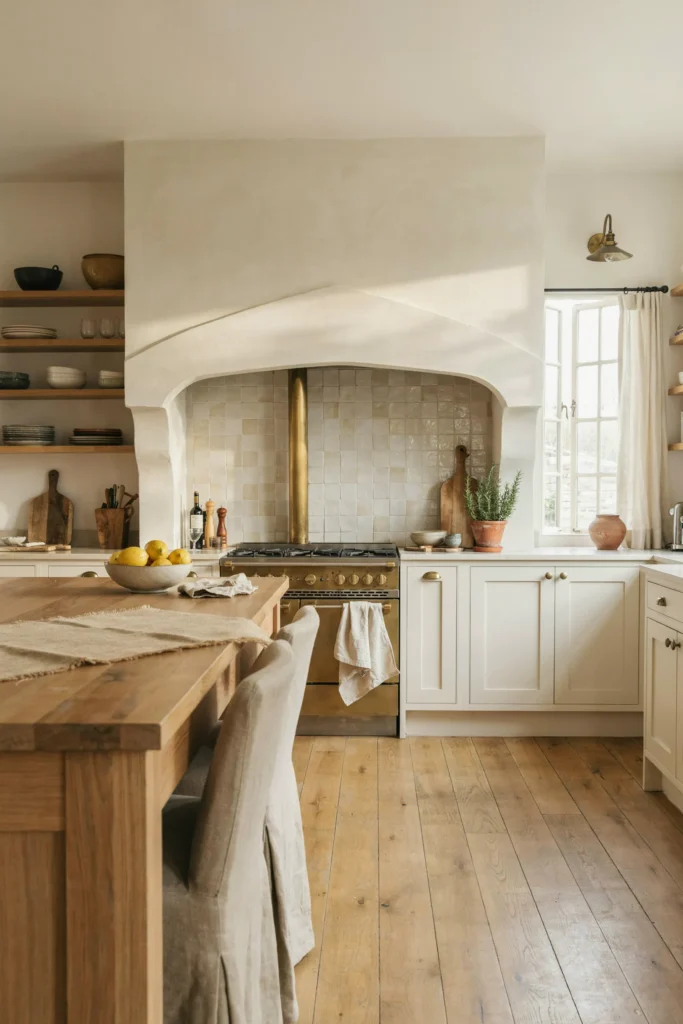
Cost: Moderate to high | Time: Several days for installation | Skill Level: Professional recommended | Best For: Kitchens with a defined cooking wall
A statement range hood can give the cooking wall architectural presence without adding unnecessary decoration. Plaster, painted wood, and shiplap-style surrounds all suit farmhouse interiors. Keep the hood shape simple, then let the surrounding cabinetry and backsplash provide supporting detail. Proper ventilation should always guide the final design.
Glass Cabinet Doors
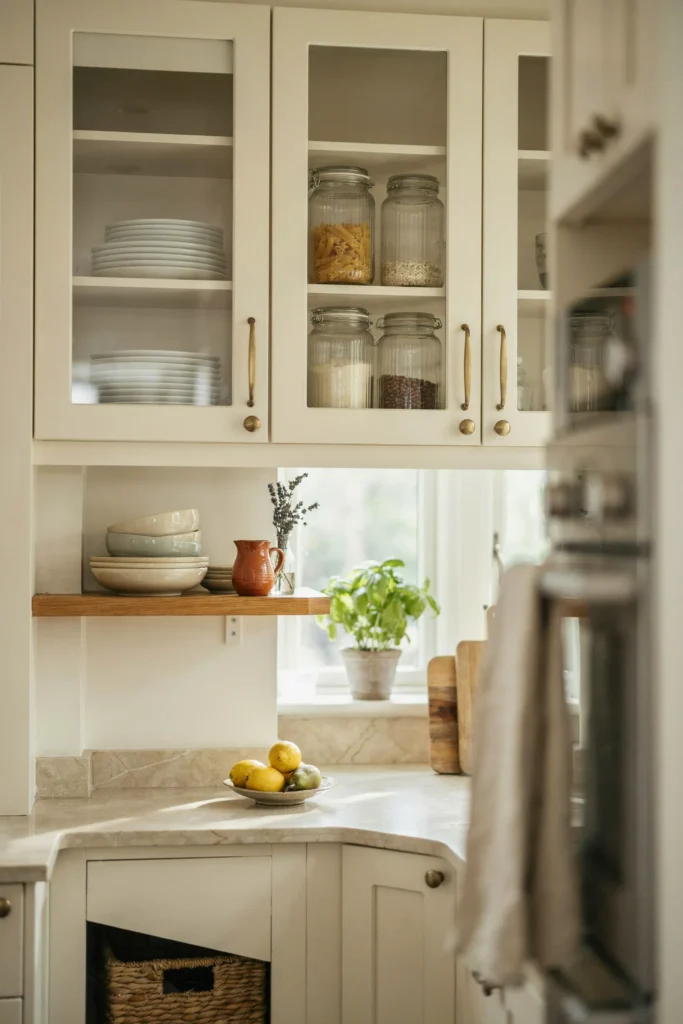
Glass-front cabinets make everyday dishes part of the kitchen decor while breaking up a long run of solid cabinetry. Clear glass keeps the display bright, while seeded or ribbed glass gives a softer vintage effect. Reserve these doors for items you enjoy seeing because visible storage works best when the contents remain organized.
In smaller kitchens, placing glass doors on only two or three upper cabinets can create openness without making every shelf visible. Use matching plates, bowls, and glassware to maintain visual order. Leave a little breathing room between pieces, and avoid treating the cabinets like tightly packed storage bins.
Farmhouse Butler Pantry
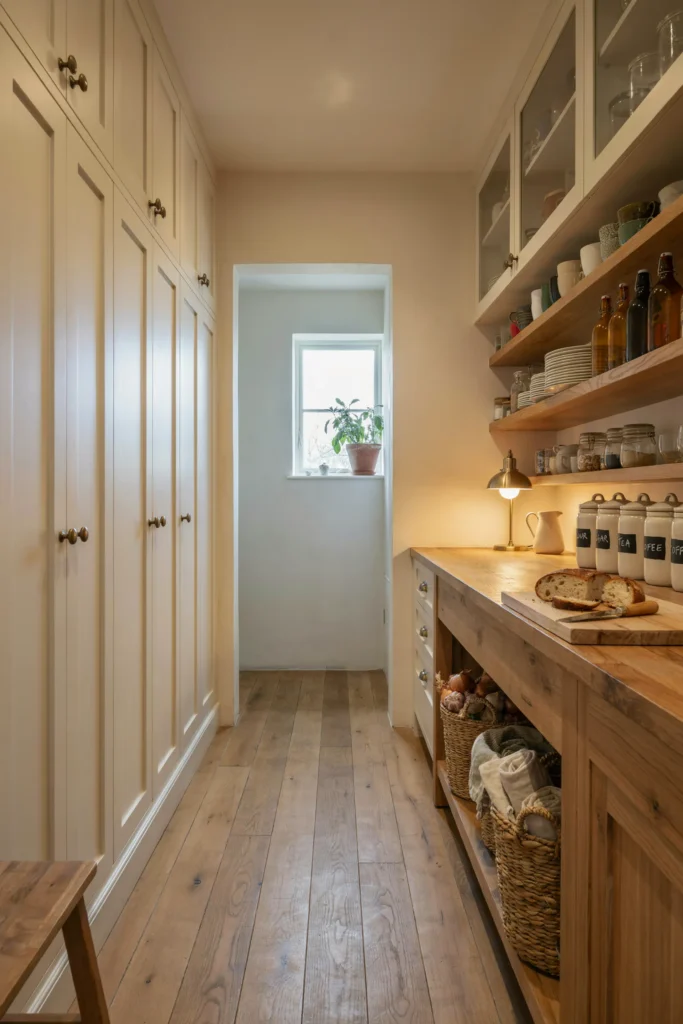
- Measure the available wall depth before planning cabinetry or shelving.
- Reserve the counter closest to the kitchen for appliances used frequently.
- Add closed cabinets for bulky items that create visual clutter.
- Use open shelves for attractive jars, serving pieces, and everyday dishes.
- Include task lighting beneath shelves or inside darker storage zones.
A butler pantry can extend useful storage while keeping the main kitchen visually calm. Even a narrow alcove can work if every cabinet has a clear purpose. In my experience, combining closed storage with a small open display section makes these hardworking spaces easier to maintain and more pleasant to use.
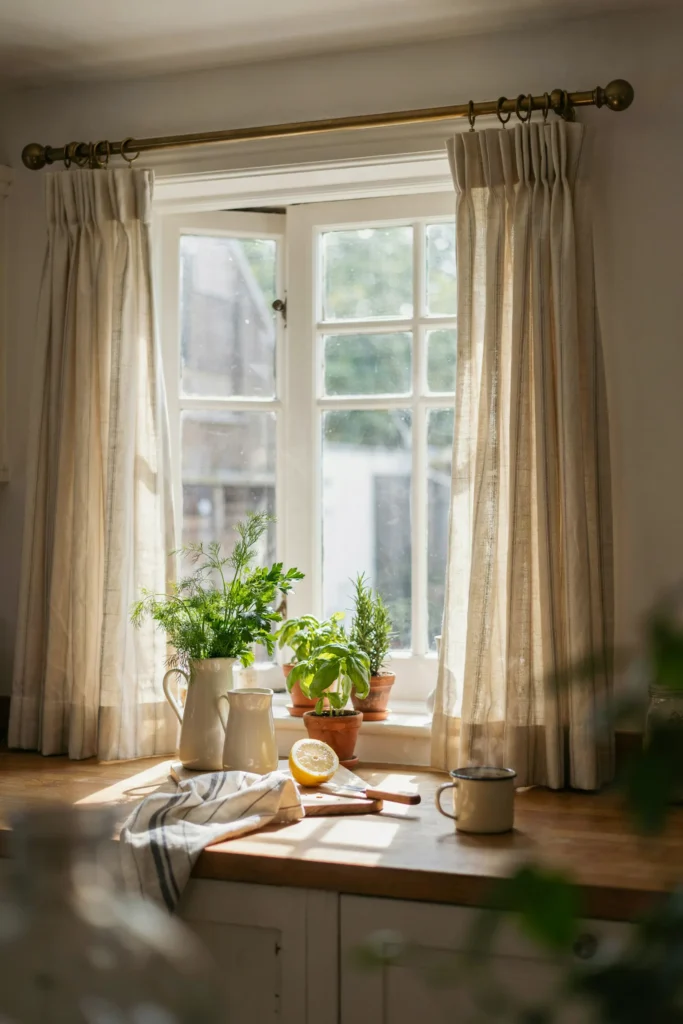
Linen Café Curtains
| Option A | Option B |
| Plain linen fabric | Subtle ticking stripe |
| Soft, understated look | More traditional farmhouse character |
| Lets decor take the lead | Adds a small visual pattern |
| Easy to coordinate | Best with simple surrounding finishes |
Café curtains bring softness to a kitchen window while preserving useful daylight. Linen in ivory, oatmeal, or muted beige works especially well with white cabinetry and natural wood. Hang the rod slightly above the window frame, then keep the fabric length neat so the treatment feels intentional rather than overly decorative.
Deep Farmhouse Drawers
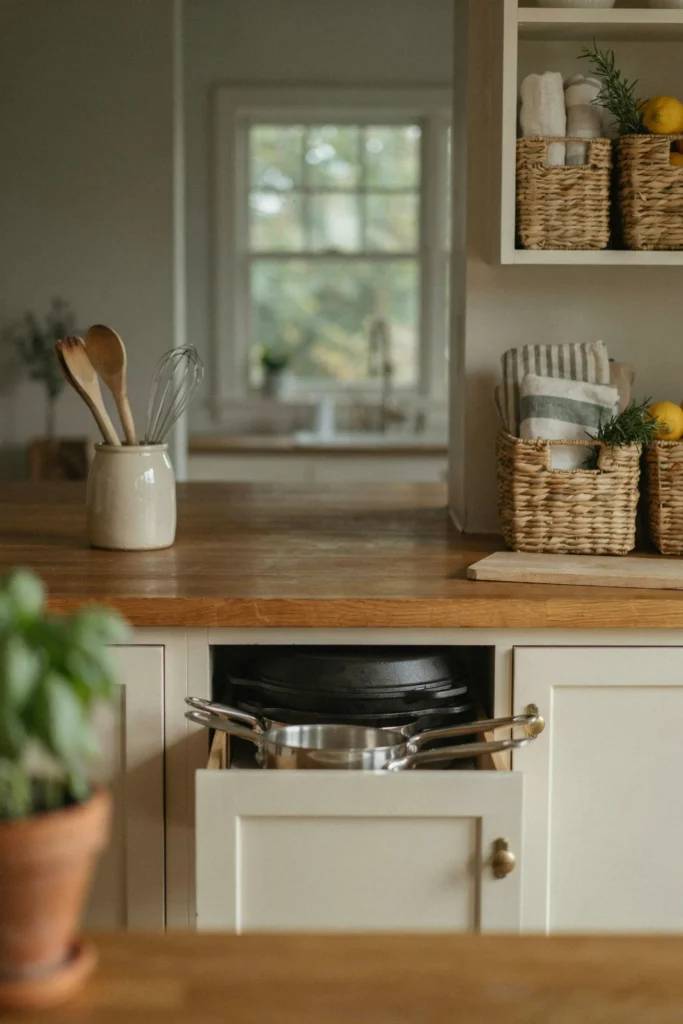
Quick Tip: Reserve the deepest drawers for cookware, mixing bowls, or heavier kitchen tools. Store lighter utensils in shallower drawers nearby so each storage zone stays practical and easy to access.
Deep drawers make lower cabinetry much easier to use because you can see more of the contents without reaching into dark corners. Add adjustable dividers for pans, lids, or baking tools, and keep heavier items toward the bottom. This layout reduces unnecessary bending and makes everyday cooking routines more efficient.
Copper Pot Display
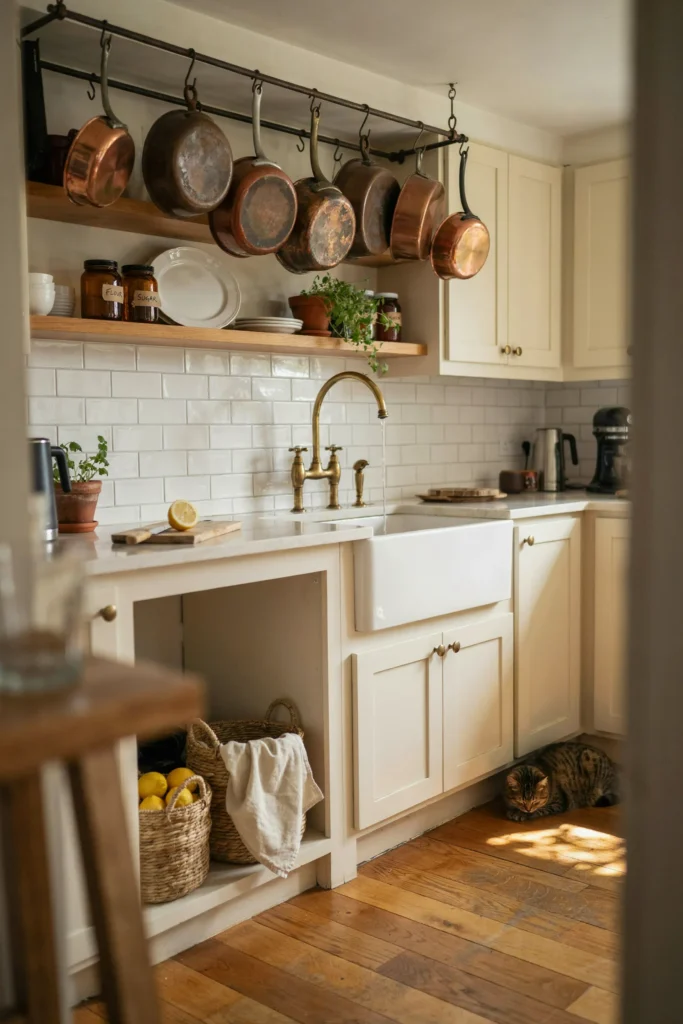
Cost: Moderate | Time: One afternoon | Skill Level: Beginner | Best For: Kitchens with open wall space
Copper cookware adds a warm metallic layer that works naturally with wood, cream, and muted green finishes. Hang frequently used pots where they are easy to reach, preferably near the cooking area. A simple rail keeps the display functional, while the varied copper patina gives the room a collected farmhouse feel.
Chunky Wood Shelves
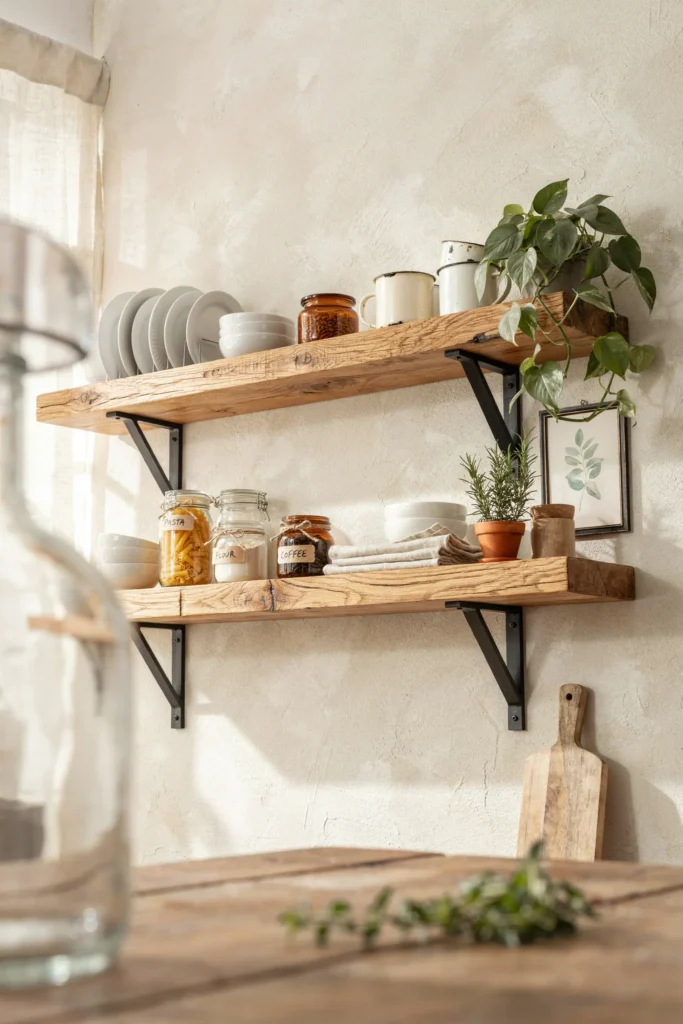
Thick wood shelves create stronger visual weight than thin floating shelves, making them especially useful on a large blank wall. Choose boards with visible grain and slightly softened edges for a natural appearance. Keep the styling restrained with ceramics, cutting boards, glass containers, and greenery so the wood remains the main feature.
I’ve seen chunky shelves look best when their depth matches the scale of the surrounding cabinetry. Leave enough clearance below for countertop tasks and above for displayed pieces. If the kitchen already has several wood elements, use a lighter stain to prevent the room from feeling visually heavy.
Mixed Metal Hardware
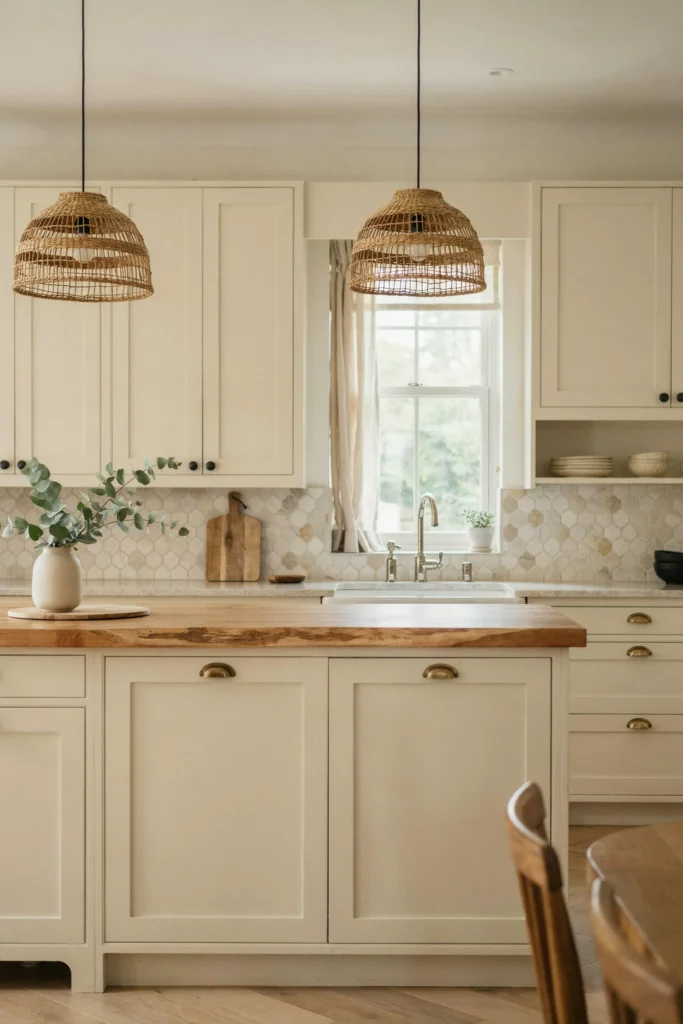
- Pair two metal finishes rather than combining several unrelated finishes.
- Use the dominant finish on cabinet hardware for visual consistency.
- Repeat the secondary metal in lighting, faucets, or small accents.
- Keep the undertones compatible so the metals feel intentionally layered.
- Match the finish intensity to the kitchen’s overall character.
Mixed metals can give farmhouse cabinetry a more collected, lived-in appearance without making the design feel mismatched. Aged brass and matte black are a dependable pairing, while brushed nickel offers a quieter alternative. For a balanced result, let one finish dominate and repeat the second in only a few noticeable locations.
Vintage Farmhouse Flooring
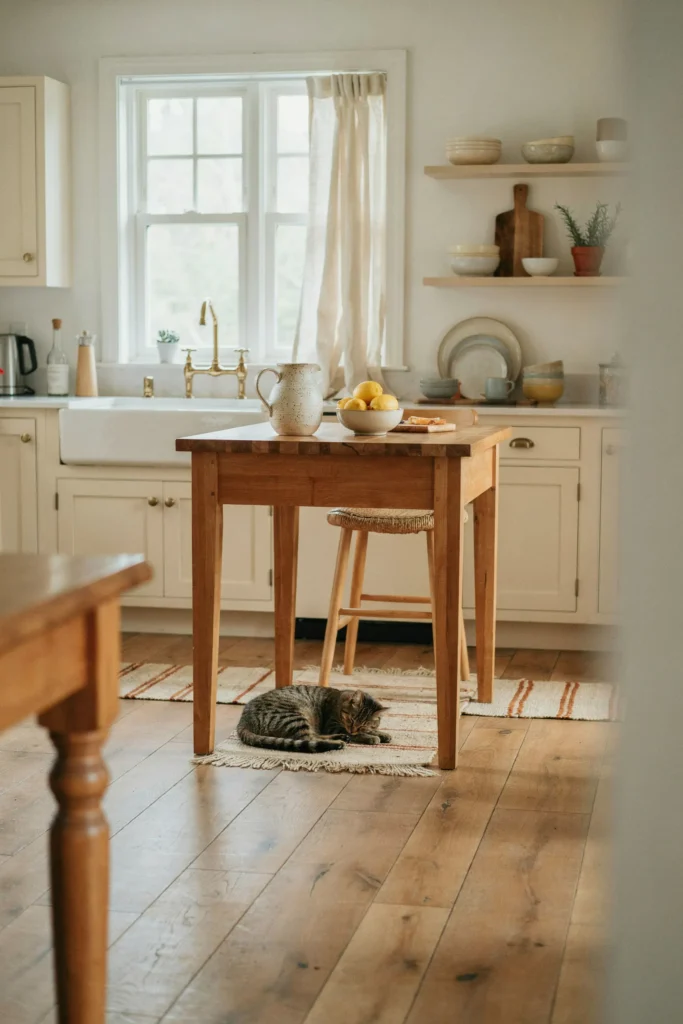
DO
- Choose wide planks with natural grain and moderate variation.
- Coordinate the wood tone with the island or open shelving.
- Use a washable runner near the sink and cooking zone.
- Seal natural wood properly for easier everyday maintenance.
DON’T
- Choose flooring with an orange tone that clashes with cool cabinetry.
- Use highly glossy finishes that compete with the relaxed aesthetic.
- Ignore transitions where wood meets tile or another flooring material.
- Select delicate surfaces without considering spills and heavy foot traffic.
Flooring establishes the visual temperature of the entire kitchen, so warm natural wood is a reliable foundation for farmhouse styling. Oak offers durability and visible grain, while engineered wood can provide better dimensional stability in areas exposed to moisture. Keep the finish low-sheen to preserve a relaxed, lived-in appearance.
Ceramic Farmhouse Decor
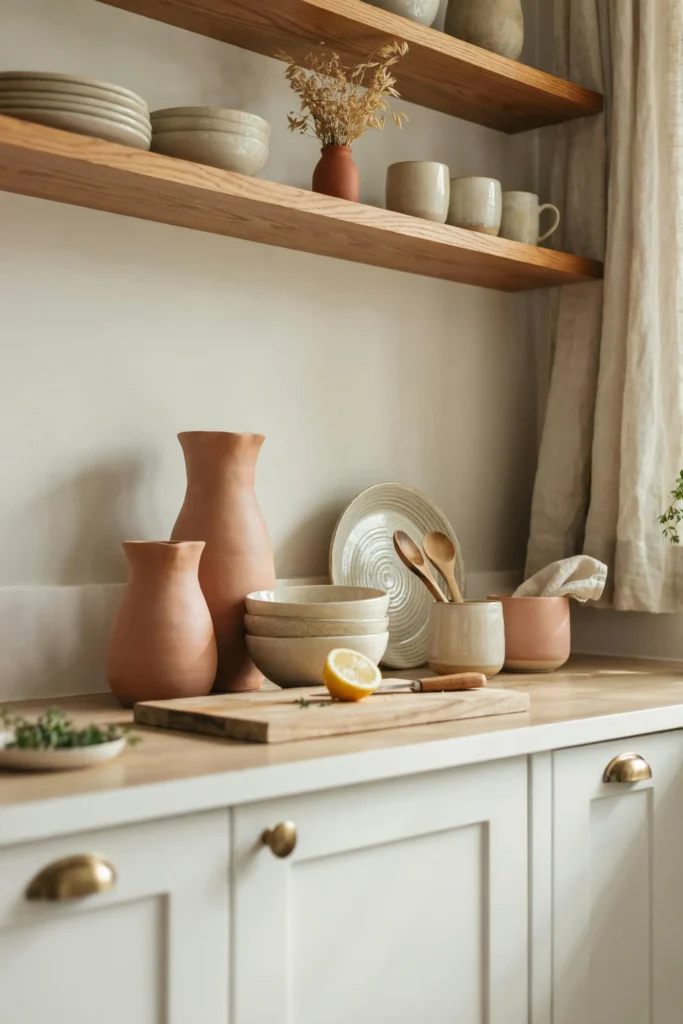
Cost: Low to moderate | Time: One afternoon | Skill Level: Beginner | Best For: Open shelves and countertops
Handmade-style ceramics add subtle texture without filling the room with unnecessary color. Choose a few pieces in ivory, cream, soft beige, or muted terracotta, then vary their shapes and heights. A pitcher beside stacked bowls or a small crock near the stove can make practical surfaces feel thoughtfully arranged.
Farmhouse Breakfast Nook
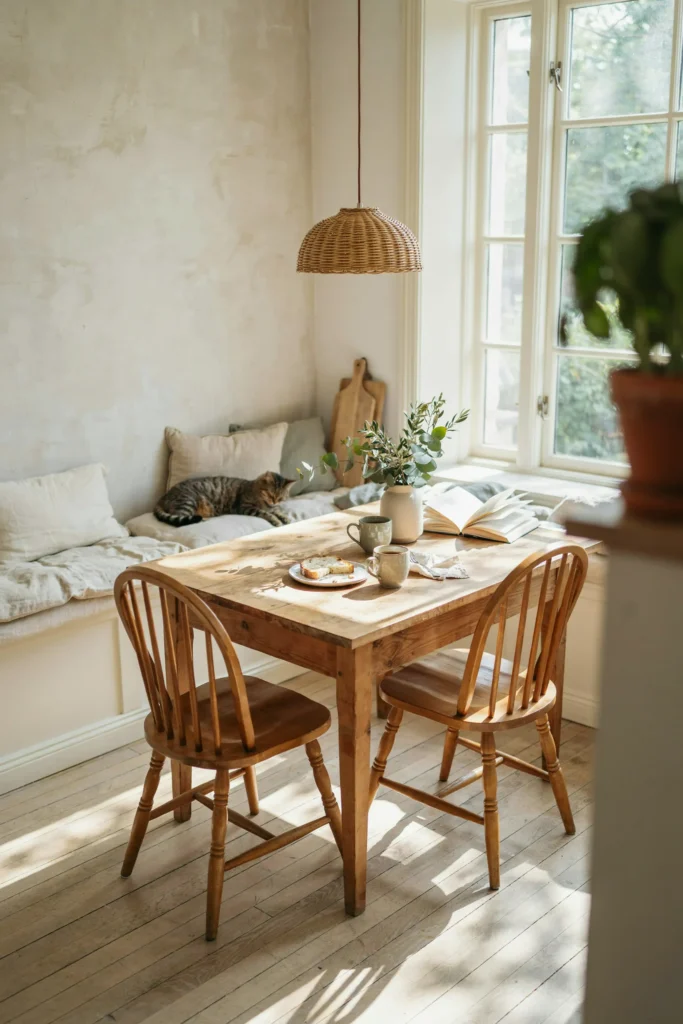
A small breakfast nook can make the kitchen feel more connected to everyday family routines. Tuck a round or rectangular wood table beside a window, then add a built-in bench where floor space is limited. The combination of natural wood, linen, and soft upholstery keeps the dining corner comfortable without adding visual bulk.
For a compact layout, choose a pedestal table so chairs can move freely around the base. Built-in bench storage can also hold table linens, small appliances, or seasonal serving pieces. These practical details help the nook earn its footprint while reinforcing the warm, approachable character that defines strong farmhouse kitchen design.
Beadboard Cabinet Details
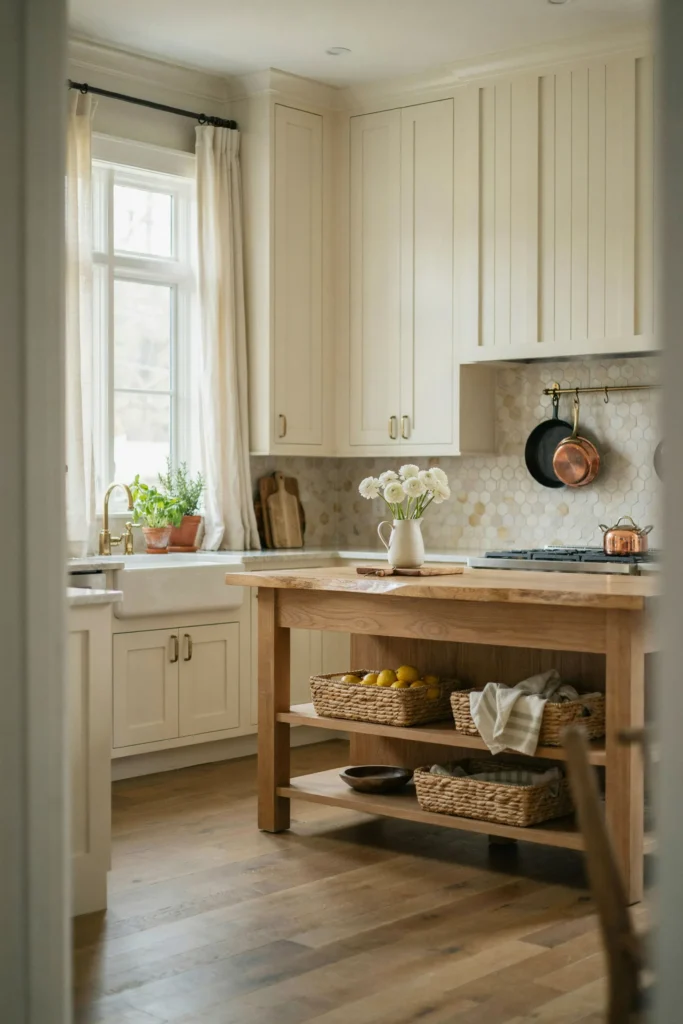
Cost: Moderate | Time: One to two days | Skill Level: Intermediate | Best For: Cabinet ends and island panels
Beadboard introduces vertical texture that instantly gives cabinetry more traditional character. Rather than covering every cabinet front, use it on an island, pantry door, or exposed cabinet ends. This keeps the detail noticeable without making the kitchen feel visually busy.
The narrow grooves also pair naturally with other farmhouse materials such as shiplap, oak, linen, and handmade ceramics. For a cleaner result, paint the beadboard the same color as the surrounding cabinets. This creates texture through shadow and depth rather than relying on another accent color.
CONCLUSION
A warm farmhouse kitchen doesn’t require a complete renovation or a perfectly matched set of rustic pieces. Small choices such as natural wood shelving, vintage lighting, creamy cabinetry, or a practical apron front sink can change the character of the room.
The best Farmhouse Kitchen Design Ideas balance beauty with everyday function, giving you a space that feels comfortable and useful. I’ve seen how thoughtful material choices can completely shift the way a kitchen feels. Save this post on Pinterest, try the ideas that fit your home, and share it with someone planning their own cozy kitchen update.