22 Daybed Ideas for Small Spaces You’ll Truly Adore
Small rooms can feel cramped when every piece of furniture has only one job. A well-planned daybed can change that.
Daybed Ideas for Small Spaces can help you create a comfortable place to relax, sleep, read, or welcome overnight guests without overwhelming the room.
This collection focuses on practical setups that make limited floor space work harder while keeping your home warm and inviting. You’ll find clever storage bases, window nooks, slim frames, cozy cushions, flexible layouts, and other space-conscious ideas worth saving. In my experience, the biggest difference often comes from choosing furniture that fits the room’s proportions rather than simply choosing the smallest available piece. These ideas can help you find that balance while giving your space more function and personality.
Window Daybed Nook
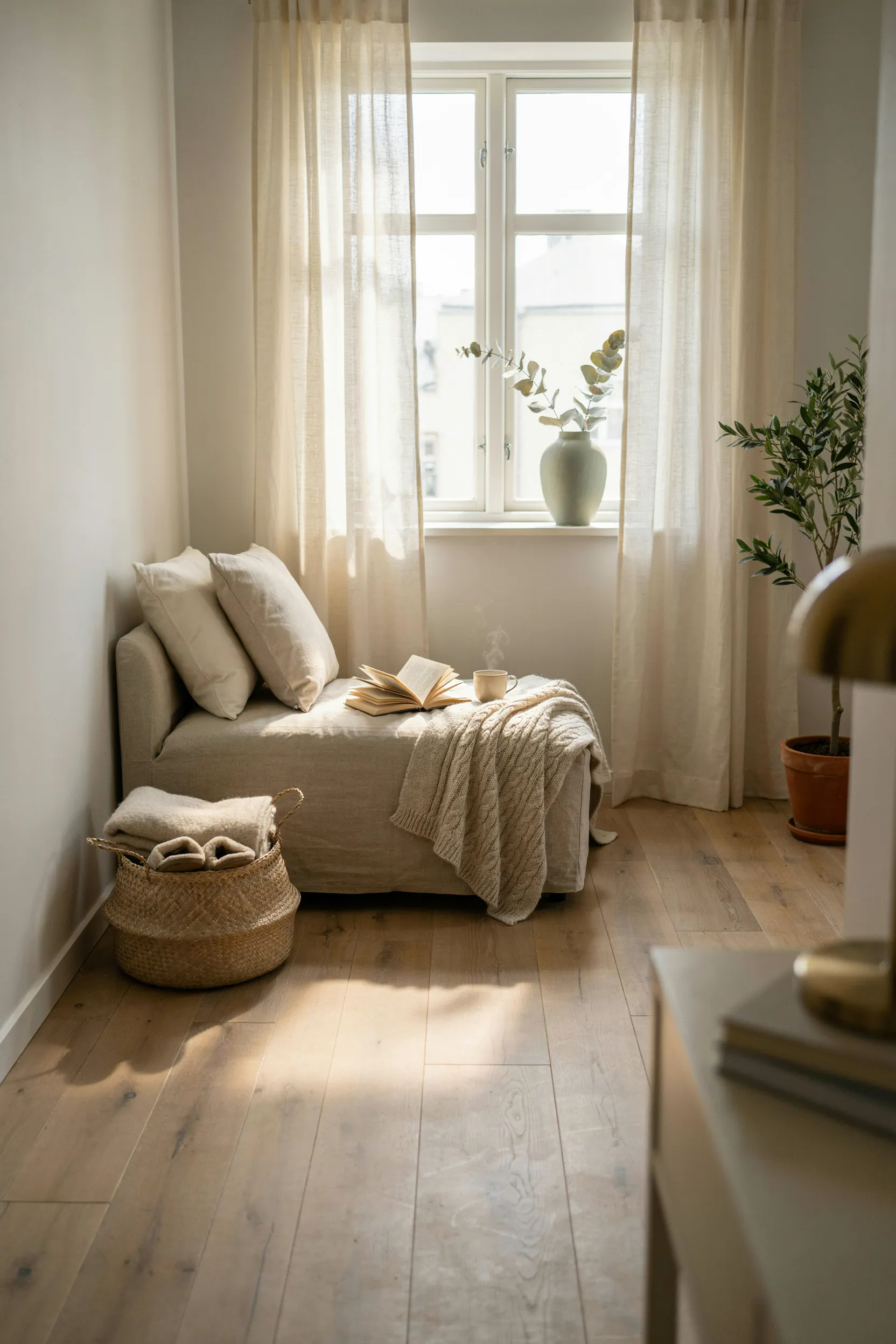
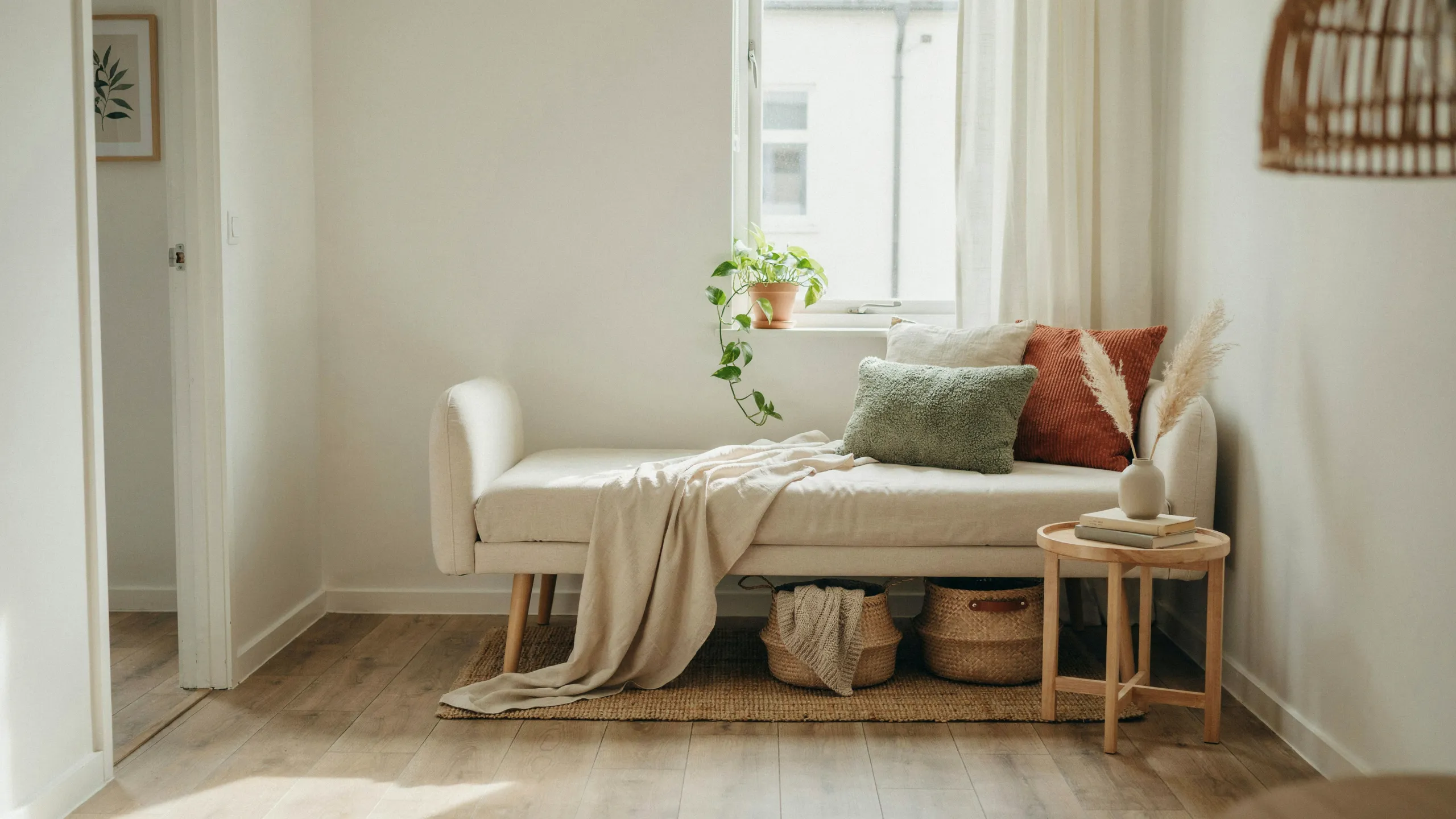
A window can give a compact daybed the sense of having its own little room. Position the frame directly beneath the sill, then keep the surrounding furniture minimal. A slim side table handles books or drinks without stealing valuable floor space.
I’ve noticed that a daybed looks more intentional when its textiles repeat one or two colors already present in the room. Try ivory upholstery with muted green cushions and a textured throw. Keep curtains light so daylight remains the main feature rather than making the sleeping area feel enclosed.
ALSO READ : Budget-Friendly Fall Decorations
Built-In Storage Daybed
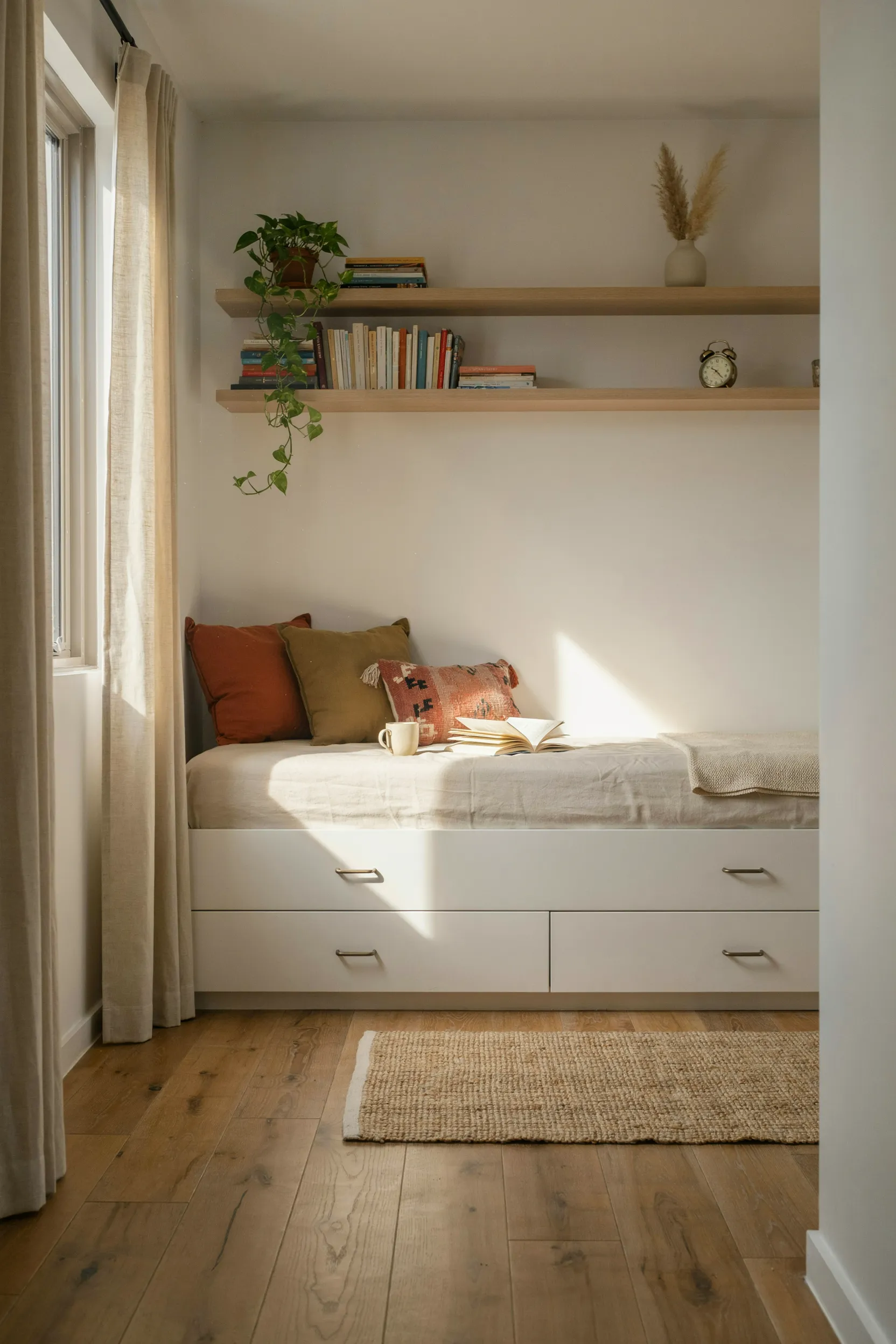
- Choose deep drawers: Allow enough clearance for bedding, blankets, and seasonal textiles.
- Keep the frame shallow: A streamlined base preserves walking space in tight rooms.
- Match nearby cabinetry: Repeating the same finish makes the built-in look intentional.
- Use labeled baskets: Small containers inside drawers keep frequently used items organized.
- Add soft cushions: Layer two or three cushions to make the sleeping surface feel inviting.
Storage underneath changes how a small room functions because the daybed performs two jobs at once. Bedding can disappear into the base instead of occupying a separate closet shelf. For renters, a freestanding version with rolling drawers can create a similar setup without permanent construction.
Pinterest Account : HavenAndHue2
Floating Corner Daybed
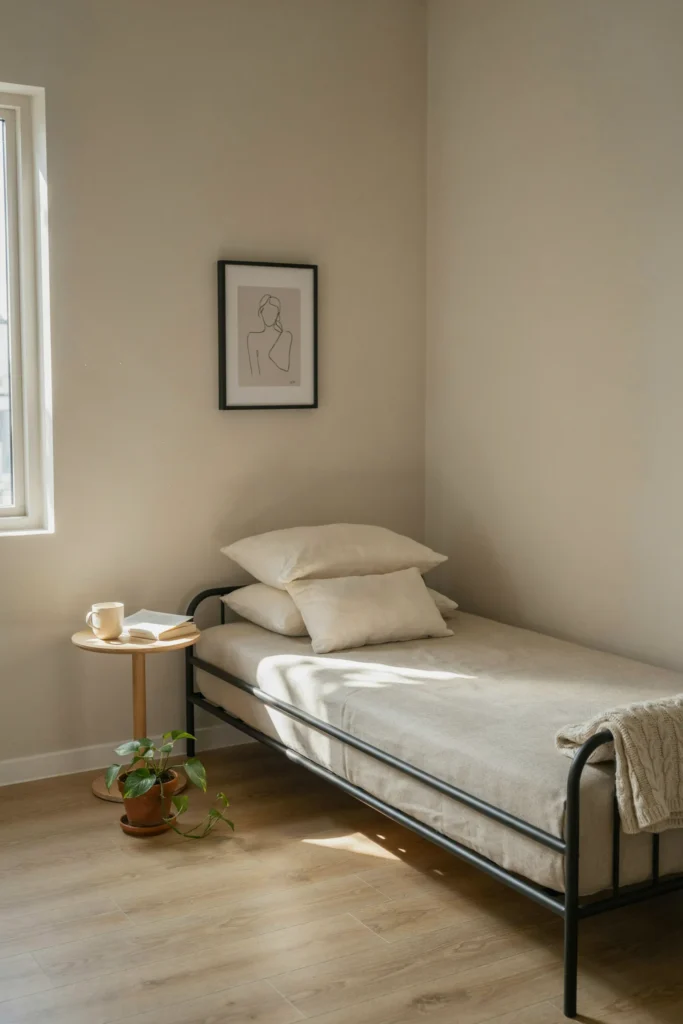
A tight corner becomes useful when the daybed occupies its edges without crowding the center. Leave a narrow visual gap beneath the frame or choose slim legs to create an airy effect. A small round table beside it provides function while keeping the arrangement easy to navigate.
For extra comfort, position the longer side against the wall and reserve the open end for entering or stretching out. In my experience, this arrangement works especially well in studio apartments because it creates a defined lounging zone without requiring a bulky sectional or oversized chair.
Wall-Hugging Daybed
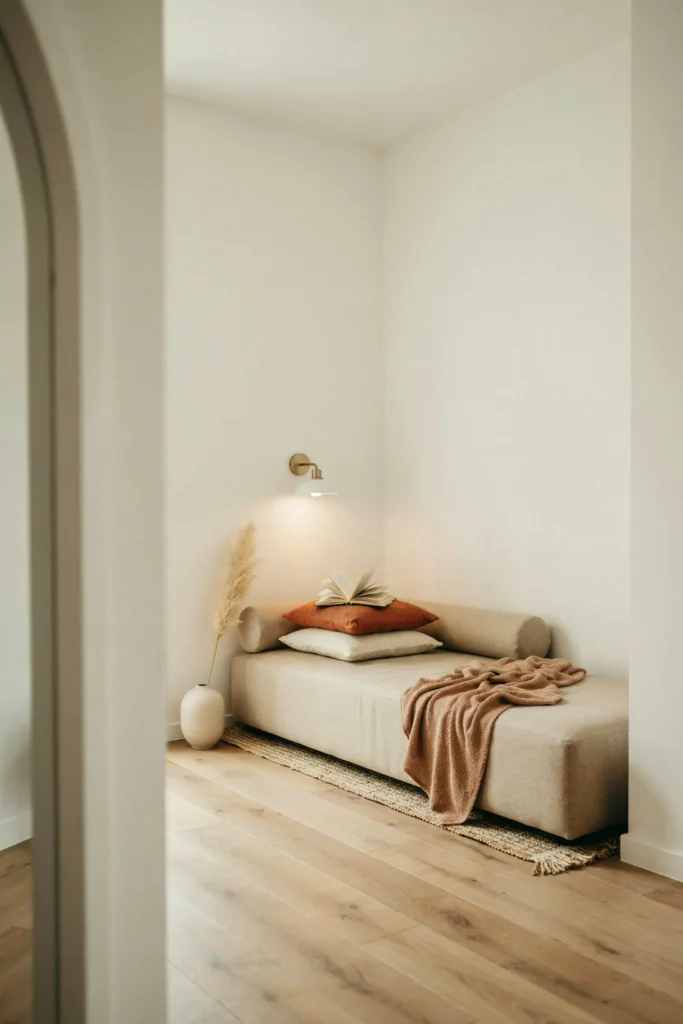
BEFORE: A bulky sofa leaves little room for movement, making the room feel crowded. The seating area also lacks a practical sleeping surface for overnight guests.
AFTER: A wall-hugging daybed opens the center of the room while providing comfortable seating and a bed in one footprint. Keep the walkway in front clear and choose a frame with a narrow profile.
A simple wall placement works especially well in studio apartments and compact living rooms because the furniture stays visually contained. Style the back with firm cushions so it reads more like a sofa during the day. This approach follows a practical small-space principle: let multifunctional furniture serve more than one purpose.
Pull-Out Trundle Bed
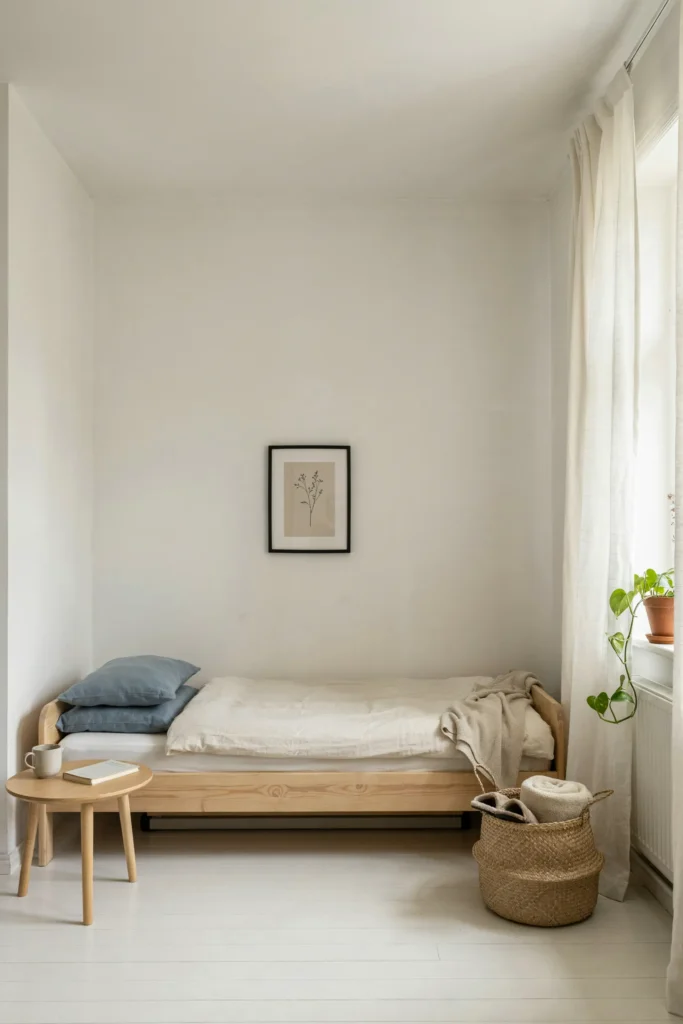
- Measure the extension: Check the full open footprint before choosing the frame, including space needed to walk around it.
- Choose matching mattresses: Use compatible mattress heights so the sleeping surfaces remain comfortable and practical.
- Keep bedding nearby: Store sheets and blankets in a basket or cabinet close to the daybed.
- Protect the walkway: Leave enough open floor in front for pulling out the lower bed without moving other furniture.
Overnight guests become much easier to accommodate when a second mattress stays hidden beneath the main frame. During the day, the lower section disappears and the room functions normally. Homes and Gardens also highlights adaptable daybeds as a useful choice where one room needs to serve multiple purposes.
Slim Metal Frame
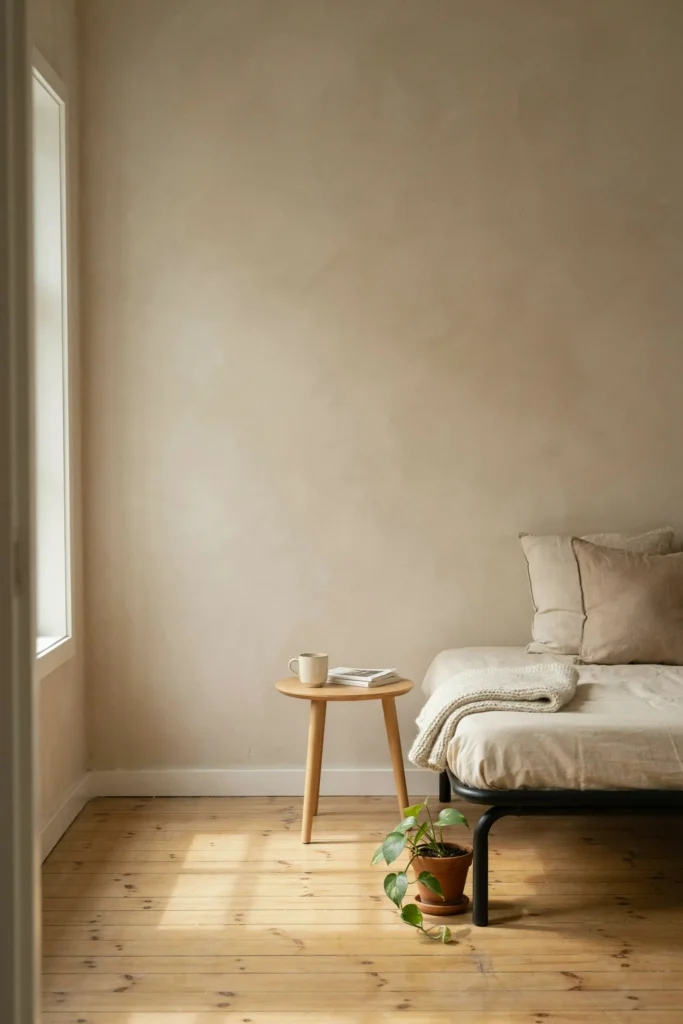
| Option A | Option B |
| Frame: Thick upholstered structure | Frame: Slim metal structure |
| Visual weight: Heavier | Visual weight: Lighter |
| Best setting: Cozy enclosed rooms | Best setting: Tight, airy rooms |
| Styling: Soft layered textiles | Styling: Linen and simple cushions |
A slender metal frame keeps more of the floor visually exposed, which can help a compact room feel less crowded. Pair black or bronze metal with warm textiles to prevent the setup from feeling cold. I’ve noticed that a restrained frame also gives you more freedom to change cushion colors as your decor evolves.
Platform Storage Base
DO:
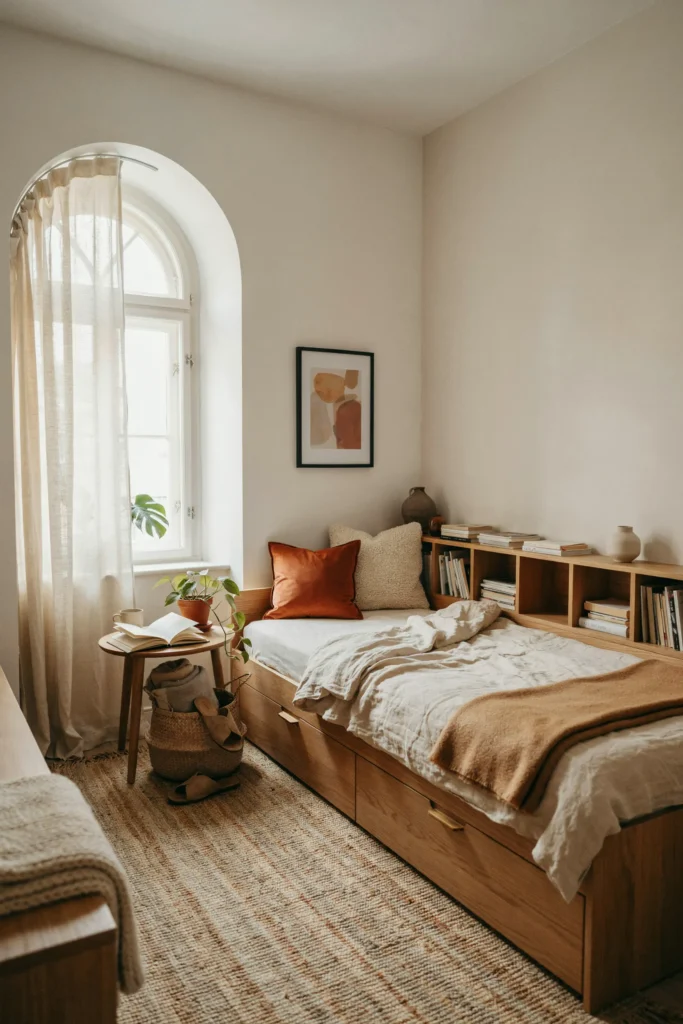
- Choose a platform with drawers or open cubbies for accessible storage.
- Keep everyday bedding in the easiest-to-reach compartments.
- Repeat the wood finish elsewhere to create visual continuity.
- Use baskets inside open cubbies to conceal smaller items.
DON’T:
- Block drawers with a nearby table or chair.
- Overfill open cubbies with mismatched storage containers.
- Choose an oversized platform that reduces walking clearance.
- Store heavy items where frequent lifting becomes awkward.
A raised base gives a compact sleeping area valuable hidden capacity without adding another cabinet. Use lower drawers for spare linens and less-used items, while keeping books or baskets in accessible cubbies. The result is especially useful in studios where every square foot needs to contribute to storage or daily comfort.
Soft Upholstered Frame
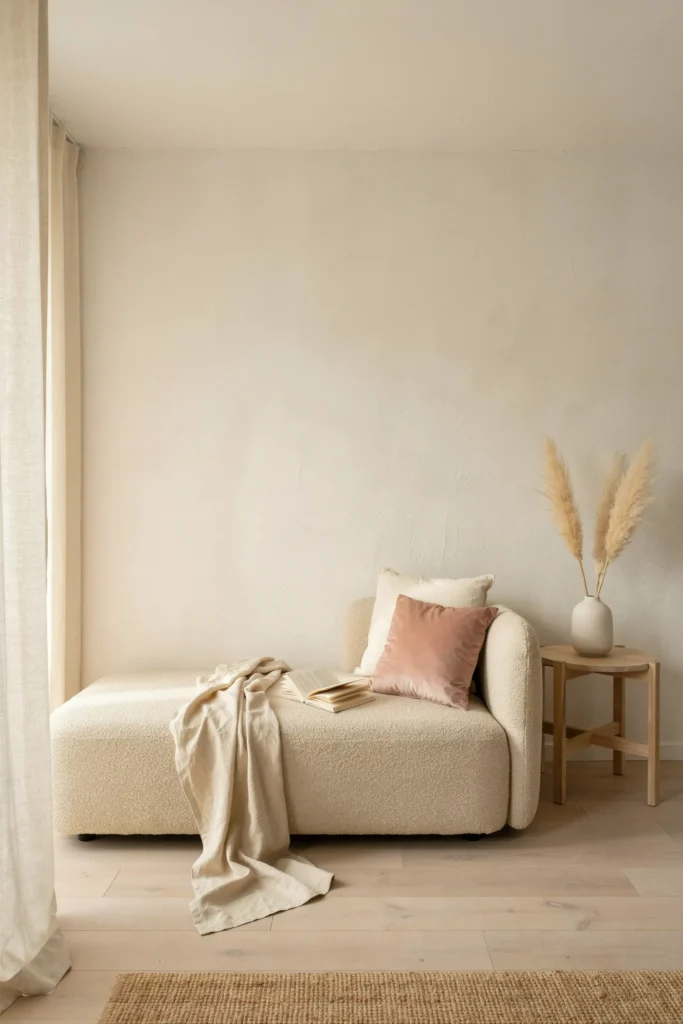
Cost: Moderate | Time: One afternoon to style | Skill Level: Beginner | Best For: Bedrooms and guest corners
A padded frame instantly gives a compact sleeping area a softer visual presence. Choose performance fabric or a removable cover if the daybed will receive regular use. Keep the surrounding furniture simple, then add one textured throw and a few structured cushions for a polished sofa-like appearance.
Corner Cushion Daybed
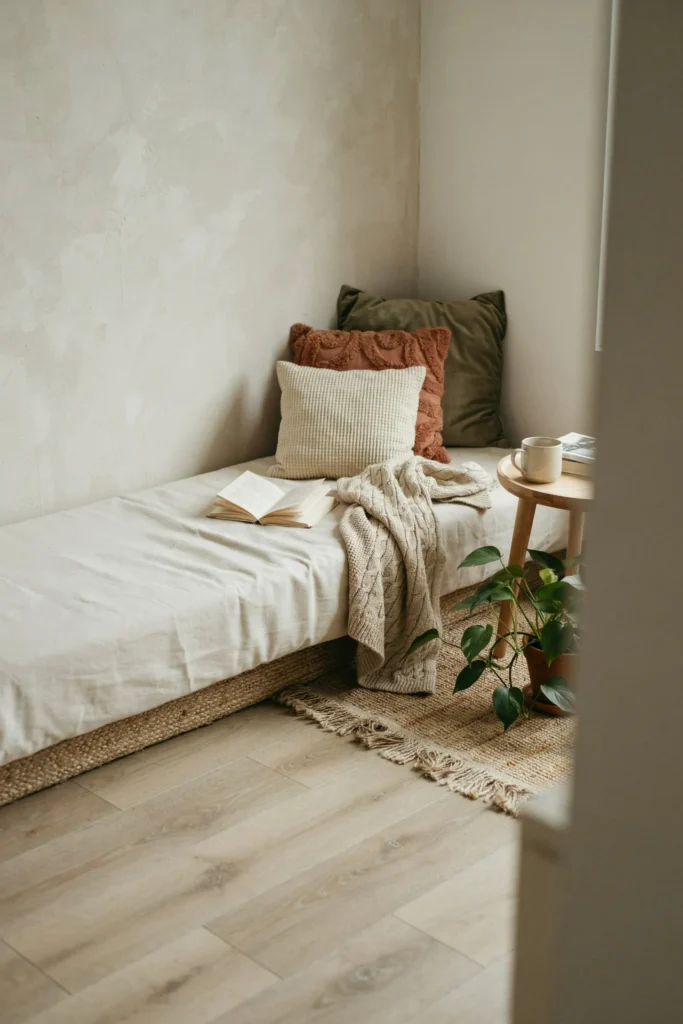
Sometimes the cushion does most of the decorating work. Measure the corner carefully, then use a seat cushion cut to the available width so the daybed feels built into the room rather than squeezed into it.
For comfort, choose a firm base cushion and add firmer back pillows along the wall. A washable linen or cotton cover makes everyday maintenance easier. This setup suits renters and DIY decorators because the visual effect can be achieved with a simple platform, bench, or sturdy low frame.
Bookcase Backrest Daybed
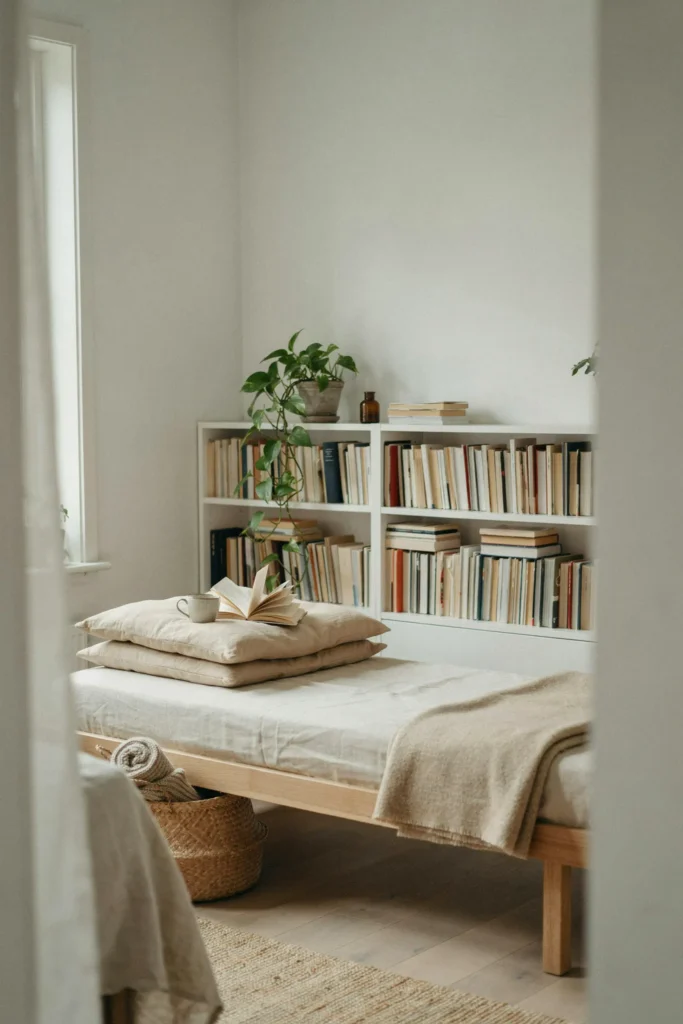
DO:
- Choose a low bookcase that stays below the daybed cushion height.
- Secure tall shelving properly before placing furniture nearby.
- Keep frequently read books within easy reach.
- Repeat the shelf finish on a nearby table or storage basket.
DON’T:
- Use unstable freestanding shelves as a backrest.
- Overload shelves with heavy objects.
- Push the mattress tightly against sharp shelf edges.
- Let decorative items reduce usable seating space.
A bookcase behind the sleeping surface creates storage without adding another piece of furniture. Keep the shelves low enough to maintain comfortable back support and use the upper surface for a few decorative pieces. In my experience, combining books with soft textiles makes a compact daybed feel naturally connected to the room.
Under-Window Reading Bed
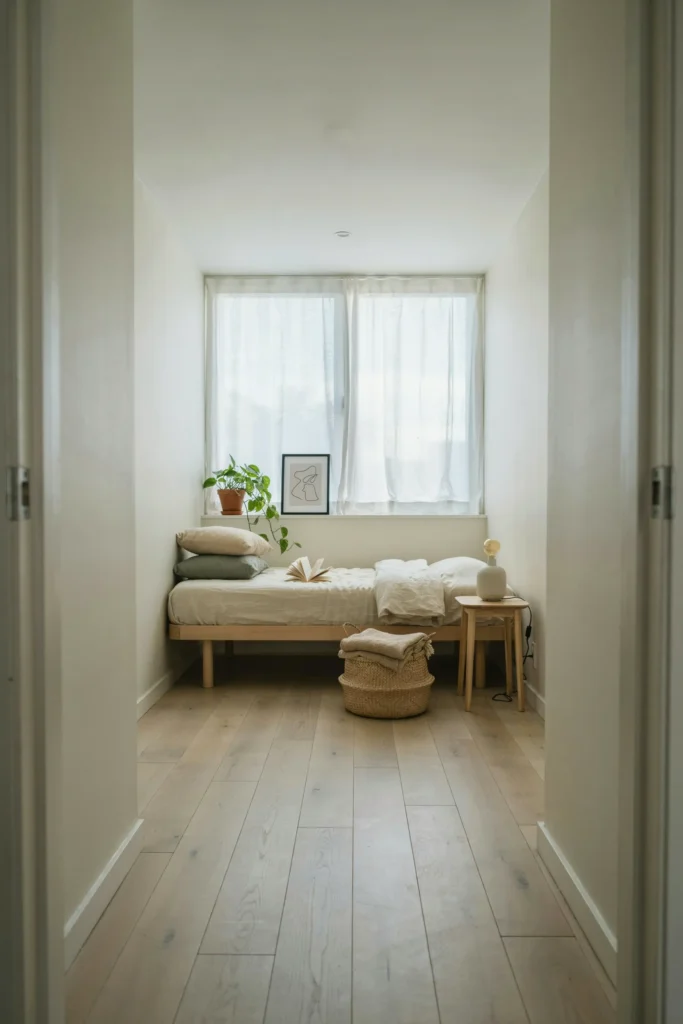
- Measure the sill height: Make sure the finished daybed does not obstruct the window or prevent curtains from opening.
- Choose a low frame: A lower profile keeps natural light flowing across the room.
- Add layered cushions: Use firm back pillows to create comfortable reading support.
- Keep accessories narrow: Select a slim lamp or tiny side table that does not crowd the window area.
Natural light can make a small sleeping corner feel noticeably more open. Keep the frame low and avoid heavy curtains that block the window. Add a small reading lamp for evenings, then use one textured throw to bring warmth without filling the limited surface with unnecessary accessories.
Daybed Room Divider
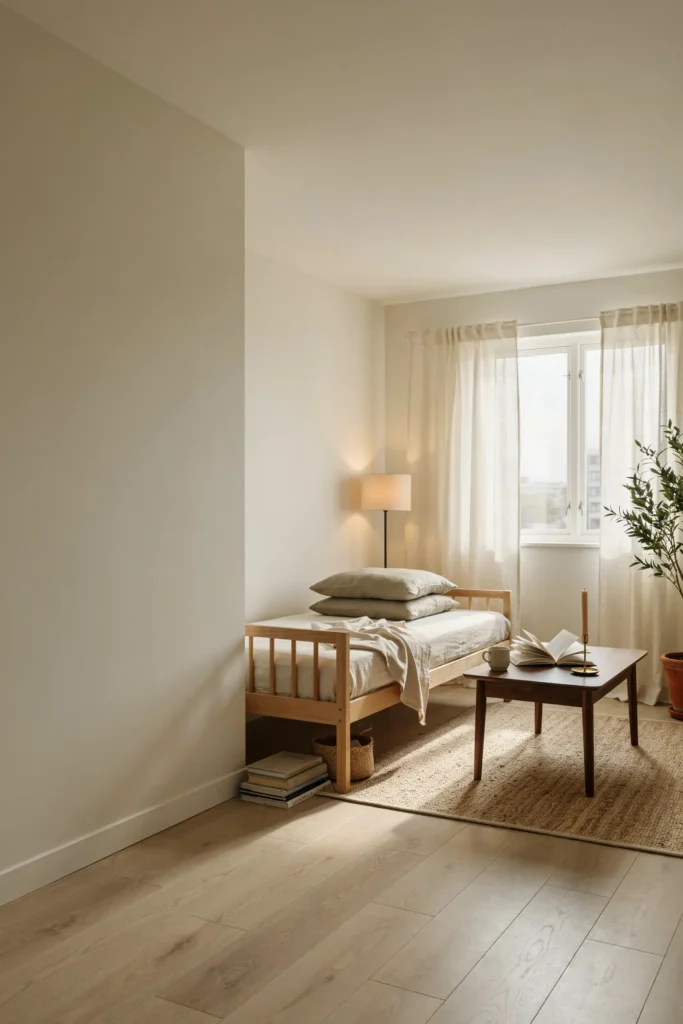
| Option A | Option B |
| Placement: Against a wall | Placement: Across a room zone |
| Main benefit: Saves perimeter space | Main benefit: Defines separate areas |
| Best for: Narrow bedrooms | Best for: Studio apartments |
| Visual effect: More open wall area | Visual effect: Clearer room boundaries |
Placing a daybed across a studio can visually separate sleeping and living areas without building a permanent wall. Keep the back attractive because both sides remain visible. An open frame, finished wood panel, or neatly arranged cushions can make the furniture function as a divider while preserving natural light and circulation.
Daybed With Wall Shelves
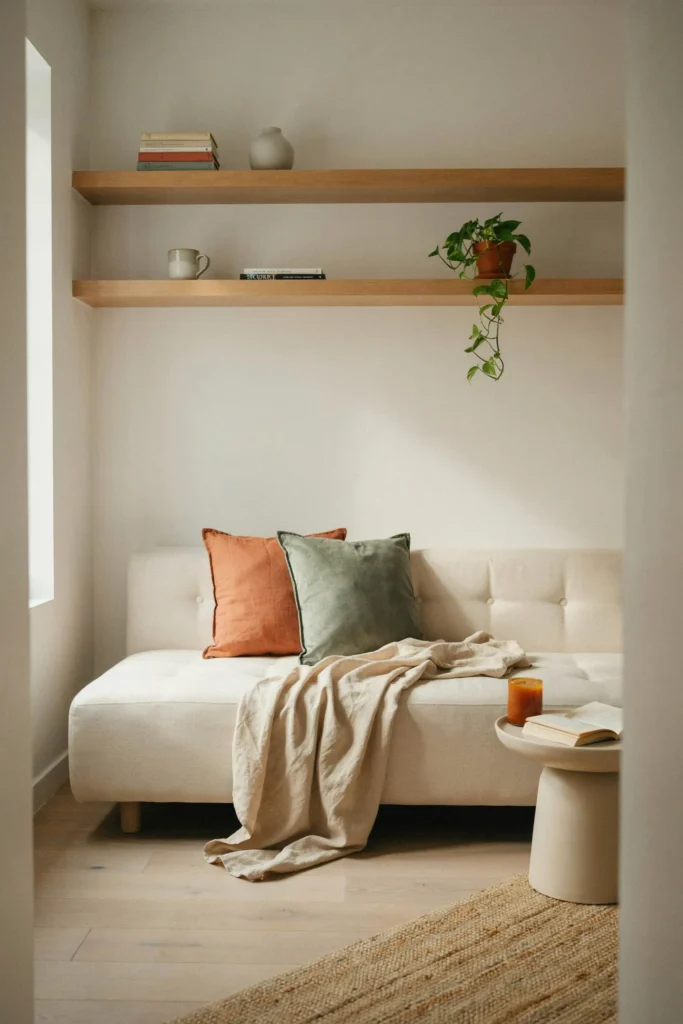
DO:
- Install shelves high enough to leave comfortable headroom.
- Keep everyday books and small baskets within easy reach.
- Match shelf wood with another finish in the room.
- Leave some shelf space empty for a lighter appearance.
DON’T:
- Hang shelves so low that they interfere with pillows.
- Fill every shelf with decorative objects.
- Place fragile items where they can easily fall onto the bed.
- Use deep shelves that make the corner feel crowded.
Wall-mounted shelving makes use of vertical space while leaving the floor clear for movement. Keep the display restrained with books, a small plant, and one or two textured pieces. For small bedrooms, this arrangement provides useful storage without requiring a bulky bedside cabinet beside the daybed.
Linen Daybed Styling
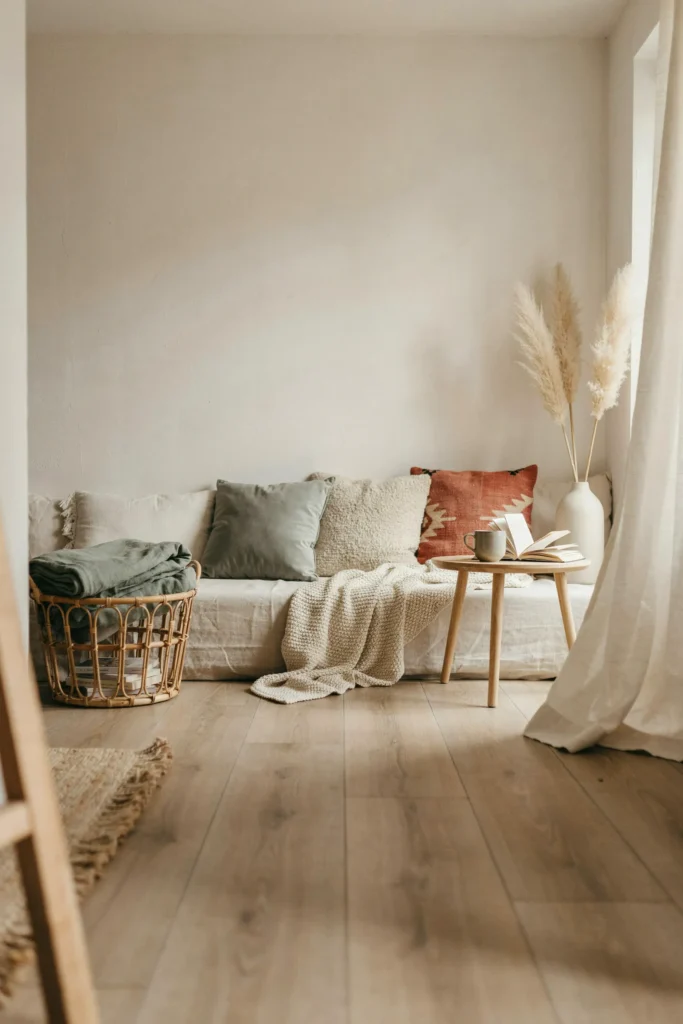
Cost: Moderate | Time: 30 minutes | Skill Level: Beginner | Best For: Soft, relaxed interiors
Natural linen brings texture without adding visual heaviness to a compact sleeping area. Start with one fitted cover, then layer two larger back cushions and one smaller accent cushion. Keep the palette within three or four muted shades so the daybed feels inviting without becoming visually busy.
Narrow Alcove Daybed
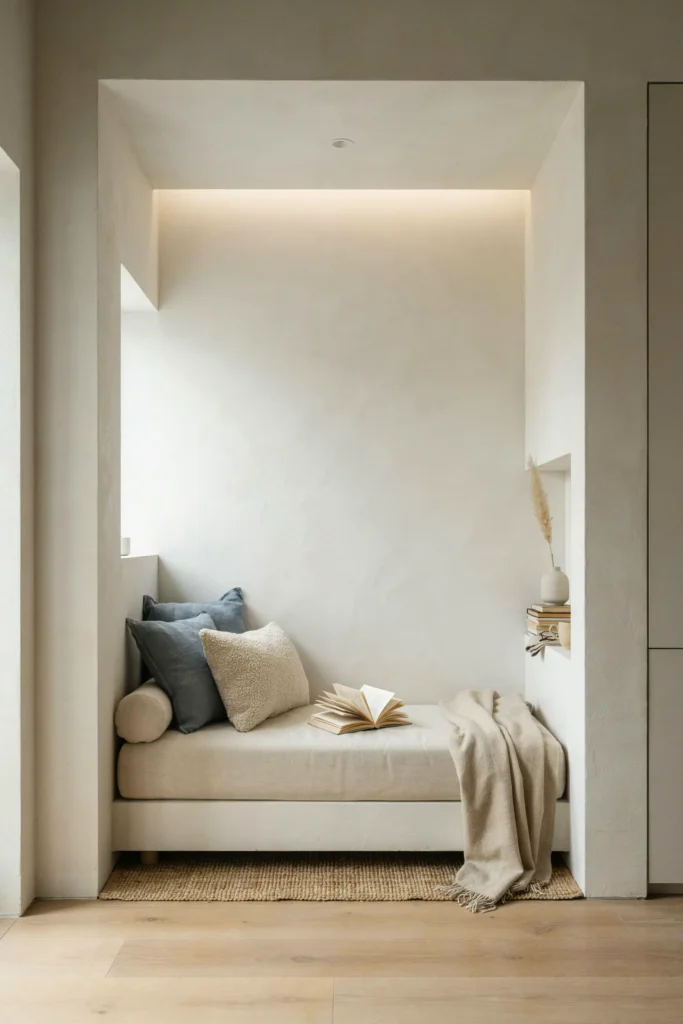
BEFORE: An unused alcove often becomes a catch-all for bags, blankets, or miscellaneous items. Its awkward shape makes standard furniture difficult to position without wasting valuable floor area.
AFTER: A fitted daybed turns the recess into purposeful seating and sleeping space. Add a narrow shelf or wall-mounted light so the area gains function without extending furniture into the room.
Measure the alcove at several points before ordering or building the frame, since older walls may not be perfectly square. Keep the mattress slightly narrower than the opening if you need easier access for cleaning. This approach makes an awkward architectural feature work harder while preserving the room’s main walking path.
Canopy Corner Daybed
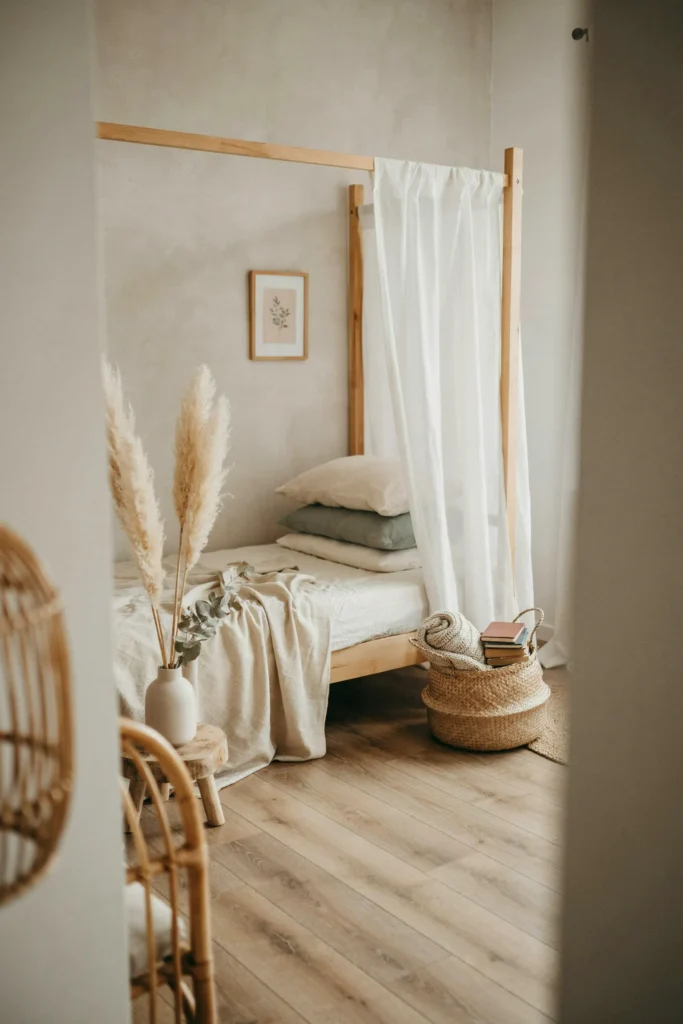
- Choose a slim frame: Select narrow canopy posts that provide structure without consuming unnecessary floor space.
- Keep fabric light: Use sheer linen or cotton panels so the corner stays visually airy.
- Limit the palette: Combine ivory, beige, and one muted accent shade for a calm finish.
- Secure the textiles: Attach panels neatly so they stay away from walkways and moving parts.
A canopy can give a compact daybed a defined sleeping zone without constructing a permanent enclosure. Keep the fabric panels mostly open during the day to preserve light and circulation. At night, closing them slightly can create a quieter retreat, especially in a studio where the bed shares space with living areas.
Rolling Daybed Frame
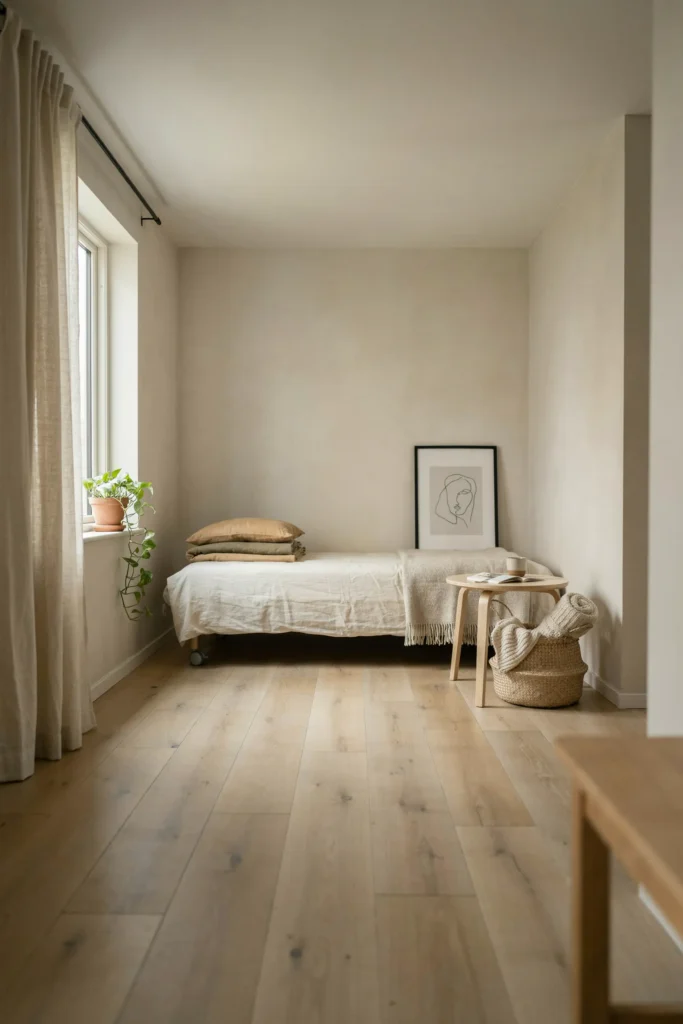
| Option A | Option B |
| Mobility: Fixed in place | Mobility: Easy to reposition |
| Best use: Stable daily layout | Best use: Flexible multipurpose rooms |
| Cleaning: Requires maneuvering around furniture | Cleaning: Floor access is easier |
| Space planning: Permanent footprint | Space planning: Can adapt when needed |
A rolling frame gives a small room more flexibility throughout the day. Lockable casters are especially useful because they allow movement while keeping the bed stable during use. Roll the daybed toward a wall for daytime seating or reposition it when you need more open floor space for guests.
Neutral Layered Daybed
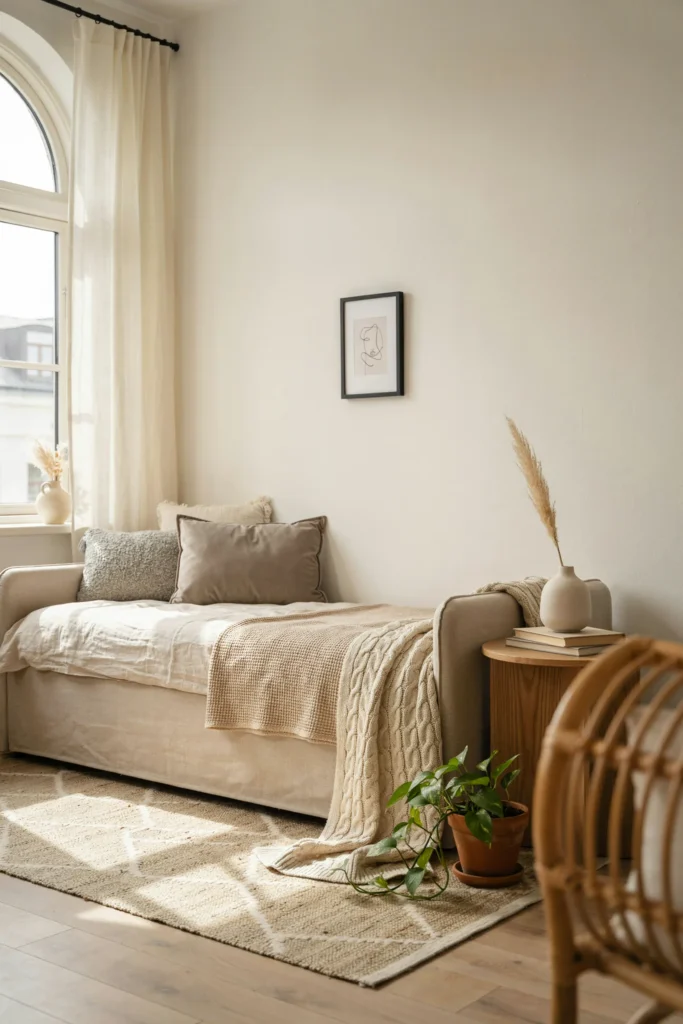
Cost: Low to Moderate | Time: 20 minutes | Skill Level: Beginner | Best For: Neutral interiors
Layering similar neutrals adds depth without making a small room feel visually crowded. Start with an ivory base, then introduce beige cushions, a taupe throw, and one subtle patterned pillow. Vary textures rather than adding many colors, using linen, cotton, boucle, or woven materials for contrast.
Fold-Down Daybed
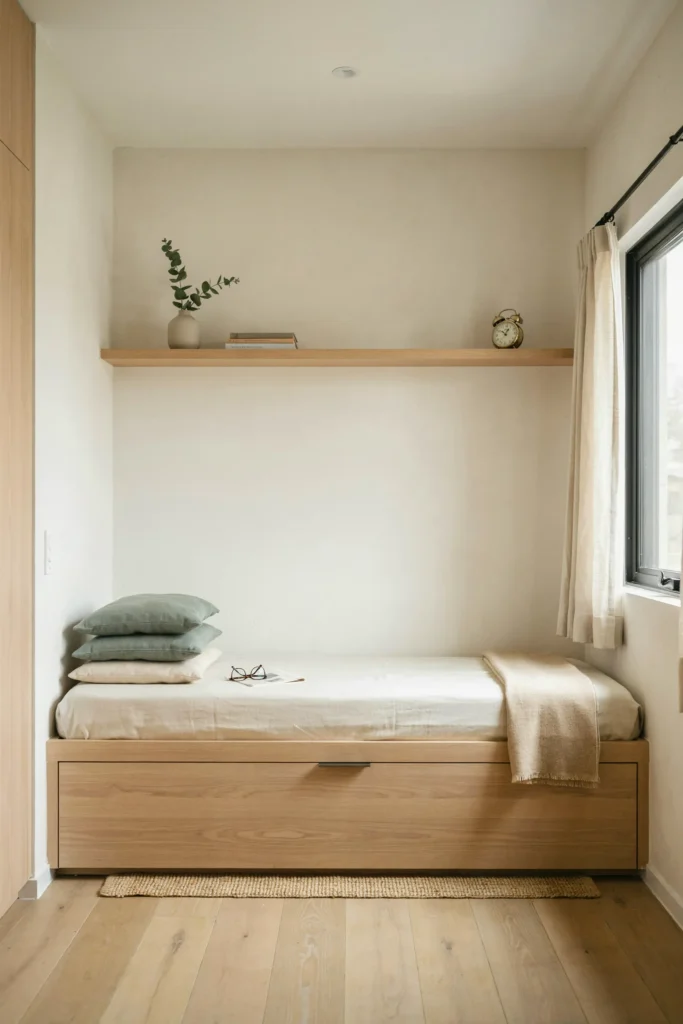
Best For: Studios and multipurpose rooms | Space Saved: Floor area during daytime | Skill Level: Intermediate | Result: Flexible sleeping zone
A fold-down frame keeps the sleeping surface out of the way when the room needs another purpose. Choose a model with secure hardware and enough clearance for the mattress to open fully. Keep the surrounding floor free so the bed can be lowered without moving chairs, tables, or storage pieces.
Daybed With Curtains
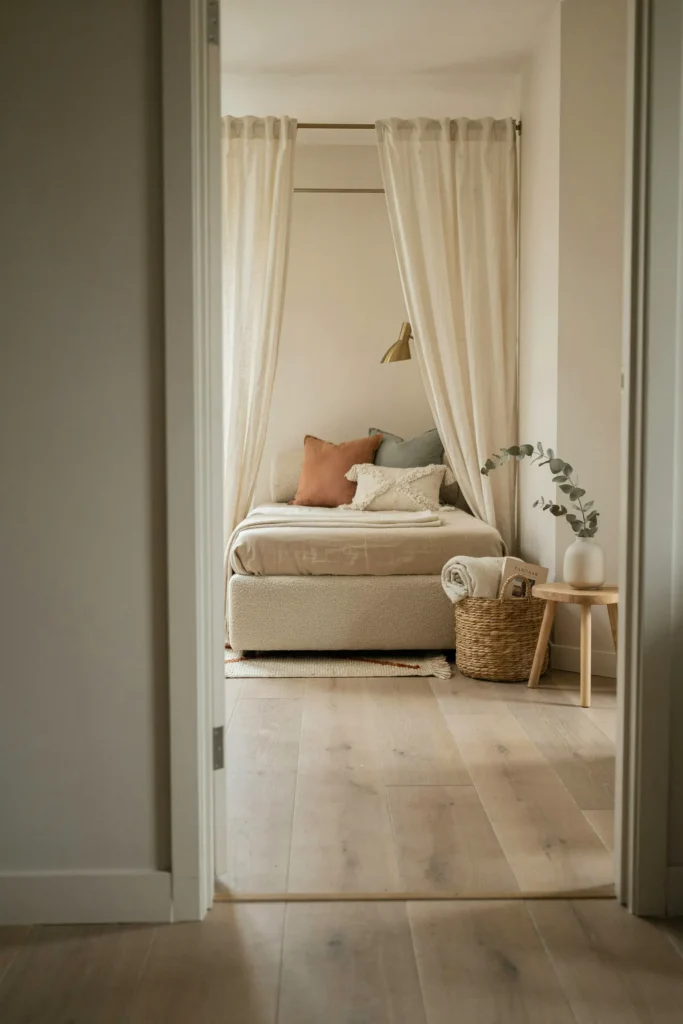
Curtains can give a compact sleeping area a little privacy without requiring a solid partition. Mount a ceiling track slightly beyond the daybed edges, then choose lightweight fabric that can be pulled completely aside during the day.
I’ve noticed that floor-to-ceiling curtains often make a small sleeping corner feel more intentional because they visually connect the bed with the room’s full height. Keep the fabric close to the wall color for a quiet effect, or add a subtle texture for warmth without making the enclosure feel heavy.
Daybed With Side Table
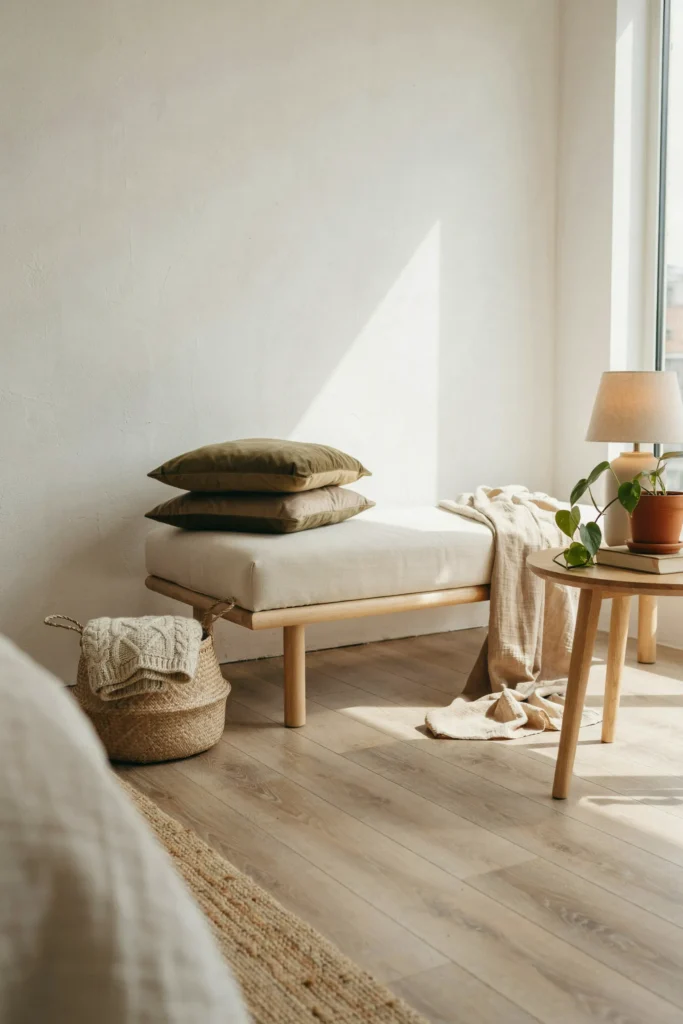
- Choose a narrow table: Look for a compact round or C-shaped design that fits beside the frame.
- Keep essentials nearby: Use the surface for a lamp, book, water glass, or small tray.
- Match the scale: A low daybed pairs naturally with a table that stays close to seat height.
- Preserve the walkway: Leave enough clearance to enter and leave the sleeping area comfortably.
- Limit tabletop clutter: One lamp and a small decorative object are usually enough.
A slim side table adds everyday convenience without requiring a full nightstand. For particularly tight rooms, a C-table can slide partly beneath the daybed frame and use otherwise wasted floor space. This small adjustment keeps essentials accessible while preserving the open circulation that makes compact interiors easier to live in.
Daybed Footboard Storage
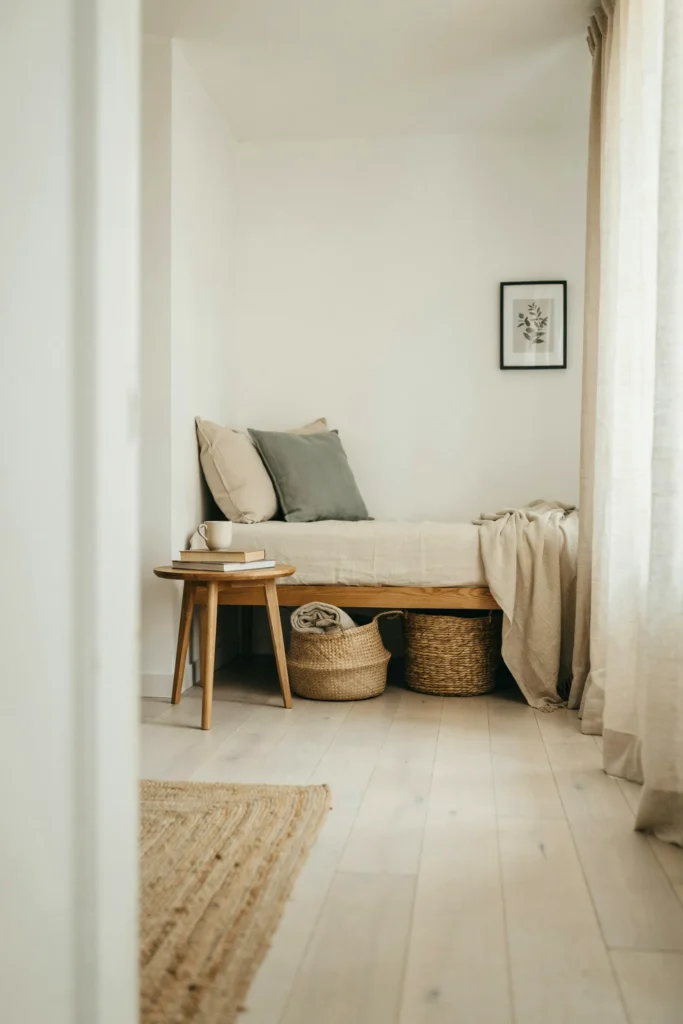
Cost: Moderate | Time: One afternoon | Skill Level: Beginner to Intermediate | Best For: Bedrooms needing extra storage
A storage bench at the foot of a daybed creates a useful landing spot for folded blankets, pillows, or clothing without adding another large cabinet. Choose a bench slightly narrower than the mattress width, leaving enough room to walk around both ends comfortably.
For very tight rooms, select a hinged-top bench or baskets that slide underneath. Keep the storage visually coordinated with the bed frame so the arrangement feels intentional rather than crowded. This final setup works particularly well for anyone who needs extra organization but wants to preserve a clean, open floor plan.
CONCLUSION
A small room does not have to limit your comfort or creativity. The right daybed can provide seating, sleeping space, storage, and a cozy focal point while keeping valuable floor area available. From built-in drawers to window nooks and flexible frames, these Daybed Ideas for Small Spaces offer plenty of practical inspiration for different layouts and decorating styles.
I’ve seen how thoughtful furniture choices can completely change the way a compact room feels and functions. Save this post on Pinterest so you can revisit your favorite ideas, try one that suits your space, and share it with someone planning a small-room makeover. Start with one simple change and build from there.