22 Cozy Bedroom Ideas for a Dreamy, Inviting Escape
A bedroom should feel like the easiest place in your home to relax. Cozy Bedroom Ideas can help turn a plain or uncomfortable room into a warm retreat that feels inviting from morning to night.
The best cozy spaces are not necessarily expensive or filled with decorations. Small choices such as softer bedding, layered lighting, warm colors, natural textures, and thoughtful furniture placement can make a noticeable difference. These ideas are designed for homeowners, renters, and anyone who wants a comfortable bedroom without starting a complete renovation.You’ll find practical inspiration for creating more warmth, softness, and personality while keeping the room functional.
In my experience, even changing the bedding and lighting can make a bedroom feel noticeably calmer. Keep reading for simple ideas you can adapt to your space, budget, and personal style.
Warm Layered Bedding
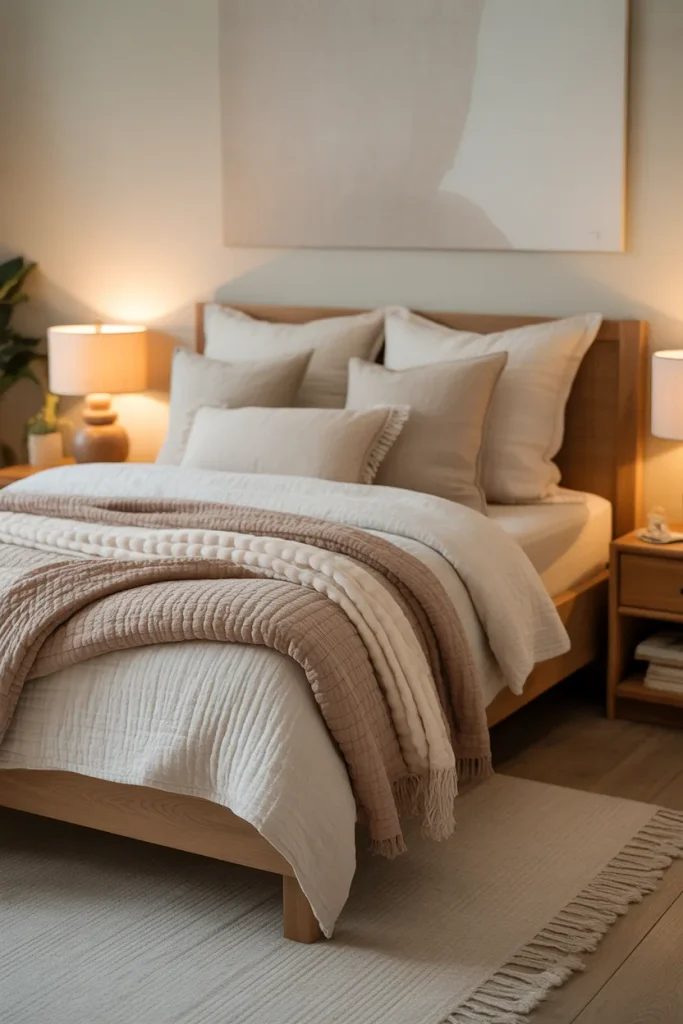
The right bedding can make a bedroom feel warmer within minutes. Start with breathable cotton or linen sheets in cream, ivory, or soft beige. Add a quilt or lightweight comforter, then finish with a chunky throw folded across the lower third of the bed.
Varying textures keeps the bed from looking flat. Mix smooth sheets with quilted fabric, knitted blankets, and two or three plush pillows. In my experience, layering works especially well when the colors stay within a tight palette. The room feels relaxed rather than visually crowded.
Pinterest account : housedecorater56
Soft Ambient Lighting
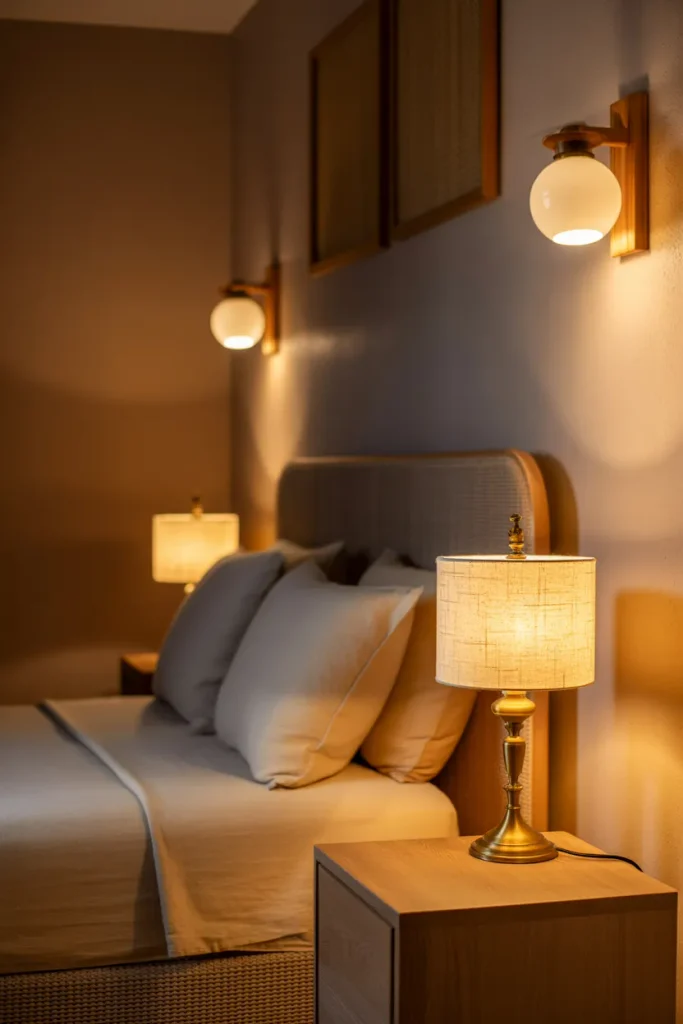
- Choose warm white bulbs around 2700K for a softer evening glow.
- Place matching lamps on both sides of the bed for visual balance.
- Add a small floor lamp if the room has a dark reading corner.
- Use dimmable fixtures when possible for flexible brightness.
- Keep harsh overhead lighting off during your nighttime routine.
Lighting changes the mood without taking up much floor space. Bedside lamps create a gentle pool of light while keeping the rest of the room subdued. I’ve noticed that placing light sources at different heights, such as a lamp and wall sconce, gives bedrooms a more comfortable, layered appearance.
Plush Area Rug
Quick Tip:
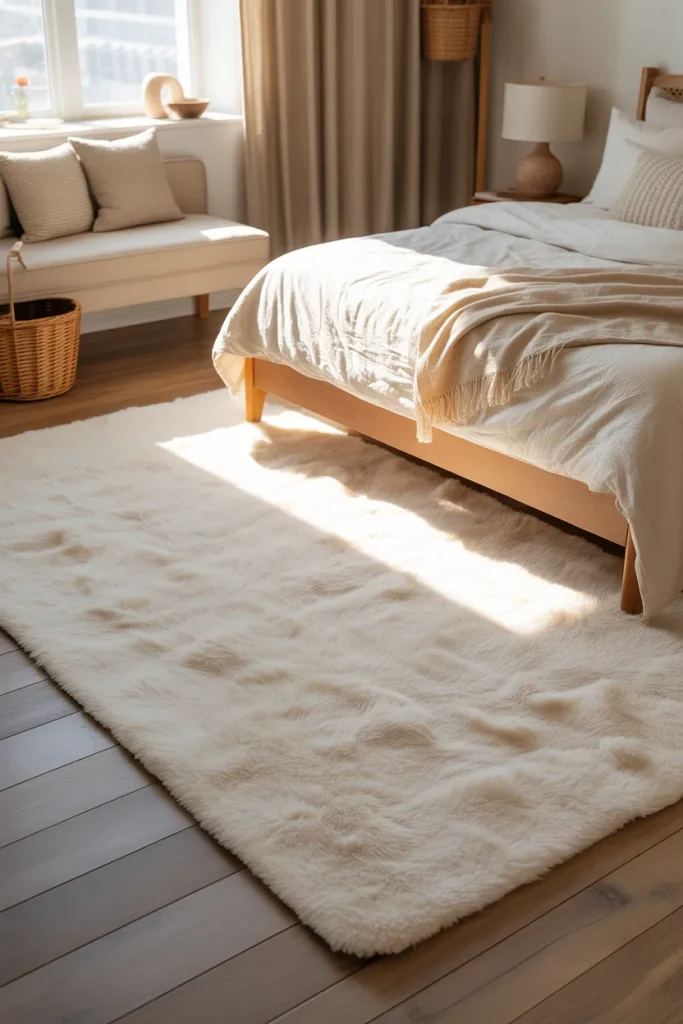
Choose a rug large enough to extend beyond the sides and foot of the bed. A thick pile adds softness underfoot, but a low-pile woven rug is easier to clean in busy bedrooms.
A rug helps visually anchor the bed while making cold floors feel more comfortable. For a queen bed, position the rug so several feet extend beyond each side rather than using a tiny mat beside the nightstand. Neutral patterns are useful when your bedding already has several textures.
Textured Accent Wall
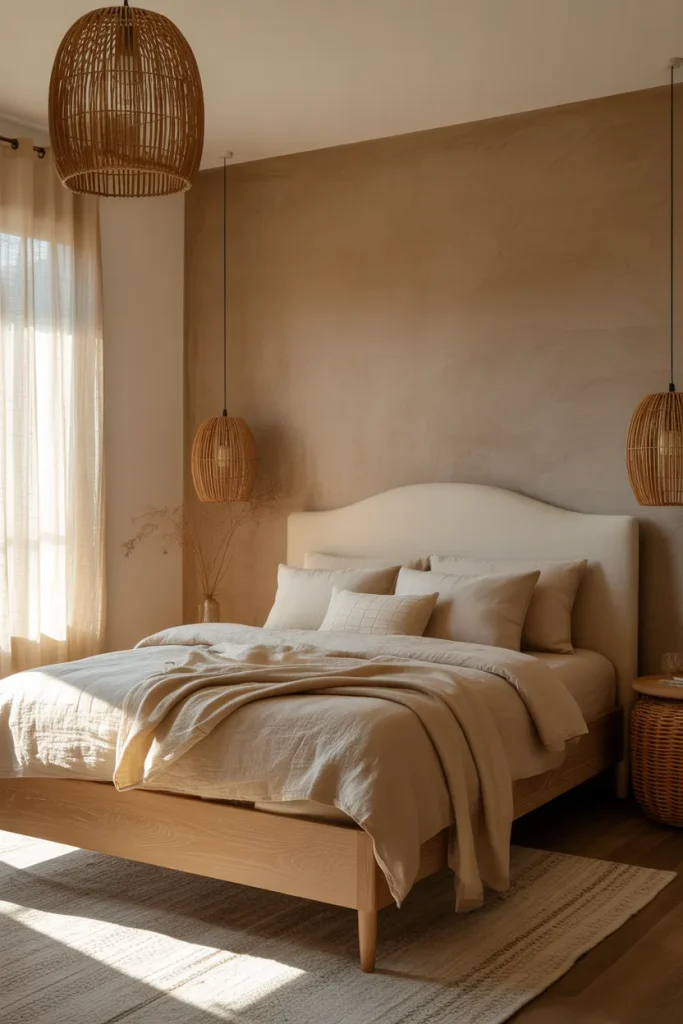
BEFORE: A plain wall can leave the sleeping area feeling unfinished, especially when the rest of the room already has layered fabrics and warm furnishings. The bed may look visually disconnected from the surrounding decor.
AFTER: A textured finish gives the wall subtle depth without overwhelming the room. The bed becomes the natural focal point, while earthy tones make the entire space feel warmer and more intentional.
A textured wall does not need to involve complicated construction. Limewash paint, removable wallpaper, vertical wood slats, or lightly textured wallpaper can create a similar effect. I’ve seen simple wall treatments work especially well in rental bedrooms because they add character without requiring major furniture changes.
Canopy Bed Frame
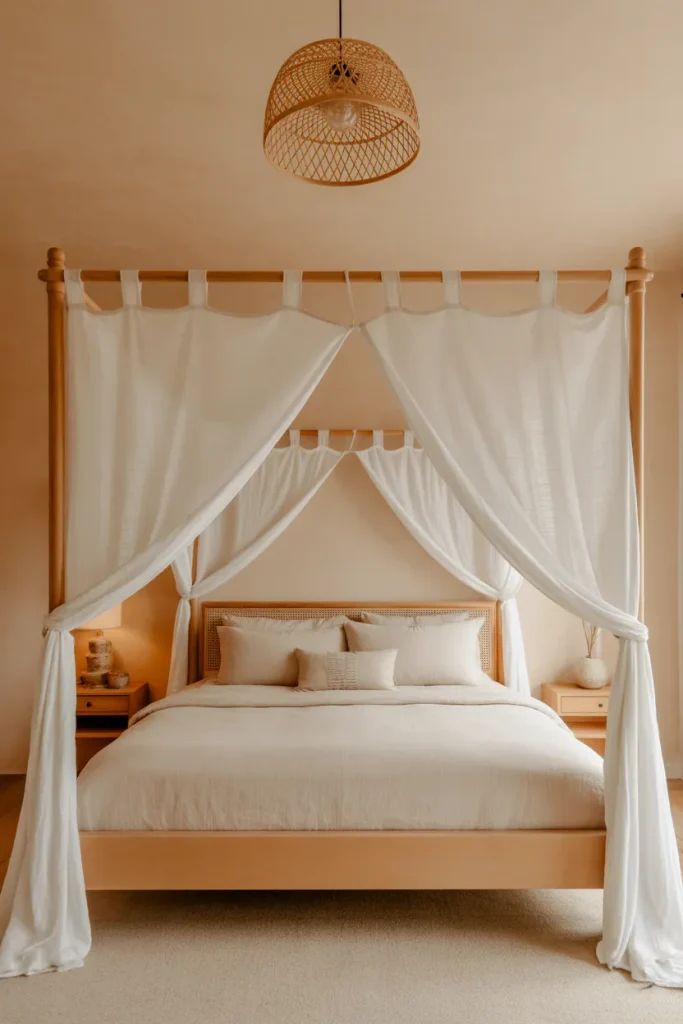
- Choose the frame: Select a slim wood or metal canopy with clean lines so the structure does not visually shrink the room.
- Add fabric: Hang lightweight white, ivory, or oatmeal curtains from the upper rails.
- Keep layers loose: Let the fabric fall naturally instead of creating heavy, tightly gathered panels.
- Balance the room: Repeat the canopy’s material or color through a nightstand, bench, or small decorative accent.
A canopy creates a cozy sense of enclosure around the bed without needing bulky furniture. For smaller rooms, keep the frame visually light and choose sheer fabric that allows daylight through. This setup works particularly well for anyone who wants a softer sleeping area while keeping the surrounding decor simple.
Also Read : Small Living Room Arrangement
Linen Curtain Layers
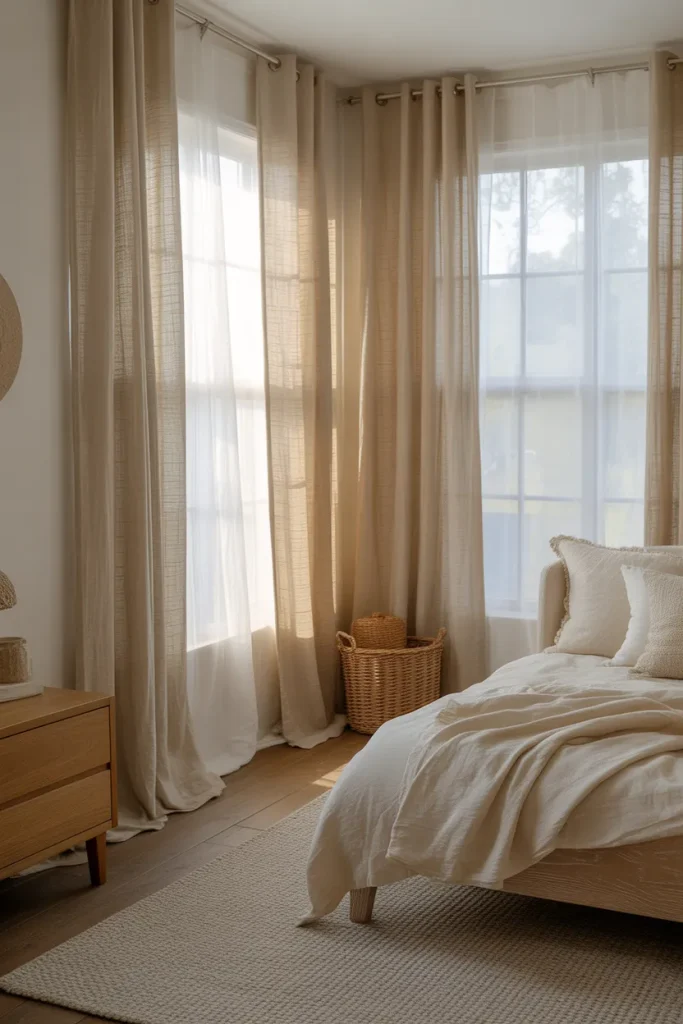
| Comparison Point | Option A | Option B |
| Fabric | Heavy blackout curtain | Linen with sheer layer |
| Daylight | Very limited | Soft filtered light |
| Appearance | Structured and dramatic | Light and relaxed |
| Best Use | Deep sleepers | Bright, airy bedrooms |
Curtain layering can soften hard window lines while giving you better control over privacy and daylight. Pair a sheer inner panel with a heavier linen outer curtain, then hang both close to the ceiling. The extra height draws the eye upward and makes the sleeping area feel more spacious without adding furniture.
Plush Throw Blankets
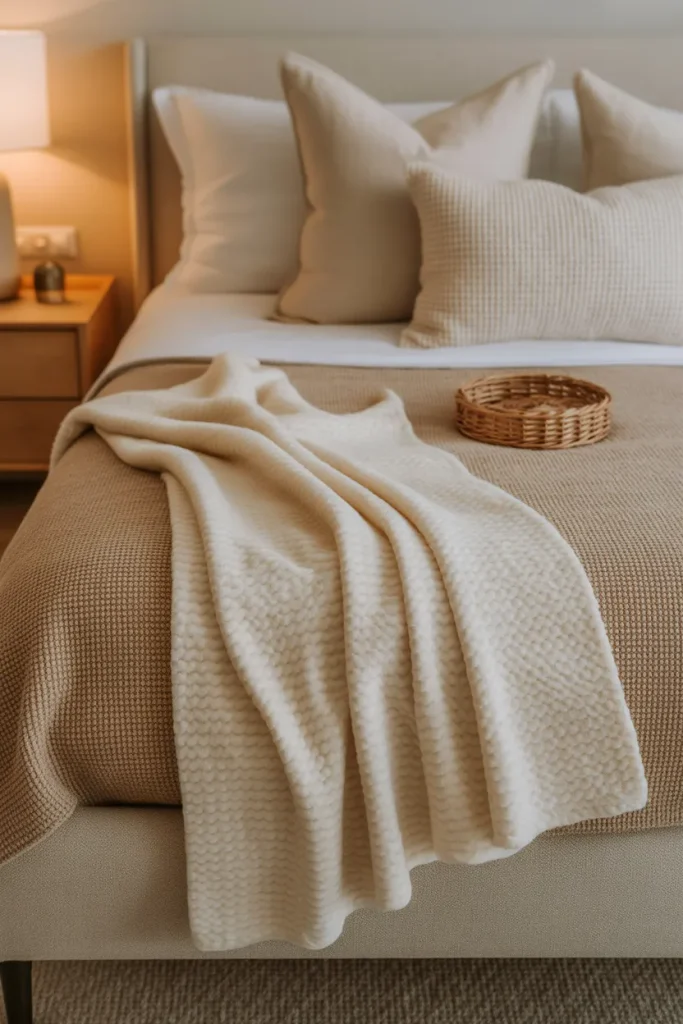
DO:
- Choose one substantial throw with a visible knit, boucle, fleece, or woven texture.
- Drape it loosely across the lower corner of the bed.
- Repeat one throw color in a pillow or small accent nearby.
- Wash and rotate blankets regularly to keep them fresh.
DON’T:
- Cover the entire bed with several heavy blankets.
- Mix too many unrelated colors or patterns.
- Let thick throws pile up on the floor.
- Choose fabric that feels scratchy against bare skin.
A soft blanket adds instant texture and gives the bed a lived-in finish. For the most inviting look, fold one neatly at the foot or let part of it fall naturally over a corner. This small layer is especially useful during cooler months when comfort matters as much as appearance.
Wooden Bedside Tables
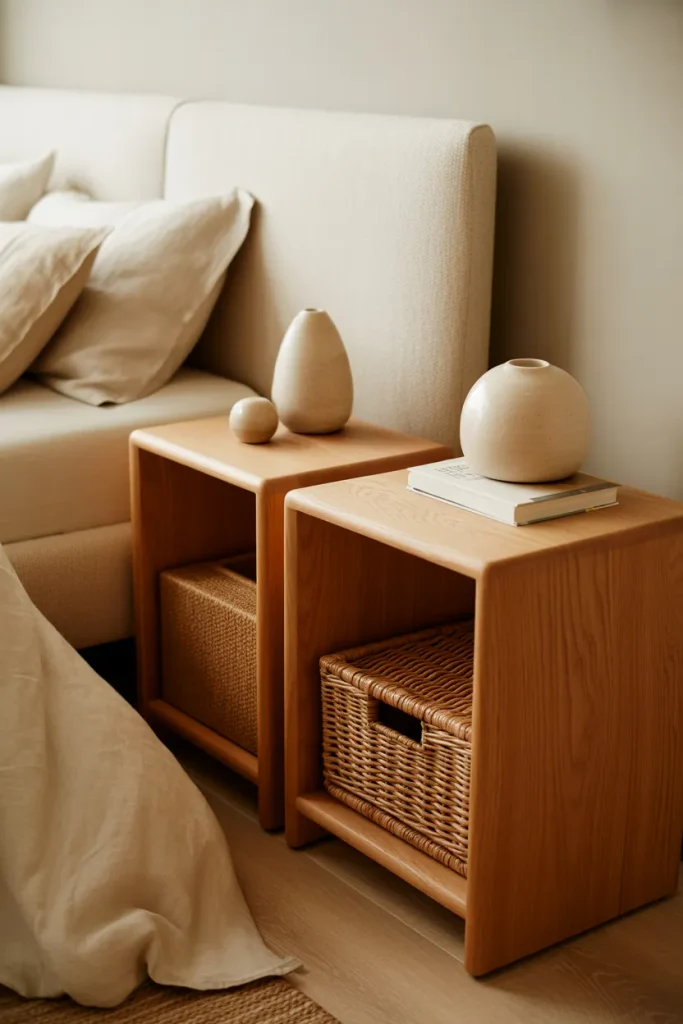
Cost: Medium | Time: About 30 minutes to style | Skill Level: Beginner
Best For: Warm, natural bedrooms | Works In: Small or spacious rooms
Result: More balanced bedside storage with added natural texture
Wood brings warmth that painted furniture sometimes lacks, especially beside pale bedding and neutral walls. Choose bedside tables with visible grain and simple shapes, then keep the surfaces useful rather than crowded. I’ve noticed that one lamp, a small book stack, and a tiny dish often provide enough decoration without making the nightstand feel cluttered.
Upholstered Headboard
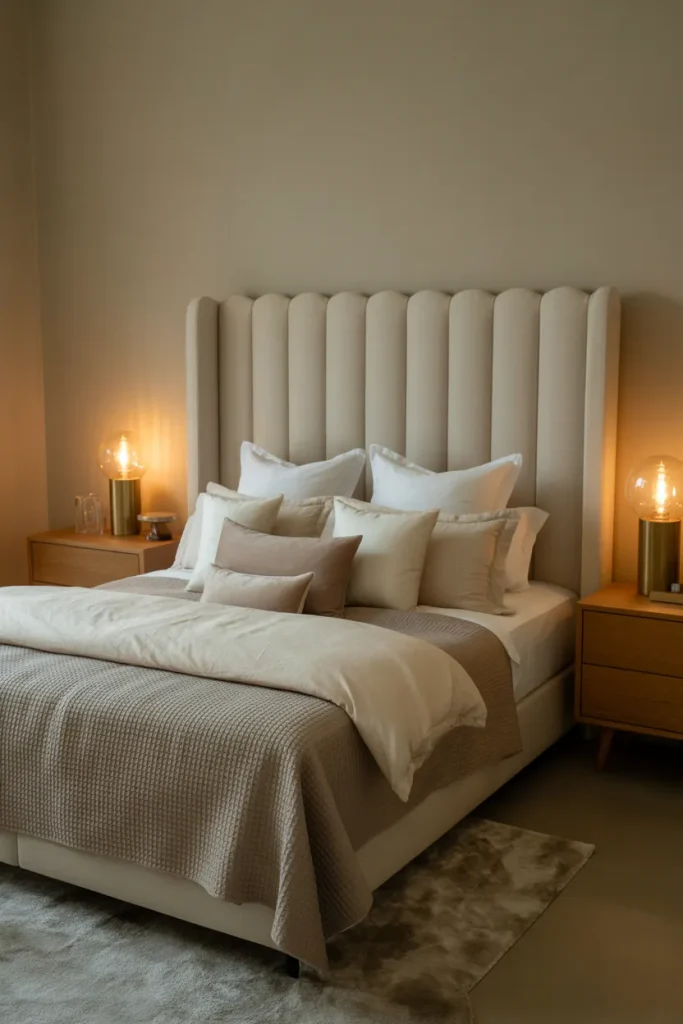
A padded headboard instantly gives the bed a softer visual presence. Choose oatmeal, ivory, beige, or muted taupe upholstery to keep the room calm, then balance it with crisp bedding and natural wood accents. A taller design can also create a stronger focal point without requiring artwork above the bed.
For smaller bedrooms, avoid an overly wide or heavily tufted style that can dominate the wall. A simple rectangular headboard often provides enough softness while preserving visual space. If reading in bed is part of your routine, prioritize comfortable padding over decorative details.
Plenty of Pillows
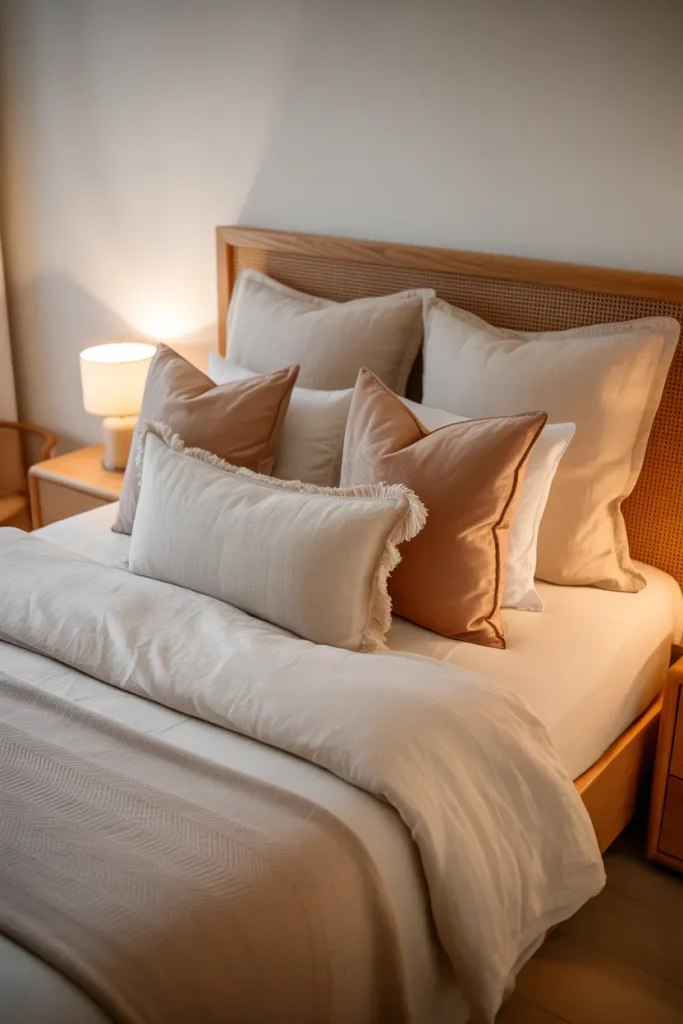
- Start with two sleeping pillows that provide proper support.
- Add two larger shams behind the front pillows for height.
- Finish with one or two smaller lumbar or square cushions.
- Mix textures such as linen, cotton, boucle, or velvet.
- Keep most pillow colors within the room’s existing palette.
Too many pillows can make bedtime inconvenient, so keep the arrangement practical. A few varied shapes create depth without turning the bed into a storage pile. For everyday comfort, leave enough room to sit, read, or stretch without moving half the bedding first.
Warm Neutral Palette
Quick Tip:
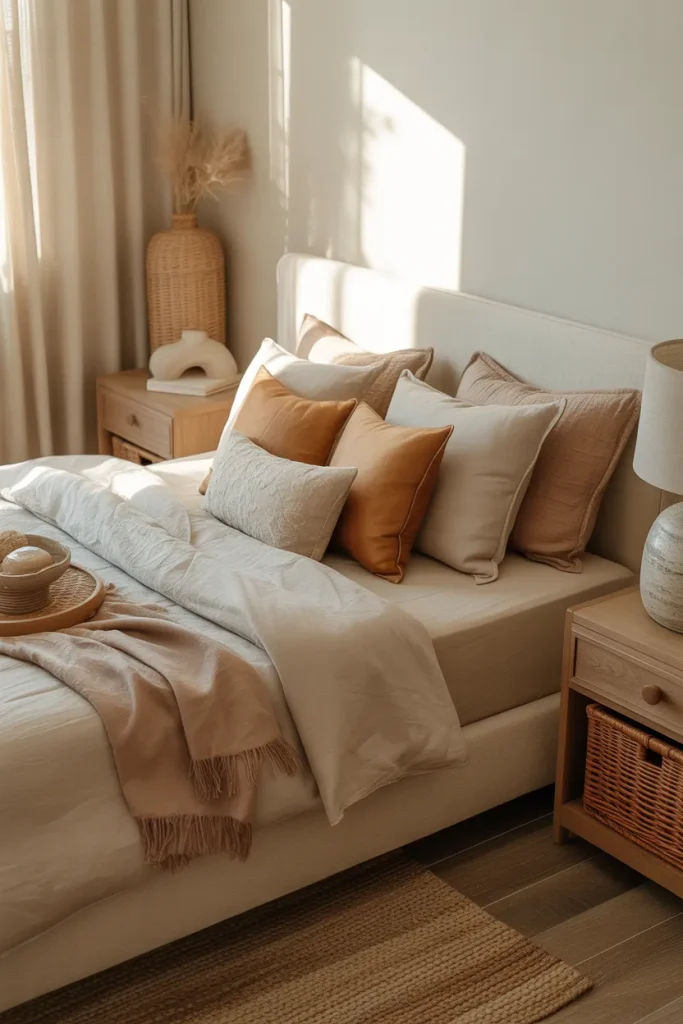
Build your palette around three or four related shades rather than choosing every neutral available. Use the lightest tone for larger surfaces, a medium shade for furniture and textiles, and a deeper tone for small accents.
Warm neutrals help create a restful backdrop while giving different textures room to stand out. Cream walls paired with beige bedding and natural wood can feel especially inviting. If the room starts looking flat, introduce caramel, muted clay, or warm brown through a throw, cushion, artwork, or bedside accessory.
Reading Nook Corner
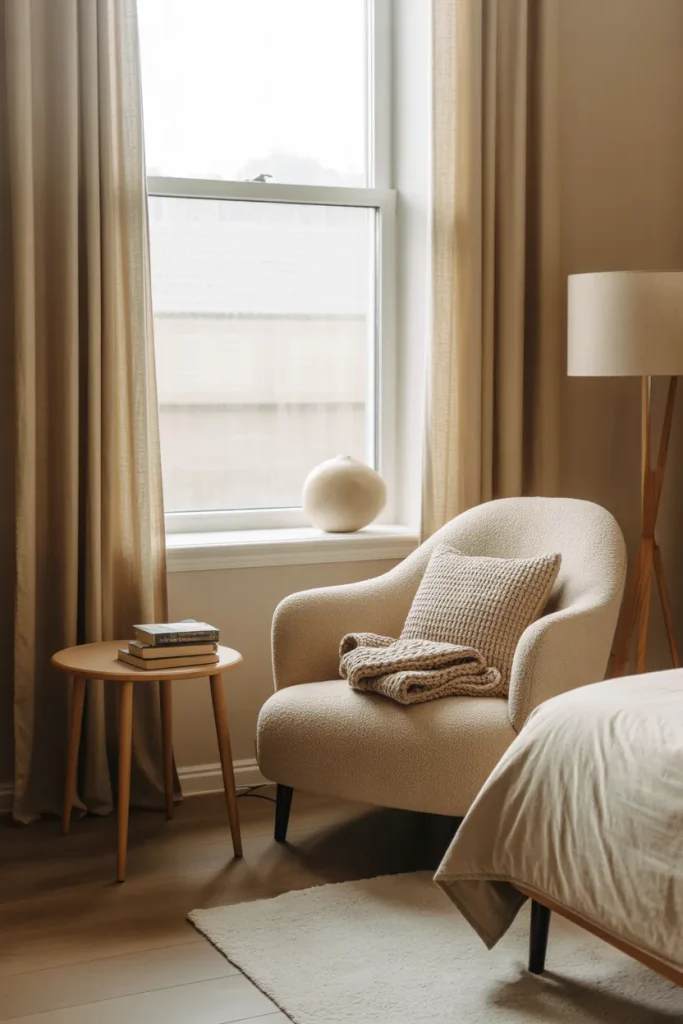
BEFORE: An empty bedroom corner often becomes a drop zone for laundry, bags, or unused furniture. The space contributes little to the room’s function and can make the layout feel unfinished.
Layered Wall Art
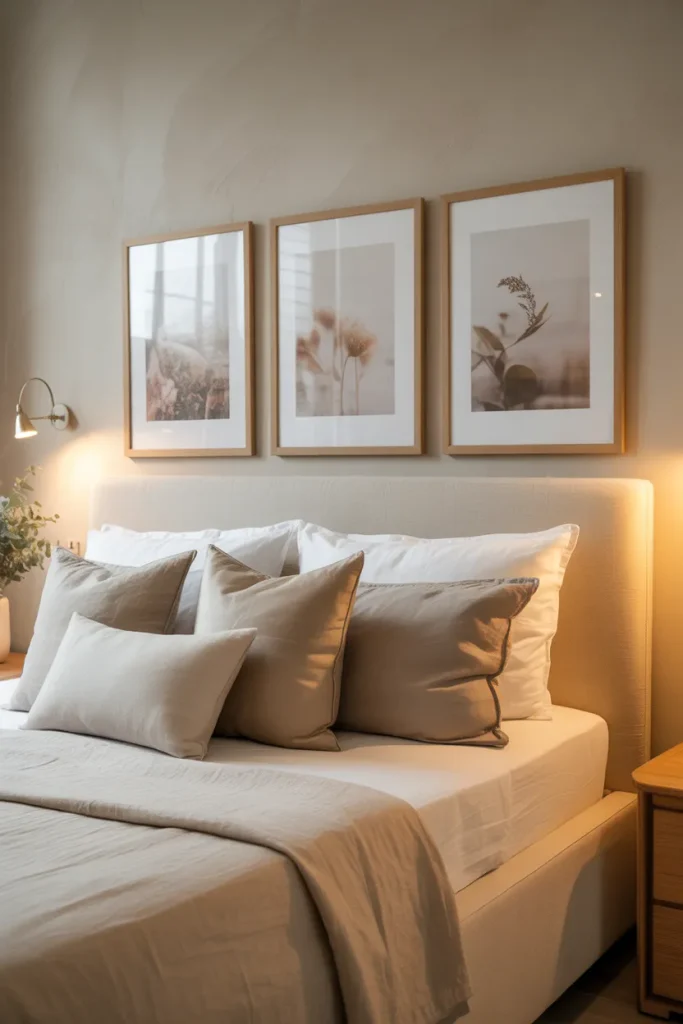
- Choose two or three artworks with related colors rather than identical designs.
- Keep frame finishes consistent, such as light oak, natural wood, or soft brass.
- Center the arrangement over the bed for a balanced focal point.
- Leave roughly 6 to 10 inches between the artwork and headboard.
Wall art gives a bedroom personality without adding visual bulk. Botanical sketches, abstract shapes, soft landscapes, and simple line drawings all work nicely with restful palettes. For a cohesive look, repeat one color from the artwork in a pillow, throw, or small decorative object nearby.
Woven Storage Baskets
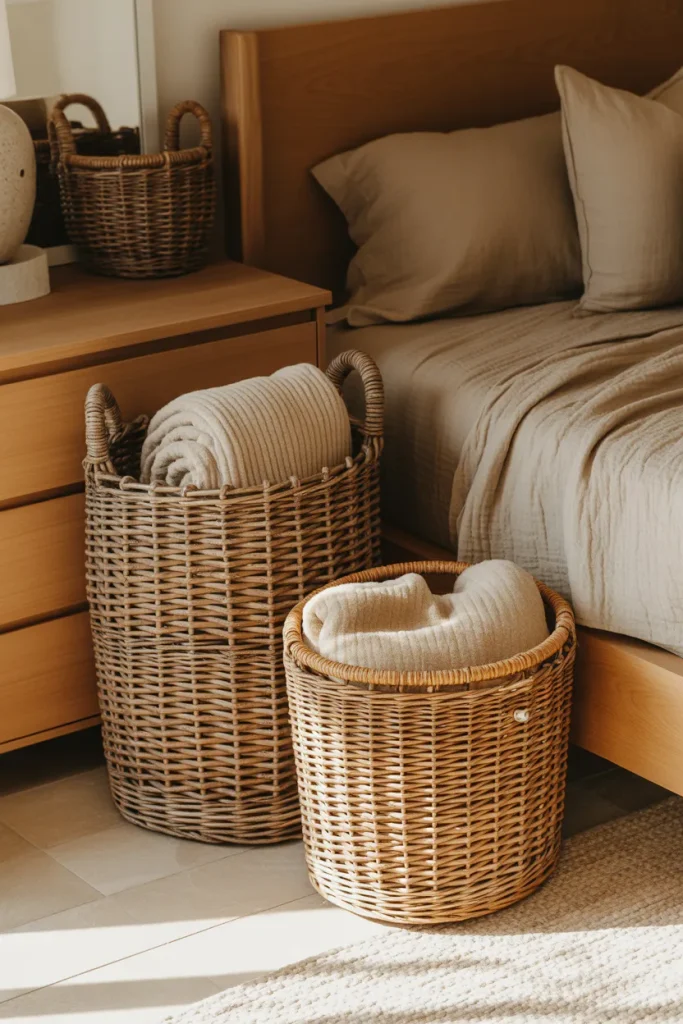
Quick Tip:
Place storage baskets where clutter naturally collects, such as beside the bed, under a console, or near the closet. Choose baskets with sturdy handles if you expect to move them frequently.
Rattan, seagrass, and water hyacinth baskets add natural texture while keeping everyday items contained. Use larger baskets for blankets or laundry and smaller ones for books, accessories, or electronics. I’ve noticed that open storage works best when the contents are limited to one category, making the room easier to tidy.
Candlelit Bedside Styling
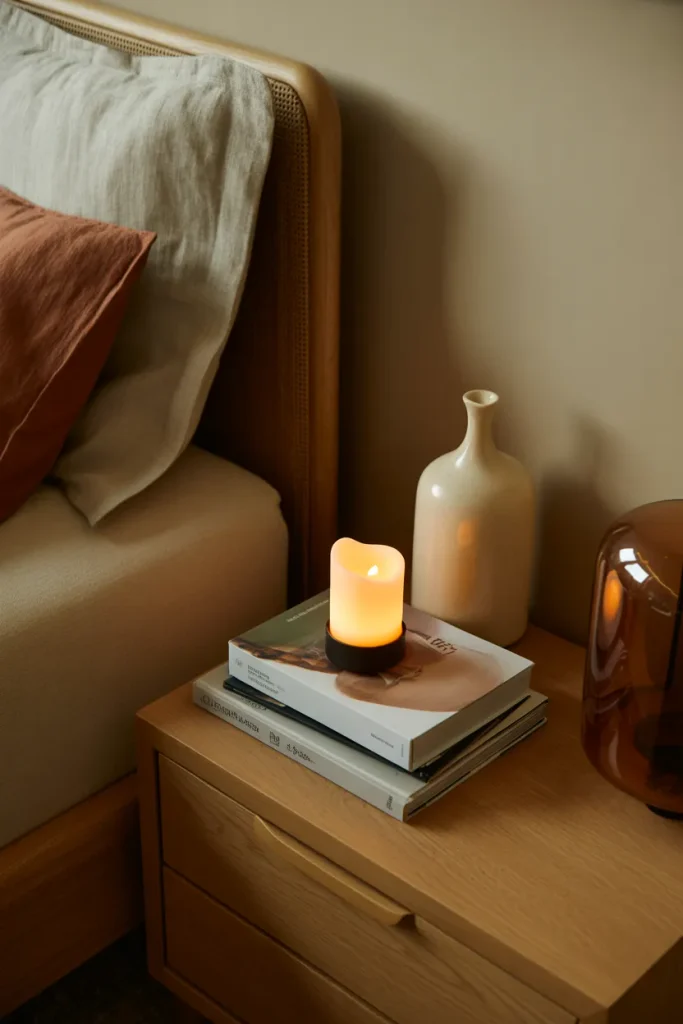
BEFORE: A nightstand covered with chargers, bottles, papers, and random objects can make even a beautifully decorated bedroom feel unsettled. The bedside area becomes functional but visually distracting.
AFTER: A small tray, warm lamp, books, and a flameless candle create a calmer arrangement while keeping useful items nearby. Grouping accessories gives the surface a deliberate structure and leaves enough open space for daily essentials.
For safety and convenience, flameless candles are a practical choice for bedside styling. Choose warm-toned light rather than bright white LEDs, and keep cords tucked behind furniture where possible. A simple tray can also prevent small items from spreading across the entire nightstand, making your evening reset much faster.
Canopy Bed Frame
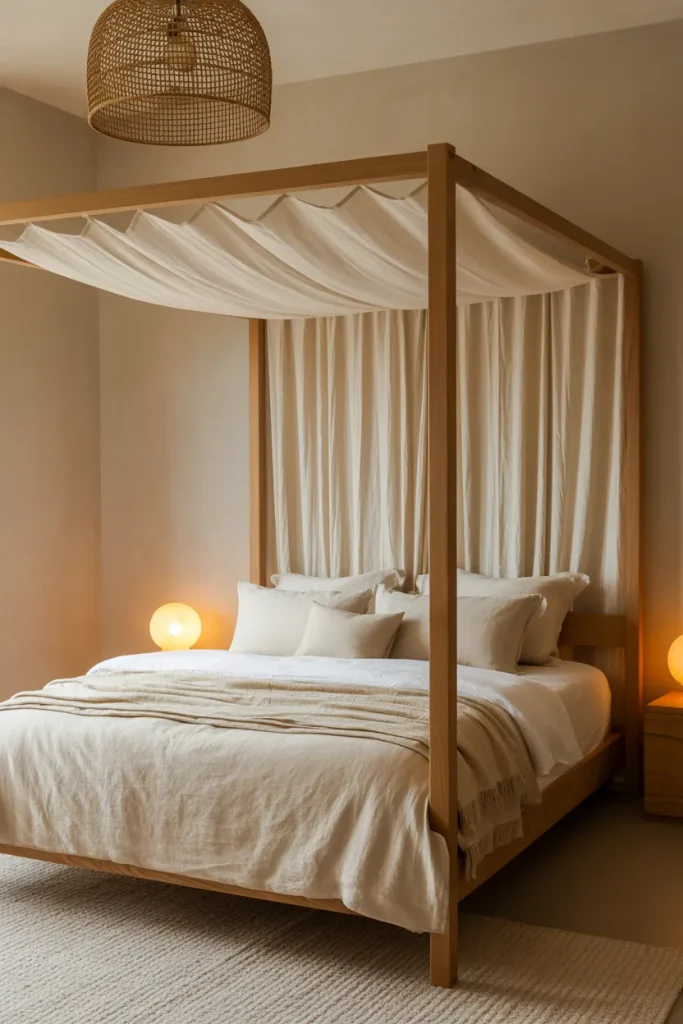
- Choose the frame: Select a slim wood or metal canopy with clean lines so the structure does not visually shrink the room.
- Add fabric: Hang lightweight white, ivory, or oatmeal curtains from the upper rails.
- Keep layers loose: Let the fabric fall naturally instead of creating heavy, tightly gathered panels.
- Balance the room: Repeat the canopy’s material or color through a nightstand, bench, or small decorative accent.
A canopy creates a cozy sense of enclosure around the bed without needing bulky furniture. For smaller rooms, keep the frame visually light and choose sheer fabric that allows daylight through. This setup works particularly well for anyone who wants a softer sleeping area while keeping the surrounding decor simple.
Plush Throw Blankets
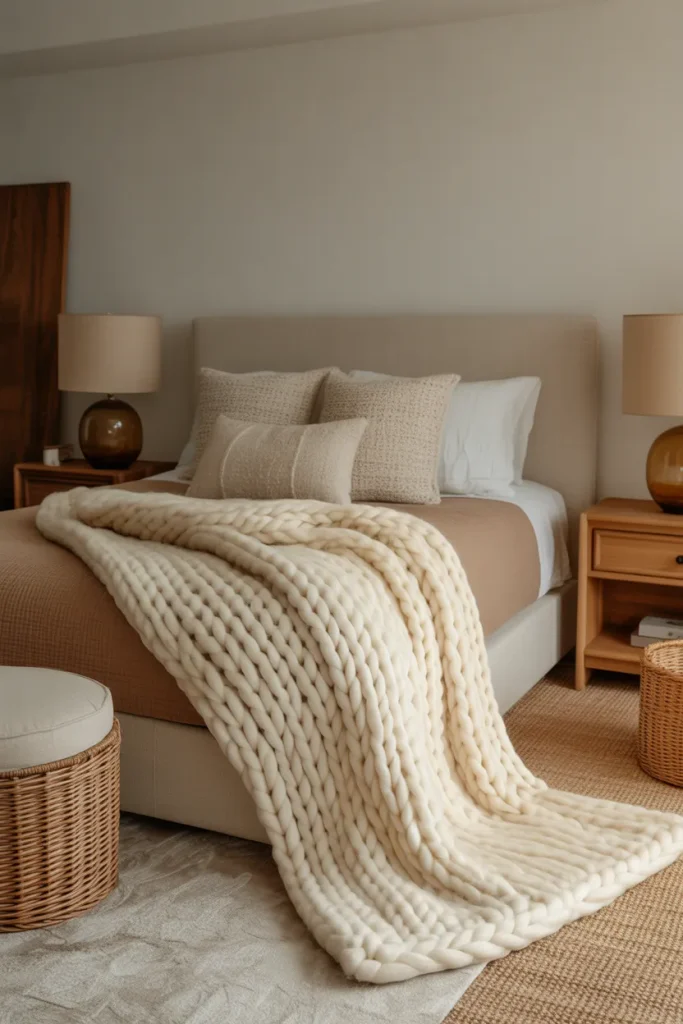
- Choose one substantial throw with a visible knit, boucle, fleece, or woven texture.
- Drape it loosely across the lower corner of the bed.
- Repeat one throw color in a pillow or nearby accent.
- Mix textures while keeping the overall palette restrained.
- Wash and rotate blankets regularly to keep them fresh.
Too many blankets can make bedtime inconvenient, so keep the arrangement practical. A single textured throw creates depth without turning the bed into a pile of fabric. For everyday comfort, leave enough room to sit, read, or stretch without moving several layers first.
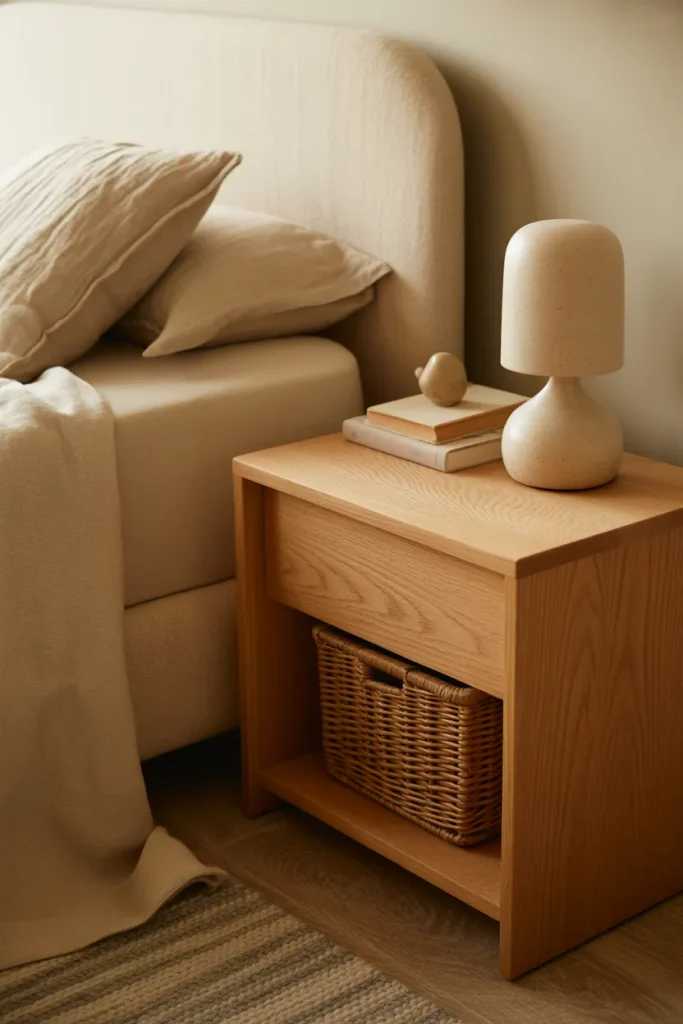
Wooden Bedside Tables
Quick Tip:
Choose bedside tables that provide enough surface space for your lamp and everyday essentials. A drawer or lower shelf is useful for hiding chargers, reading glasses, and other small items.
Wood brings natural warmth that painted furniture sometimes lacks, especially beside pale bedding and neutral walls. Choose tables with visible grain and simple shapes, then keep the surfaces functional rather than crowded. I’ve noticed that one lamp, a small book stack, and a tiny dish are often enough to create a polished bedside arrangement.
AFTER: A compact chair, small table, and focused reading light turn the forgotten corner into a useful retreat. Keep the furniture proportional to the available floor area so the nook feels comfortable without blocking walkways.
A reading corner adds another layer of comfort beyond the bed itself. Look for a chair with supportive cushioning and place a small lamp within easy reach. I’ve noticed that a narrow side table is usually enough for a book, drink, and reading glasses, so there is no need for bulky storage.
Blackout Bedroom Shades
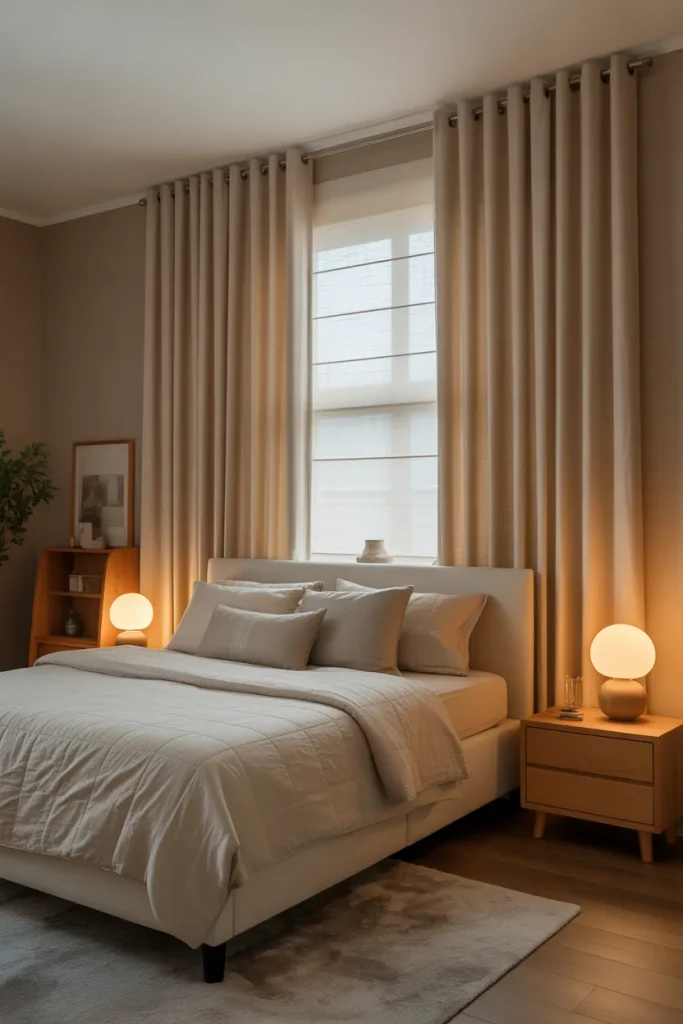
Cost: Medium | Time: One afternoon | Skill Level: Beginner
Best For: Light sleepers and bright rooms | Works In: Bedrooms with large windows
Result: Better light control and a darker nighttime setting
Window coverings affect both comfort and atmosphere, especially in bedrooms that receive strong morning or street light. Choose blackout-lined curtains in warm neutrals and hang them slightly wider than the window. This helps block light around the edges while making the window area feel softer and more substantial.
Soft Bedside Sconces
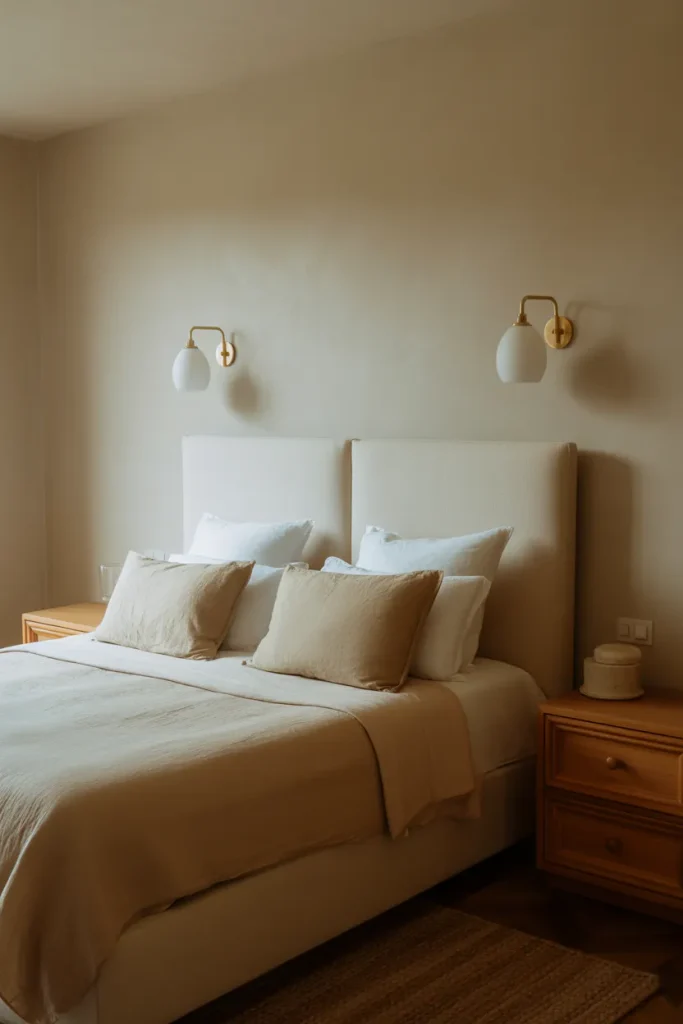
Good lighting near the bed starts with smart placement. Mount sconces slightly above eye level when sitting in bed, leaving enough room for reading without creating glare. Choose adjustable or directional fixtures if possible, especially when both people sharing the room have different nighttime routines.
Warm metal finishes such as brass or aged bronze pair naturally with cream, beige, and wood tones. I’ve noticed that wall-mounted lighting also keeps small nightstands less crowded because the lamp no longer needs valuable surface space. Add a dimmer when the fixture supports one for greater control.
Cozy Window Seat
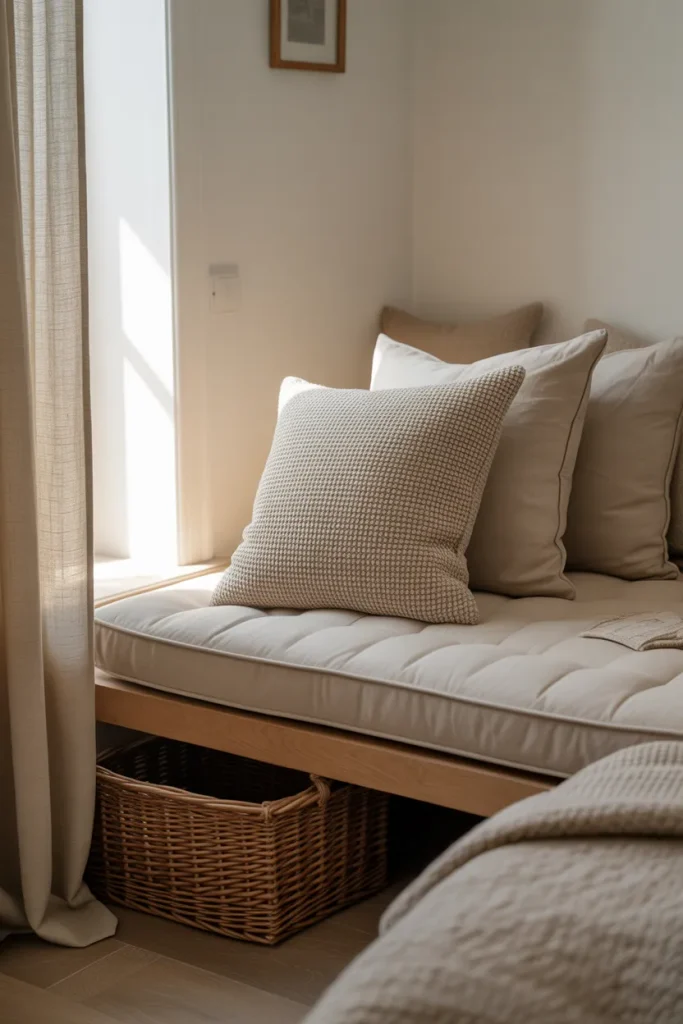
- Choose the cushion: Use a firm upholstered cushion that fits the full width of the seat.
- Layer textiles: Add two or three pillows in linen, cotton, or boucle for comfortable support.
- Use the space below: Store baskets, books, or extra blankets underneath the bench.
- Add focused lighting: Position a small floor lamp nearby if you use the seat after sunset.
- Keep access clear: Avoid placing furniture directly in front of the window seat.
A window seat gives an unused edge of the bedroom a clear purpose. Keep the palette connected to your bedding so the nook feels like part of the same design. For small rooms, built-in seating can provide both a comfortable retreat and valuable hidden storage without taking up much additional floor area.
Arched Floor Mirror
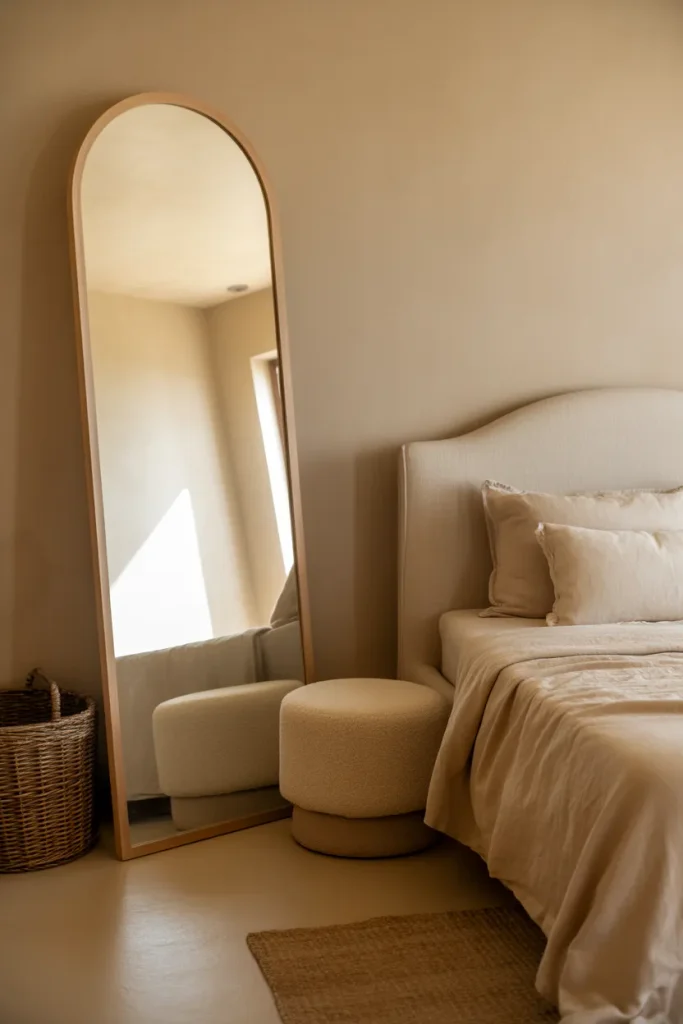
- Pick the right shape: An arched mirror adds a softer visual line than a sharp rectangular design.
- Choose a warm frame: Oak, walnut, or natural wood works well with neutral bedding and woven accents.
- Place it near light: Position the mirror where it can reflect daylight without creating harsh glare.
- Keep the area simple: Leave enough open space around it so the mirror remains a useful focal point.
A floor mirror can make a bedroom feel brighter while giving you a practical dressing spot. Lean it securely against a wall or use an anchored design for added stability. In smaller rooms, placing it opposite a window can help distribute natural light and create a greater sense of openness.
CONCLUSION
Creating a comfortable bedroom does not require a major makeover. The ideas throughout this guide show how thoughtful lighting, soft fabrics, warm colors, natural materials, and practical styling can create a space that feels genuinely relaxing.
Use these Cozy Bedroom Ideas as inspiration, then choose the changes that make sense for your room and routine. Start with one small update, such as a textured throw, warmer lamp, or plush rug, and build from there. I’ve seen how small changes like these can completely shift the way a space feels. Save this post on Pinterest, try your favorite ideas, and share it with someone planning a cozy bedroom refresh.