21 Narrow Hallway Decorating Ideas to Try Right Now
A narrow hallway can feel cramped, dark, and surprisingly difficult to decorate. The right details can change that without sacrificing valuable walking space.
These Narrow Hallway Decorating Ideas focus on practical ways to make a tight corridor feel brighter, more organized, and more inviting. From slim consoles and oversized mirrors to layered lighting, vertical storage, runners, and carefully chosen colors, each idea is designed for real homes where every inch matters.
You do not need a major renovation or a large decorating budget to create a hallway you enjoy walking through. In my experience, small changes often have the biggest visual impact in narrow spaces. A better light source, a useful wall ledge, or a well-sized mirror can completely shift how the corridor feels. As you explore these ideas, look for the solutions that match your home’s layout, lighting, and everyday needs.
Slim Console Table
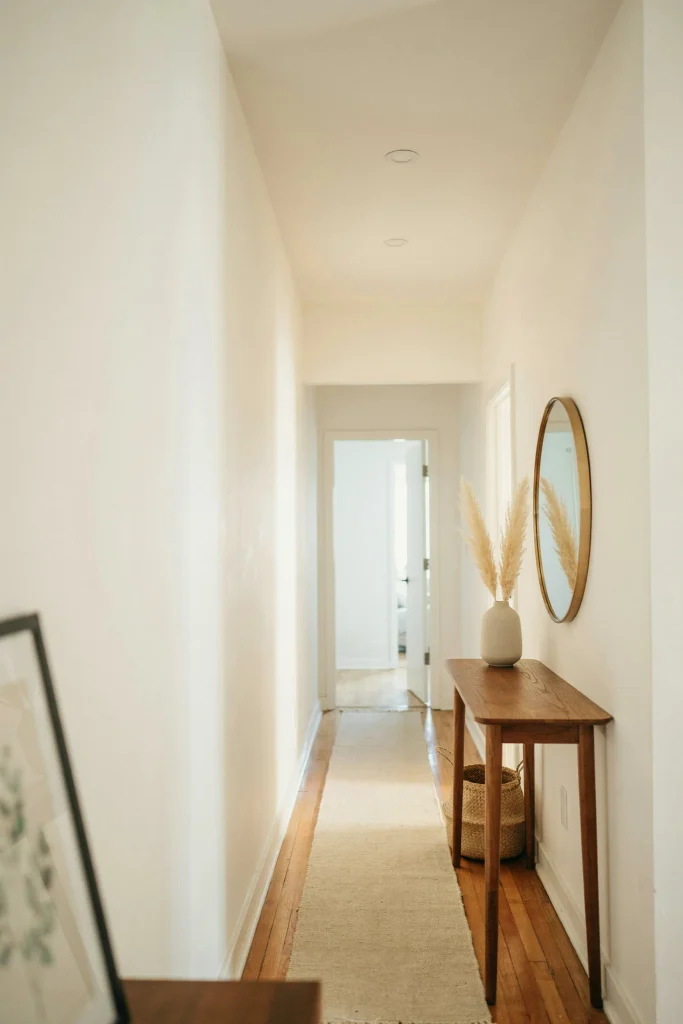
A slim console gives an empty hallway a useful purpose without stealing precious walking space. Choose a table around 8 to 12 inches deep, then keep the surface lightly styled with one lamp, a small tray, or a single vase. The goal is function without creating a visual obstacle.
For extra storage, look for a console with one shallow drawer or an open lower shelf. Keep the floor underneath mostly clear so the passage still feels open. In my experience, furniture with visible legs works especially well because more floor remains visible, making a tight corridor feel less crowded.
ALSO READ : Elegant & Luxury Halloween Decor Ideas
Oversized Wall Mirror
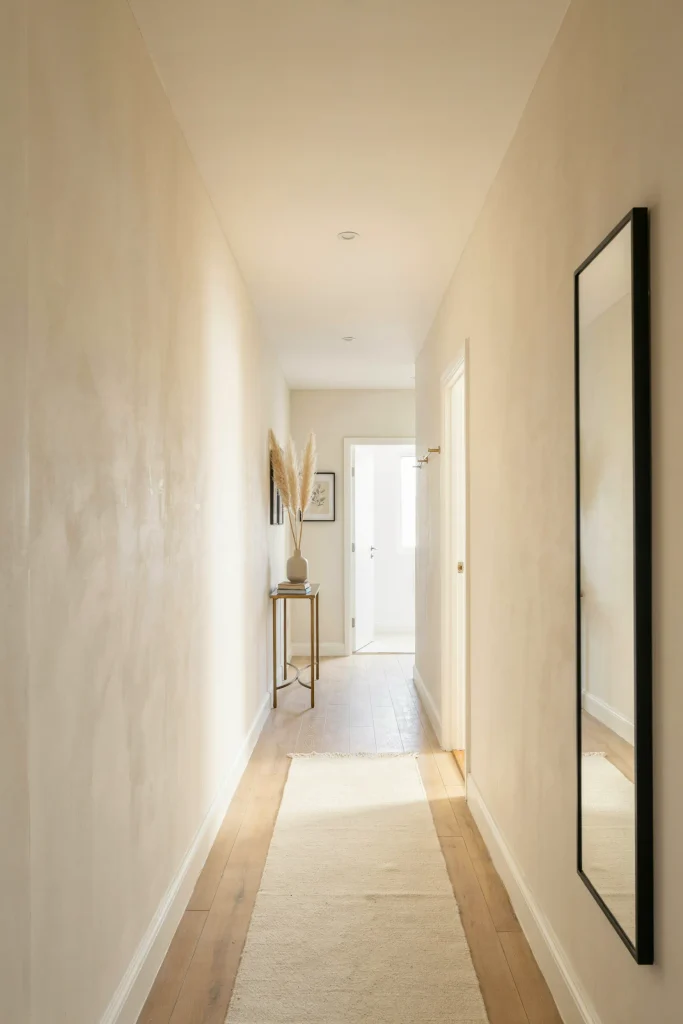
- Choose a tall mirror that draws the eye upward rather than a wide design that crowds the walls.
- Position it where it can reflect natural light from a nearby room or window.
- Leave several inches of breathing room around the frame instead of filling the wall edge to edge.
- Select a thin black, brass, oak, or brushed nickel frame that complements nearby finishes.
- Secure larger mirrors properly, especially in homes with children or pets.
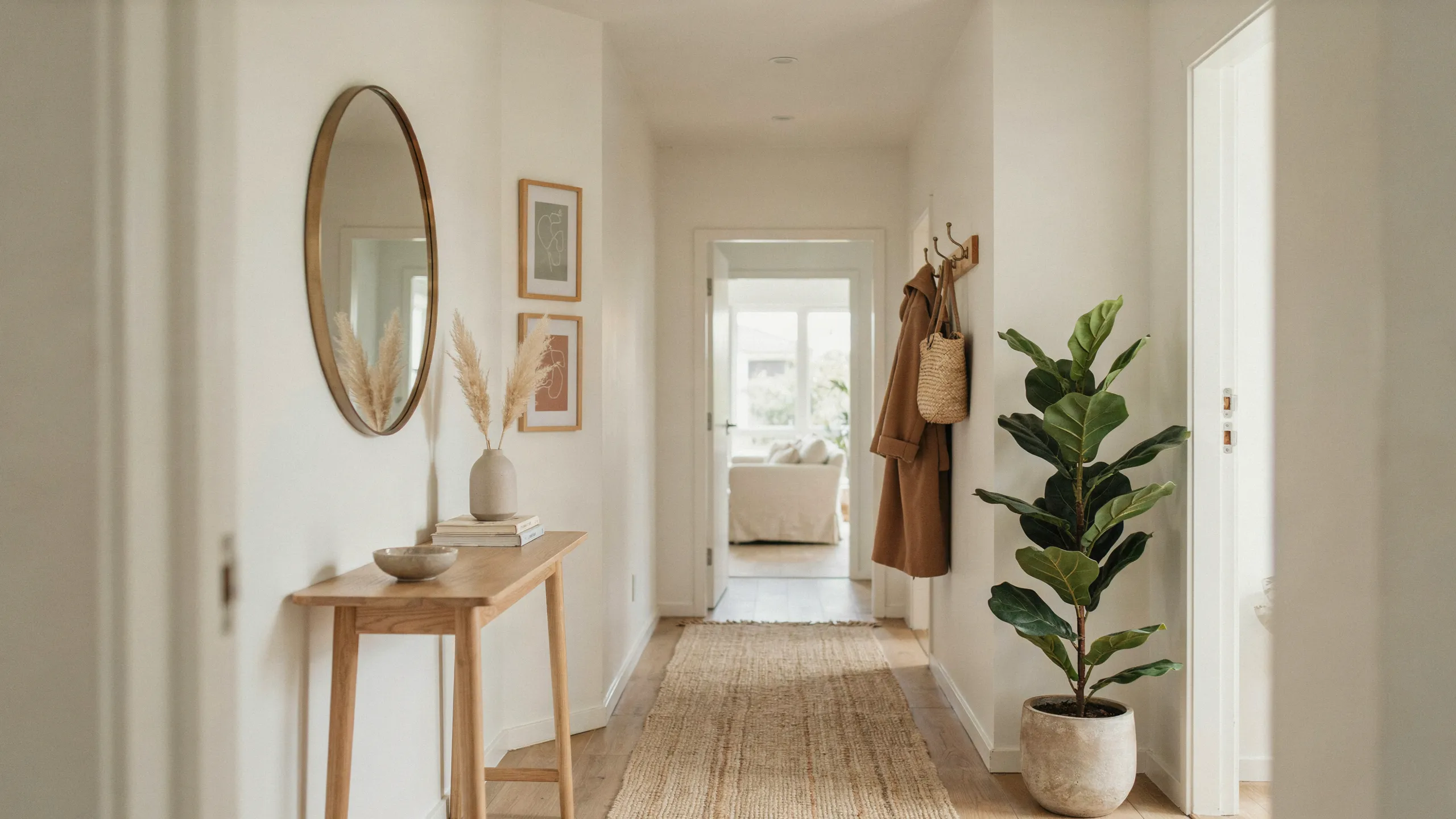
A well-placed mirror can make narrow hallway decorating ideas feel noticeably more spacious because it adds visual depth without taking floor space. A vertical shape also emphasizes ceiling height. For a softer look, pair the mirror with a slim runner and one small decorative accent rather than covering the surrounding wall.
Pinterest Account : HavenAndHue2
Soft Runner Rug
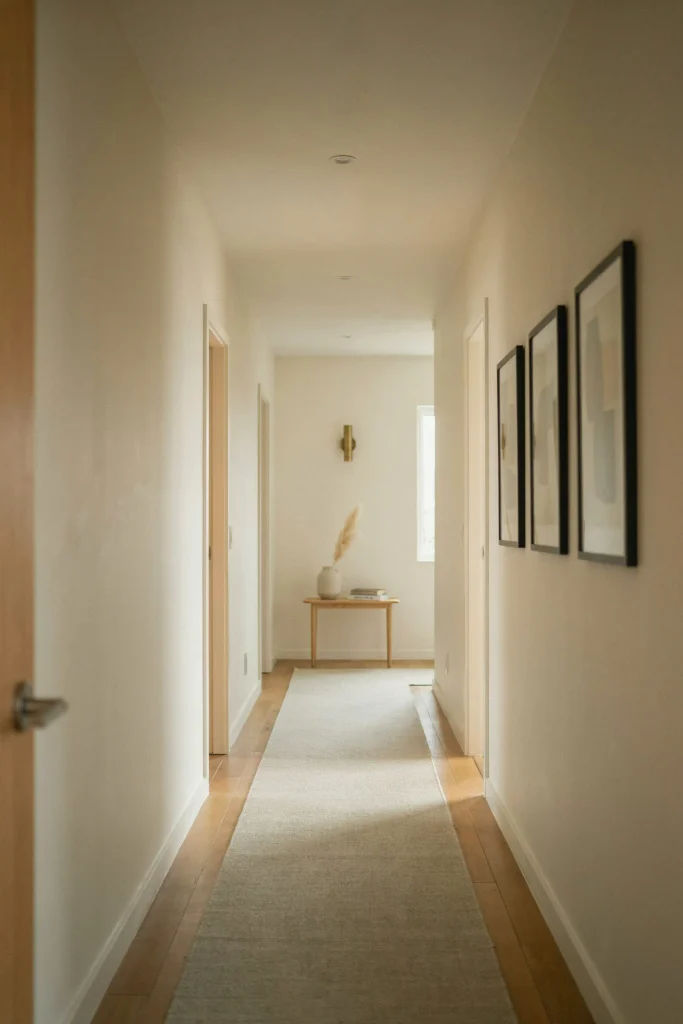
Quick Tip: Choose a runner that leaves visible flooring along both sides of the hallway. A gap of roughly 3 to 6 inches helps define the rug while keeping the passage visually open. Pick a low-pile design so doors can open freely.
A runner adds warmth, texture, and a gentle visual path through the corridor. For busy households, washable or stain-resistant materials are especially practical. Neutral stripes, subtle geometric patterns, and faded vintage motifs can hide everyday marks while adding personality without making the hallway feel narrower.
Wall-Mounted Ledge
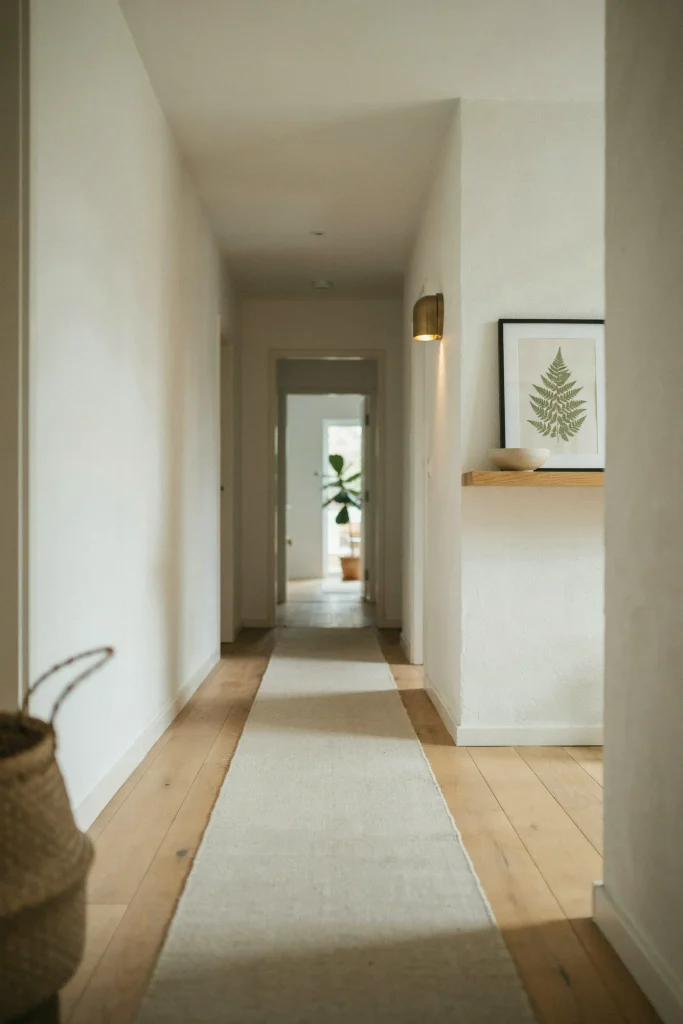
BEFORE: The hallway has an empty wall but little room for furniture. Keys, mail, and small everyday items tend to collect near the entrance, leaving the space looking unfinished.
AFTER: A slim wall ledge creates a useful landing spot without taking floor space. Keep it shallow and style it with only a tray, small vase, or framed print so the walkway stays open.
A floating ledge works especially well where even a slim console would feel intrusive. Choose a finish that matches the flooring or door hardware for a connected look. I’ve noticed that keeping the ledge nearly as visually light as the wall makes the hallway feel organized without adding bulk.
Vertical Coat Hooks
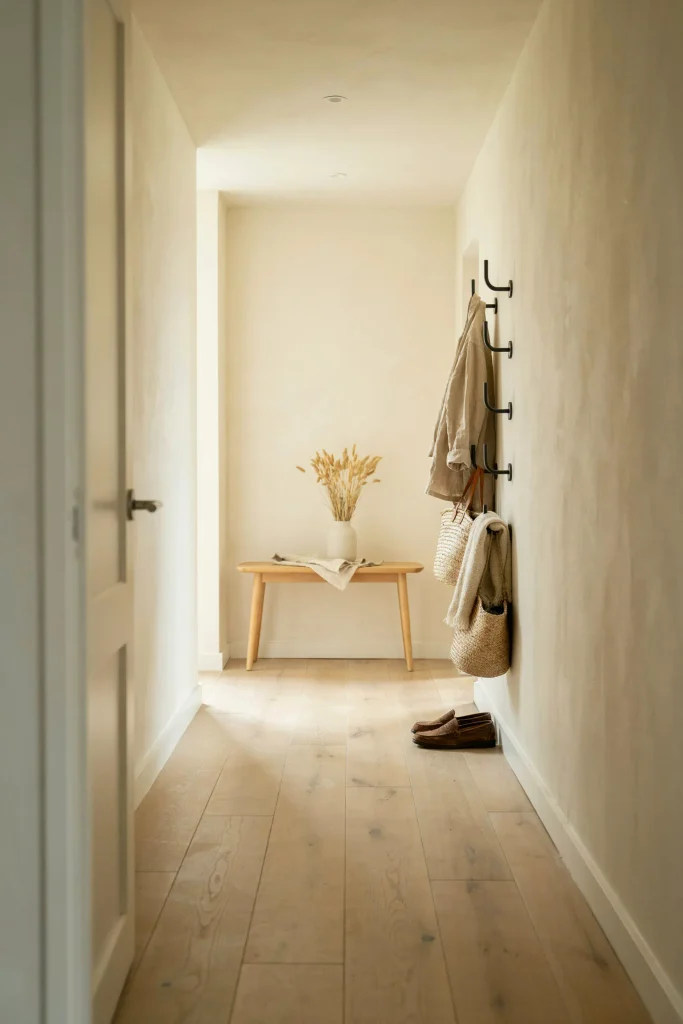
- Mark the placement: Choose one wall section that stays clear of door swings and other obstacles.
- Space the hooks: Leave enough room between hooks for coats and bags to hang without overlapping heavily.
- Add a second level: Place smaller hooks lower down for children, handbags, or frequently used accessories.
- Keep the floor clear: Pair the hooks with wall-mounted storage rather than a bulky coat stand.
- Edit regularly: Remove seasonal items so the hook rail does not become a permanent clutter zone.
Vertical storage keeps everyday belongings off the floor while making better use of unused wall height. For a family hallway, different hook heights can make the arrangement more practical for everyone. Choose sturdy hardware and install it into appropriate wall support, especially when the hooks will carry heavy coats or bags.
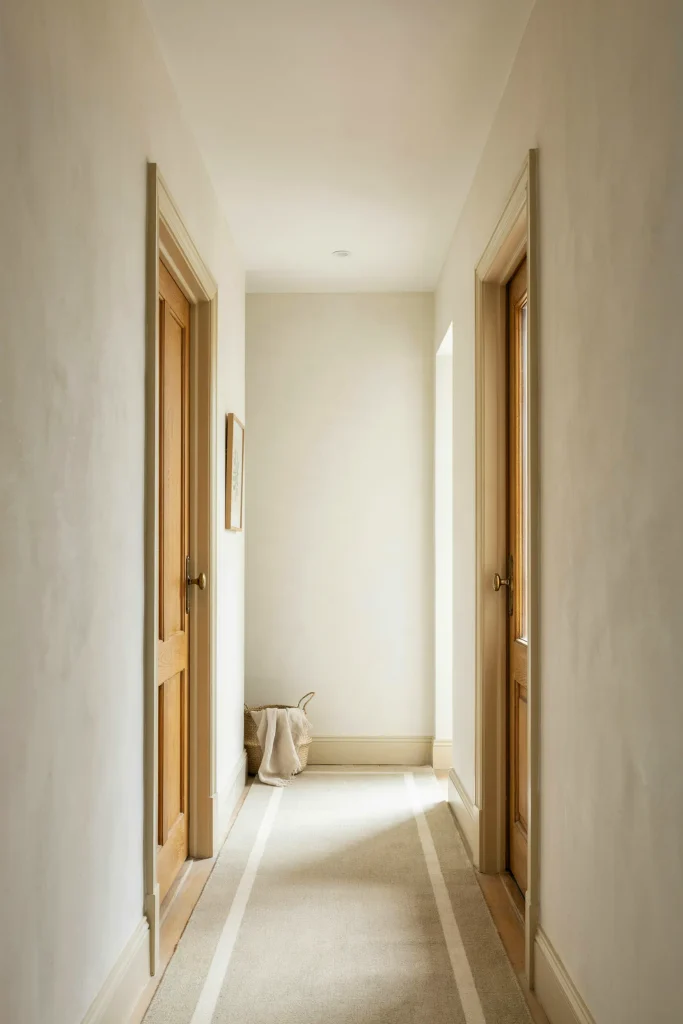
Painted Door Trim
| Comparison Point | Option A | Option B |
| Wall color | Warm neutral | Soft neutral |
| Trim finish | Same as wall | Contrasting color |
| Visual effect | Quiet and airy | More defined |
| Best for | Minimal spaces | Character-rich homes |
| Styling needs | Very little | Simple decor accents |
Painting the trim in a gentle contrasting shade can give a narrow corridor architectural definition without filling the walls with accessories. Keep the contrast controlled rather than extremely dark. Soft olive, muted taupe, warm gray, or creamy beige can add character while maintaining a calm visual flow.
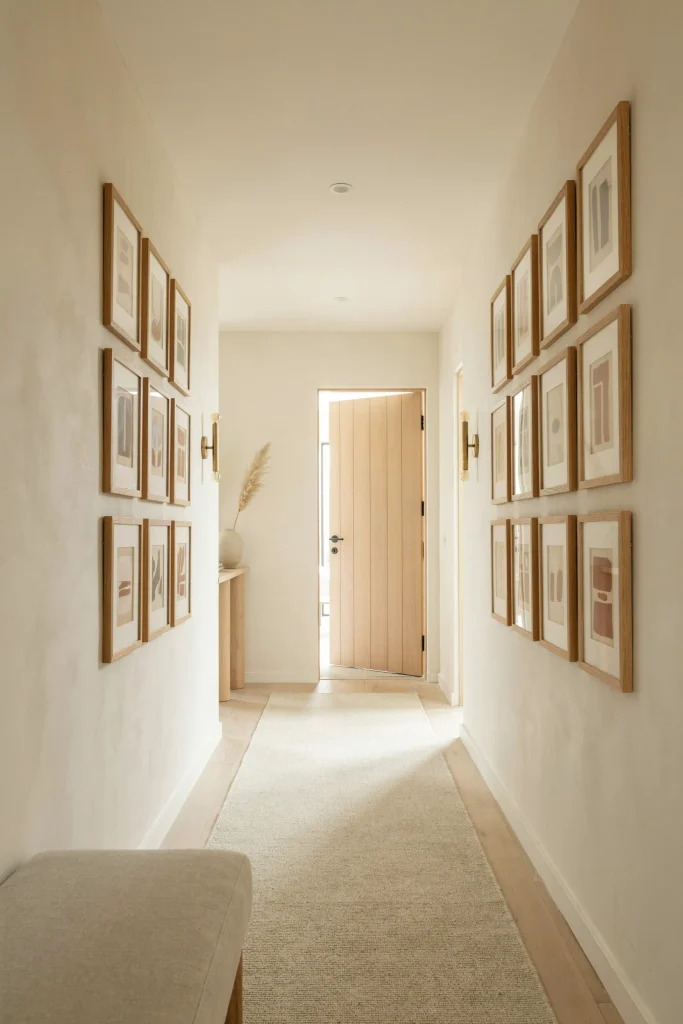
Gallery Frame Grid
DO:
- Choose frames with a consistent finish for a cohesive display.
- Keep artwork colors within two or three related tones.
- Measure the wall before drilling to maintain even spacing.
- Hang the center of the arrangement around comfortable eye level.
DON’T:
- Mix too many frame sizes without a clear layout.
- Push artwork tightly against door casings.
- Fill every available section of wall.
- Use bulky frames that project heavily into the walkway.
A compact gallery arrangement brings personality to blank walls while keeping the floor completely clear. For a polished result, lay the frames on the floor first and adjust the spacing before hanging them. Botanical prints, family photographs, abstract sketches, or simple line art can all work beautifully in a narrow passage.
Light-Colored Walls
Cost: Low | Time: One weekend | Skill Level: Beginner
Best For: Dark or windowless corridors
Works In: Rentals and owned homes
Result: Brighter, more open appearance
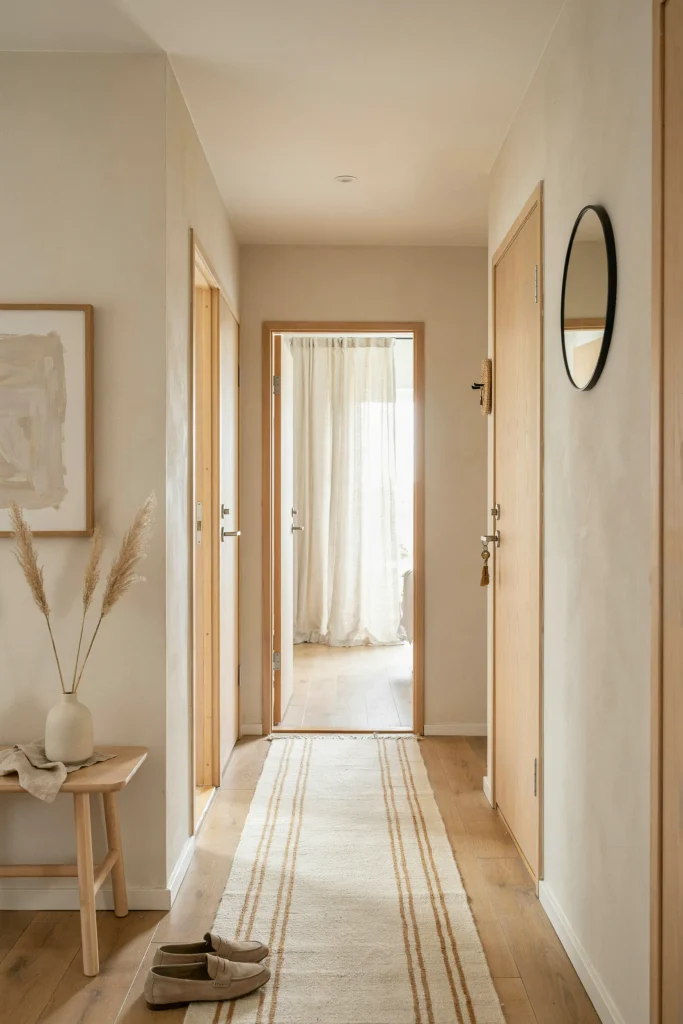
Lighter walls can help a tight hallway feel less enclosed by reflecting available light across the passage. Warm white, pale greige, soft beige, and muted cream are especially versatile choices. I’ve seen this work well in corridors that receive little daylight, particularly when the ceiling and trim are kept similarly light.
Ceiling Paint Contrast
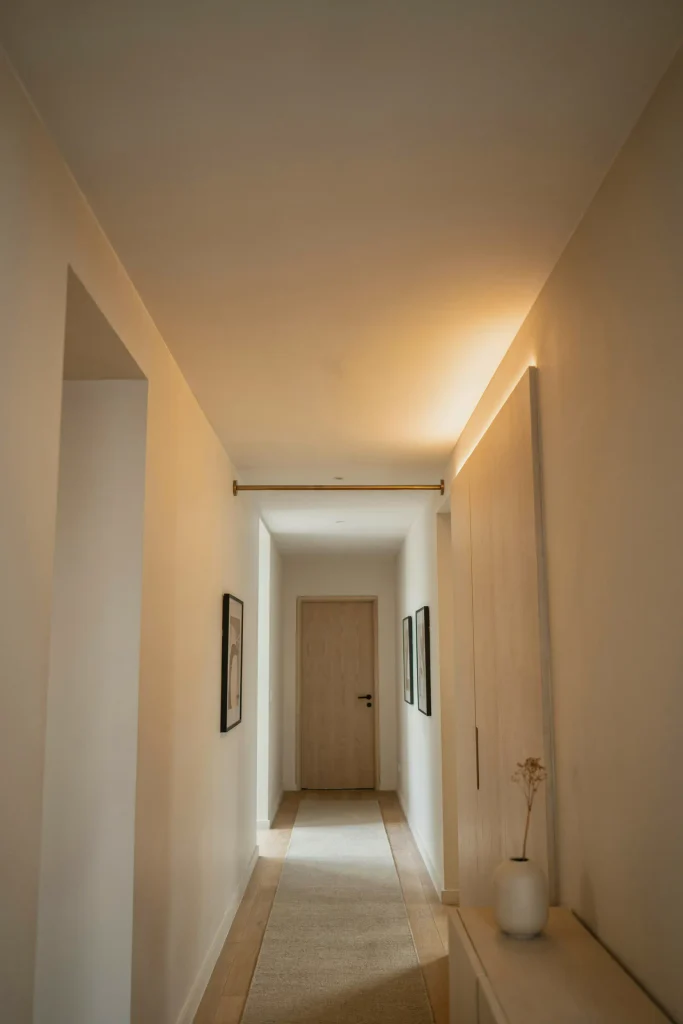
A narrow hallway gains unexpected character when the ceiling receives its own subtle color treatment. Instead of choosing a dramatic contrast, consider a shade one or two steps lighter or darker than the walls to create gentle architectural definition.
Keep the surrounding decor restrained so the ceiling remains part of the design rather than competing with it. This approach works particularly well in hallways with interesting molding, tall doors, or attractive architectural details. A warm neutral ceiling can also soften a stark white corridor while maintaining a bright, welcoming appearance.
Floating Shoe Cabinet
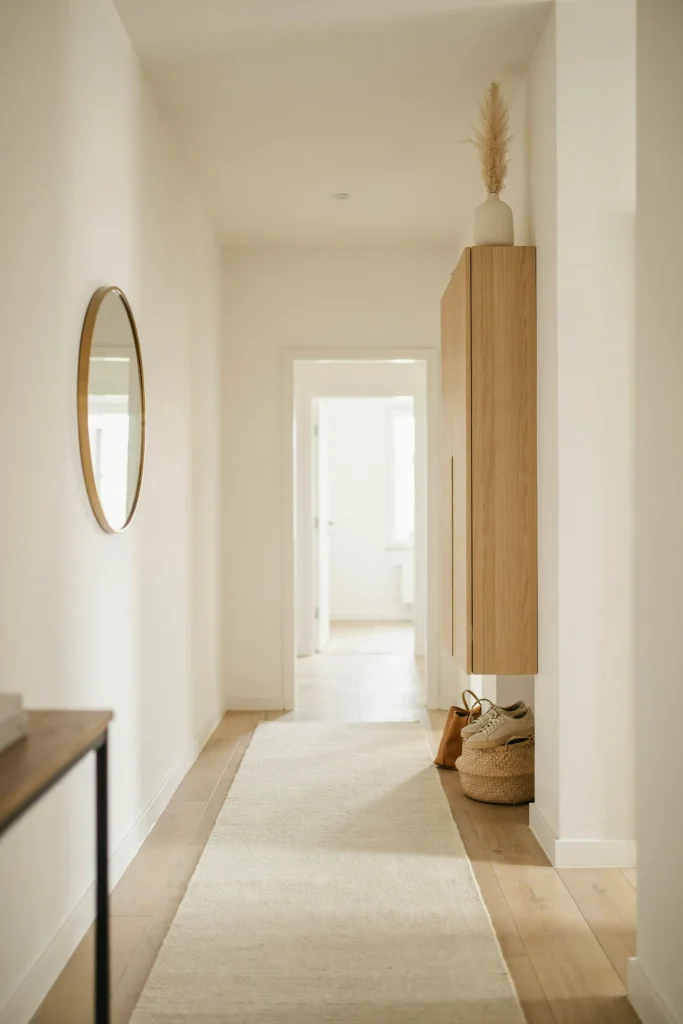
- Measure the available wall depth before choosing a cabinet.
- Select a wall-mounted model to keep the floor visually open.
- Store only frequently worn shoes near the entrance.
- Add a small tray on top for keys and sunglasses.
- Leave enough clearance for doors and comfortable walking.
A floating shoe cabinet solves a common entryway problem without introducing bulky furniture. The open space underneath keeps the flooring visible, which helps the corridor feel less crowded. For busy homes, assigning each shelf a specific purpose also makes daily tidying much faster and keeps shoes from spreading across the walkway.
Warm Wall Sconces
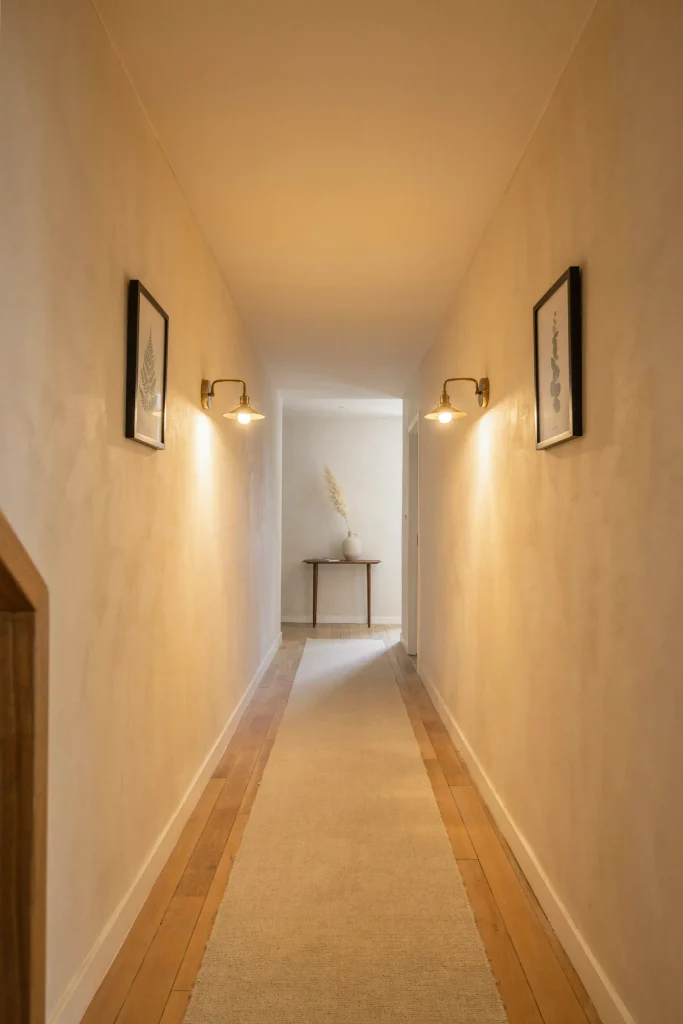
Quick Tip: Use slim sconces that sit close to the wall and choose warm bulbs around 2700K to create a comfortable glow. Place them where they will not interfere with artwork, door openings, or everyday movement.
Layered lighting makes a hallway feel considered rather than purely functional. Wall sconces are particularly useful when the corridor has limited natural light because they spread illumination along the walls instead of concentrating it in one ceiling fixture. In my experience, matching the metal finish to door handles or nearby hardware creates an especially cohesive result.
Arched Mirror Accent
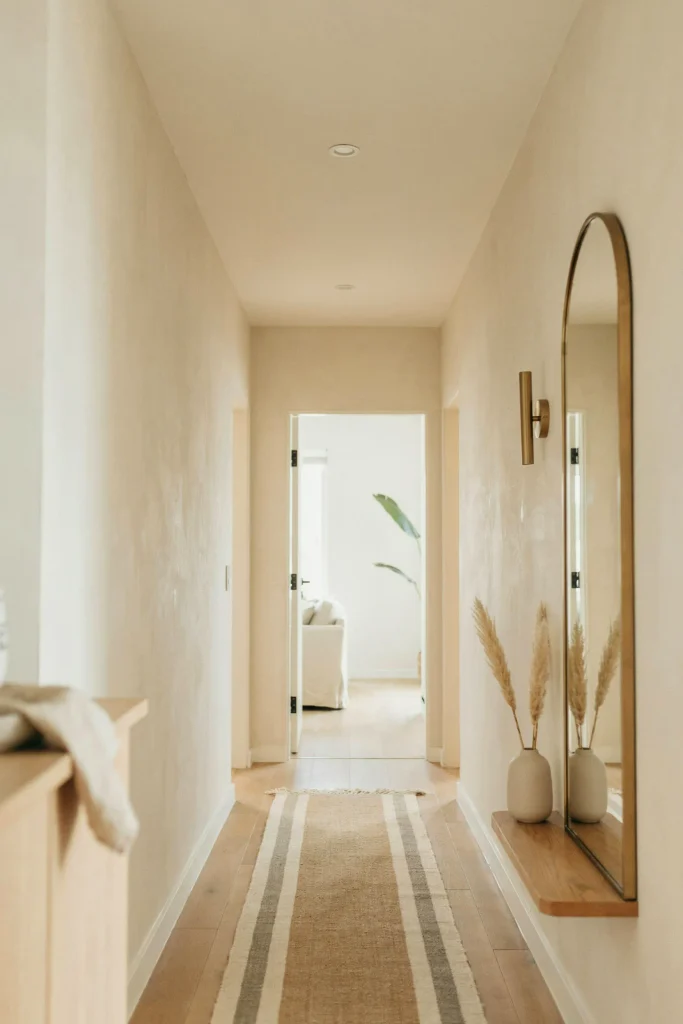
BEFORE: A long corridor can feel flat when the walls are bare and there is little visual variation. A standard rectangular mirror may also make the space feel overly structured.
AFTER: A tall arched mirror introduces a softer shape while reflecting light and nearby rooms. Its curved top breaks up straight architectural lines without requiring additional floor furniture.
Choose a mirror that is tall rather than extremely wide so it supports the hallway’s vertical proportions. Position it where the reflection shows something attractive, such as a plant, artwork, or bright doorway. The reflection matters just as much as the frame, so check the view from several angles before fixing it securely.
Vertical Slat Paneling
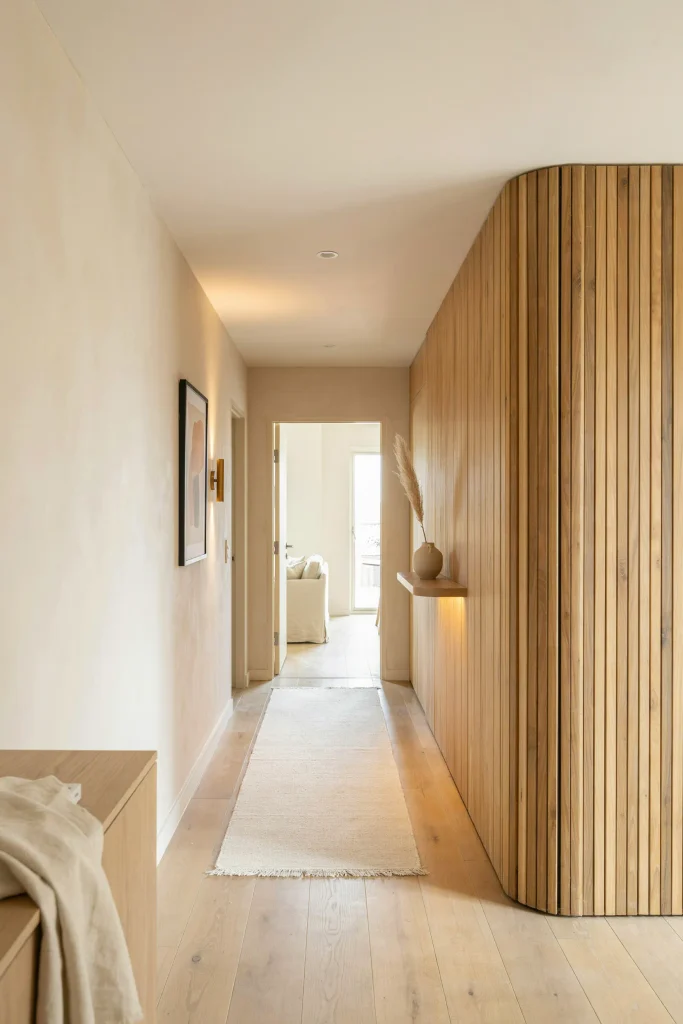
- Choose one wall: Select the longest uninterrupted wall so the vertical lines create a clear visual direction.
- Measure carefully: Plan the panel width and spacing before installation to avoid awkward cuts around doors.
- Keep the finish light: Natural oak, painted cream, or soft greige keeps the corridor visually open.
- Limit accessories: Let the paneling provide texture instead of covering it with heavy decor.
Vertical lines can make a narrow passage feel taller while adding architectural interest without requiring furniture. Light wood is especially useful for warm, modern interiors because it introduces texture without creating a heavy visual block. For a simpler update, consider removable slat-style panels or narrow trim strips rather than a full renovation.
Built-In Storage Nook
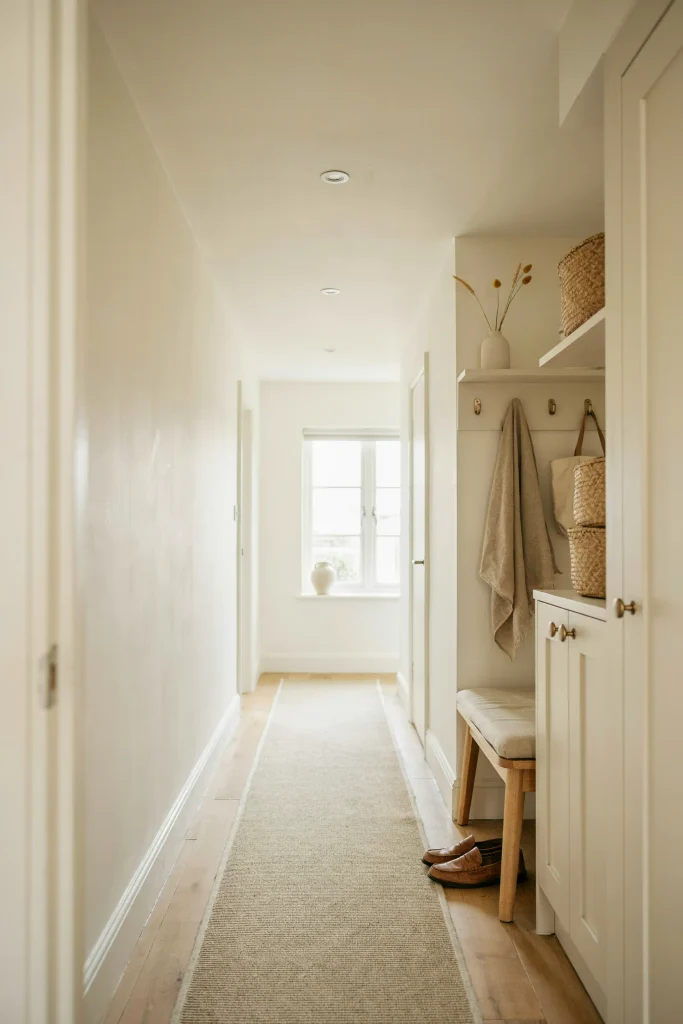
| Comparison Point | Option A | Option B |
| Storage style | Open cubbies | Closed cabinets |
| Visual feel | Casual and accessible | Clean and concealed |
| Best for | Frequently used items | Reducing visible clutter |
| Styling | Baskets and hooks | Minimal accessories |
| Maintenance | Easy access | Easier visual tidiness |
A shallow built-in can turn an awkward section of hallway into useful storage without narrowing the walking route. Keep the unit no deeper than necessary for the items it holds. Closed doors work well for visual calm, while a small open niche can display one attractive object or provide quick access to daily essentials.
Contrasting Door Color
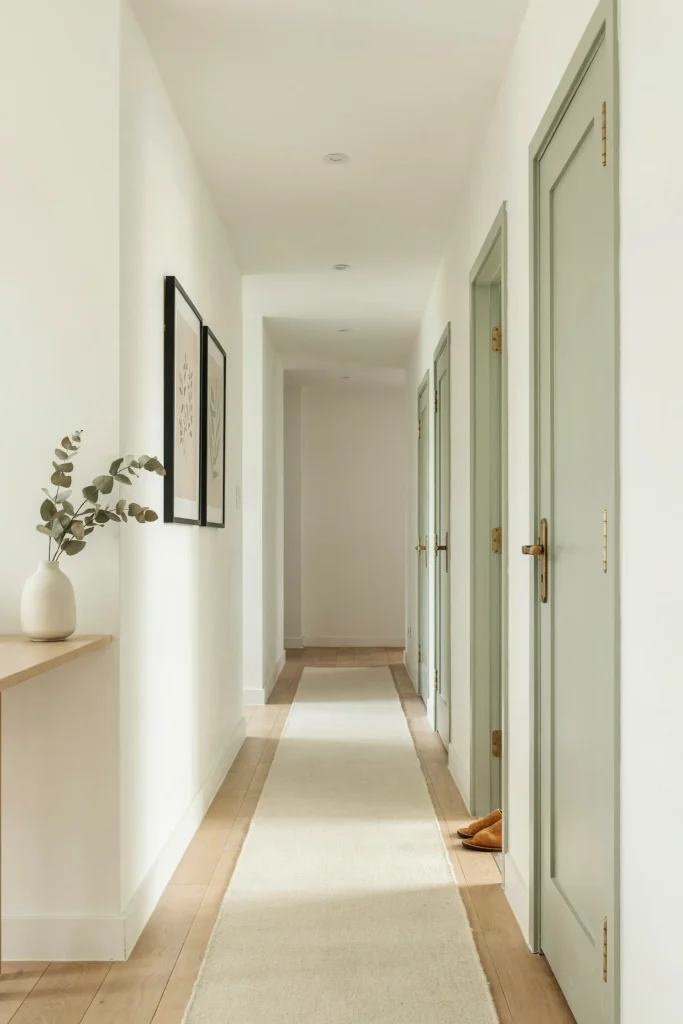
DO:
- Pick one consistent accent color for all visible doors.
- Use a durable satin or eggshell finish for frequently touched surfaces.
- Match the color to existing artwork, rugs, or upholstery nearby.
- Test a sample under both daylight and artificial lighting.
DON’T:
- Choose a color without checking how it looks beside the flooring.
- Paint only one door if the remaining doors create visual imbalance.
- Use an overly glossy finish that highlights every surface mark.
- Ignore door hardware when selecting the accent shade.
A colored door can give a long corridor rhythm and personality without adding another piece of furniture. Muted sage, dusty blue, warm taupe, and deep charcoal are useful starting points. If the hallway is especially dark, keep the walls and ceiling light so the painted doors become defined accents rather than making the passage feel enclosed.
Slim Picture Ledge
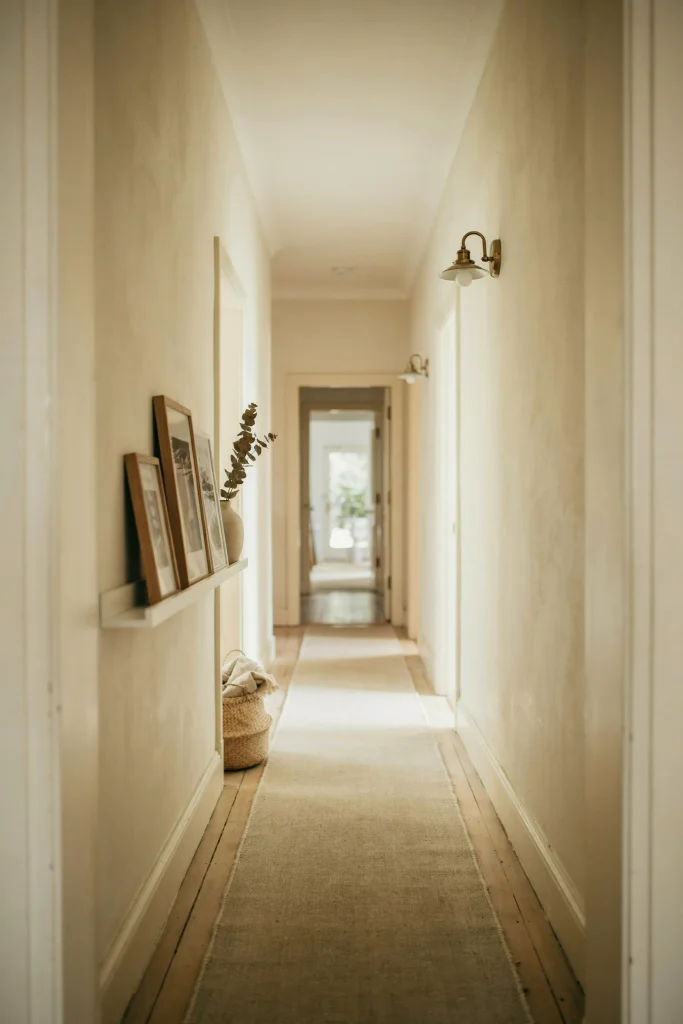
Cost: Low to moderate | Time: One afternoon | Skill Level: Beginner
Best For: Renters and small hallways
Works In: Minimal and modern interiors
Result: Flexible wall display without floor clutter
A picture ledge gives you an easy way to refresh hallway artwork without repeatedly drilling new holes. Layer two or three frames with different heights, then add one small decorative object for depth. Keep the ledge shallow and the display restrained so the wall remains visually light.
Tall Indoor Plant
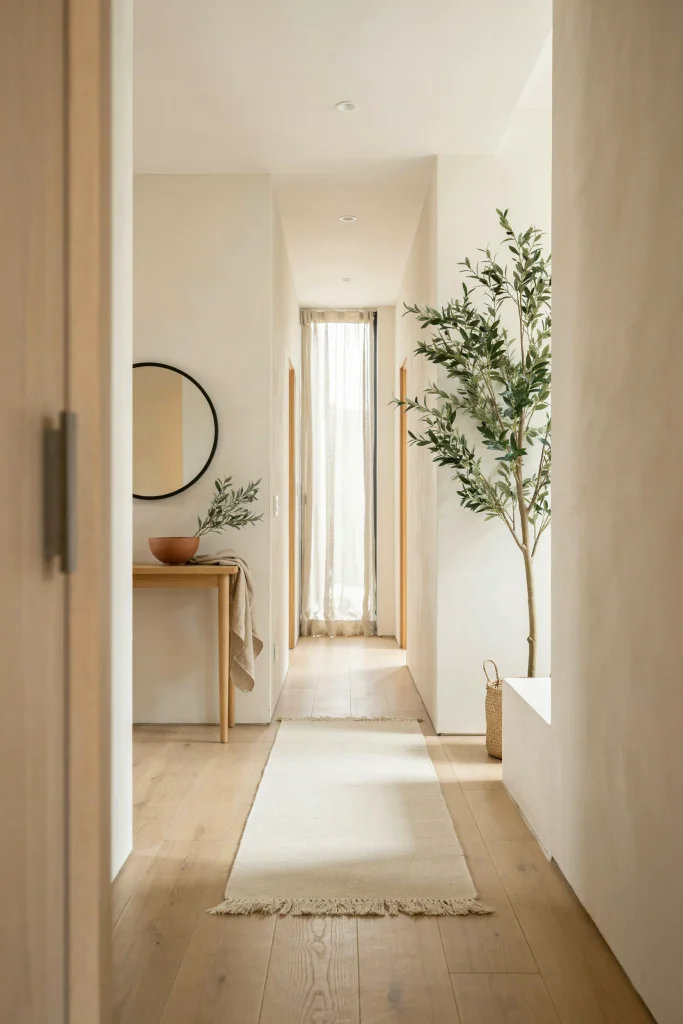
A single tall plant can soften the straight lines of a corridor without requiring a collection of accessories. Choose a narrow-growing variety and place it in a slim planter near the end of the hallway or in an unused corner.
Keep leaves away from door openings and the main walking path. For darker corridors, choose a shade-tolerant plant or use a realistic high-quality artificial option. I’ve noticed that one substantial plant often feels calmer than several small pots competing for limited space.
Layered Lighting
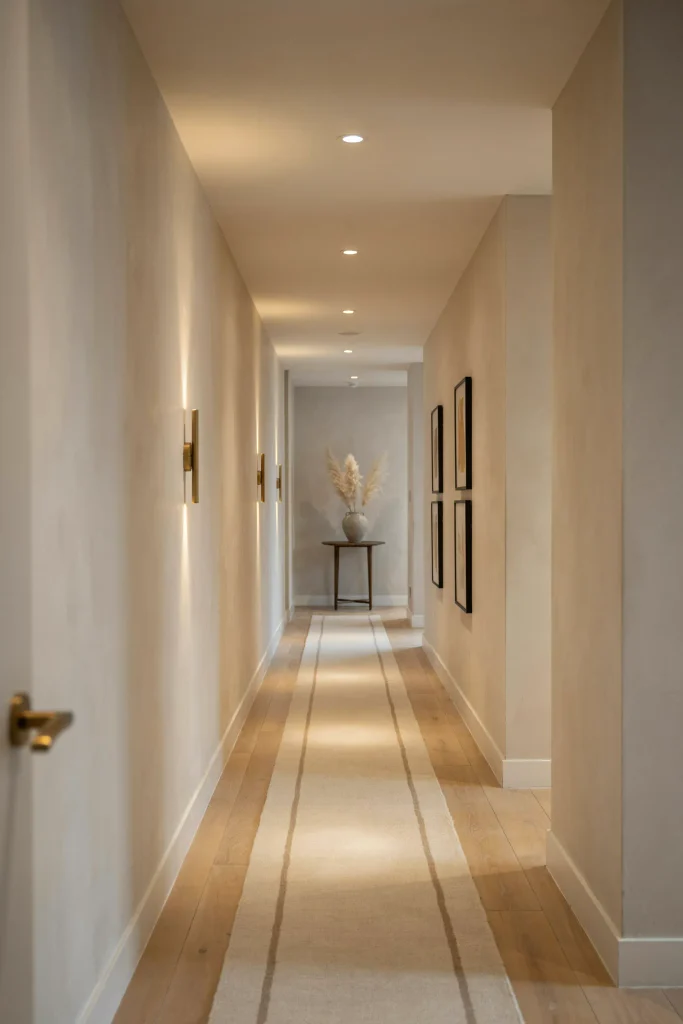
- Start overhead: Use a compact flush-mount fixture for general illumination without lowering the visual ceiling height.
- Add wall light: Place slim sconces along longer sections to spread brightness evenly.
- Warm the bulbs: Choose warm white lighting around 2700K for a comfortable residential atmosphere.
- Highlight details: Aim light toward artwork, mirrors, or textured walls where practical.
- Keep controls convenient: Position switches near entrances so the corridor is easy to light at night.
Layered lighting is especially useful for hallways that change throughout the day. Overhead lighting handles everyday visibility, while wall fixtures add softer evening illumination. The combination also helps decorative details stand out without relying on excessive accessories. For renters, plug-in sconces can provide a similar effect without permanent electrical work.
Decorative Wall Hooks
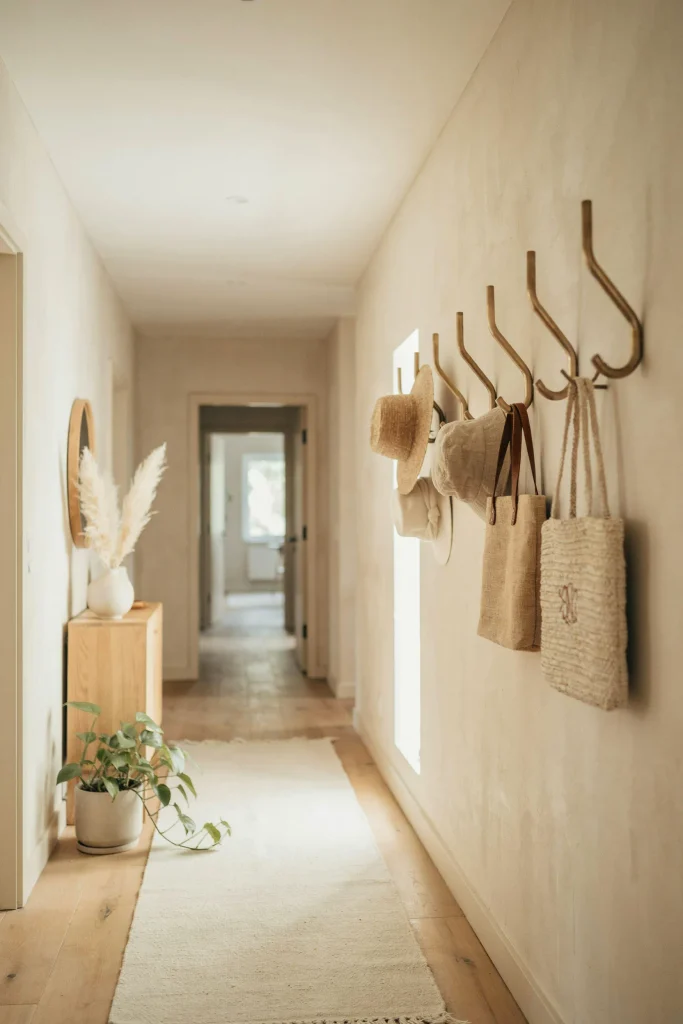
Quick Tip: Treat decorative hooks as both storage and wall decor. Choose a small group in one finish, then hang only items used regularly so the arrangement stays intentional rather than becoming a clutter collection.
Hooks are especially practical near an entry door where coats, bags, keys, and hats need a quick drop zone. Mount them at comfortable heights and leave enough space between pieces for easy access. Sculptural wood, ceramic, or metal hooks can add personality while using almost no floor space.
Narrow Bench Seat
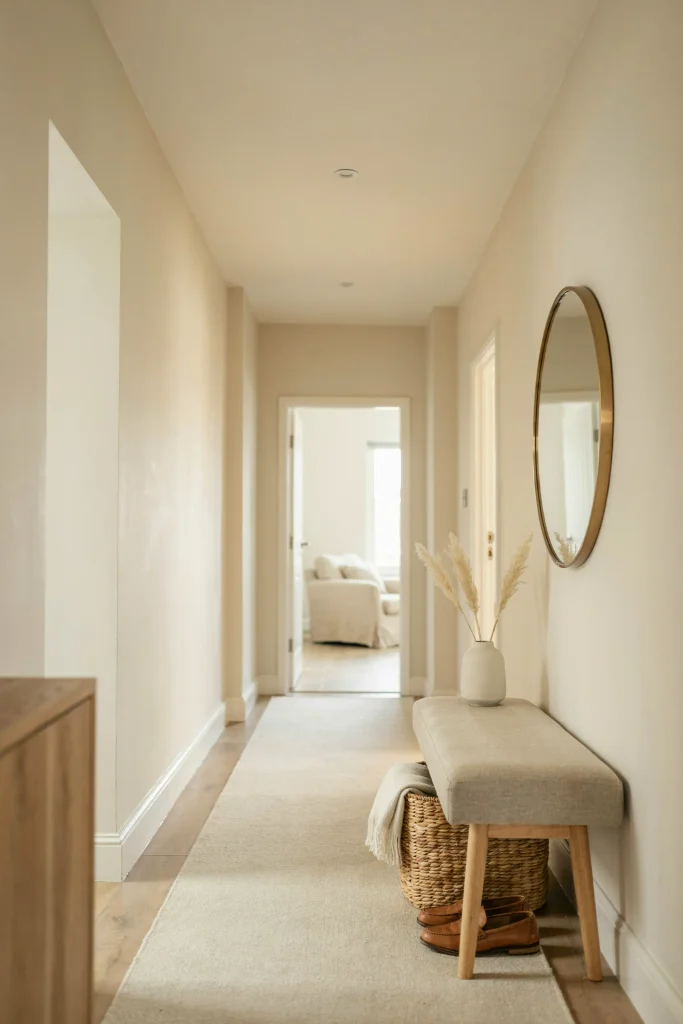
Cost: Moderate | Time: One afternoon | Skill Level: Beginner
Best For: Hallways near entry doors
Works In: Homes with limited floor space
Result: Seating plus compact storage
A shallow bench can make an entry corridor more useful without requiring a full-sized seating area. Look for a design that leaves comfortable walking clearance and has an open base for baskets or shoes. A light fabric, natural wood, or slim upholstered profile keeps the furniture from visually weighing down the hallway.
Layered Neutral Textures
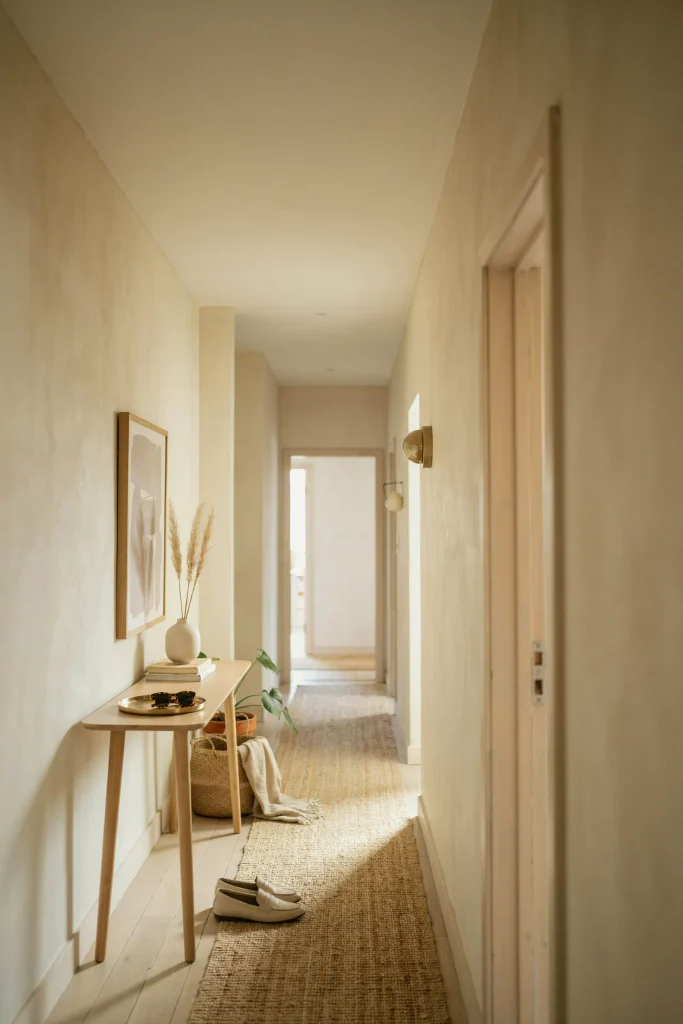
Neutral decorating does not have to feel plain. Combine several subtle textures, such as linen artwork, woven baskets, natural wood, boucle upholstery, and a softly patterned runner, while keeping the color palette closely related.
The key is to vary texture rather than adding more objects. A textured wall finish can provide depth, while a woven runner adds softness underfoot. For Narrow Hallway Decorating Ideas that feel calm and cohesive, repeat one or two materials already used elsewhere in the home. That visual connection helps the corridor feel like part of the overall interior.
CONCLUSION
A narrow hallway can become one of the most welcoming parts of your home with a few thoughtful changes. The best Narrow Hallway Decorating Ideas combine beauty with practical details, helping you add storage, light, texture, and personality without blocking the walkway.
Start with one simple update, such as a runner, mirror, wall hooks, or a fresh paint color, then build from there. I’ve seen how small changes like these can completely shift the way a space feels. Save this post on Pinterest for your next decorating project, try your favorite ideas, and share it with someone who could use inspiration for a tight hallway.