21 Kitchen Table Ideas for Studio Apartments to Shine
Small studio kitchens can feel cramped when every inch of floor space matters. But the right dining table can make your apartment feel more organized, stylish, and comfortable.
These Kitchen Table Ideas for Studio Apartments will help you create a practical eating area without sacrificing valuable room for cooking, relaxing, or entertaining. From space-saving folding tables and cozy built-in benches to elegant glass designs and charming bistro setups, there are options for different layouts, budgets, and decorating styles.
I’ve noticed that the most functional small spaces often rely on furniture that serves more than one purpose. A table that folds away, offers hidden storage, or fits neatly against a wall can make everyday routines much easier. Explore these inspiring ideas to find a setup that suits your space and makes even a tiny kitchen feel thoughtfully designed.
Round Pedestal Table
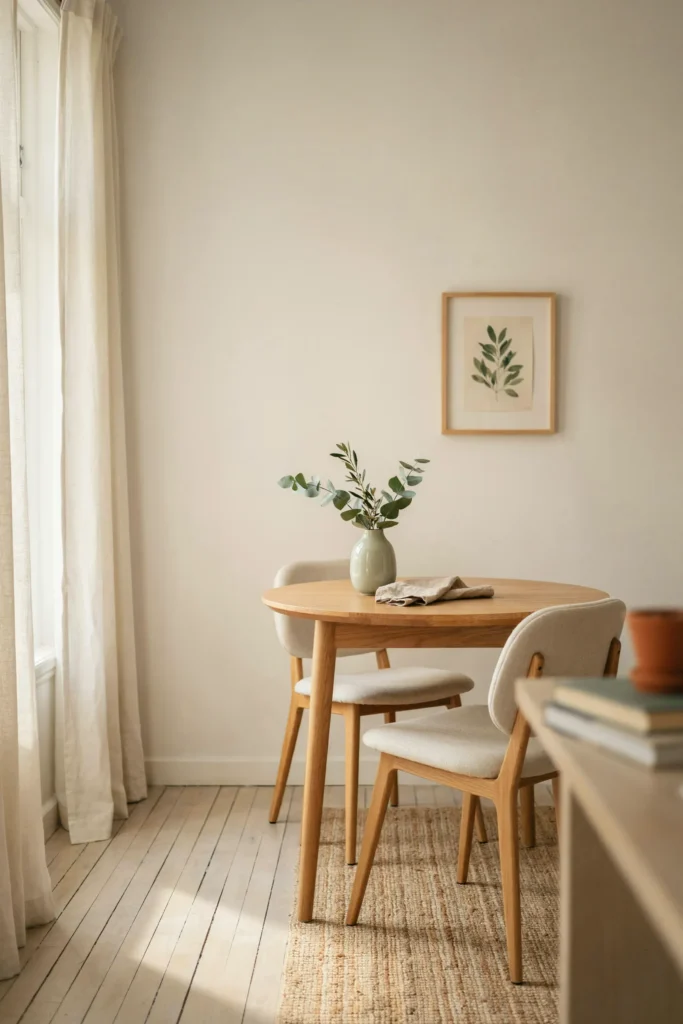
A round pedestal table makes a small kitchen feel more open without sacrificing everyday comfort. Its central base leaves extra room for legs and allows chairs to tuck neatly underneath when the meal is over. The curved edges also soften a room filled with straight cabinets, counters, and rectangular appliances.
For anyone exploring Kitchen Table Ideas for Studio Apartments, this shape is especially useful when the dining area sits beside a kitchen walkway. Choose a tabletop around 30 to 36 inches wide for two people, then measure the surrounding space before buying. Keeping the floor visible beneath the table helps the entire corner feel lighter.
ALSO READ : Witch Halloween Decor Ideas
Wall Side Dining Nook
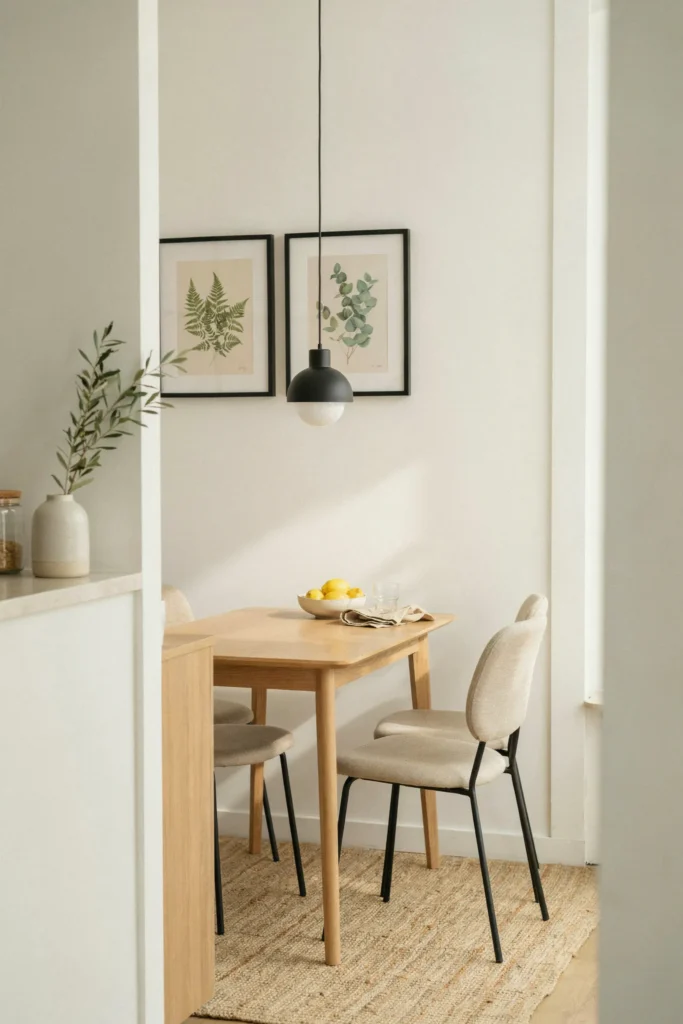
A dining table placed against the wall can reclaim precious floor space in a studio apartment. Instead of leaving a table floating in the middle of the room, position one long side against an empty wall and keep the chairs on the open side. This arrangement creates a defined eating area without blocking the kitchen entrance.
- Choose a narrow tabletop: Look for a depth of around 20 to 30 inches if you mainly eat simple meals.
- Keep the chairs lightweight: Slim legs and open backs help the corner look less crowded.
- Add vertical decoration: Hang one large print or two small frames above the table.
- Protect the wall: Use felt pads or chair bumpers to prevent marks.
I’ve noticed that wall-side arrangements work especially well in long, narrow studios where every step between the kitchen and living area matters. Leave enough clearance to pull out the chairs comfortably, and choose a finish that complements nearby cabinets for a more connected look.
Pinterest Account : HavenAndHue2
Fold Down Wall Table
Quick Tip:
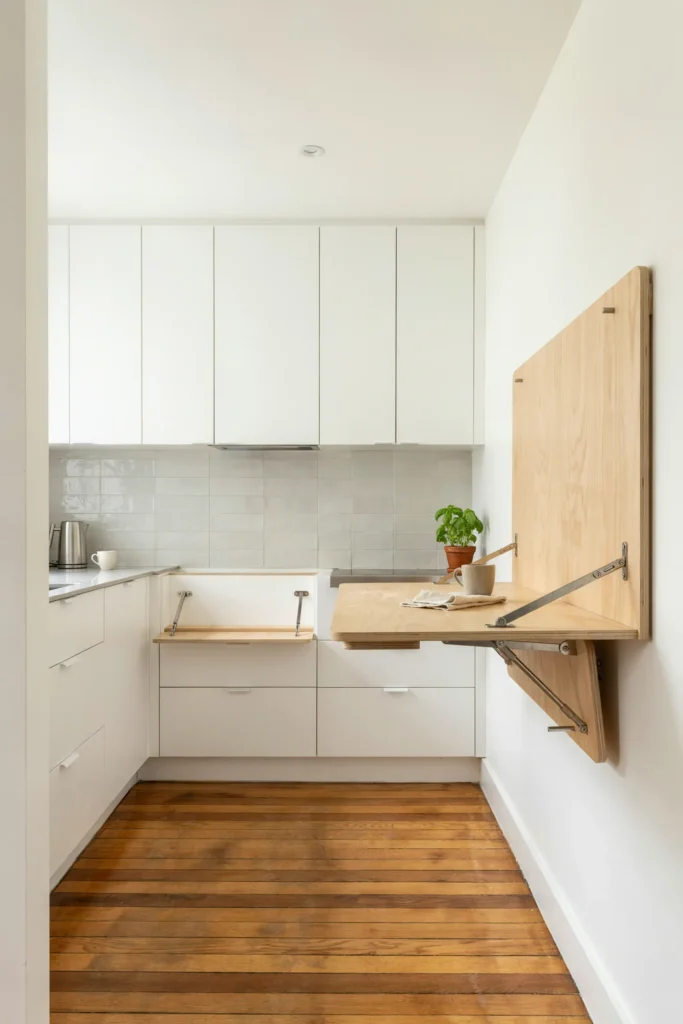
Choose a wall-mounted folding table with sturdy locking brackets and a tabletop deep enough for your usual meals. Before installation, check the wall construction, mounting hardware, and manufacturer’s weight limit. Keep the folded table clear of cabinet doors, electrical outlets, and walking routes.
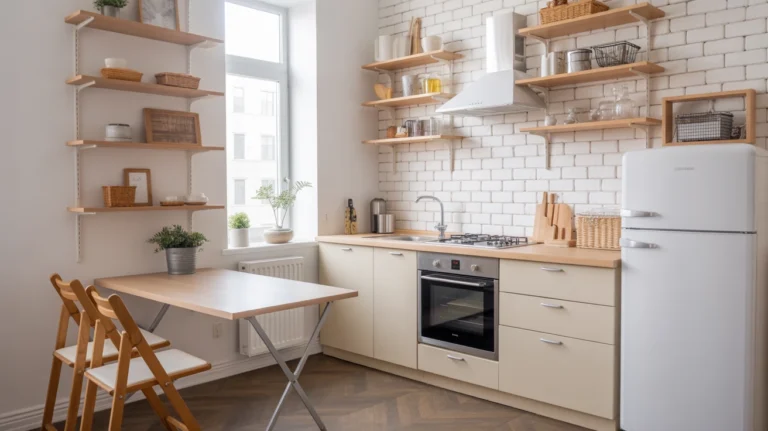
A fold-down surface gives you a dining spot when you need one and frees the floor when you don’t. It’s particularly helpful in studios where a table must share space with a work desk or sofa. Pair it with folding chairs that hang on wall hooks, and the entire setup can stay compact between meals.
Slim Rectangular Table
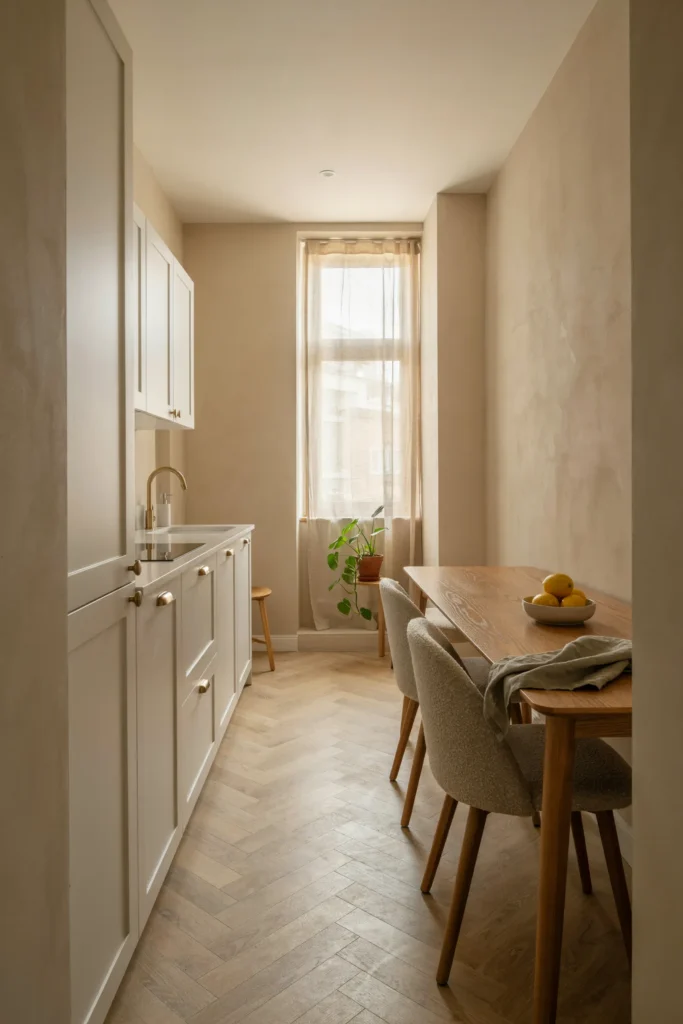
BEFORE
A bulky dining table can make a narrow studio kitchen feel cramped. Chairs may obstruct cabinet doors, and walking between the kitchen and living area becomes awkward.
AFTER
A slim rectangular table creates a practical dining surface while keeping the layout organized. Its straight edges sit neatly against a wall or parallel to the kitchen counter.
Choose a tabletop around 24 to 30 inches deep, depending on your available space. Measure the full chair footprint, not just the tabletop, before purchasing. Leave roughly 36 inches for comfortable movement where possible, especially along the main route between the kitchen and living area.
Drop Leaf Dining Table
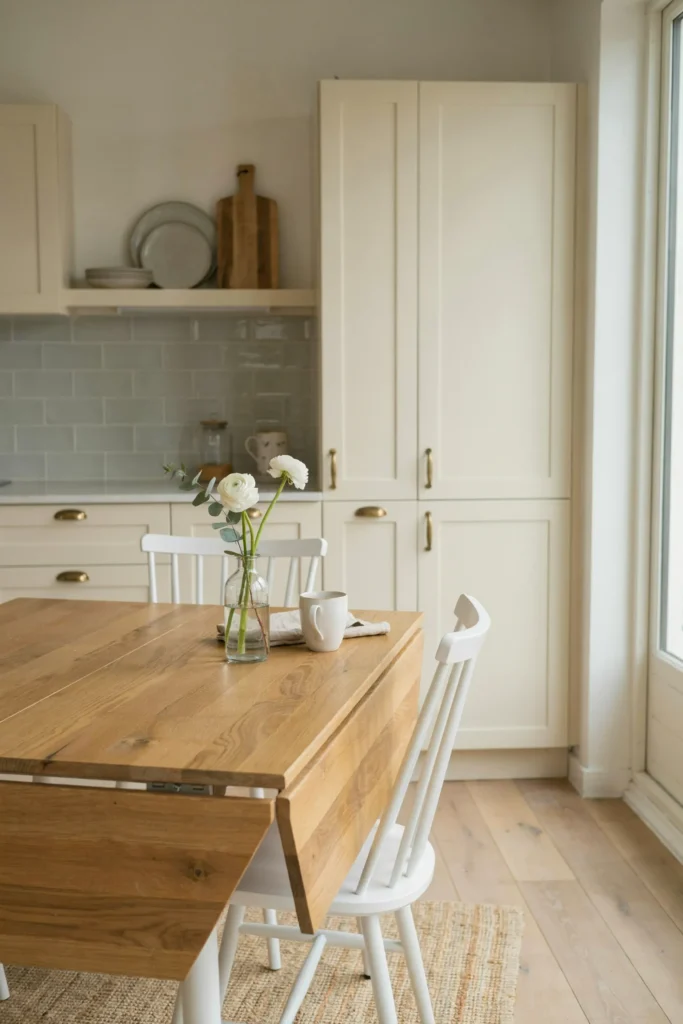
- Measure the folded footprint: Check how much wall or floor space the table occupies when both leaves are down.
- Test the open position: Make sure the extended surface won’t block drawers, appliances, or the main walkway.
- Select flexible seating: Choose stackable stools or lightweight chairs that can move aside easily.
- Keep the tabletop simple: Use a small centerpiece that can be removed quickly before expanding the table.
A drop-leaf design gives you the freedom to adjust your dining area throughout the day. Keep one leaf raised for breakfast or laptop work, then open both sides when friends visit. For a studio shared by one or two people, this flexible arrangement provides useful dining space without committing the entire floor to a permanent table.
Glass Top Dining Table
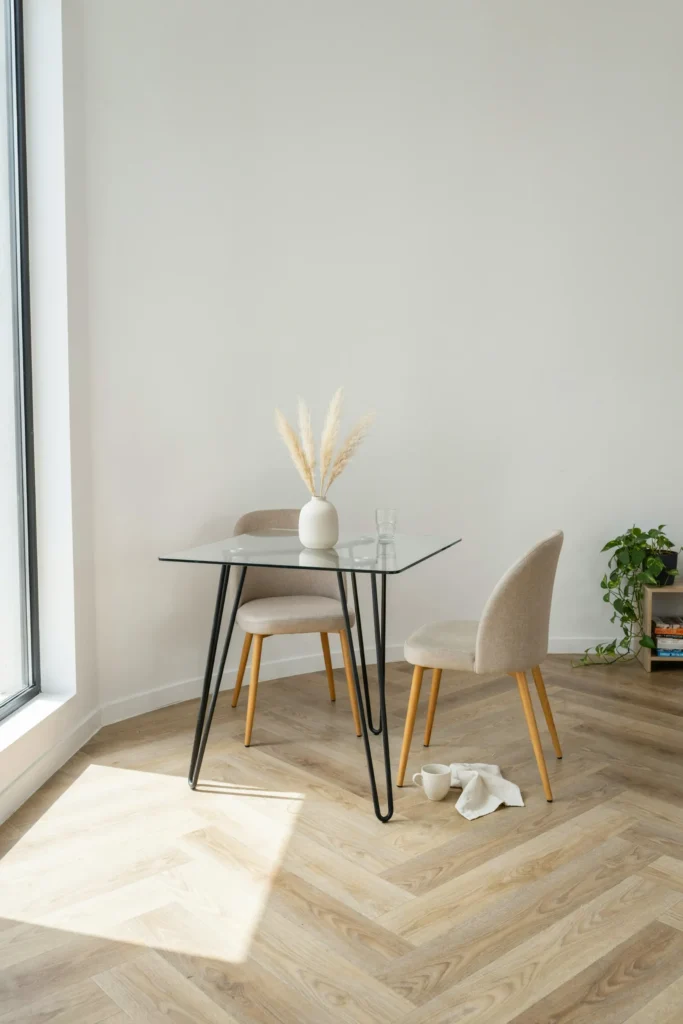
| Design Detail | Option A: Glass Table | Option B: Solid Wood Table |
| Visual effect | Open and airy | Warm and substantial |
| Cleaning | Shows fingerprints easily | May hide minor smudges |
| Style | Contemporary and light | Rustic, classic, or Scandinavian |
| Best placement | Bright, uncluttered corners | Cozy dining nooks |
| Main consideration | Requires regular glass cleaning | Can look heavier in tight spaces |
A glass tabletop allows light to pass through, making a compact dining corner feel less visually crowded. Choose a tempered-glass design with sturdy legs and rounded corners, particularly if the table sits near a busy walkway. Pair it with slim chairs and minimal decorations so the transparent surface remains the focal point rather than another source of clutter.
Bistro Table for Two
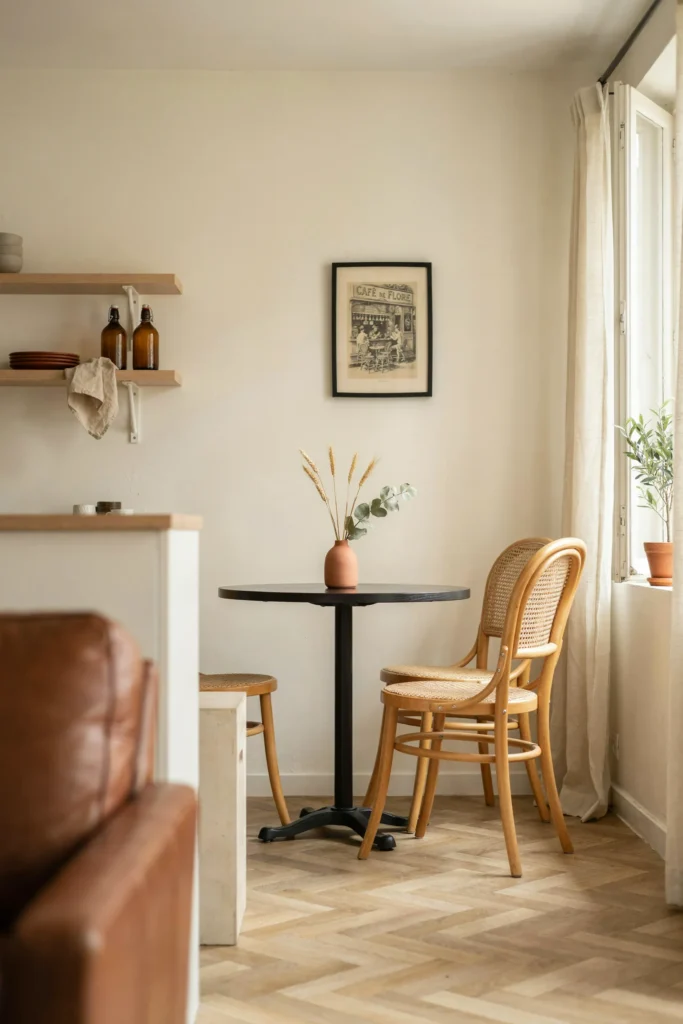
DO
- Choose a tabletop around 24 to 30 inches wide for a compact dining spot.
- Position the table near a window to make the corner feel brighter.
- Select chairs with slim frames that slide easily beneath the tabletop.
- Add a small vase or a single candle for café-inspired charm.
DON’T
- Choose oversized chairs that crowd the surrounding walkway.
- Fill the tabletop with bulky decorative accessories.
- Place the table where it blocks refrigerator or cabinet doors.
- Ignore the height difference between the tabletop and your chairs.
A bistro setup brings a relaxed café atmosphere into even the smallest studio kitchen. Black metal, natural wood, and soft neutral fabrics create an appealing contrast without overwhelming the room. Keep the accessories simple, and your everyday breakfast spot can feel intentional rather than squeezed into an unused corner.
Kitchen Island Dining Extension
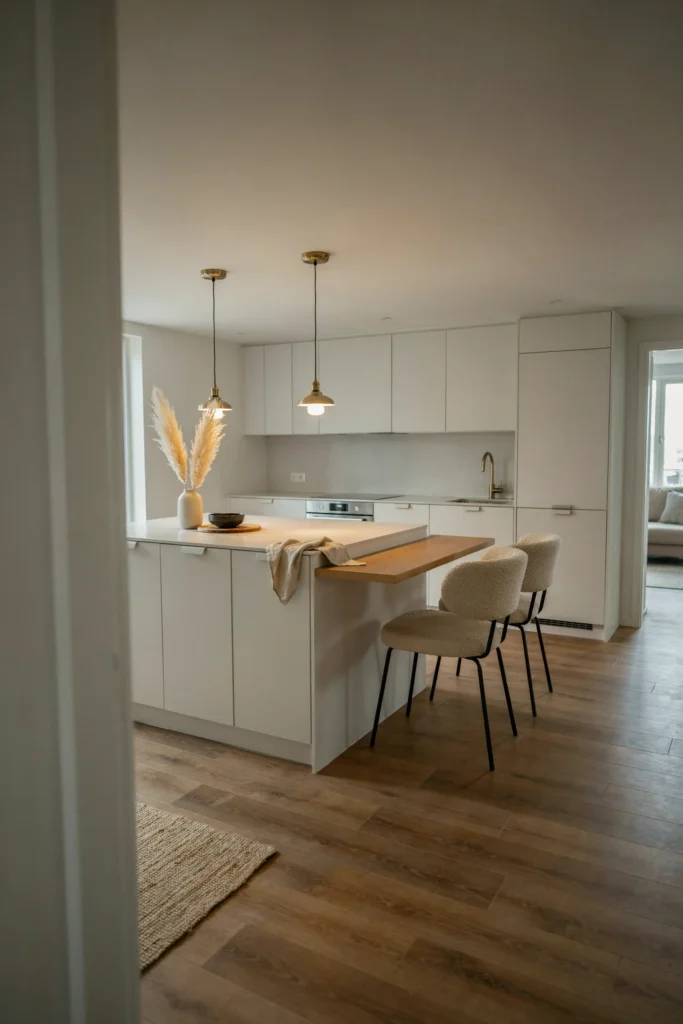
Cost: Moderate to high, depending on whether you buy a freestanding island or install a custom extension.
Time: One afternoon for a freestanding setup, longer for fitted cabinetry.
Skill Level: Beginner for movable furniture, professional help for fixed installations.
Best For: Studios with an existing island or enough room for a narrow kitchen peninsula.
An island extension combines food preparation and dining in one compact footprint. Choose a design with a genuine overhang for comfortable legroom, then match the stools to the counter height. Before purchasing, check that the island leaves enough room for appliance doors, drawers, and safe movement through the kitchen.
Built-In Bench Dining
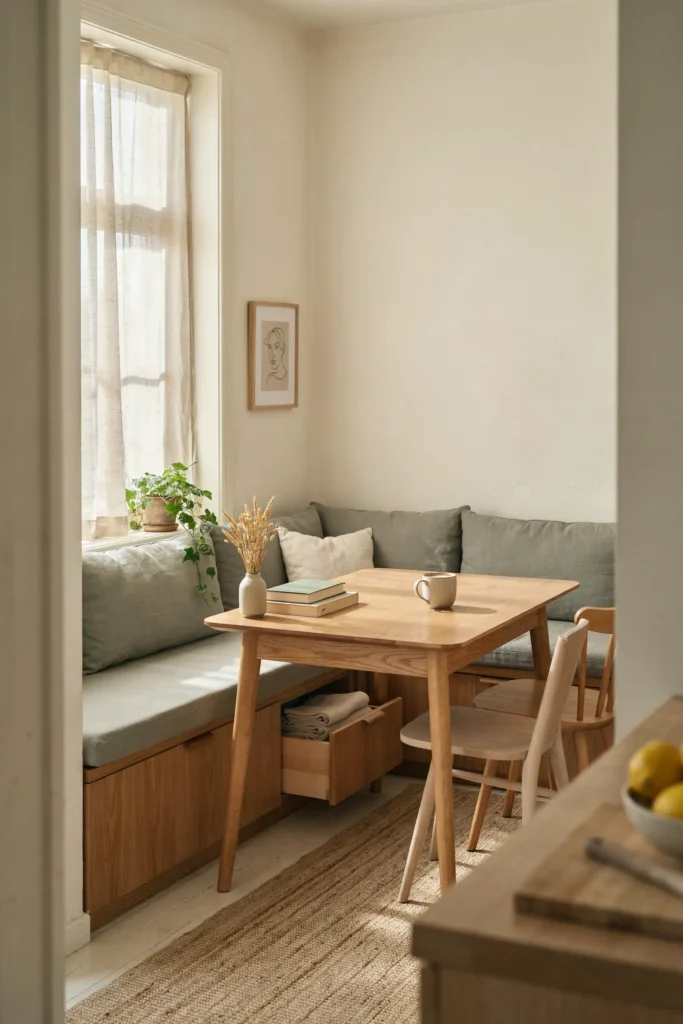
A built-in bench can turn an awkward corner into a useful dining destination while creating extra storage underneath. Position a compact table in front of the seating and add one or two movable chairs on the opposite side. The arrangement works particularly well beside a window or along a short wall.
For the most practical setup, choose wipeable upholstery or removable cushion covers, especially if the bench doubles as everyday seating. Storage drawers can hold placemats, table linens, or small kitchen supplies. Keep the table easy to move if you need access to the storage, and measure the bench depth before deciding on the tabletop size.
Nesting Dining Tables
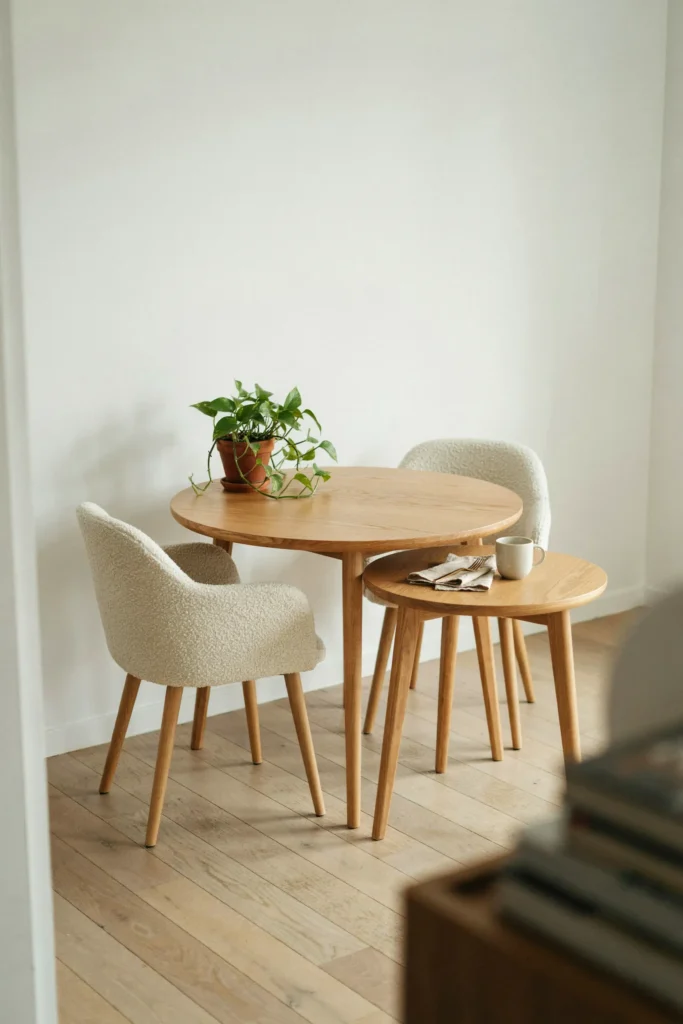
- Choose matching finishes: Oak, walnut, or matte white helps the nested tables look like a coordinated set.
- Keep the smaller table accessible: Pull it out when you need extra serving space or a separate surface.
- Use compact chairs: Lightweight seating prevents the dining corner from feeling crowded.
- Style the larger tabletop simply: A small bowl or vase leaves room for meals and drinks.
Nesting tables offer flexibility without requiring a permanently large dining surface. Keep the smaller table tucked underneath during ordinary meals, then pull it out when guests arrive or when you need space for snacks. Check the height and stability of both tables before buying, especially if you plan to use them for dining rather than decoration.
Counter Height Dining Table
Quick Tip:
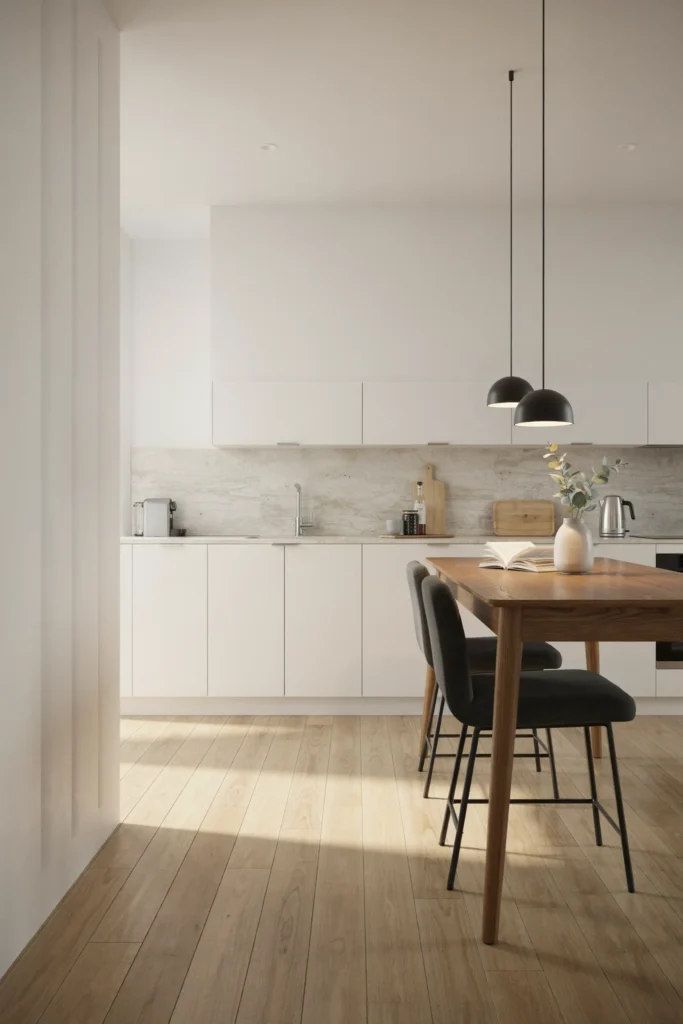
Measure your table height before purchasing stools. Standard counter-height tables are commonly around 34 to 36 inches tall, while their matching stools often have seats around 24 to 26 inches high. Aim for approximately 10 to 12 inches between the seat and tabletop for comfortable legroom.
A counter-height table can create a subtle visual boundary between the kitchen and living area without requiring a full room divider. Choose a narrow rectangular design if the table will sit beside a counter or wall. Stools that tuck underneath keep the floor open, while a durable tabletop handles everyday meals, coffee breaks, and occasional laptop sessions.
Extendable Dining Table
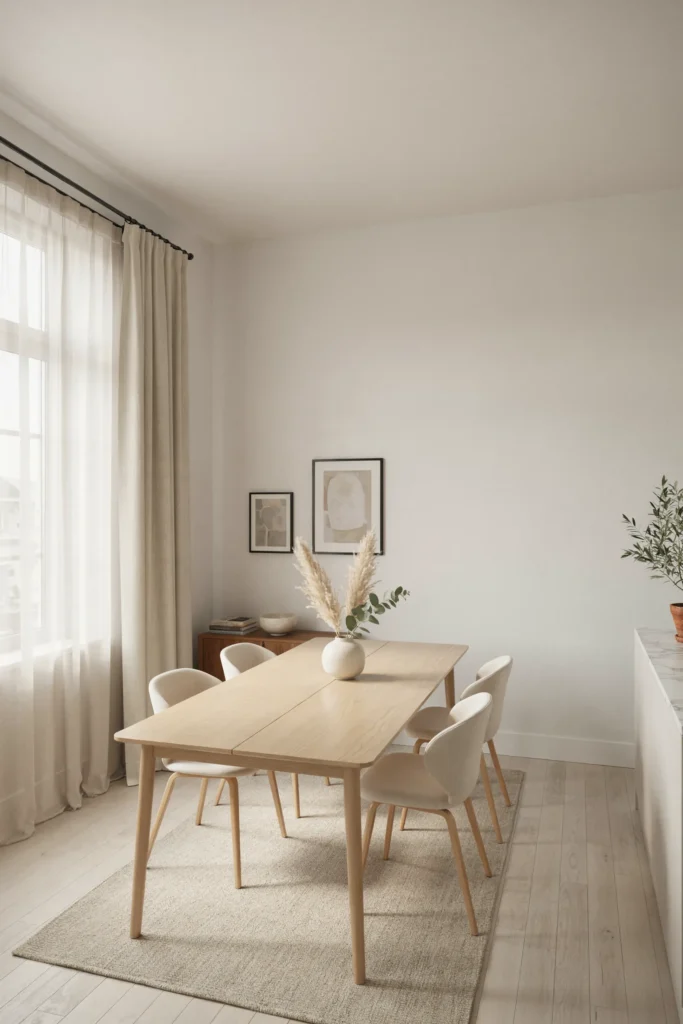
BEFORE
A permanently large dining table takes up valuable floor space, even when only one or two people are eating. Extra chairs can make the kitchen feel crowded throughout the week.
AFTER
An extendable table keeps the everyday setup compact and provides extra room for shared meals. A concealed leaf or sliding extension allows the tabletop to grow when guests arrive.
Measure both the closed and fully extended dimensions before choosing a model. Check that the expanded table leaves room to pull out chairs and walk around safely. If your studio has a narrow layout, an extension that opens from one end may be easier to accommodate than a design that expands into the main walkway.
Vintage Wooden Table
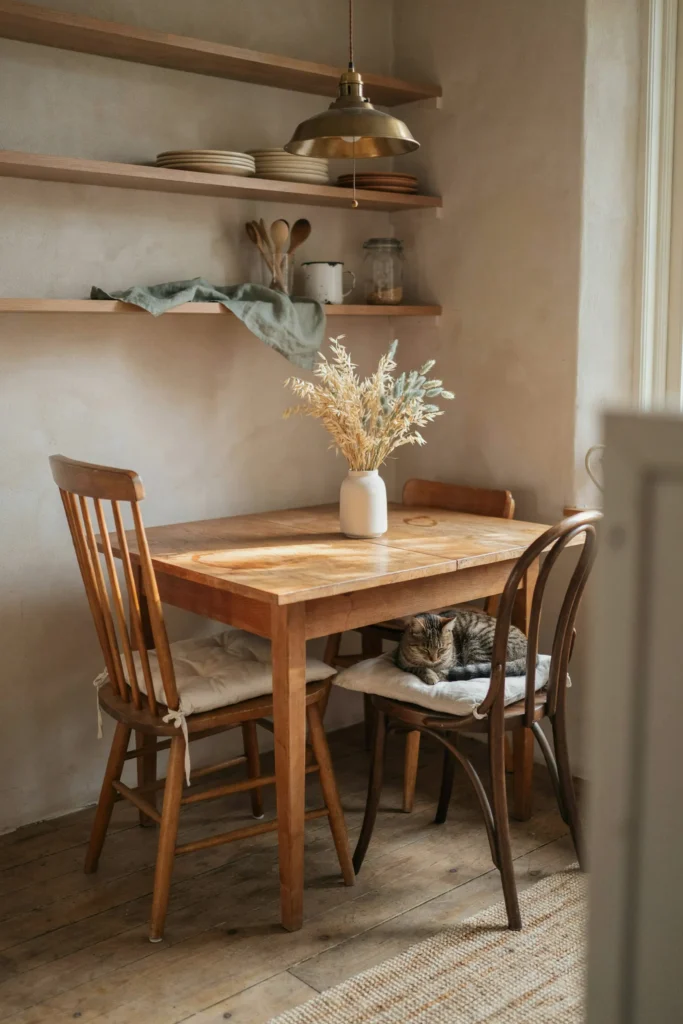
- Find the right shape: Choose a small round or rectangular vintage table that fits your available floor space.
- Check its condition: Inspect the legs, joints, tabletop, and finish for damage or instability.
- Refresh the surface: Clean the wood and apply an appropriate furniture polish or protective finish.
- Pair it with simple seating: Use lightweight chairs in complementary wood tones or neutral upholstery.
A vintage wooden table adds warmth and character to a studio without requiring lots of decoration. Its natural grain gives a small dining area visual interest, while a compact footprint keeps the room functional. I’ve noticed that mixing one distinctive vintage piece with simpler modern furniture often creates a more personal look than matching every item perfectly.
Marble Look Dining Table
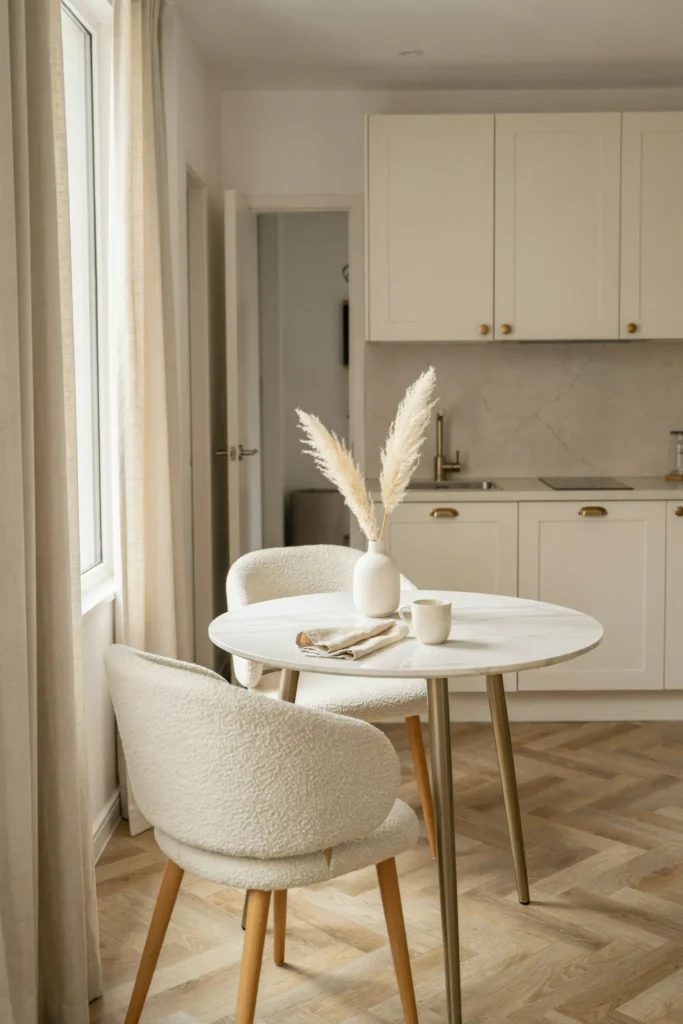
| Design Feature | Option A: Marble-Look Laminate | Option B: Natural Marble |
| Initial cost | Often more affordable | Usually more expensive |
| Weight | Generally lighter | Often heavy |
| Maintenance | Depends on the surface finish | Requires suitable stone care |
| Appearance | Printed or engineered veining | Unique natural patterns |
| Practical concern | Check heat and scratch resistance | Can stain or etch without proper care |
A marble-look table introduces a refined finish without needing an oversized dining setup. Pair a white surface with slim brass or black legs and neutral chairs to keep the arrangement visually light. For everyday use, check the manufacturer’s cleaning instructions and resistance to stains, heat, and scratches before choosing a tabletop.
Colorful Accent Table
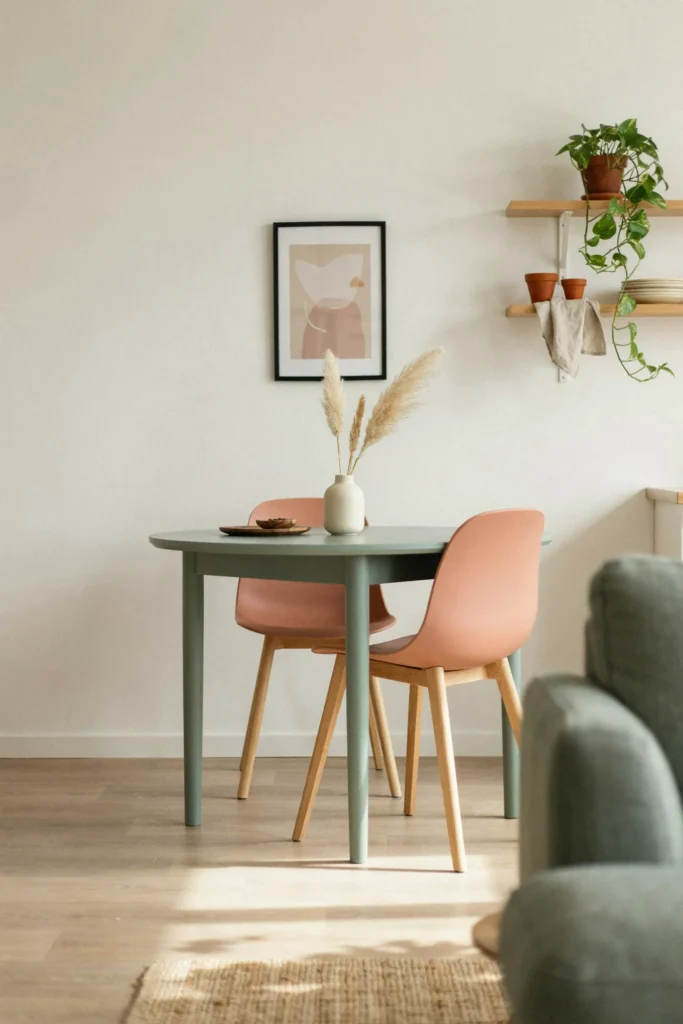
DO
- Choose one main accent color, such as sage, terracotta, dusty blue, or mustard.
- Repeat the color in a cushion, artwork, or small kitchen accessory.
- Keep surrounding furniture neutral to let the table stand out.
- Select a durable tabletop finish suitable for frequent cleaning.
DON’T
- Combine too many saturated colors in one small corner.
- Choose a table finish that clashes with permanent kitchen cabinets.
- Cover the entire tabletop with decorative objects.
- Forget to test paint or finish samples in your apartment’s lighting.
A colorful dining table can give a neutral studio kitchen a clear focal point without changing the cabinets or walls. Start with one shade that complements your existing finishes, then repeat it in just one or two small details. This keeps the dining area expressive and coordinated while leaving the rest of the room calm.
Wall Mounted Bar Table
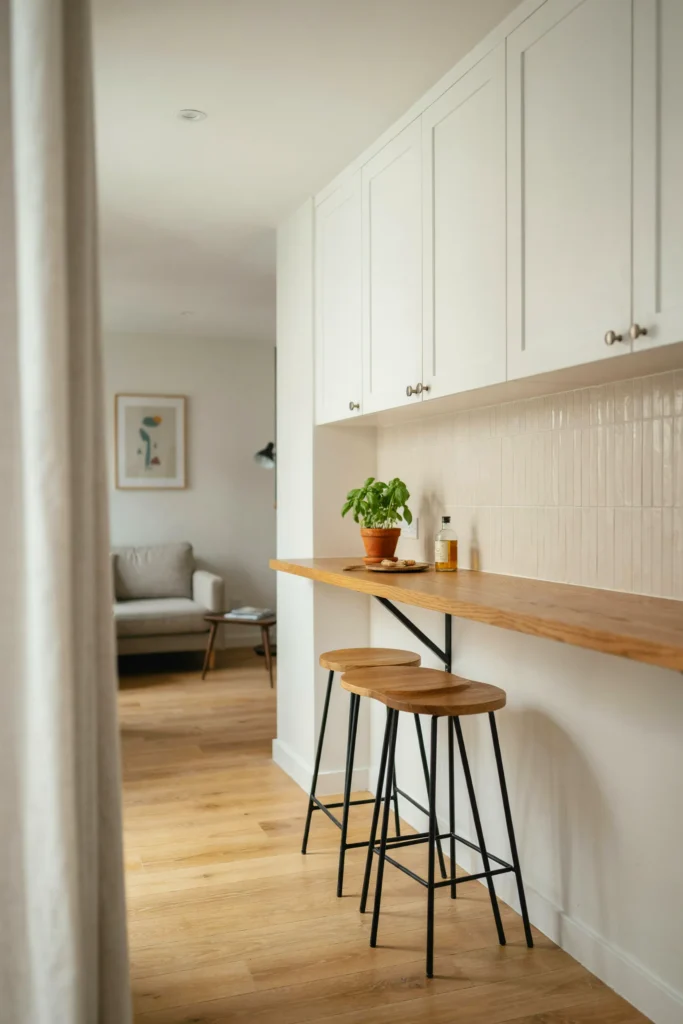
Cost: Moderate, depending on the tabletop material and mounting hardware.
Time: A few hours for installation, depending on wall construction.
Skill Level: Intermediate, because secure mounting is essential.
Best For: Narrow kitchens with an unused wall and limited floor space.
A wall-mounted bar table keeps the floor beneath it open, making a tight kitchen feel less crowded. Choose a sturdy tabletop with enough depth for plates and drinks, and use mounting hardware suited to the wall structure. Foldable or backless stools can slide away when the surface isn’t needed, leaving a clearer path through the studio.
Scandinavian Light Wood Table
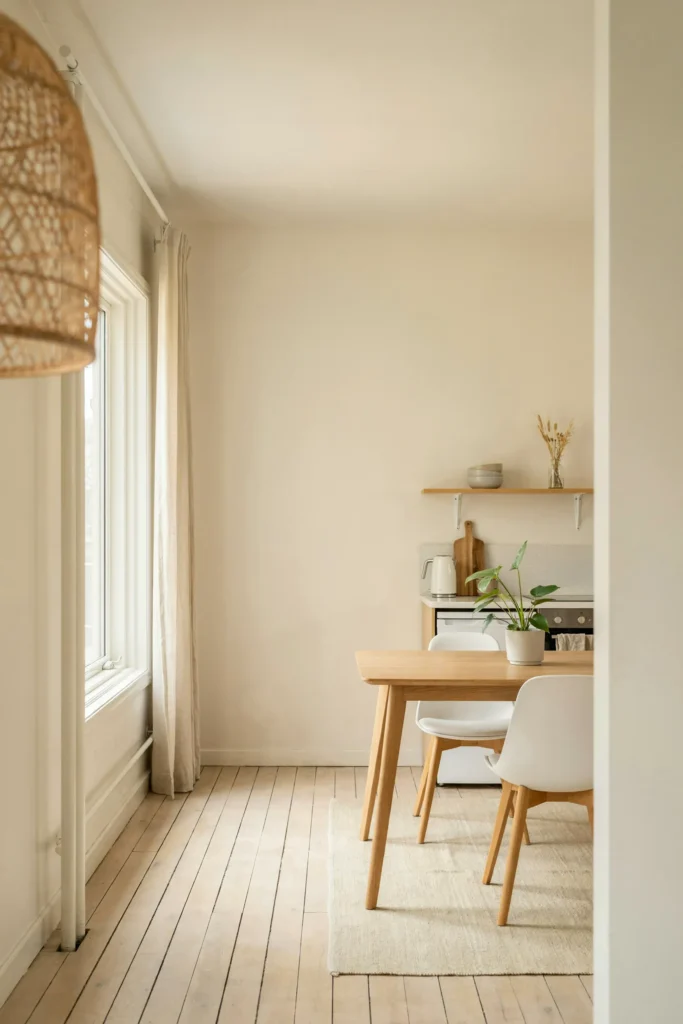
Light wood furniture brings a fresh, open feeling to a compact apartment without relying on glossy finishes or bold colors. A simple oak or birch table pairs easily with white cabinetry, cream upholstery, and muted green accessories. Choose a design with slim legs and a modest tabletop so the furniture feels proportional to the room.
To keep the look practical, wipe the surface regularly and use placemats to protect it from food spills and hot dishes. Match the wood tone to one or two existing elements, such as flooring or shelving, rather than trying to coordinate every finish exactly. The result is a calm dining corner that feels connected to the rest of your studio.
Half Moon Console Table
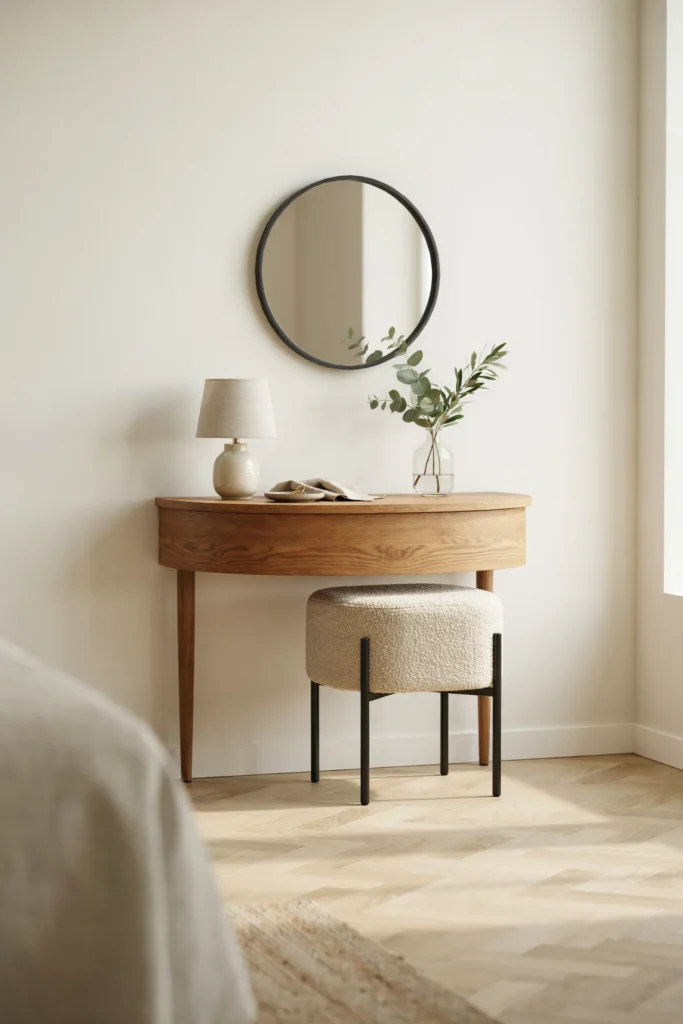
Half-moon tables offer a clever shape for narrow dining corners because their flat backs sit close to the wall while their curved fronts soften the layout. Choose a model with a tabletop wide enough for your usual plates and cups, then pair it with stools that fit completely underneath.
Some console tables are designed mainly for decoration, so check the manufacturer’s intended use and weight limit before using one for meals. If you find a sturdy dining-suitable model, keep the styling minimal and reserve the tabletop for everyday essentials. This approach works best for light meals, coffee breaks, or a compact two-person setup rather than large dinner gatherings.
Industrial Metal Table
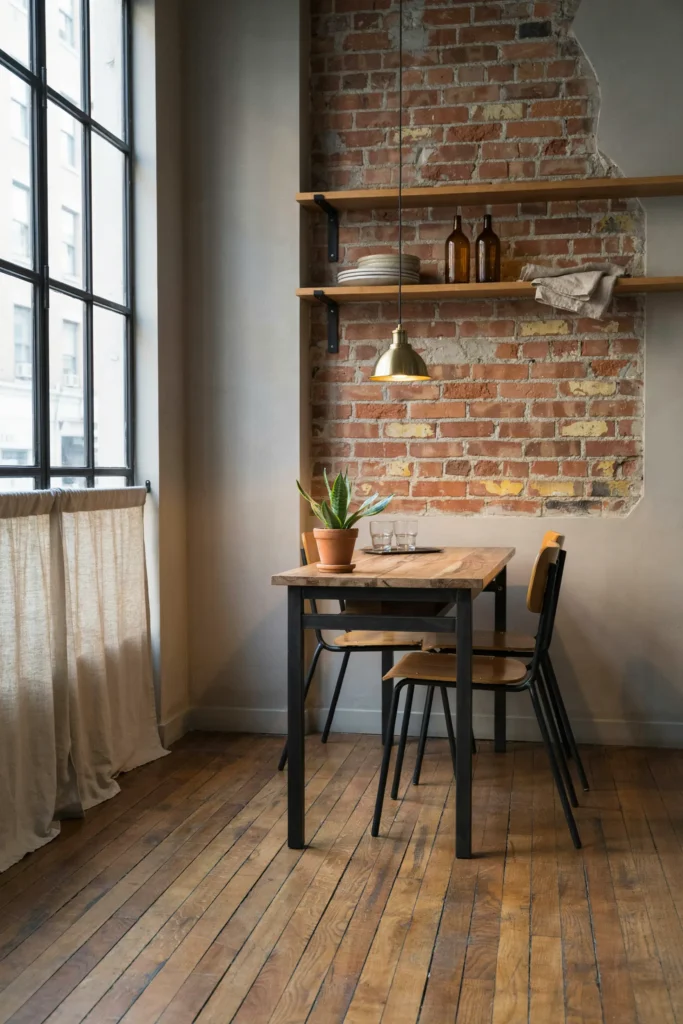
- Choose a slim frame: Open metal legs keep the table from looking too bulky in a compact kitchen.
- Balance dark finishes: Pair black metal with warm wood, cream walls, or pale flooring.
- Check the stability: Look for reinforced joints and a sturdy base that won’t wobble during meals.
- Protect the floor: Add suitable felt pads beneath the legs to reduce scratches and noise.
Industrial furniture can give a small studio kitchen a more defined look without adding elaborate decoration. A warm wood tabletop softens the dark metal frame, while simple chairs maintain a clean outline. If your kitchen already has dark hardware or black pendant lights, repeating those finishes helps the dining area feel connected to the rest of the room.
Storage Dining Bench
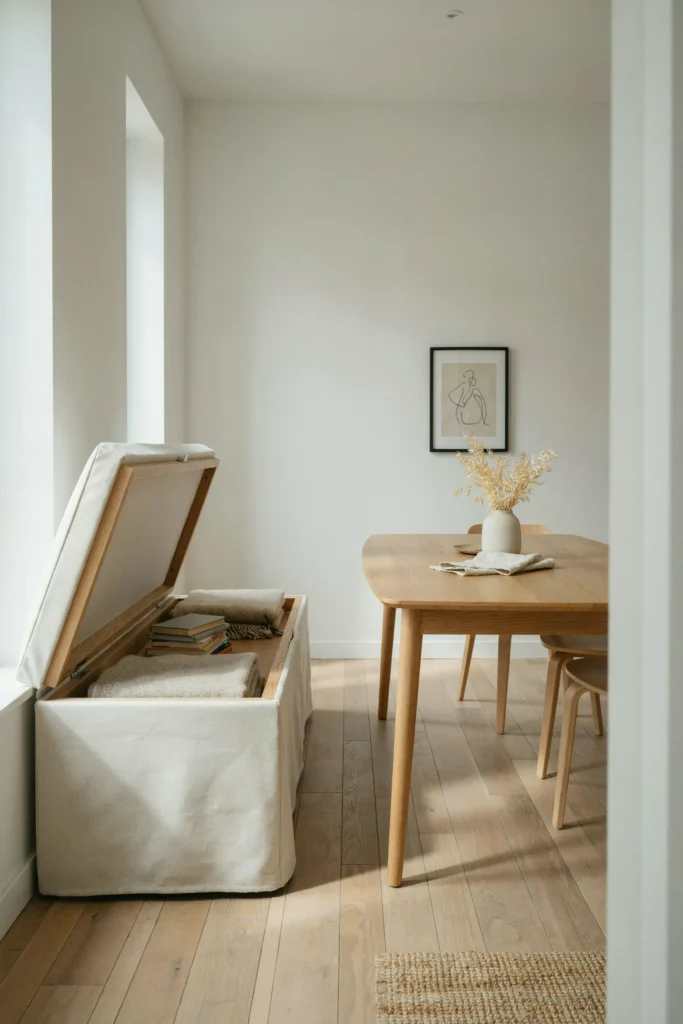
- Cost: Moderate, depending on whether the bench is ready-made or custom-built.
- Storage: Useful for placemats, table linens, and small dining accessories.
- Space: Works best along a wall where the bench can stay in place.
- Maintenance: Removable or washable cushion covers help with everyday spills.
A storage bench gives your dining area a second job by keeping useful items close without adding another cabinet. Place it against a wall and slide the table toward it, leaving movable chairs on the open side. Before buying, check that the seat opens fully and that the table can move enough to provide comfortable access to the storage compartment.
Minimalist White Dining Table
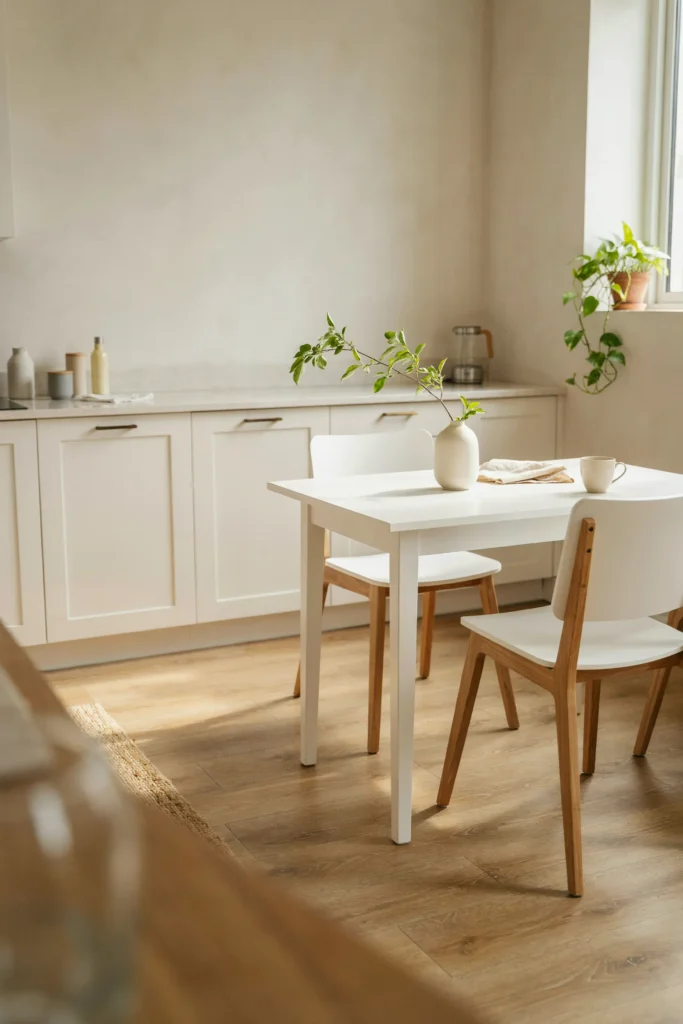
A simple white table helps a compact kitchen feel brighter by blending naturally with light walls and cabinetry. For the best result, choose a matte or easy-clean finish, slim legs, and a tabletop sized for your daily routine. Add warmth through wooden chair legs, a woven placemat, or a small plant instead of filling the surface with decorations.
When comparing Kitchen Table Ideas for Studio Apartments, consider how the table will function beyond mealtimes. A compact white design can double as a coffee spot or temporary work surface, provided it offers enough legroom and a comfortable height. Keep a little open space around it, and the dining corner will feel tidy without becoming impractical.
CONCLUSION
A small studio apartment doesn’t mean giving up a comfortable or beautiful dining area. With the right table shape, flexible seating, and clever placement, you can create a kitchen corner that feels welcoming without overcrowding your home.
These Kitchen Table Ideas for Studio Apartments offer inspiration for every style, from minimalist white furniture to warm vintage wood and practical storage benches. Start with one change that fits your layout and budget, then build around it at your own pace.
Save this post on Pinterest for future inspiration, try your favorite idea, and share it with someone creating a stylish small home. Your perfect little dining spot is within reach!